Why I’m Glad Noelia Castillo Ramos is Dead

a stone angel holding a wreath of thorns

Everyone should have the right to die 

a carved stone angel holding a wreath of thorns
Photo by Cosmin Gurau on Unsplash

The death of Noelia Castillo Ramos has been rocking the internet for the past couple of weeks. Before her euthanasia, thousands logged on begging and praying for Ramos to change her mind.

Since her death, Ramos’s euthanasia has been criticized by many as a callous state sanctioned execution, with some in my social media feeds even claiming that the hospital pressured Ramos into death to profit off of her organs.

While I understand where the critics of Ramos’s euthanasia are coming from, I disagree. I think that Ramos was in a position in which many people would want to die and should have the right to.

Ramos’s death was a landmark case in assisted death cases, because she was diagnosed as mentally ill and her diagnosis did not impact her eligibility for euthanasia. I see Ramos’s death as more than just one person’s euthanasia. It’s a case that sets a precedent heard around the world for how and when it should be socially acceptable to end one’s life. 

The right to die is a fundamental human right

I’m of the opinion that everyone on Earth should get to choose the time and manner of their own death. 

I first developed this opinion when I read about two Australian scientists, Patricia and Peter Shaw, who were married to each other and who opted for euthanasia together as a sort of final romantic gesture. They took the time to get their affairs in order and to prepare their children for their deaths before ending their lives. It seemed like a really dignified way to die, and it made me consider planning my own death when I reach old age. 

I live in Oregon, which is one of the states in the US where euthanasia, for some people, is legal. However, in order to qualify for a physician assisted death in Oregon, you must be diagnosed with a terminal illness that is expected to end your life within about six months. 

I think that the qualification requirements for voluntary assisted death where I live should be changed to be closer to European standards, which tend to allow voluntary assisted death on a much broader grounds than in Oregon. 

Many things shouldn’t disqualify euthanasia seekers

In Oregon, voluntary assisted death isn’t available to people with chronic illnesses or other permanent disabilities unless they are expected to die within the next six months. It’s also not available to people who are suffering because of mental illness, or because of some other set of life circumstances which are causing them unbearable suffering. 

I don’t think that it’s the place of doctors or anybody else to tell a private individual when their suffering is so unbearable that they should be allowed to die. Once a mental health evaluation and appropriate waiting period have confirmed that someone actually does want to die, and if a waiting period is appropriate, that they have for some time, I think the decison should be left up to the individual. 

Mental illness shouldn’t be a disqualifying factor because it is very capable of causing unbearable suffering, and it’s also capable of causing incapacity. Many people are mentally ill but not (always) incapacitated, and rational enough to make the decision to end their lives, especially if their prognosis is that they may eventually become too incapacitated to make that decision. 

Millions of fantastic and interesting people have ended their lives via some form of euthanasia or assisted death throughout history. No one should be prevented from joining their ranks unless there is a very good reason. 

Rape is horrifying

Rape is recognized under international law as a form of torture. I know from firsthand experience that this form of torture is incredibly traumatic and can permanently alter the brain. 

Many rape survivors continue to suffer mental health symptoms related to their rapes for their entire lives. For some, the memory of a rape can become like a prison that they can never escape from. Unbearable suffering due to a rape or other torture should be a reason why someone can seek voluntary assisted death.

Disability is horrifying

Like rape, disability can permanently alter a person’s brain and also their manner and quality of life. Because I’m disabled, and have become more disabled later in life, I know firsthand how terrible it can be. Like rape, disability can feel like a prison that the disabled person cannot escape from. This is as true for people with mental disabilities as it is for people with physical disabilities. 

Imagine being so disabled that you don’t recognize your own family members, or that you need help walking or talking. Wouldn’t you at least contemplate death in a situation like that? 

Ramos consistently wanted to die

Ramos literally begged for death for years. She wanted to die so badly that she jumped from a five story building. While she suffered from depression and borderline personality disorder, these disabilities did not render her incapacitated or incoherent enough to where she was unable to advocate for the health decision that she wanted. 

Imagine being raped and having your rapists not go to jail, and then attempting to kill yourself and ending up unable to walk! To me, this sounded like a nightmare from which Ramos could never wake. I might want to die in a situation like that, and I might be angry if someone tried to deny me something that I see as a fundamental human right. 

I understand why Ramos’s family didn’t agree with her decision. They obviously thought that her life still had value and made an effort to tell her that in a public way. But the decision to end your own life isn’t a matter of whether or not you deserve to live based on how valuable you are to others, it’s matter of whether or not you deserve the level of compassion that is necessary to grant someone a merciful death over an unnecessarily painful life that they have consistently rejected. 

Everyone should be allowed to choose death

I know that if I lived with someone who begged for death every day for years, it would be a tough wish for me to not want to grant. I hope that if I’m ever in that situation that I have the ability to do so legally and sanely. 

Maybe not everyone is meant to live into old age? Maybe our lives can still be meaningful if they end when we are younger, or if they end by our own hand? I know that Ramos’s death was undeniably meaningful to me. I’ll always remember the sacrifice she made that helping to defend one of my most basic rights. 

Why You Should Care About Carrie Buck

The story of a woman who fought compulsory sterilization

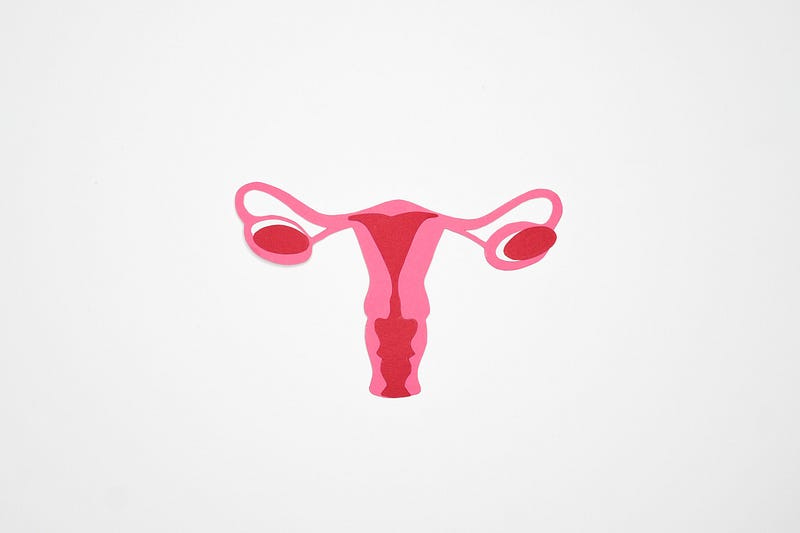
A pink and red drawing of a uterus against a white backgrond
Photo by Nadezhda Moryak

The US has been in an uproar since a Supreme Court draft overturning Roe v. Wade leaked a few weeks ago. Many American women and other people with uteri are terrified that our rights to bodily autonomy and reproductive freedom will soon be taken away.

Unfortunately, this doesn’t stop with Roe v. Wade. The Supreme Court has A LOT of power. Most people don’t realize how much. Roe v. Wade was born out of the Court’s interpretation of the “right to privacy” in The Constitution, and many other precedents based on this right could fall if the Court decides to start interpreting it differently, like the ones that make gay and interracial marriages legal, for starters.

The Roe v. Wade thing has caused a lot of ordinary people to start learning more about Supreme Court case law. I took a couple of classes about this exact thing not too long ago, and there’s a particular case that comes to mind when it comes to the Supreme Court and human rights that I think merits our attention at this moment.

This is the story of Carrie Buck, who brought a case to the Supreme Court in 1927 because she did not want to be forcibly sterilized after Clarence Garland, the nephew of her foster parents had raped and impregnated her.

Carrie’s biological mother, Emma Buck, had been committed to The Virginia Colony for Epileptics and the Feebleminded after having been abandoned by her husband, Frederick, and being thought to have contracted syphilis, along with being accused of prostitution and “immorality” (whatever that means).

This resulted in Buck being placed with foster parents John and Alice Dobbs.

After Buck became pregnant, her foster parents saw this as a sign that she was promiscuous, and therefore “feebleminded.” They had committed to the same Colony where her mother had lived. Her newborn daughter, Vivian, was taken away from her. Eight years later, Vivian later died of an intestinal infection after contracting measles.

Later, Buck was selected by Albert S. Priddy, a doctor at the Colony, to test the constitutionality of Virginia’s new compulsory sterilization law. She was chosen based on the fact that both her, her mother, and her daughter were thought to be “feebleminded,” suggesting that “feeblemindedness” was genetic.

One thing that I think is interesting about this case is that Irving P. Whitehead, the attorney representing Buck, was himself a known eugenicist, and was also friends with Albert Priddy. It would seem that Buck had no real defense in this case– the prosecution and the defense were in bed together, and were intentionally using Buck to legitimize the eugenics laws that they both supported.

The Court ruled in an eight-to-one decision that Virginia’s sterilization law was constitutional, and Buck was sterilized.

In the Court’s opinion, Justice Oliver Wendell Holmes Jr. famously stated:

“Three generations of imbeciles is enough.”

Buck’s sister Doris was also sterilized without her knowledge or consent when she was in the hospital with appendicitis. She did not discover until much later that she was unable to have children.

Buck was released from the Colony after her sterilization, and she married William D. Eagle, a 65-year-old widower. After he died, she married Charlie Detamore, an orchard worker.

Various researchers and reporters visited and spoke to Buck later in her life. They reported that she was, in fact, of normal intelligence. Buck’s daughter Vivian was also of normal intelligence, according to her primary school report cards. However, this did not stop modern media from continuing to portray buck as intellectually disabled. In the film Against Her Will: The Carrie Buck Story, Marlee Matlin plays a fictional version of Buck who is still “feebleminded.”

At this time in US history, forced sterilization was not at all uncommon. It mostly happened to women, particularly Black and brown women. It often happened to the neurodivergent, the mentally ill, petty criminals, and sex workers. It almost always happened to the low-income.

Eugenics laws that were enacted starting in 1907 made this legal. While many of these laws are no longer on the books, forced sterilization is still technically allowed by the highest court in our nation, as Buck v. Bell has never been overturned. Carrie Buck matters because her case sets the current legal precedent for forced sterilization in the US. This means that, theoretically, none of us are safe from forced sterilization, even in this day and age.

The history of forced sterilization in the United States is horrifying. It’s also overwhelmingly sexist, racist, ableist, and classist. Here are some stomach-churning facts to give you an idea of how serious this has been:

We like to think of forced sterilization as something that no longer happens in the United States. Unfortunately, that is not true, and in a world where civil and human rights related to bodily autonomy are currently being eroded, we should be very, very concerned about this.

It’s happened as recently as 2018, to Summer Creel, who was told by a judge that she would receive a reduced sentence if she underwent the procedure.

California prisons have illegally sterilized women without informed consent as recently as 2010. Between 2006 and 2010, 148 women were given tubal ligations without approval from the health care board that exists in order to prevent coercion and abuse. Many women reported feeling bullied into the procedure or being misinformed about it.

In 2020, a whistleblower reported that Dr. Mahendra Ami, now referred to as the “Uterus Collector” had performed at least 20 hysterectomies on women in immigrant detention without their consent. Many of these women did not speak English well and did not understand what was going to be done to them, or what had been done to them.

Even wealthy and privileged Americans are still at risk– while we don’t use the term “feebleminded” anymore, once one has been placed into that category by a modern court, it is easy to lose one’s civil and human rights. Look at the case of Britney Spears’ abusive conservatorship as an example. Spears said that she was forbidden from removing her IUD while under the conservatorship. Even extremely powerful women like Spears can be placed in situations where their reproductive rights are restricted.

Reproductive freedom is an issue that should unite everyone– not just the disabled, not just the mentally ill, not just the poor, not just the BIPOC, and not just women. While forced sterilization has largely affected people with uteri, your vas deferens are not safe either! If you care about reproductive rights, now is a great time to pay attention.


Originally published on medium.com on May 28th, 2022.