Why I’m Glad Noelia Castillo Ramos is Dead

a stone angel holding a wreath of thorns

Everyone should have the right to die 

a carved stone angel holding a wreath of thorns
Photo by Cosmin Gurau on Unsplash

The death of Noelia Castillo Ramos has been rocking the internet for the past couple of weeks. Before her euthanasia, thousands logged on begging and praying for Ramos to change her mind.

Since her death, Ramos’s euthanasia has been criticized by many as a callous state sanctioned execution, with some in my social media feeds even claiming that the hospital pressured Ramos into death to profit off of her organs.

While I understand where the critics of Ramos’s euthanasia are coming from, I disagree. I think that Ramos was in a position in which many people would want to die and should have the right to.

Ramos’s death was a landmark case in assisted death cases, because she was diagnosed as mentally ill and her diagnosis did not impact her eligibility for euthanasia. I see Ramos’s death as more than just one person’s euthanasia. It’s a case that sets a precedent heard around the world for how and when it should be socially acceptable to end one’s life. 

The right to die is a fundamental human right

I’m of the opinion that everyone on Earth should get to choose the time and manner of their own death. 

I first developed this opinion when I read about two Australian scientists, Patricia and Peter Shaw, who were married to each other and who opted for euthanasia together as a sort of final romantic gesture. They took the time to get their affairs in order and to prepare their children for their deaths before ending their lives. It seemed like a really dignified way to die, and it made me consider planning my own death when I reach old age. 

I live in Oregon, which is one of the states in the US where euthanasia, for some people, is legal. However, in order to qualify for a physician assisted death in Oregon, you must be diagnosed with a terminal illness that is expected to end your life within about six months. 

I think that the qualification requirements for voluntary assisted death where I live should be changed to be closer to European standards, which tend to allow voluntary assisted death on a much broader grounds than in Oregon. 

Many things shouldn’t disqualify euthanasia seekers

In Oregon, voluntary assisted death isn’t available to people with chronic illnesses or other permanent disabilities unless they are expected to die within the next six months. It’s also not available to people who are suffering because of mental illness, or because of some other set of life circumstances which are causing them unbearable suffering. 

I don’t think that it’s the place of doctors or anybody else to tell a private individual when their suffering is so unbearable that they should be allowed to die. Once a mental health evaluation and appropriate waiting period have confirmed that someone actually does want to die, and if a waiting period is appropriate, that they have for some time, I think the decison should be left up to the individual. 

Mental illness shouldn’t be a disqualifying factor because it is very capable of causing unbearable suffering, and it’s also capable of causing incapacity. Many people are mentally ill but not (always) incapacitated, and rational enough to make the decision to end their lives, especially if their prognosis is that they may eventually become too incapacitated to make that decision. 

Millions of fantastic and interesting people have ended their lives via some form of euthanasia or assisted death throughout history. No one should be prevented from joining their ranks unless there is a very good reason. 

Rape is horrifying

Rape is recognized under international law as a form of torture. I know from firsthand experience that this form of torture is incredibly traumatic and can permanently alter the brain. 

Many rape survivors continue to suffer mental health symptoms related to their rapes for their entire lives. For some, the memory of a rape can become like a prison that they can never escape from. Unbearable suffering due to a rape or other torture should be a reason why someone can seek voluntary assisted death.

Disability is horrifying

Like rape, disability can permanently alter a person’s brain and also their manner and quality of life. Because I’m disabled, and have become more disabled later in life, I know firsthand how terrible it can be. Like rape, disability can feel like a prison that the disabled person cannot escape from. This is as true for people with mental disabilities as it is for people with physical disabilities. 

Imagine being so disabled that you don’t recognize your own family members, or that you need help walking or talking. Wouldn’t you at least contemplate death in a situation like that? 

Ramos consistently wanted to die

Ramos literally begged for death for years. She wanted to die so badly that she jumped from a five story building. While she suffered from depression and borderline personality disorder, these disabilities did not render her incapacitated or incoherent enough to where she was unable to advocate for the health decision that she wanted. 

Imagine being raped and having your rapists not go to jail, and then attempting to kill yourself and ending up unable to walk! To me, this sounded like a nightmare from which Ramos could never wake. I might want to die in a situation like that, and I might be angry if someone tried to deny me something that I see as a fundamental human right. 

I understand why Ramos’s family didn’t agree with her decision. They obviously thought that her life still had value and made an effort to tell her that in a public way. But the decision to end your own life isn’t a matter of whether or not you deserve to live based on how valuable you are to others, it’s matter of whether or not you deserve the level of compassion that is necessary to grant someone a merciful death over an unnecessarily painful life that they have consistently rejected. 

Everyone should be allowed to choose death

I know that if I lived with someone who begged for death every day for years, it would be a tough wish for me to not want to grant. I hope that if I’m ever in that situation that I have the ability to do so legally and sanely. 

Maybe not everyone is meant to live into old age? Maybe our lives can still be meaningful if they end when we are younger, or if they end by our own hand? I know that Ramos’s death was undeniably meaningful to me. I’ll always remember the sacrifice she made that helping to defend one of my most basic rights. 

Mentally Ill People Are Not Inherently Violent and Dangerous 


Negative stereotypes place vulnerable people at higher risk 

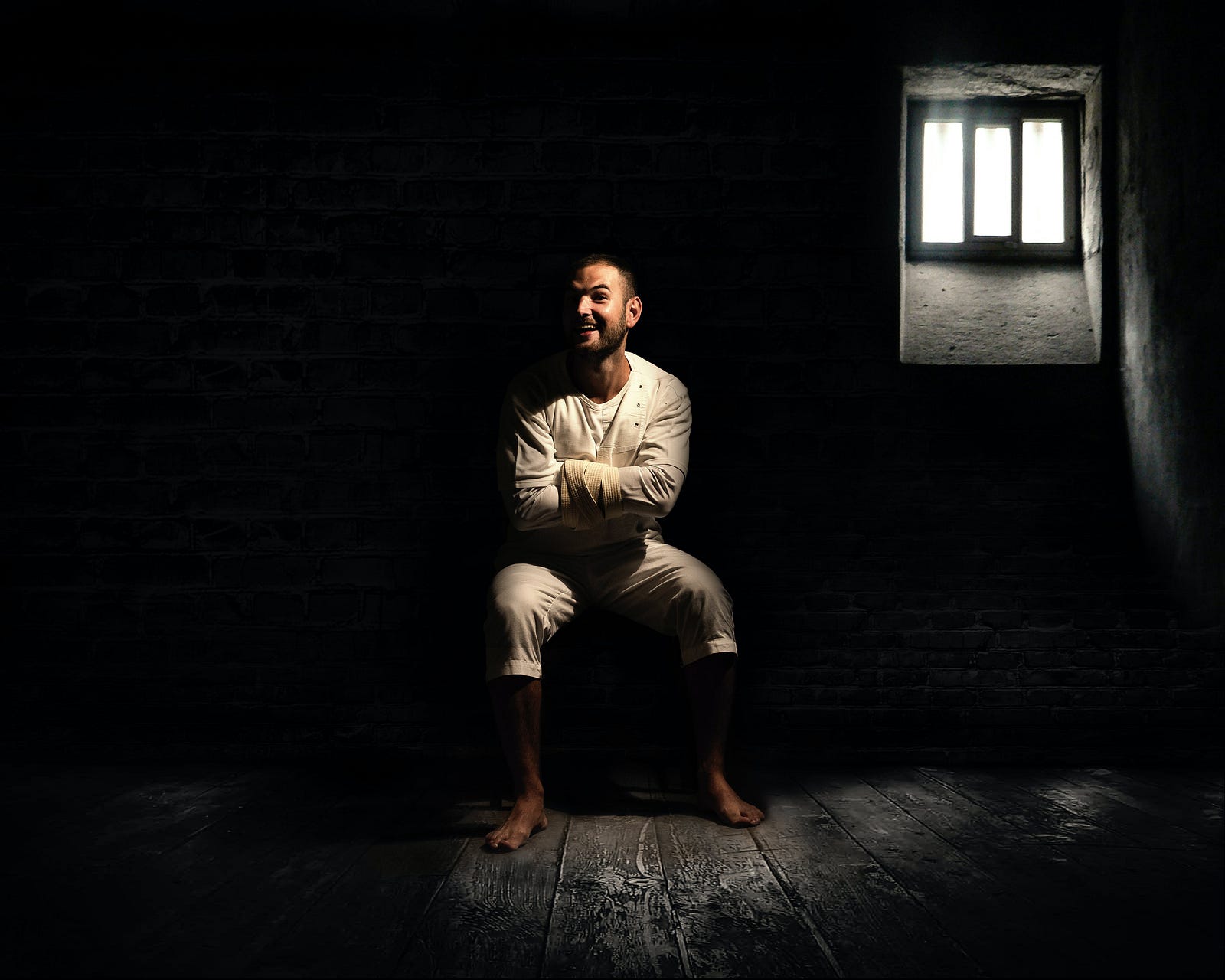
man in straight jacket and laughs to himself with a disturbed look on his face in a darkened room with one window and a small amount of light shining through the window
Photo by Marko Garic 

Billions of people worldwide suffer from mental illness. 

While it’s true that people with mental illness are more likely to be violent than the general population, they are also more likely to be violently victimized than the general population. In fact, the average mentally ill person is more likely to be violently victimized than they are to be the perpetrator of violent acts. If they have some other identity characteristic that is stigmatized, like if they are black or trans, the risk gets even higher.

The images of mentally ill and otherwise neurologically disabled people presented by the media aren’t helping the situation. Mentally ill people are often depicted in a dehumanized way, as evil villains or as monstrous, beastly, out-of-control characters who are disposable to plot lines by virtue of their differences.

Mentally ill people are also often portrayed as helpless victims. This false dichotomy obscures the reality of mental illness. As someone who suffers from mental illness myself, I know that the vast majority of people who do are pretty normal people. Most of us aren’t scary monsters or scared, witless adult children, regardless of how we are portrayed in the media. 

The media demonizes common mental health symptoms like psychosis, hypersexuality, or self harm, feeding into social stigmas surrounding these kinds of symptoms. This stigma makes it more difficult for people to talk about these symptoms. This makes it more difficult or frightening for people to seek treatment, which then leads to less people getting help for their illnesses. 

We have to accept the reality, as mentally ill people, if we want to be functional, that we are both more likely to be dangerous, and more likely to be placed in dangerous situations. It’s also good for us and the people around us to have an awareness of how these realities affect our lives and how they can best support us for our own good, their own good, and the good of everyone around us. 

Mentally Ill People Are More Likely to be Assaulted

Studies show that mentally ill people are more likely to be physically abused or sexually assaulted than the general population. We are also often targeted for property crimes, such as internet or phone scams that also target groups like the elderly. 

Mentally ill people are more likely to be targeted for such crimes for multiple reasons. One of these is that, because mentally ill people are perceived as violent, it’s easier for an abusive person to blame their violence on the mentally ill person who is their victim. Mentally ill people are seen as less credible in general. We are less likely to be believed if we go to the police or to anyone to report a crime. 

Mentally Ill People Are More Likely to be Shot by The Police

It’s estimated that between about one quarter and one half of all fatal police shootings involve someone with a mental illness. People with untreated mental illnesses are possibly as much as sixteen times more likely to be killed by law enforcement

In a police encounter, it may be difficult for an officer to determine whether or not a person with a mental illness really is or isn’t a violent threat. This problem is exacerbated by racial factors.

 Bad public policy creates a vicious cycle 

A lack of public resources for things like mental health, housing, and addictions contributes to these problems. 

When mentally ill people are violent, or when we become so sick that we are unable to care for ourselves, we often become the responsibility of the state. The state often seriously fumbles the care of vulnerable people with mental illness or other disabilities. 

If someone doesn’t get treatment for their mental illness, often it will get worse. And if they are arrested for a violent crime or another crime due to their mental illness, incarceration often makes things worse instead of better. The standard of care for people with mental illnesses in jails and prison is very low. According to NAMI, around two thirds of people with mental illness don’t get proper care while incarcerated.

Fight the stigma 

It’s vital to make sure that mentally ill people receive a high standard of care. 

When people with mental illness receive a high standard of care, we are less likely to become dangerous towards ourselves or anyone else. We are also less likely to end up in danger ourselves. The best way to make sure that we get the care we need is to help the world see us as fully human and deserving of the same level of respect as other humans. 

Remember that the schizophrenic man you see shouting racial slurs on the street corner is still a person. So is the woman who is huddled in an empty store doorway wrapped in wool blankets and talking to herself. So is your co-worker who has emotional outbursts. So is your family member who is so depressed that they can’t get out of bed. 

We don’t stop being human because we are sick. Being sick isn’t a moral failing, or at least not a moral failing of the individual who is sick. Civilization is built on cooperation towards common goals, like the safety-and well being of everyone. If we cannot help people who are sick or otherwise incapacitated live healthy, normal lives, we are failing as a civilized society. We are failing at the very thing which makes us a civilized society.

Mass Incarceration of Nonviolent Offenders Harms Society


Criminal justice reform in the US can’t happen fast enough

a barbed wire fence outside of a prison
Photo by Hédi Benyounes

The United States incarcerates more people than any other nation on earth, with about 2.3 million people currently locked up in 2019. This includes 1,306,000 in state prisons, 221,000 in federal jails and prisons, 612,000 in local jails, and 61,000 in immigrant detention centers.

Over 540,000 people are incarcerated who have not been convicted or sentenced. Median bail levels are often too high for the typical citizen to pay when they are detained.

A staggering 7.1 million people in the United States are under some kind of criminal justice supervision, including probation or parole.

Spending on prisons and jails has increased at triple the rate of spending on Pre‐K‐12 public education in the last thirty years.

Mass incarceration perpetuates a cycle of poverty, addiction, illness, and violence. It’s a huge cost to taxpayers, a human rights fiasco, and a national embarrassment.


On average, incarcerating someone costs $80-$100 per day. While the annual cost of corrections, 80 billion dollars, is often cited as the cost of incarceration; there are many hidden social costs.

According to a recent study, incarceration generates an additional ten dollars in social costs for every dollar spent on corrections. More than half of these costs are borne by families, children, and community members.

The costs borne by the incarcerated include lost productivity, reducing an individual’s lifetime earnings between ten and forty percent. By age 48, the typical former inmate will have earned $179,000 less than if they had never been incarcerated.

Formerly incarcerated people can also be banned by law from working in many industries, living in public housing, and receiving governmental benefits. A criminal record can reduce the likelihood of a job offer or job callback by close to 50%.

These are only a few of the obstacles making re-entry to society after jail or prison so difficult.

Education levels, job skill levels, employment rates, earning power, and mental health are all often low among people in jail or prison before they enter. The time they spend there only makes these problems worse.


A parent’s income is one of the strongest indicators of a child’s chances for upward economic mobility.

Incarceration decreases economic mobility generationally.

More than 1.2 million inmates are parents of children under the age of 18. This means that about 1 in 28 or 3.2 percent of children in the US have a parent in jail or prison.

It’s even worse for African Americans, with 1 in 9 black children having an incarcerated parent. This is a figure that has quadrupled over the past 25 years.

Forty-two percent of children who start out in the bottom fifth of the income distribution get stuck there as adults. It is again worse for African Americans, with 54 percent remaining in the bottom fifth.

When a wage-earning parent is locked up, families often struggle to make ends meet. A study found that in the period that a father was behind bars, the average child’s family income fell 22 percent compared with that of the preceding year.

Having a parent in jail or prison disadvantages a child for life.


People in the system experience chronic health conditions, infectious diseases, substance use disorders, and mental illnesses at much higher rates than the general population.

More than half of all incarcerated people have a mental illness.

One in five incarcerated people is locked up for a drug offense and an estimated one-half of people incarcerated meet the criteria for drug abuse or dependence. Only 11 percent of these people receive treatment for their addictions while incarcerated.

About forty-five percent of people in local and state prisons have both a mental illness and an addiction.

Locking people up doesn’t fix addiction and mental illness.

People benefit more from receiving treatment for their mental illness or drug addiction than they do from incarceration.

Drug treatment is more cost-effective and more effective at preventing recidivism than incarceration. So why are we sending people to jail instead of rehab? It doesn’t make sense on a fiscal or legal level.


Our current system punishes people arbitrarily and causes more harm than it prevents. Society as a whole would benefit more from a system that involves efforts to educate, heal, and rehabilitate those who commit crimes.

Locking each other in cages as punishment for non-violent crimes is a primitive and barbaric way for human beings to behave. It doesn’t prevent crime, it doesn’t make us safer, and it causes immeasurable harm to families, communities and future generations.

It’s time to redesign our justice system to be just.


Originally posted on medium.com on July 29th, 2019.