Elephant Epistemology

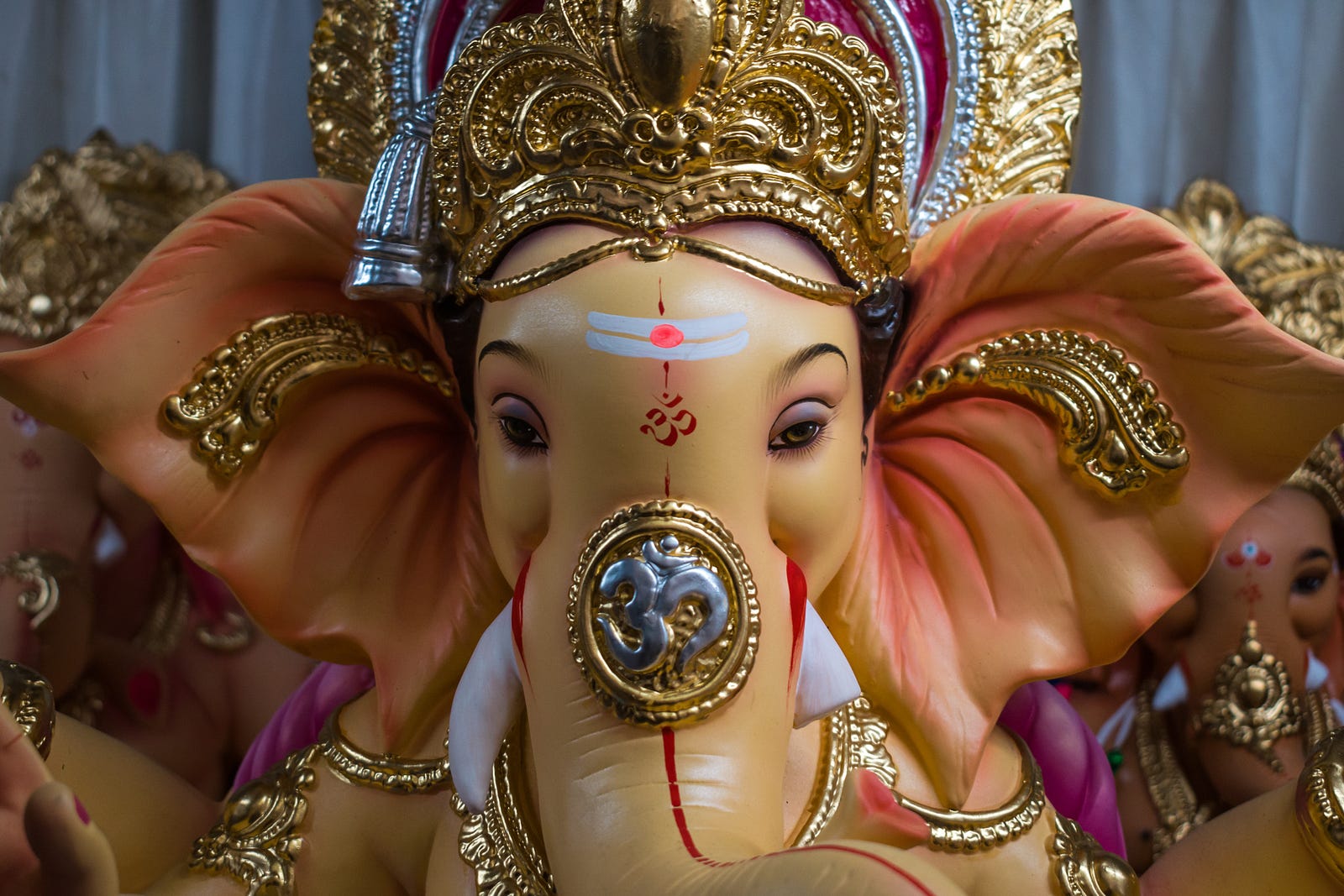
Ceramic sculpture of Lord Ganesha hiding among the shrubbery.

How perspectivism can make you a better thinker 

Storytelling is one of my favorite ways to communicate ideas. I remember stories more easily than I remember boring lectures.

Have you ever heard the story of the blind men and elephant?

The story goes like this: several blind men approach an elephant. The first man grabs the elephant’s trunk and thinks that it is a rope. The second touches the elephant’s leg and thinks it is a tree. A third blind man touches the elephant’s ear and thinks it is a blanket.

The story goes on like this. Each of the blind men has a piece of the truth, but none of them can see the whole elephant.

My elementary school librarian introduced me and my classmates to this story as a child in the form of the children’s book Seven Blind Mice by Ed Young. In the book, the role of the blind men is played by mice. I remember thinking about it a lot as a child.

I’ve heard several different versions of the story since then. I discovered through research that the story has its origins in the folk mythology of the ancient East. It was popularized in the West by John Godfrey Saxe, who called it “A Hindoo Fable.

The story is currently used by the Peace Corps to teach about cultural differences. It’s also a great story for teaching perspectivism.

What is epistemology?

Most Americans barely (if at all) even know what epistemology is, but it affects each of us in our daily lives in countless ways. For those who don’t know, epistemology is the branch of academic philosophy which deals with knowledge production.

Epistemology is what helps us distinguish the ideas we consider to be factual and true from the ideas that we consider to be subjective opinions. It helps us establish the “Overton Window,” the socially acceptable boundaries of the arena of public discourse.

Nietzsche and Eastern Philosophy

When I was going to college for philosophy and doing research on Friedrich Nietzsche, I found lots of evidence that his epistemology and ethics were influenced by Eastern thought.

I first read Thus Spoke Zarathustra when I was about twenty-two, and I found the spirit of the book to be too similar to stories from Hinduism and Buddhism to ignore. The protagonist of this book is named after Zoroaster, an Iranian prophet similar in character to many of the Buddhist Bodhisattvas.

In the story, Zarathustra speaks to a dwarf who I recognized as resembling Vamana, an incarnation of Vishnu, who is the preserver and balancer of the universe in Hindu mythology. Vamana made sense to me as the deliverer of information about eternal recurrence in Nietzsche’s mind, as Vishnu is the upholder of moral order and associated with time.

Another avatar of Vishnu, Krishna, declares himself in the Bhagavad Gita:

“I am mighty Time, the source of destruction that comes forth to annihilate the worlds.”  

Like the god Shiva, who is better known for being the the “destroyer” of the Hindu canon, Vishnu is often depicted with snakes, or nagas in Sanksrit. Shiva is usually depicted as holding a snake named Vasuki wrapped around his neck while Vishnu is often depicted as reclining on a snake named Shesha. Shesha represents the fabric of space and time in Hindu metaphysics. 

Snakes are associated with the eternal cycle of death and rebirth in Hinduism, and also in Western culture in the form of the Ouroboros symbol, the snake eating its own tail. I believe this mythology was part of the inspiration for Nietzsche’s eternal recurrence.

Perspectivist Epistemology 

When I was in my late twenties, I started doing further research about Nietzsche and Eastern philosophy, and I began to seriously consider the elephant story again.

Part of what separates Eastern perspectivism from Western Kantian epistemology is the idea that the noumenal world (the “real” world that is never fully knowable to us through empirical observation as the blind men in the elephant story) is at least partially knowable through introspection, like the kind encouraged by Eastern meditation practices. 

Arthur Schopenhauer, one of Nietzsche’s influences, made a similar argument.

I found that this story, while helping me to explain Nietzsche’s perspectivism, also provided an eloquent introduction to Eastern views on epistemology more generally. 

Western philosophy is more likely to tell you to look outside yourself for an answer to a philosophical question, while Eastern philosophy is more likely to tell you to look within yourself. While this might seem self-centered on the surface, in practice, it actually leads to greater empathy and understanding of opposing perspectives. 

When I looked at both Eastern Philosophy and Nietzsche’s ethics, I found mostly Virtue Ethics, which are basically just theories about how to be a good person. Virtue Ethics is also a theme throughout many stories about Eastern sages: they tend to be tales about the many different ways that there are to be a good person.

You can’t have ethics without epistemology, as it determines where you get and how you interpret the information on which you base your values. You can’t have epistemology without ethics, because your values inevitably guide your knowledge-seeking. I think that virtue ethics naturally follow from a perspectivist epistemology. 

Eastern Philosophy and Nazis

For Nietzsche, a misinterpretation of his perspectivist epistemology resulted in his ethics being misappropriated and warped by Nazis.

Nazis learned about Eastern philosophy from Nietzsche and from a Hindu woman named Savitri Devi. They used Nietzsche’s work as a vehicle to misappropriate and warp the principles of Eastern philosophy that Nietzsche admired. Some of these stolen ideas became part of Nazi philosophy and culture.

This was some of the most effective political propaganda ever created. Centuries earlier, European Colonialists used the same kind of ideological misinterpretations to exploit the Hindu caste system. Both this and the Nazi misinterpretations of Hindu ethics influence modern Hindu nationalism and Nazi occultism.

I think that the Nazis wanted to appropriate and smear Hinduism because Eastern asceticism, like fascism, preaches a disciplined lifestyle. The difference is that Hindu ascetic discipline comes from within, while fascist discipline is forced on a population by corrupt authority figures.

The Nazi misinterpretation of Hinduism is fundamentally a misinterpretation of what it means to be powerful. Nazis preached the power of the boot and the fist while Hinduism preaches the power of self-discipline and fearless compassion.

Smearing a symbol

Probably the most commonly known example of this philosophy mistake is the story of the swastika symbol. The symbol adopted by the National Socialist Party in 1918 originated as a Hindu symbol for peace. There are also many similar-looking symbols in other cultures.

The swastika is sometimes thought to be originally based on the swirling shape of galaxies in the cosmos, or on the shape of the movements of the sun in the sky. Because of the Nazi smear-job, the symbol seems to be permanently associated in the public consciousness with Adolf Hitler and the atrocities of the Nazi regime.

So why is epistemology important?

Mistakes like this are common throughout history in both philosophy and science, and they serve as ridiculous and terrifying examples of why the disciplines of philosophy and science need each other and always will.

Epistemology is a critical intersection of philosophy and science, because it’s the part of philosophy that convinces us that we should trust science in the first place, and whose science, and why. It’s also a critical intersection of philosophy and politics because it tells us which politicians we should trust and listen to, and when, and why.

When the consequences of a philosophy mistake are the facilitation of the literal Holocaust, it makes sense to pay attention to how that mistake was made and how to avoid that mistake and other mistakes like it in the future.

That’s what I’m aiming to do by telling you this story.

A horrible epistemology mistake led to the peaceful, compassionate philosophies of the East being misinterpreted by Westerners (and some Easterners) as the building blocks of literal fascism.

I want to show you how to avoid making the same kind of fatal mistakes in your own thinking, and how to correct them when they happen.

Elephant Epistemology

Another thing about elephants: it is said that they have excellent memories. It is said that they “never forget.” I’ve never forgotten the lesson of the elephant story.

Now, every time I think about my own epistemology, I start by thinking about the elephant. Since my perspective as a single human being is limited, I can only perceive one part of the elephant at a given moment.

When I begin pondering how much I know about something and why I know it, I keep in mind that the other perspectives on whatever I’m pondering are probably different. That doesn’t mean that what I’m seeing is right and what others are seeing is wrong or vice versa, just that I have to keep an open mind to the parts of the elephant that I can’t see.

The thing about life is this: just when you think you have it figured out, there’s always more to the story.

How to use Elephant Epistemology

By talking about the history and practice of epistemology in a more casual and less academic format, I’m hoping to get people interested in a way of seeing the world that will broaden their perspective and empower their ethics and decision-making.

The sad truth is that people mostly think about their own perspective and the perspective of those like them in most situations. That’s not the best way to get an accurate picture of what the world looks like.

The best way to do epistemology like an ancient Eastern sage is to gather your knowledge from a variety of viewpoints and to try to think from the perspective of each of those viewpoints.

It’s the old story of putting yourself in someone else’s shoes. The other person might be living, dead, or not even a person at all. Try thinking from the perspective of a plant or animal, for instance (maybe an elephant?). Then you’ll start to get a feel for the kind of epistemology that I think is effective for producing good knowledge.

Remember that, like the men in the story, your own perspective is always going to be limited to whatever part of the elephant is near to you. No one is omniscient (not even God, in my opinion), and learning is best approached with as much humility as you can muster.

A word from Lord Ganesha

In the ancient Hindu epic Mahabharata, the Hindu god Ganesh is creatively credited as the one who wrote down the tale as dictated to him by the Hindu sage Vyāsa.

The elephant-headed god Ganesh is depicted in the story as having written down the story with one of his tusks, which he removed and dipped in ink after the feather pen he was using broke during the dictation. This story highlights the importance of the elephant in Hindu culture as a symbol of the processes used to obtain knowledge and wisdom.

Ganesh is seen in the Hindu faith as the placer and remover of obstacles.

An important lesson from this story about Ganesh: when you are searching for the truth, you will always encounter obstacles. What’s really important is your ability to overcome these obstacles and adapt your thinking to your changing perspective on a changing world.

Keep the elephants of Hindu mythology in mind as you embark on your journey to find the truth.

A Surprising Number of Animals Are Returning from Extinction 

A white wolf standing in colorful fall leaves.

Earth’s biodiversity howls from beyond the grave

a white wolf staring into the camera against a backdrop of fall leaves
Photo by Steve on Pexels

As a resident of the planet Earth, I’ve been concerned about large numbers of animals and plants going extinct.

We are currently living through a mass extinction event. Scientists at the University of Zurich found that the current rates of animals and plants going extinct are between 100 and 1000 times greater than pre-human levels. They think that this discrepancy is largely caused by the actions of human beings.

This event is referred to by scientists as the Holocene extinction, Anthropocene extinction or Sixth mass extinction.

It’s been said before, but of course bears repeating: it seems like we should probably pay more attention to the effect that we are having on the environment as a species.

All this news of ecological destruction can be stressful. It’s a big, daunting problem, and it can be difficult to want to pay attention to it consistently because it’s so depressing. Fortunately, while I was looking into it, I found that there is also some better news on the horizon when it comes to Earth’s rapid loss of biodiversity.

While we might be losing some species, many other species are also making comebacks! Here’s a few examples of species that are rising from the grave.

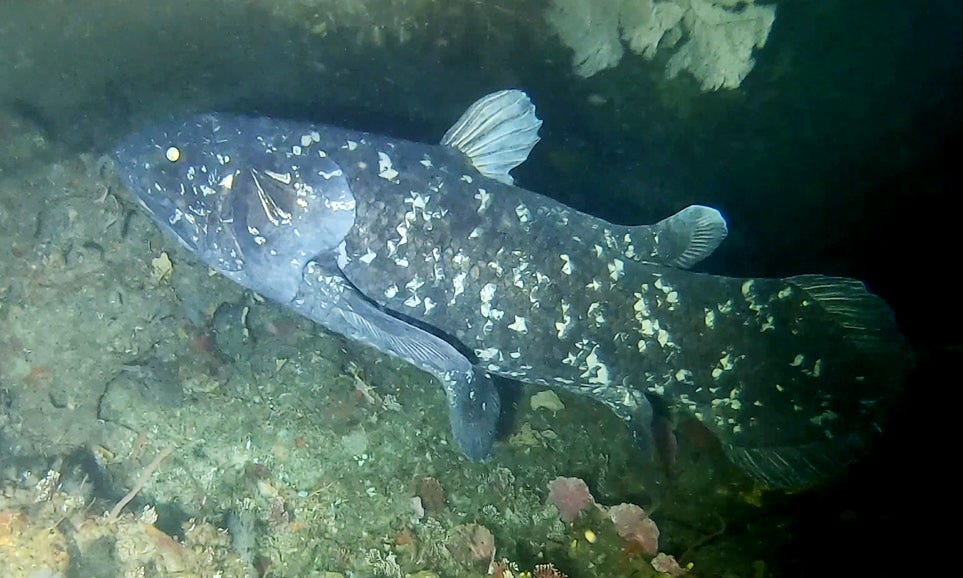
Coelacanth (Sarcopterygii)

Photo by Bruce Henderson on Wikimedia Commons

As a kid, I learned that these scaly fish were thought to be extinct for millions of years before a living specimen was captured in 1938.

Coelacanths are the animal that got me interested in cryptozoology. Cryptozoology is the study of animals that may or may not by mythical, like Bigfoot and the Loch Ness Monster.

Cryptozoologists are also interested in verified, real animals that once existed that may or may not be extinct today. Like conservationists, they often discuss species of animals that are currently threatened or endangered due to their small population.

Coelacanths changed the way that I view natural history as a whole. Learning about the return of this species made me skeptical of extinction claims made about any other species. They also made me less skeptical of scientific claims that cryptids are not always the stuff of legend and folklore. Some may be living animals currently unknown or little known to science!

Subscribe to continue reading

Become a paid subscriber to get access to the rest of this post and other exclusive content.

Why You Should Care About Carrie Buck

The story of a woman who fought compulsory sterilization

A pink and red drawing of a uterus against a white backgrond
Photo by Nadezhda Moryak

The US has been in an uproar since a Supreme Court draft overturning Roe v. Wade leaked a few weeks ago. Many American women and other people with uteri are terrified that our rights to bodily autonomy and reproductive freedom will soon be taken away.

Unfortunately, this doesn’t stop with Roe v. Wade. The Supreme Court has A LOT of power. Most people don’t realize how much. Roe v. Wade was born out of the Court’s interpretation of the “right to privacy” in The Constitution, and many other precedents based on this right could fall if the Court decides to start interpreting it differently, like the ones that make gay and interracial marriages legal, for starters.

The Roe v. Wade thing has caused a lot of ordinary people to start learning more about Supreme Court case law. I took a couple of classes about this exact thing not too long ago, and there’s a particular case that comes to mind when it comes to the Supreme Court and human rights that I think merits our attention at this moment.

This is the story of Carrie Buck, who brought a case to the Supreme Court in 1927 because she did not want to be forcibly sterilized after Clarence Garland, the nephew of her foster parents had raped and impregnated her.

Carrie’s biological mother, Emma Buck, had been committed to The Virginia Colony for Epileptics and the Feebleminded after having been abandoned by her husband, Frederick, and being thought to have contracted syphilis, along with being accused of prostitution and “immorality” (whatever that means).

This resulted in Buck being placed with foster parents John and Alice Dobbs.

After Buck became pregnant, her foster parents saw this as a sign that she was promiscuous, and therefore “feebleminded.” They had committed to the same Colony where her mother had lived. Her newborn daughter, Vivian, was taken away from her. Eight years later, Vivian later died of an intestinal infection after contracting measles.

Later, Buck was selected by Albert S. Priddy, a doctor at the Colony, to test the constitutionality of Virginia’s new compulsory sterilization law. She was chosen based on the fact that both her, her mother, and her daughter were thought to be “feebleminded,” suggesting that “feeblemindedness” was genetic.

One thing that I think is interesting about this case is that Irving P. Whitehead, the attorney representing Buck, was himself a known eugenicist, and was also friends with Albert Priddy. It would seem that Buck had no real defense in this case– the prosecution and the defense were in bed together, and were intentionally using Buck to legitimize the eugenics laws that they both supported.

The Court ruled in an eight-to-one decision that Virginia’s sterilization law was constitutional, and Buck was sterilized.

In the Court’s opinion, Justice Oliver Wendell Holmes Jr. famously stated:

“Three generations of imbeciles is enough.”

Buck’s sister Doris was also sterilized without her knowledge or consent when she was in the hospital with appendicitis. She did not discover until much later that she was unable to have children.

Buck was released from the Colony after her sterilization, and she married William D. Eagle, a 65-year-old widower. After he died, she married Charlie Detamore, an orchard worker.

Various researchers and reporters visited and spoke to Buck later in her life. They reported that she was, in fact, of normal intelligence. Buck’s daughter Vivian was also of normal intelligence, according to her primary school report cards. However, this did not stop modern media from continuing to portray buck as intellectually disabled. In the film Against Her Will: The Carrie Buck Story, Marlee Matlin plays a fictional version of Buck who is still “feebleminded.”

At this time in US history, forced sterilization was not at all uncommon. It mostly happened to women, particularly Black and brown women. It often happened to the neurodivergent, the mentally ill, petty criminals, and sex workers. It almost always happened to the low-income.

Eugenics laws that were enacted starting in 1907 made this legal. While many of these laws are no longer on the books, forced sterilization is still technically allowed by the highest court in our nation, as Buck v. Bell has never been overturned. Carrie Buck matters because her case sets the current legal precedent for forced sterilization in the US. This means that, theoretically, none of us are safe from forced sterilization, even in this day and age.

The history of forced sterilization in the United States is horrifying. It’s also overwhelmingly sexist, racist, ableist, and classist. Here are some stomach-churning facts to give you an idea of how serious this has been:

We like to think of forced sterilization as something that no longer happens in the United States. Unfortunately, that is not true, and in a world where civil and human rights related to bodily autonomy are currently being eroded, we should be very, very concerned about this.

It’s happened as recently as 2018, to Summer Creel, who was told by a judge that she would receive a reduced sentence if she underwent the procedure.

California prisons have illegally sterilized women without informed consent as recently as 2010. Between 2006 and 2010, 148 women were given tubal ligations without approval from the health care board that exists in order to prevent coercion and abuse. Many women reported feeling bullied into the procedure or being misinformed about it.

In 2020, a whistleblower reported that Dr. Mahendra Ami, now referred to as the “Uterus Collector” had performed at least 20 hysterectomies on women in immigrant detention without their consent. Many of these women did not speak English well and did not understand what was going to be done to them, or what had been done to them.

Even wealthy and privileged Americans are still at risk– while we don’t use the term “feebleminded” anymore, once one has been placed into that category by a modern court, it is easy to lose one’s civil and human rights. Look at the case of Britney Spears’ abusive conservatorship as an example. Spears said that she was forbidden from removing her IUD while under the conservatorship. Even extremely powerful women like Spears can be placed in situations where their reproductive rights are restricted.

Reproductive freedom is an issue that should unite everyone– not just the disabled, not just the mentally ill, not just the poor, not just the BIPOC, and not just women. While forced sterilization has largely affected people with uteri, your vas deferens are not safe either! If you care about reproductive rights, now is a great time to pay attention.


Originally published on medium.com on May 28th, 2022. 

The Overwhelmingly Vast Majority of Hindus Are Not Nazis 


Stop confusing the two!

very pretty statue of lord ganesha
Photo by Sonika Agarwal

Explaining my religion is complicated. I was raised Wiccan or Neo-Pagan, and my family on that side is mostly Catholic. My family on the other side is mostly Protestant. I am a practicing Hindu. 

I came to be a practicing Hindu, not through simply deciding to be a Hindu, but by pursuing religion and spirituality in an abstract way, which led me, ultimately, to religious beliefs and practices that were consistent with Hinduism. I explored the world, I explored different spiritual practices, and I ended up repeating the ones that worked for me the best. Gradually, I found myself doing things like chanting traditional Hindu mantras and praying to Hindu Gods, and I began to identify as a Hindu. 

My current religious practices are a mix of how I was raised, Neo-Pagan practices, and the religion that I found on my own spiritual path as an adult, Hinduism. My Hindu practices are mostly consistent with a branch of Hinduism called Shaivism, and with a branch of Buddhism called Vajrayana Buddhism. I learned from research, after adopting many of my current practices, that my Buddhist practices have pretty obvious roots in ancient Vedic Hinduism. I’m also into Chaos Magic, but I don’t think that’s inconsistent with any of my other beliefs.  

I went on a quest to learn about the religion that I had found I was already practicing, because I wanted to engage with it more fully with on a spiritual level. On my quest, I did a bunch of research about Hinduism. I found it to be strangely associated with Nazism, largely through the influence of the philosopher Friedrich Nietzsche on a woman named Savitri Devi and Devi’s influence on Hitler and the the Third Reich. 

I no longer buy the narrative that Devi was Hitler’s Nazi priestess or the idea that that Nazism has any real roots in Hinduism. Nazism is built, in part, on horrific misinterpretations of Hindu philosophy, which honors the cycle of death and rebirth and the unique roles that living beings play during their time on the planet Earth. 

My theory is that Devi was basically Hitler’s hostage, and that her real beliefs about the world were twisted by Hitler to fit his Nazi ideology. Either that, or she became confused, as Nietzsche had been when learning about Eastern philosophy through the influence of the philosopher Arthur Schopenhauer. Schopenhauer studied Eastern philosophy, and one of his main takeaways was an Eastern interpretation of the concept of compassion. 

Compassion in Eastern traditions is a kind of compassion that more deeply understands the experience and mindset of the individual who is not oneself. Compassion in Western traditions is often associated with submissiveness and cowardice, and not honored or explained in quite the same way as it is in Eastern traditions, except maybe, through Western religions, sometimes. There are similar concepts of compassion and peace in Christianity, for example. 

Devi and Hitler, like many Hindus, were vegetarians. It would seem that they had some kind of compassion for the natural world. And yet, Hitler’s regime led to the torture and slaughter of millions of people.

This isn’t the kind of thing that my Hindu or Buddhist practices advocate for, and the confusion of the two, in my opinion, should be included in the list of Nazi crimes against humanity, as this kind of cultural erasure is, in itself, an act of genocide. The swastika, for example, which is important in Hinduism and also exists in many other cultures, has now come to globally symbolize Nazi philosophy. 

Hinduism, and the many Eastern faiths that have been spawned by its ancient Vedic roots overwhelmingly focus on practices of peace, nonviolence and self-discipline. Philosophically, they tend to focus on the importance of cultivating of love, compassion and understanding for all living beings on Earth. 

The self-discipline and personal growth aspects of the Hindu faith, I think, are where the Nazis began twisting Hindu philosophy to fit their nefarious ends. One theme in Hinduism is repetition, like the repetition of mantras and certain tasks. This kind of repetition leads to the kind of mastery of different skills or disciplines that would be valued in Nazi philosophy. This kind of repetition in the natural world leads to literal evolution. Practice might not make “perfect,” as they say, but you can’t deny that you usually get better at something if you do it a bunch of times. 

Evolution, I think is what the Nazis were attempting to force with their torture and killing of millions of people. I don’t think that their propaganda and ideology, which attempted to convince the world that huge populations of people were worthy of indiscriminate punishment based on their immutable physical characteristics or social classes alone, expressed their true goals. Their true goal was to place stress on humanity and to traumatize it in such an irrevocable way that it would be forced to evolve in a new direction. The cruelty itself was the point. 

If the Nazi goal was to create a version of humanity that was objectively better, I don’t think the path they chose to get there was effective. Humans, because of our powers of self-reflection and our ability to plan for the future, are different from the vast majority of living beings on this planet. Because of our differences we wield immense power. Massively traumatizing us, as through war, will not necessarily cause the kind of evolution we want. Sometimes trauma causes growth in people, but much more often it makes them terribly ill. 

War has made us sick as a species, and further traumatizing us through further wars will not force us to evolve fast enough to save ourselves from ourselves. We need to find a different approach to reigning in the chaos of humanity. War is everywhere. It’s even in the streets of my hometown, and it could always come to the streets of yours. 

We will not solve the world’s problems by torturing the populace. Every act of torture is an experiment, and every failed experiment runs the risk of becoming an act of terror or a horrific crime against humanity. Torturing people might make them stronger or more compassionate sometimes, but it’s a high stakes gamble. That’s not a bet that I’m willing to take for the sake of creating a better or stronger humanity. It doesn’t seem like it will work! 

People often get confused and think I’m a Nazi because I’m talking about Hinduism, or about Nietzsche or Schopenhauer or because they see the Hindu symbols tattooed on my body. I’m not really offended by this misunderstanding because I understand where it comes from, but I think it’s a shame that Westerners are being deprived of the wisdom that my religion and other religions like it have to offer by these unfair negative cultural associations between Hinduism and Nazism. 

Colonization in the East by the West began in ancient times and the warping of these traditions by the West has continued since then. It’s almost like the power of real, authentic love and compassion that is behind these traditions is too much power for the colonial West to allow anyone to hold besides itself. 

For the record: Hindus are not Nazis. 

We are mostly peaceful, and we often even take our peacefulness to extremes. I’m an extremist in some ways, and I know that means I won’t always get along with everyone. But I’d rather be an extremist for love, compassion, and peace than an extremist for hatred, bigotry, and war, and I just want to make sure that everyone knows which one I am. 

You Can Survive Anything


And you should

mountain towering over ocean, cloudy grey sky
Photo by Yuriy Rzhemovskiy

On January 15th, 1915, Endurance became frozen in an Antarctic ice floe. By February, expedition leader Ernest Shackleton realized the ship would be trapped until spring. He ordered that the ship’s normal routine be abandoned, and for his men to prepare to hunker down for the remaining months.

The ship was not free by spring. By October, it had begun to sink, finally sliding entirely beneath the surface on the 21st of November.

For two months, Shackleton’s men lived on a large, flat, floe of ice; hoping that it would drift towards nearby Paulet Island, 250 miles away. The crew ate the blubber from seals they killed and did their best to guard their digits against frostbite. They eventually moved to another floe after failed attempts to march across the first towards the island.

By the 17th of March, 1916, the new “Patience Camp” had drifted within 50 miles of the island, and on the 9th of April, the men attempted to reach it in lifeboats. Five days later, after 497 total days living on ice and at sea, the men landed their three lifeboats on Elephant Island, 346 miles from where the Endurance sank months before.

Since Elephant Island was far from any shipping routes, and rescue was unlikely, Shackleton planned another expedition in the James Caird, the most seaworthy of the 20-foot lifeboats. Shackleton knew that if he and his five chosen companions did not reach South Georgia within four weeks, the rest of the crew would be lost, so he refused to pack supplies for any longer than that amount of time.

After fifteen days of sailing and hurricane-force winds, the crew finally landed on an unoccupied southern shore. Their journey continued as Shackleton, Frank Worsely and Tom Crean crossed 32 miles of unforgiving terrain, armed with only boots into which they had pushed screws, carpenter’s adzes, and 50 feet of rope for scaling the icy mountains.

36 grueling hours later, the men reached the whaling station at Stromness, securing rescue for everyone. 24 of the 27 men in the original crew survived the long ordeal.

While many things about this story are astounding, the fact that stands out to me the most is that Shackleton planned another expedition to Antarctica later in life, still brave enough to return after his previous nightmarish experience.

Some of the former crew of Endurance even signed up to go back with their former boss. I couldn’t believe it when I read this; after all that, how could they go back?


It’s true that you never really know how strong you are until being strong is your only choice. This situation is something to be embraced, not feared.

I remember something a friend said to me once, while we were both being paid minimum wage to shovel manure for ten hours a day.

“It builds character.”

At the time, the phrase was just a little comic relief in an unpleasant moment, but in retrospect, I can see how wise it was.

I had the good fortune of first reading about Shackleton while I was doing another job involving intense labor in tough conditions. A youth crew building and maintaining wilderness trails, we camped at a high elevation near Crater Lake. It was unusually cold for autumn, and it soon began to snow and hail.

While shivering in my sleeping bag in a drafty tent after a day of hauling gravel uphill in a wheelbarrow, I thumbed through the pages of Endurance, Alfred Lansing’s account of Shackleton’s journey. Reading the story with numb fingers by the light of my headlamp, I felt grateful. “At least I still have my fingers,” I thought. “And my lamp is battery-powered!”


Life will always contain suffering, and suffering will always be relative. You might find, as I have, that your own suffering seems smaller to you the longer you spend out in the cold. If you focus on surviving, you might find that you begin to drift towards safer shores.

It’s easy to be afraid of what might happen in the future or to worry that you can’t handle what is happening right now. It’s important to realize that this kind of ruminating does nothing to help us. We’re better off kindling a fire and getting ready to roast whatever kind of seal blubber happens to be on the menu today.

You don’t have to be an explorer to know that being a human is terrifying, and it always will be– but it’s not all bad.

Yeah, you might end up losing a toe to frostbite, but you’ll probably also have some great stories to tell. There might not be many uncharted lands left on this planet, but life is still an adventure. Treat it like one.

Take a deep breath, stand up straight, and sail your ship straight into the frozen wilderness of life.

It builds character. You might even decide to go back for seconds.


Originally published on medium.com on August 20th, 2019. 

The One Million Dollar Elk


Is my hometown f*ing serious?

Thompson Elk Statue 2006 | Photo: Wikimedia Commons
Thompson Elk Statue circa 2006, Photo: Wikimedia Commons

Oregon Public Broadcasting reports that 1.5 million dollars has been designated to replace the historic David P. Thompson elk statute downtown. 

I remember growing up with the elk statue! It’s near the college campus where I lived with my Mom when I was small. I was also a witness to the destruction of the elk statue over the past three years. Protestors really did some crazy stuff to mess up that elk, let me tell you. 

Here’s a photograph I took at a protest in May 2020: in this photo protestors are roasting pig’s heads over an open fire that they lit on the stone base of the statue. 

pigs heads being roasted on elk statue base with “fuck 12” graffiti and “black lives over capitalism” sign
Photo courtesy of author

Do we need a new elk?

While I loved the elk statue, and it made me sad to see it get totally destroyed, I understood the anger of the people who were doing it, and why they felt that destroying a piece of property might be an acceptable way to express that anger. 

Personally, I’m not really big on the “tear down statues” method of protesting. I get why it happens, but something like an elk (it’s an animal, dude) seems pretty benign to me. The elk was pretty to look at, and I’m pretty sure that the local elk population isn’t guilty of anything bad. 

It didn’t seem fair to me that the elk face the wrath of the protestor’s anger when it wasn’t really the elk’s fault or the fault of the artist who made the elk. 

I’m not opposed to replacing the elk. I kind of miss it. But one million dollars seems like a lot of money for an elk statue. Money that could be going to say, things like helping the homeless get off the street or deal with their drug addictions and mental illness. 

Or maybe the money could go to pushing for the kind of criminal justice reform which is needed in order to prevent the kind of misplaced rage in the populace which caused the destruction of the elk in the first place. 

Remember the tram? 

The one point five million approved for the elk reminds me of when the OHSU aerial tram was built in Portland. Essentially, the tram is a giant and terrifying way for the local hospital to give people more access to parking. 

The tram cost A LOT of money, and it didn’t really have the full support of the community. It was marketed as something that would It was marketed as something that would look good as a part of the Portland skyline. But not everyone was into it. 

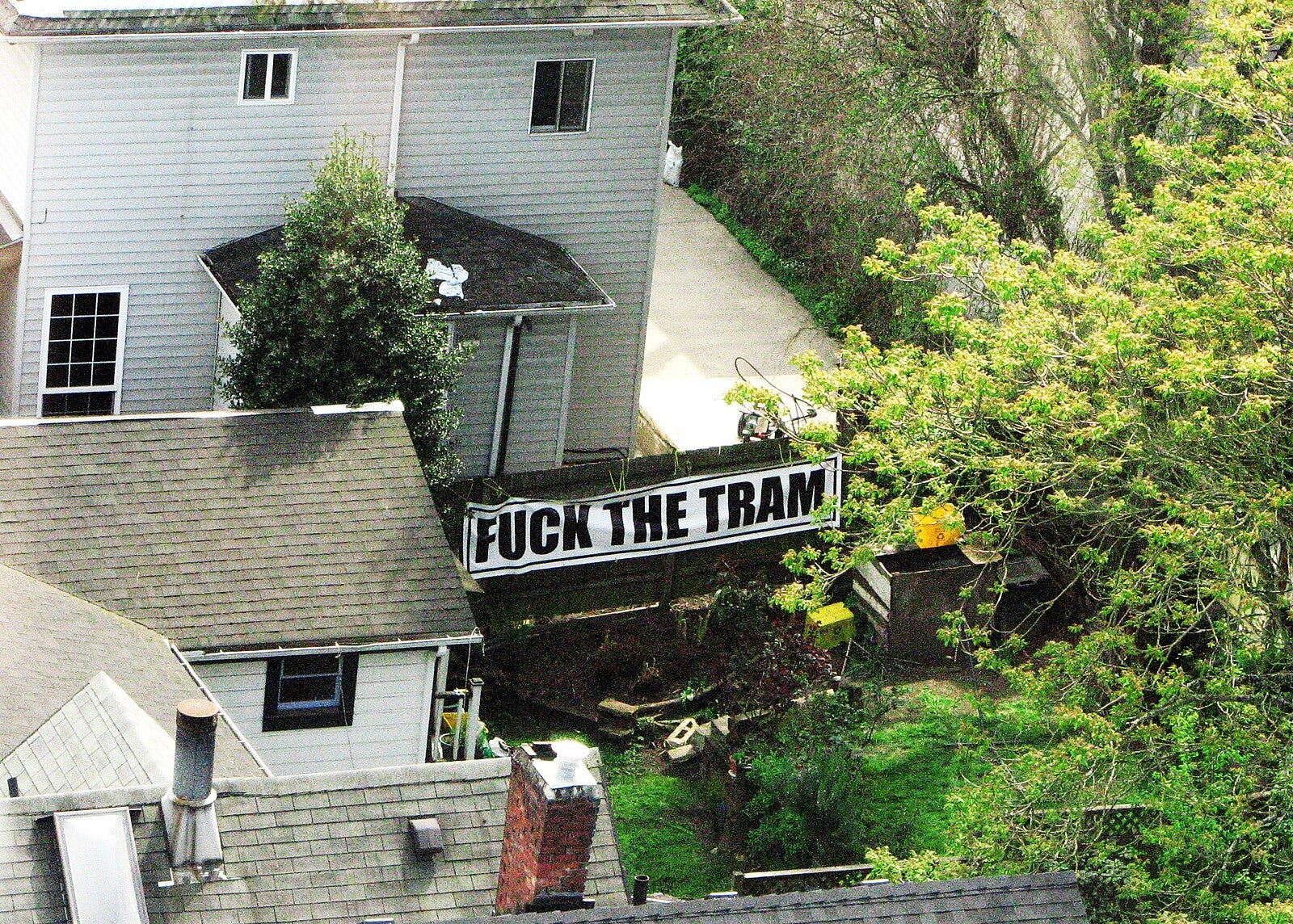
People who live underneath the tram even went as far as to put up a sign that said “Fuck the Tram.” They felt that it encroached upon their privacy and other rights. 

large sign on fence which reads “FUCK THE TRAM”
Photo: Wikimedia Commons

Is the elk another tram?

As OPB reports, ten years after the tram’s construction, the tram costs millions of dollars, much of which came straight out of the pockets of local taxpayers. It was controversial at the time of its construction and remains so today. 

“Accusations of mismanagement and subterfuge flew,” writes OPB’s Randy Gragg of the funds used to build the tram. The people who designed and built the tram ended up going way over budget. Gragg also notes that the affordable housing in the south Waterfront neighborhood went unfinished as the tram was finished. 

Is the new elk statute another expensive and ridiculous boondoggle put in place by the leaders of the city of Portland to make it seem like everything is going well when it isn’t? 

Wouldn’t the money be better spent feeding the homeless?

The Ship of Theseus and Human Identity


Are you still the same person you were yesterday?

old shipwreck washed up on a beach with people looking at it
Photo by Vasiliki Volkova

The mythical hero and founder king of Athens, Theseus, sailed into battle on a famous ship. Legend has it that the ship, displayed in a museum, began to rot and gradually had its pieces replaced.

The Ship of Theseus is a philosophical thought experiment that can help us to understand the metaphysics of identity. The basic question that it raises is if an object which has had all of its fundamental components replaced is still the same object.

With all of its original pieces replaced, is the Ship of Theseus still fundamentally the same ship?

This idea has interesting and uncomfortable implications when applied to our theories about the human mind and body.

For example: would you dare to step into a Star Trek transporter? If your atoms were disassembled by a tractor beam, would it be the same person reassembled on the other side? Could you tell the difference? Does it matter?

In an age when science fiction seems to be transforming into science fact at an alarming rate, we can’t help but begin to wonder about things like the continuity of consciousness.

Futurists imagine a world where human beings might attain a state approaching functional immortality through the use of technology. Some theorize about a technological singularity, in which the human race fuses with and becomes indistinguishable from our technology.

One day, will we be able to upload our own consciousness into clones of ourselves, or artificial bodies with a much later expiration date than our flimsy human ones? If we were able to do something like this, would we still be human? Would still be ourselves? Does this idea of ourselves even hold water?

These ideas are explored in many places in modern media, particularly in works of science fiction.

In the 2015 film Advantageous, a mother considers transferring her mind into a younger body in order to serve as the spokesperson for a corporation offering this service.

In L. Frank Baum’s turn-of-the-century novel The Wonderful Wizard of Oz, the Tin Woodsman’s origin story remembers him as a human who had all of his limbs gradually replaced with tin. The question of whether he is still the same man, Nick Chopper, is a running joke throughout the story.

The Tin Man eventually meets another version of himself, created from his discarded flesh. Which one is the real Nick Chopper?

In the 1999 film Bicentennial Man, we watch a robot slowly transition towards humanity through the slow replacement of his parts, much like the Ship of Theseus. Robin William’s leading character, Andrew and the Tin Man share a similar problem: if they only had a brain!

Stories like these hint at the idea that the brain– particularly the prefrontal cortex– might be part of what makes us human.


There are many proposed solutions to the Ship of Theseus problem, and how we decide to answer this question says lot about how we see ourselves, our lives, and our future.

Here are a few possible answers:

No identity over time

This theory suggests that there is no continuous “ship” which exists across time, but rather that the ship in each instant is a separate ship, an event existing only for that moment. Do you see yourself this way, a different being from moment to moment?

Continual identity over time via final cause

The Ship of Theseus had a purpose, after all; transporting the hero into battle. This purpose is the ship’s final cause.

Aristotle had the idea that there were four causes or reasons for a thing to be:

The formal cause is the design of the thing, like the ship’s shape, or the way the bones of your skeleton hang together.

The material cause is the type of matter the thing is made of, like the ship’s wood, or the cells of your body.

The efficient or moving cause is the agent that changes the thing, like the passage of time rotting the ship’s wood, or the experiences of your life, shaping your character.

The final cause is the intended purpose of a thing or the mystical possibility of an oak tree that lurks inside of an acorn. This final cause is the essence and identity of the ship, its reason for existing in the first place.

You might relate the final cause of the ship to the meaning of your own life, your telos, your ultimate aim. This way of solving the problem suggests that the ship is the same ship, as a function of its intended purpose.

Gradual loss of identity

This theory suggests that perhaps the ship was once the same ship, but stopped being that ship as it began to decompose.

If our identity is a function of our purpose, what happens when that purpose is unclear? Are we still ourselves if we aren’t serving the same purpose that we once were? If the parts of ourselves which once made us ourselves are gradually replaced, have we lost the essence of who we are?

There is no ship

Conceptualism argues that the ship is just a concept we invented. The new ship and the old ship are separate concepts. They must not be the same ships, then. Otherwise, how would we compare these ideas?

You can think about yourself this way, too. One could similarly argue that you are just a concept that you invented. There is no “you” only your ideas about who and what “you” are.

So, what is the ship?

Nobody actually knows.

How do you choose to view your identity?

Are you a fleeting part of the “now,” existing only within this moment until you become something else in the next moment?

Are you a function of your purpose, an instrument of the reason why you exist or the ideas by which you choose to live?

Are you a gradually degrading being, becoming less and less you as you age and your concept of yourself becomes fuzzier?

Do you have an identity at all? Do any of us? Are we all “special, unique snowflakes” or “all part of the same compost heap?”

What are you?

We’re moving into a future where our ideas about our identity and our humanness are becoming more important. These questions are no longer just abstract food for thought to ponder in the moments when we feel ideologically confused.

The time is coming when we’ll have to make tangible, materialistic ethical decisions related to the abstract concepts of our selves, our identity, and our humanness. We’ll have to decide which choices we’ll make when it comes to the ethics of our technology and our conscious evolution as a species.

What will the future of humanity look like based on those choices?

Regardless of what happens with clones, cyborgs, AI, data clouds, or anything in the science-future of the world, we also have to consider our perspective on this when we make decisions in our daily lives.

Our beliefs and our behavior are closely tied to our identities. Our ideas about who, what, and why we are influencing how we live our lives and how we will feel about the choices we make.

Who are you?

Why are you?

What makes you, you?

Think about it.


Originally published on medium.com on October 29th, 2019. 

The United States of America is Basically Doing the Holocaust

We should probably stop.

a series of grey boxes

Photo by Michael Fousert

During the Holocaust, specific groups of people became the target of propaganda and violence that was coordinated by the state. These groups included ethnic, cultural and social groups such as Jews, Catholics, Freemasons, gay people, trans people, disabled people, and sex workers.

People belonging to these groups became the targets of propaganda campaigns designed to destroy their reputations– but more importantly, to destroy their credibility. An important feature of the Holocaust was the culture of secrecy and the destruction of historical records. Because we do not, collectively, remember our history in a meaningful way, in a way which allows us to fully comprehend the horrors that human beings are capable of, we are continuing to perpetrate these horrors.

The philosopher Hannah Arendt wrote about how totalitarian governments created societies of people who were lonely; not just physically lonely, physically isolated, but spiritually isolated from one another. During World War II, Nazis used propaganda and violent threats to create a culture in which speaking the truth was punishable by social isolation, shaming, unjust incarceration, and physical torture. They created a world in which human beings were incapable of having real intimacy with one another because they were no longer able to express to each other the truth of their experiences. This weakened the social and familial bonds between people, which made them easier to control.

This kind of spiritual loneliness, according to Arendt, is what created the perfect conditions for governments to control the minds of their citizens. Unable to find real human connection under conditions where it was impossible to tell the truth, human beings sought comfort elsewhere — from the authority figures who became stand-ins for the real human relationships which could no longer exist. They became loyal to an amorphous, faceless authority instead of to one another. Even people who lived in the same house, worked at the same jobs or attended the same schools could no longer truly relate to one another. People became passionately terrified of one another. There was a culture of paranoia.

Fear is the seed of hatred. By causing immense fear, by torturing the populace en masse by making everyone afraid all the time, not just of the state, but of each other, Nazis made people more willing to participate in their atrocities. They created a world in which human beings were willing to harm the ones they loved the most in order to avoid pain. In which they were forced to denounce their most deeply held beliefs at the barrels of guns. In which they informed on and turned in their loved ones. In which they were coerced into implicating themselves and other innocent people in kangaroo courts in which facts and evidence didn’t matter. In which people were so confused, so tortured, that they no longer trusted their own memories or senses.

During the Holocaust, it was not just agents of the governments who committed atrocities, it was everyone. Every single person who participated was, to varying degrees, culpable. And yet, when the criminals were tried, a select few were disproportionately punished for crimes which were participated in, condoned, and concealed by nearly everyone. These people became the scapegoats for the crimes of everyone else. Perhaps collectively, as a species, after such an event, we believed that using these people as sacrifices would absolve the rest of us of our guilt.

But guilt doesn’t work that way. Morality doesn’t work that way. Human psychology doesn’t work that way. The world doesn’t work that way. When people commit atrocities, if they witness atrocities, even if they are forced to say, even, for a time, forced to believe that the atrocities didn’t happen, some part of them will still remember. And then, regardless of whether or not they are held accountable by the laws of any state, people will punish themselves, and each other, regardless of how much anyone involved deserves any of it. 

The collective guilt that resulted after the Holocaust led thousands of people to commit suicide and countless others to be left with permanent mental and spiritual scars that would never heal and would be passed down from generation to generation. The intergenerational trauma from the Holocaust and other genocides have left intergenerational traumas that fuel a cycle of hatred and fear and perpetuate unnecessary suffering across the planet.

The government and people of the country in which I live are perpetuating these same crimes, right now, as I speak. The government of my country perpetrates horrific crimes against humanity on what seems to be a perpetual basis, both at home and abroad.

In the country where I live, right now, as I speak, people are being locked away without due process and being treated in horrifying and inhumane ways while in captivity. They are being separated from their parents, children, brothers, and sisters. They are being denied medical treatment when they are sick. They are being asked to defend themselves at hearings in languages that they do not understand without representation by attorneys. People are being raped and sexually abused by government officials who are not held accountable for their actions. People are having their body parts, such as their reproductive organs, removed without their informed consent.

My country murders civilians en masse in foreign countries in order to maintain its control over global markets and natural resources. It relentlessly persecutes, tortures, and executes citizens who speak out against its atrocities.

During World War II, people with both immutable physical characteristics or religious, cultural and social associations like mine were tortured and murdered. Historically, the peaceful values of both my ancestral culture and both the religion in which I was raised and the one I currently practice were warped and distorted by state governments for propaganda of fear-mongering, hate-mongering, and social control.

During my lifetime, I have personally been subjected to treatment which constitutes torture and crimes against humanity. I know many other people belonging to the both the same and other cultural, religious, and social groups and as me who have been subjected to the same. My local, state and federal governments have condoned this treatment and failed to hold the perpetrators accountable. I have been subjected to this treatment, not, in fact, because of the groups that I belong to, but because I reported the atrocities that I witnessed and experienced and because I fought back. The same is true for many others around me, regardless of race, religion, culture, and the like.

It does not matter what ethnic, religious, social, or cultural group you belong to. During the reign of a totalitarian government, any person is potentially a member of a group that was referred to by Nazis during the Holocaust as “untermenschen,” or “subhumans.” This group still exists today, under the totalitarian government under which I live. Absolutely anyone can be labeled a member of this group, and absolutely anyone is a potential target.

Dear America — your human sacrifices do not absolve you of your crimes, and they will not absolve you of your guilt.

No matter who you are, one day you too, could one day be treated as “subhuman.” And also, no matter who you are, one day, you too could be the person who treats someone else that way. You might even be doing it right now. And if the propaganda and mind control that is inflicted on you every single day of your life has succeeded in breaking your consciousness to the point where you can no longer see the truth when it’s right in front of you — you might not even be aware of it. But you will be one day. And it’s gonna hurt.