Why You Should Care About Carrie Buck

The story of a woman who fought compulsory sterilization
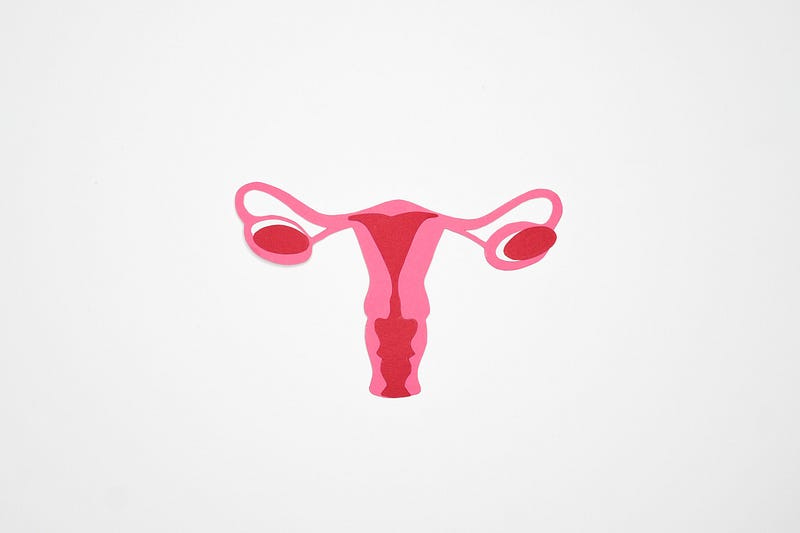
A pink and red drawing of a uterus against a white backgrond
Photo by Nadezhda Moryak

The US has been in an uproar since a Supreme Court draft overturning Roe v. Wade leaked a few weeks ago. Many American women and other people with uteri are terrified that our rights to bodily autonomy and reproductive freedom will soon be taken away.

Unfortunately, this doesn’t stop with Roe v. Wade. The Supreme Court has A LOT of power. Most people don’t realize how much. Roe v. Wade was born out of the Court’s interpretation of the “right to privacy” in The Constitution, and many other precedents based on this right could fall if the Court decides to start interpreting it differently, like the ones that make gay and interracial marriages legal, for starters.

The Roe v. Wade thing has caused a lot of ordinary people to start learning more about Supreme Court case law. I took a couple of classes about this exact thing not too long ago, and there’s a particular case that comes to mind when it comes to the Supreme Court and human rights that I think merits our attention at this moment.

This is the story of Carrie Buck, who brought a case to the Supreme Court in 1927 because she did not want to be forcibly sterilized after Clarence Garland, the nephew of her foster parents had raped and impregnated her.

Carrie’s biological mother, Emma Buck, had been committed to The Virginia Colony for Epileptics and the Feebleminded after having been abandoned by her husband, Frederick, and being thought to have contracted syphilis, along with being accused of prostitution and “immorality” (whatever that means).

This resulted in Buck being placed with foster parents John and Alice Dobbs.

After Buck became pregnant, her foster parents saw this as a sign that she was promiscuous, and therefore “feebleminded.” They had committed to the same Colony where her mother had lived. Her newborn daughter, Vivian, was taken away from her. Eight years later, Vivian later died of an intestinal infection after contracting measles.

Later, Buck was selected by Albert S. Priddy, a doctor at the Colony, to test the constitutionality of Virginia’s new compulsory sterilization law. She was chosen based on the fact that both her, her mother, and her daughter were thought to be “feebleminded,” suggesting that “feeblemindedness” was genetic.

One thing that I think is interesting about this case is that Irving P. Whitehead, the attorney representing Buck, was himself a known eugenicist, and was also friends with Albert Priddy. It would seem that Buck had no real defense in this case– the prosecution and the defense were in bed together, and were intentionally using Buck to legitimize the eugenics laws that they both supported.

The Court ruled in an eight-to-one decision that Virginia’s sterilization law was constitutional, and Buck was sterilized.

In the Court’s opinion, Justice Oliver Wendell Holmes Jr. famously stated:

“Three generations of imbeciles is enough.”

Buck’s sister Doris was also sterilized without her knowledge or consent when she was in the hospital with appendicitis. She did not discover until much later that she was unable to have children.

Buck was released from the Colony after her sterilization, and she married William D. Eagle, a 65-year-old widower. After he died, she married Charlie Detamore, an orchard worker.

Various researchers and reporters visited and spoke to Buck later in her life. They reported that she was, in fact, of normal intelligence. Buck’s daughter Vivian was also of normal intelligence, according to her primary school report cards. However, this did not stop modern media from continuing to portray buck as intellectually disabled. In the film Against Her Will: The Carrie Buck Story, Marlee Matlin plays a fictional version of Buck who is still “feebleminded.”

At this time in US history, forced sterilization was not at all uncommon. It mostly happened to women, particularly Black and brown women. It often happened to the neurodivergent, the mentally ill, petty criminals, and sex workers. It almost always happened to the low-income.

Eugenics laws that were enacted starting in 1907 made this legal. While many of these laws are no longer on the books, forced sterilization is still technically allowed by the highest court in our nation, as Buck v. Bell has never been overturned. Carrie Buck matters because her case sets the current legal precedent for forced sterilization in the US. This means that, theoretically, none of us are safe from forced sterilization, even in this day and age.

The history of forced sterilization in the United States is horrifying. It’s also overwhelmingly sexist, racist, ableist, and classist. Here are some stomach-churning facts to give you an idea of how serious this has been:

We like to think of forced sterilization as something that no longer happens in the United States. Unfortunately, that is not true, and in a world where civil and human rights related to bodily autonomy are currently being eroded, we should be very, very concerned about this.

It’s happened as recently as 2018, to Summer Creel, who was told by a judge that she would receive a reduced sentence if she underwent the procedure.

California prisons have illegally sterilized women without informed consent as recently as 2010. Between 2006 and 2010, 148 women were given tubal ligations without approval from the health care board that exists in order to prevent coercion and abuse. Many women reported feeling bullied into the procedure or being misinformed about it.

In 2020, a whistleblower reported that Dr. Mahendra Ami, now referred to as the “Uterus Collector” had performed at least 20 hysterectomies on women in immigrant detention without their consent. Many of these women did not speak English well and did not understand what was going to be done to them, or what had been done to them.

Even wealthy and privileged Americans are still at risk– while we don’t use the term “feebleminded” anymore, once one has been placed into that category by a modern court, it is easy to lose one’s civil and human rights. Look at the case of Britney Spears’ abusive conservatorship as an example. Spears said that she was forbidden from removing her IUD while under the conservatorship. Even extremely powerful women like Spears can be placed in situations where their reproductive rights are restricted.

Reproductive freedom is an issue that should unite everyone– not just the disabled, not just the mentally ill, not just the poor, not just the BIPOC, and not just women. While forced sterilization has largely affected people with uteri, your vas deferens are not safe either! If you care about reproductive rights, now is a great time to pay attention.


Originally published on medium.com on May 28th, 2022. 

Seven Places Where Slavery Still Thrives Around the World Today

And what you can do about it

fruit pickers working in a field
Photo by Tim Mossholder

While slavery might seem like a horrible relic of the past, the truth is that there are more slaves living on Earth today than at any other time during the history of our species. Part of this is due to population growth, but many people living in third world countries are ignorant of the other reasons why so many slaves exist in the world today. 

There are around fifty million slaves alive on Earth. It’s difficult to get an accurate count. 

Our current global economy cannot exist as it currently functions without slavery. Every industry that brings us a good quality of life in the first world is built on the backs of human slaves in the third world and on the bottom socioeconomic rungs of more developed countries. This is simply an unsustainable situation and it cannot continue forever. 

For thousands of years, people around the world have demanded a higher degree of human and civil rights. Things like slavery and the movements for their abolition have helped to spur these kinds of movements. It is my hope that we will evolve morally enough as a species to be able to abolish or at least substantially reduce slavery in a meaningful way. 

1. Prisons

Prisoners in many countries are forced or coerced into working for less than the minimum wage of their countries, or for no money at all. Prisoners are often subjected to inhumane and unsafe working and living conditions. 

While completely legal in most cases, prison work programs often amount to what is basically slavery by all meaningful definitions of the word. According to the ACLU, 70% of prisoners are not even able to afford basic necessities of life within prison with their prison wages. Seventy-six percent report being forced to work under the threat of additional punishment. 

2. The Garment Industry

Garment workers, who are usually women and children, are often subjected to long hours without breaks. Workers are sometimes forced into contracts that they can’t leave in the middle of without sacrificing all of their earnings. 

“Fast fashion,” or the manufacture of cheap, low-quality clothing en masse, hugely drives human slavery on a global scale. This kind of marketing strategy is referred to as “planned obsolescence,” which basically just means, “made to break.” That crappy T-shirt you bought last week that already ripped at the seam? That seam may have been stitched by child slave labor. 

3. The Mining Industry

The mining industry is one of the most dangerous and environmentally destructive industries on earth. It’s incredibly dangerous. Working a mining job puts you at risk of a serious accident and of long term health problems from working under hazardous conditions. Miners often do things like inhaling toxic chemicals on a daily basis. 

Children are often employed as miners. Many of the products that most of the world uses on a daily basis depend on mining for their production. One horrifying example of this is the cobalt industry. 

The cobalt industry seems almost to be a continuation of the stomach-churning abuses in the rubber industry that took place in the same parts of Africa, decades prior to cobalt being used for laptops and cell phones. The working conditions of both child and adult workers mostly amount to exploitation at best and slavery at worst in both situations. 

4. The Agriculture Industry 

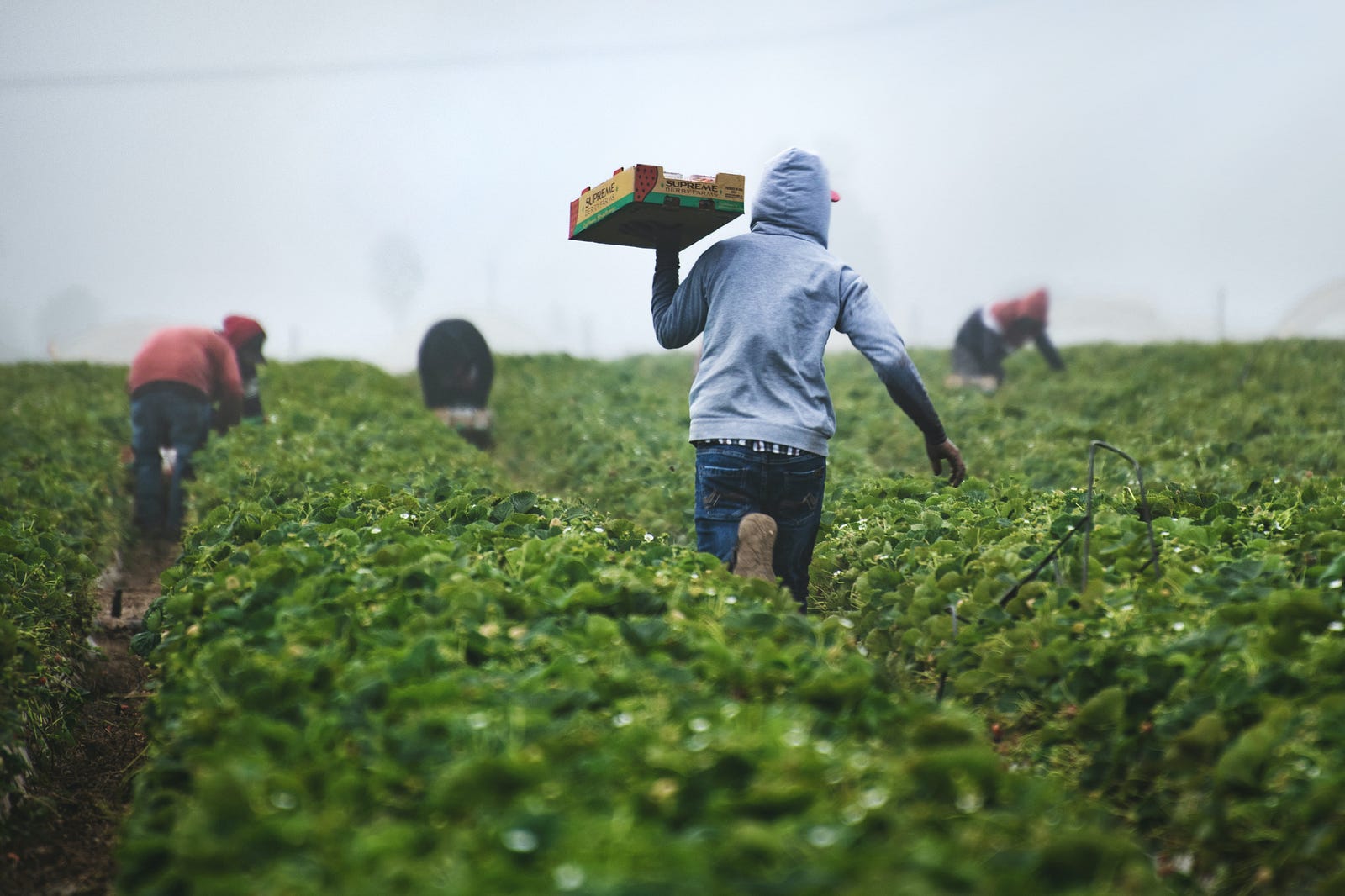
Like miners, agriculture workers are exposed to a lot of toxic chemicals, often from pesticides. They often also work long hours for minimal pay, often under a hot sun. Fruit picking is repetitive and boring labor, but it’s one kind of labor that machines can’t quite do just yet. Robots are, as of yet, unable to tell when a piece of fruit is ripe as well as a human can. 

Agriculture workers who work in slaughterhouses run the risk of injuring themselves with the machinery and tools used in the trade. It’s also traumatic working in this industry because of the way the animals are treated in addition to the terrible working conditions. 

In the United States, many immigrants from South and Central America end up working in the agriculture industry, either as fruit pickers or as slaughterhouse workers. They do the difficult jobs that no one else wants to do, and then are sometimes even imprisoned or deported, having committed no other crime than working hard and seeking a better life for themselves and their families. 

5. The Sex Industry

The sex industry is global, huge, and very morally complicated. Many sex workers are voluntary participants in their trade, or have no other better options available to them. Many do not want to be “saved,” or removed from the industry and forced to work other jobs. 

Women leaving the sex industry are often “rescued” and then enslaved again in the garment industry. They often resent this, rather than being grateful for it, because they make less money and are treated similarly poorly by management.

At the same time, many people are forced or coerced into the sex trade. Many people who do sex work voluntarily are also raped and sexually abused. Sometimes they are otherwise harassed and threatened due to their participation in it. 

6. Adoption and Surrogacy

Adoption and surrogacy is another very morally complicated area of the global economy. While adoption and surrogacy sometimes work out great for everyone involved, and while many healthy families come out of these kinds of agreements, there is also slavery and abuse rampant in the industry. 

Sometimes women will have their babies stolen and sold on the black market. Sometimes surrogates or birth mothers are coerced into agreements that they don’t understand or aren’t in full agreement with. 

Sometimes people choose adoption because they aren’t able to raise a child, even though they don’t really want to give up their baby. Sometimes people choose to be surrogates or sperm or egg donors in exchange for money when they have no other options available to them. 

Because of the delicate and personal nature of this industry, and because there are so many legal gray areas around it, the potential for abuse is high. 

7. Forced Marriage 

It’s estimated that around fifteen million people in the world are living in forced marriages. Many of the people forced into marriages are children. 

While forced marriages are illegal in many places, they still happen extremely often. This is often in service of upholding cultural or religious traditions, but sometimes is also due to economic pressure. A child may be sold into a marriage to keep the rest of the family afloat financially, for example. 

Slavery is everywhere — what can we do? 

There are a few things you can do to make the situation better! You can do research about the products that you buy and where they come from. Vote with your dollars and support brands who care about labor ethics. 

You can also reduce your consumption of consumer goods overall. Do you really need that extra sweater, just because it was on sale? Think about what you are buying and why. Take an inventory of the things you own and think about how often you use each thing. When you buy gifts for people, think about what they actually need and will use. 

You can also reuse and recycle things more. Coffee grounds make great fertilizer for your roses and egg cartons make great planters for seedlings. 

I also think it would be awesome if everyone would take the time to learn about what slavery is like from people who have actually been through it. It’s one thing to read a history book about something like colonization in India or chattel slavery in the United States, but there are many people alive today who have actually been enslaved, and their stories, in my opinion, are more relevant to discuss today. That said, learning and remembering history is very important. 

Don’t Forget

Be grateful for what you have. Remember that someone probably worked just as hard as you did to get it, just to create conditions where it was possible for you to have it in the first place. Offer your positive thoughts and prayers to people who are still trapped in slavery. Try to be understanding and compassionate towards people who have lived through it. 

The world today truly does run on slavery, but it doesn’t have to be that way. Don’t forget that slaves still exist! 

Sex Trafficking is Only Part of Human Slavery

So why aren’t we paying attention to the rest of it?

Photo by Jose Fontano

It’s estimated that there are at least 40 million human slaves alive today. This includes 25 million people in forced labor and 15 million people in forced marriage. Slavery occurs in every region of the world.

Women are disproportionately affected by human slavery– 28.7 million or about 71% percent of these people are women and girls.

As a woman, and as someone who is voluntarily employed in the sex industry, this is an issue that’s particularly close to my heart. As part of an effort to educate myself about the good and bad in my own industry, I’ve been reading a bit about commercial sex trafficking.

While doing this research, I’ve run across a lot of information about other kinds of human slavery happening in the world. I’ve been wondering why I haven’t been hearing more about other kinds of human slavery.

Forced labor is being forced to work under threat or coercion

and it generates profits of at least $150 billion dollars per year.

One-quarter of victims have their wages withheld, 17% have been threatened with physical violence, 16% have experienced acts of violence, and 17% have had their family members threatened. 7% of victims also reported sexual violence. This type of intimidation and abuse is how people are forced to work.

Forced marriage is generally forced labor and sexual coercion under the guise of “marriage.”

88% of percent of forced marriage victims are female, and 37% are children. Of the child victims, 44% are forced to marry before the age of 15.

Until recently, I had no idea how many people were forced to work in the agriculture and manufacturing industries, or how many child brides there were in the world.

Forced sexual exploitation accounts for a relatively small percentage of human slavery, at 4.8 million people or 12% of the 40 million people enslaved globally.

Besides involving sex, it’s not a whole lot different from the rest of human slavery. Being forced to work is still being forced to work, regardless of what kind of work you’re being forced to do. Often the same methods are used to coerce and intimidate victims.

So why does sex trafficking get so much more media coverage? Why can 12-year-olds still get married in the United States? Why doesn’t Lifetime make a movie about rescuing women who are being forced to work in agriculture or manufacturing?

Sex Sells

Duh.

I’ve found that sex sells better when there’s a fantasy involved; maybe one about a man rescuing a woman.

It’s a great mental image…

Burly FBI agents kick down the door of a seedy brothel, carrying damsels in distress over their shoulders. The helpless women blink their delicate, dark-expanded pupils in the sunlight.

Pimps in purple velour jogging suits are led out one by one, their gold chains and diamond watches confiscated and zipped into evidence bags. The bony, shivering victims are wrapped in emergency blankets and given warm mugs of hot chocolate.

“It’s going to be alright now,” says a fireman.

…except

not all sex workers are being forced into their labor.

They don’t all have pimps, and they aren’t all being exploited. Many of them really love sex (and money), and not all of them want to be rescued. I’m also pretty sure that 0% of them want to go to jail.

You see, in the real world, it’s the sex workers who are often the ones led out in handcuffs, whether they are victims of exploitation or not.

At the very least, a sex worker might be put in the unfortunate position of having lost their livelihood, as well as their sense of security, independence, and bodily autonomy.

Handcuffs or no, if someone busted into the strip club where I work to try and rescue me, I would be pissed.

Our focus on the sex industry is not based on the gravity of the problem relative to the global human slavery problem, but rather on a cultural obsession with sex, a history of puritanical repression, and the notion that women need to be rescued from the burden of deciding what to do with their own bodies.

Keeping sex work illegal doesn’t make sex workers safer

and it won’t end forced labor in the sex industry.

Much like prohibiting drugs does not stop drug use, and drives a violent black market; prohibiting sex work does not stop people from buying or selling sex– it just makes them less safe while they do it.

Focusing disproportionately on the sex industry when addressing the human slavery problem does not help to address the problem of human slavery, and it does not help sex workers.

It also creates a false justification for taking away a fundamental freedom that belongs to every human being: the right to do what you want with your own body, for love or money.

All of these issues need attention

It’s clear that anyone being forced to do any kind of work under the threat of violence is a threat to everyone’s fundamental human rights.

I think it’s incredible that we still condone things like forced labor or forced marriage as a species.

Shouldn’t we be past this by now?

Let us slip out of our archaic attitudes about sex, and focus on the real issue: protecting basic, inalienable human rights.


Originally published on medium.com on September 1st, 2019.