Why I Treat Spirituality Like a Buffet


There are truths in all traditions
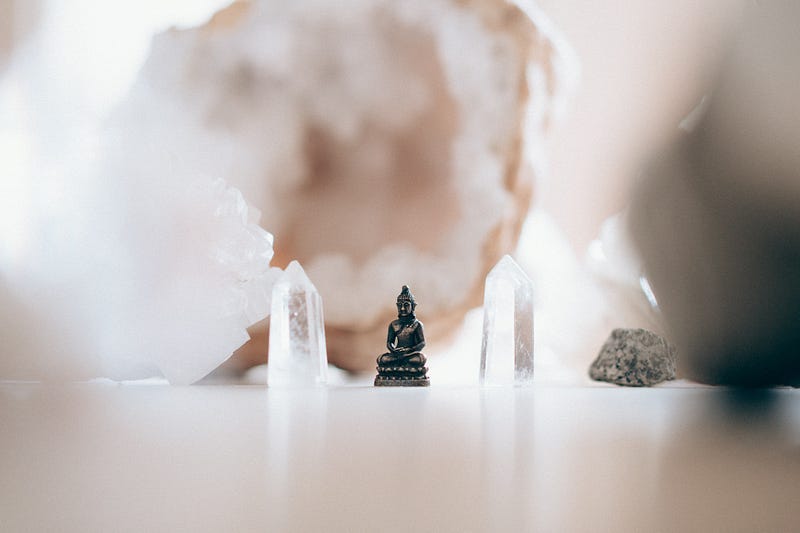
altar with Buddha statue and crystals
Photo by Samuel Austin

“The possession of knowledge does not kill the sense of wonder and mystery. There is always more mystery.”―Anais Nin

My mother was raised Catholic and is not totally happy about it. She has expressed to me that she experienced trauma related to ideas about original sin that were taught to her as a child. Not wanting to instill in me the same feelings of guilt and shame, she chose to raise me outside of organized religion.

Feeling unsure about her own spirituality but not wanting me to miss out on the experience, my mom ended up raising me in an eclectic neo-pagan tradition. She taught me about different spiritual practices from around the world and practiced a variety of rituals with me.

My mom is now a staunch Atheist, but I’m glad that she chose to raise me with some kind of spiritual tradition.

Growing up, we celebrated holidays like Christmas and Halloween, but we also celebrated things like Winter Solstice and Samhain. One year on May Day, we made gift baskets and left them on the unsuspecting doorsteps of our friends and family, a throwback to the pagan traditions of my Celtic roots. We attended church masses with our Catholic family and Passover Seders with our Jewish friends, and at home, we sometimes even cast spells.

In the absence of a strict religious dogma, my mom taught me ethics that were based on treating others how I would want to be treated.


The Golden Rule

To explain the Golden Rule my mom gave me a Wiccan rhyme:

“Ever mind the rule of three, what ye send out comes back to thee!”

These days, I relate this memory to things like Kant’s Categorical Imperative, Newton’s Third Law of Motion, and eastern ideas about Karma. I don’t take this idea totally literally. That is, I don’t believe a cartoon God sits in the sky punishing or rewarding us for our actions. Instead, I’ve come to accept this pervasive idea about the world as a useful, if more ambiguous kind of spiritual knowledge.

The Rule of Three is a kind of truth about the world that’s been expressed by many in many different ways and seems to be true in practice. While I don’t believe in an arbitrarily judgemental universe, it does seem that the scales of our lives and the world always “balance” themselves somehow in the end, however complex the circumstances are. While it’s true that sometimes bad things happen to people with good intentions and good things happen to those with ill ones, the wheel always turns.

My spirituality is based on finding ideas like The Rule of Three and applying them to my own life.

These are ideas about life that seem to persist throughout most faiths and practices, despite their vast diversity and disagreement. As I grew older and I read more philosophy, theology, and mythology, I discovered that there are many common themes like this throughout all faiths and cultures.

While we all have our own traditions and ideas about God, life, and morality, I truly believe that most of us share certain basic human values at a deep level.

My opinion is that it doesn’t matter if you’re religious or spiritual, what your practices are, or if you believe in God. There’s a utilitarian value in spirituality whether you’re a fanatical fringe zealot or a calm, rational atheist.

You don’t have to take it too seriously, either. Spirituality has a sense of humor.


The Spiritual Wisdom of Religion

Spirituality helps us understand the values that bond us together as human beings, across race, nationality, gender, age, class, and ideology. It helps us pass on fundamental truths about life, ethics, and meaning through rich and layered metaphors, through stories and speech, through dance and song, through food and wine. It helps us connect to our roots and stay grounded in rituals and traditions. It helps us stay supported and connected by creating community.

Sure, it’s easy to point out the atrocities perpetrated and justified by religion throughout history– but true spirituality isn’t about submitting to some false authority with human flaws. True spirituality is about love, introspection, learning, and growth. It’s about putting in an honest effort to be a better person, and connecting with others who are trying to do the same. It’s about allowing yourself to be at peace in an uncertain universe.

While I’ve never fully committed to any one spiritual tradition or practice, I try to treat spirituality like a buffet. Faced with unlimited options, I take what nourishes my mind and soul and leave the rest.

I guess I’m an Omnist — but I don’t really like to put a label on it. Labels are limiting.

Even if you believe that your particular holy book was literally written by God, you have to admit that s/he’s sort of hard to understand sometimes. I’ve never read a religious text that doesn’t try to say things without quite saying them outright, and in my opinion, this is because of the nature of what they’re really for.

Spiritual ideas aren’t instruction manuals for how to live. They exist in order to encourage us to write our own.

These stories and adages are designed to be a little bit confusing because they are for our souls what a puzzle might be for our minds. We don’t do puzzles to find the solution, we do them because we enjoy and benefit from the process of solving them. The relatable vagueness of these stories makes them accessible to a wide audience.

We shouldn’t be good people because we are told to be, or because we are afraid of punishment. It’s better to act in a way that you truly believe in your heart is right. This kind of honest intention always produces better results than following instructions or trying to avoid pain. No one can tell you what to believe, and belief has no power unless it’s authentic.

I’ve found spiritual wisdom in the Bhagavad Gita, The Vedas, The Bible, The Torah, and the Qu’ran, but I’ve also found it in children’s books, sci-fi novels, poems, songs, and folklore. I’ve also gained the same kind of insights from simply observing the people around me, or having a conversation with a random stranger. Opportunities to learn and grow are everywhere, as long as you’re paying attention.


Belief Has Power

Regardless of what you believe, you can’t deny that believing in something is a powerful thing to do. We’ve all experienced this in our own lives — it’s hard to accomplish anything if you don’t at least have faith in yourself.

I’m on the fence about a lot of things when it comes to spirituality. I’m not sure if there is God, or what God is, or of where, if anywhere, I’m going to go when I die. I’m not sure if I’m a good person for trying to learn and grow and be better, or if I’m a sucker for not doing whatever I want all of the time, regardless of the consequences. I’m not even completely sure if I have free will, or if my choices really matter.

I think there are many questions in life that we will probably never get the answers to. If our species figures out a way to survive after the Sun burns out, I think it’s likely that we will still be combing the universe for answers, desperately trying to satisfy the insatiable curiosity that is part of what makes a human being, a human being.

But belief is a choice. I can choose to believe in something because it makes me feel happier, or more at peace. I can choose to follow a rule because it benefits me and those around me. I can choose to practice a tradition in the service of programming my brain with positive habits and ideas. I can choose to believe that I live in a benevolent cosmos because it helps me sleep better at night.

So I will. I’m always nicer when I get a good night’s sleep.


Originally published on medium.com on December 25th, 2019. 

War is Hell–As Usual 


Why Can’t We Stop?

Photo by UX Gun

If you wander about Oregon Country Fair enough you’ll find the free library! 

As a child, I found this book there: Addicted to War: Why the U.S. Can’t Kick Militarism. 

When I was a kid, I read this comic book about the military-industrial complex over and over again, and it really impacted me. Now when I read about conflicts like Russia and Ukraine or Israel and Palestine, I ask myself questions like: “who is going to profit from this?” and “what innocent people are going to suffer?” 

For many years, the US government has painted itself as a sort of “world cop,” interfering in global conflicts in what it claims to be the best interest of the countries it invades. In reality, this image couldn’t be further from the truth of what’s really going on. 

The truth is that it’s the same story over and over again. We recruit and train the very same terrorist forces that then attack us, and then we use their attacks to justify further violence. We sell weapons to the fabricated governments that we install to serve our interests. We arm both sides of conflicts, and then our construction companies rebuild the cities that are flattened by the same bombs and drones that we manufacture. 

We design some of the best medical treatments in the world and then withhold them from the women and and children whose hospitals and schools we flatten with our explosives, and to our own soldiers who come home maimed and betrayed by the country that they swore to defend. 

Like George Orwell said: “The war is not meant to be won, it is meant to be continuous.” The war doesn’t exist to defend freedom or fight evil, it exists to generate profits and to keep the vast majority of the planet on its knees in abject terror before a select few. 

We use the oppression of women to justify invading the middle east, and then oppress women at home under a similar guise of empowering them. Women in Afghanistan are “liberated” by sanctions that are starving their children to death before their eyes the same way women at here in the US are “liberated” by having their livelihoods taken away when they fight back against male violence. 

We complain about the lack of civil liberties in countries like Russia and China, and then we imprison or banish political dissidents at home, while bombarding our own populace with endless propaganda that is designed to stoke civil unrest and blind hatred between human beings. 

The United States is like the abusive parent who uses the threat of a foreign boogeyman to frighten its children into blind obedience in the household. Our government says to us: “how dare you complain about how I treat you? Would you rather I let the boogeyman get you?” 

These boogeymen are nothing more than old worn puppets, sewn hastily together for purposes of drumming up fear and coercing compliance. 

It turns my stomach knowing that any portion of the money I’ve paid in taxes throughout my life has gone towards murdering and crippling innocent people, but I can’t deny that it’s the case. I’m complicit because I’m afraid, and so are you. 

When I read about the atrocities committed by terrorist groups I do not see monsters and boogeymen. I see the faces of the women who kill their own children because they are abused by their spouses and the mentally ill who are shot by the police because they were abandoned time and time again by a broken system and became so ill that no one around them could see their humanity any longer. 

I see human beings. Human beings who were children once and who have hopes and dreams and families just like you and me. 

Kamikaze soldiers and militant dictators are not less human than you. They are very sick human beings whose personal and collective pain has exceeded their ability to cope with it in a sane way. 

In the United States, so many of us are so sheltered and so far removed from real violence that we have forgotten why it exists in the first place. Wherever there are people in pain, there will be people waiting to exploit that pain for their own nefarious purposes. 

Don’t be a pawn in their barbarous chess game. Think for yourself. Choose the path of peace. 

The United States of America is Basically Doing the Holocaust

We should probably stop.

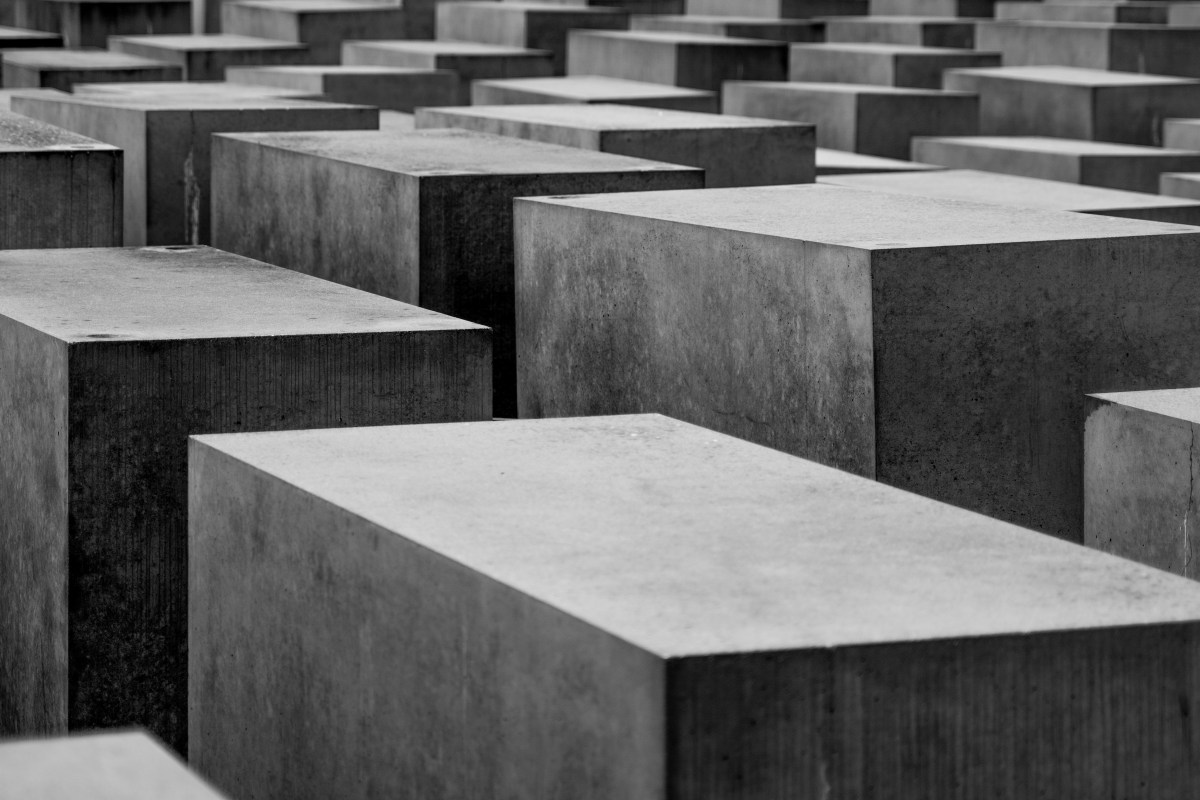
a series of grey boxes

Photo by Michael Fousert

During the Holocaust, specific groups of people became the target of propaganda and violence that was coordinated by the state. These groups included ethnic, cultural and social groups such as Jews, Catholics, Freemasons, gay people, trans people, disabled people, and sex workers.

People belonging to these groups became the targets of propaganda campaigns designed to destroy their reputations– but more importantly, to destroy their credibility. An important feature of the Holocaust was the culture of secrecy and the destruction of historical records. Because we do not, collectively, remember our history in a meaningful way, in a way which allows us to fully comprehend the horrors that human beings are capable of, we are continuing to perpetrate these horrors.

The philosopher Hannah Arendt wrote about how totalitarian governments created societies of people who were lonely; not just physically lonely, physically isolated, but spiritually isolated from one another. During World War II, Nazis used propaganda and violent threats to create a culture in which speaking the truth was punishable by social isolation, shaming, unjust incarceration, and physical torture. They created a world in which human beings were incapable of having real intimacy with one another because they were no longer able to express to each other the truth of their experiences. This weakened the social and familial bonds between people, which made them easier to control.

This kind of spiritual loneliness, according to Arendt, is what created the perfect conditions for governments to control the minds of their citizens. Unable to find real human connection under conditions where it was impossible to tell the truth, human beings sought comfort elsewhere — from the authority figures who became stand-ins for the real human relationships which could no longer exist. They became loyal to an amorphous, faceless authority instead of to one another. Even people who lived in the same house, worked at the same jobs or attended the same schools could no longer truly relate to one another. People became passionately terrified of one another. There was a culture of paranoia.

Fear is the seed of hatred. By causing immense fear, by torturing the populace en masse by making everyone afraid all the time, not just of the state, but of each other, Nazis made people more willing to participate in their atrocities. They created a world in which human beings were willing to harm the ones they loved the most in order to avoid pain. In which they were forced to denounce their most deeply held beliefs at the barrels of guns. In which they informed on and turned in their loved ones. In which they were coerced into implicating themselves and other innocent people in kangaroo courts in which facts and evidence didn’t matter. In which people were so confused, so tortured, that they no longer trusted their own memories or senses.

During the Holocaust, it was not just agents of the governments who committed atrocities, it was everyone. Every single person who participated was, to varying degrees, culpable. And yet, when the criminals were tried, a select few were disproportionately punished for crimes which were participated in, condoned, and concealed by nearly everyone. These people became the scapegoats for the crimes of everyone else. Perhaps collectively, as a species, after such an event, we believed that using these people as sacrifices would absolve the rest of us of our guilt.

But guilt doesn’t work that way. Morality doesn’t work that way. Human psychology doesn’t work that way. The world doesn’t work that way. When people commit atrocities, if they witness atrocities, even if they are forced to say, even, for a time, forced to believe that the atrocities didn’t happen, some part of them will still remember. And then, regardless of whether or not they are held accountable by the laws of any state, people will punish themselves, and each other, regardless of how much anyone involved deserves any of it. 

The collective guilt that resulted after the Holocaust led thousands of people to commit suicide and countless others to be left with permanent mental and spiritual scars that would never heal and would be passed down from generation to generation. The intergenerational trauma from the Holocaust and other genocides have left intergenerational traumas that fuel a cycle of hatred and fear and perpetuate unnecessary suffering across the planet.

The government and people of the country in which I live are perpetuating these same crimes, right now, as I speak. The government of my country perpetrates horrific crimes against humanity on what seems to be a perpetual basis, both at home and abroad.

In the country where I live, right now, as I speak, people are being locked away without due process and being treated in horrifying and inhumane ways while in captivity. They are being separated from their parents, children, brothers, and sisters. They are being denied medical treatment when they are sick. They are being asked to defend themselves at hearings in languages that they do not understand without representation by attorneys. People are being raped and sexually abused by government officials who are not held accountable for their actions. People are having their body parts, such as their reproductive organs, removed without their informed consent.

My country murders civilians en masse in foreign countries in order to maintain its control over global markets and natural resources. It relentlessly persecutes, tortures, and executes citizens who speak out against its atrocities.

During World War II, people with both immutable physical characteristics or religious, cultural and social associations like mine were tortured and murdered. Historically, the peaceful values of both my ancestral culture and both the religion in which I was raised and the one I currently practice were warped and distorted by state governments for propaganda of fear-mongering, hate-mongering, and social control.

During my lifetime, I have personally been subjected to treatment which constitutes torture and crimes against humanity. I know many other people belonging to the both the same and other cultural, religious, and social groups and as me who have been subjected to the same. My local, state and federal governments have condoned this treatment and failed to hold the perpetrators accountable. I have been subjected to this treatment, not, in fact, because of the groups that I belong to, but because I reported the atrocities that I witnessed and experienced and because I fought back. The same is true for many others around me, regardless of race, religion, culture, and the like.

It does not matter what ethnic, religious, social, or cultural group you belong to. During the reign of a totalitarian government, any person is potentially a member of a group that was referred to by Nazis during the Holocaust as “untermenschen,” or “subhumans.” This group still exists today, under the totalitarian government under which I live. Absolutely anyone can be labeled a member of this group, and absolutely anyone is a potential target.

Dear America — your human sacrifices do not absolve you of your crimes, and they will not absolve you of your guilt.

No matter who you are, one day you too, could one day be treated as “subhuman.” And also, no matter who you are, one day, you too could be the person who treats someone else that way. You might even be doing it right now. And if the propaganda and mind control that is inflicted on you every single day of your life has succeeded in breaking your consciousness to the point where you can no longer see the truth when it’s right in front of you — you might not even be aware of it. But you will be one day. And it’s gonna hurt.