The Hidden Problem of Educator Abuse


How sexual misconduct in schools is condoned and ignored
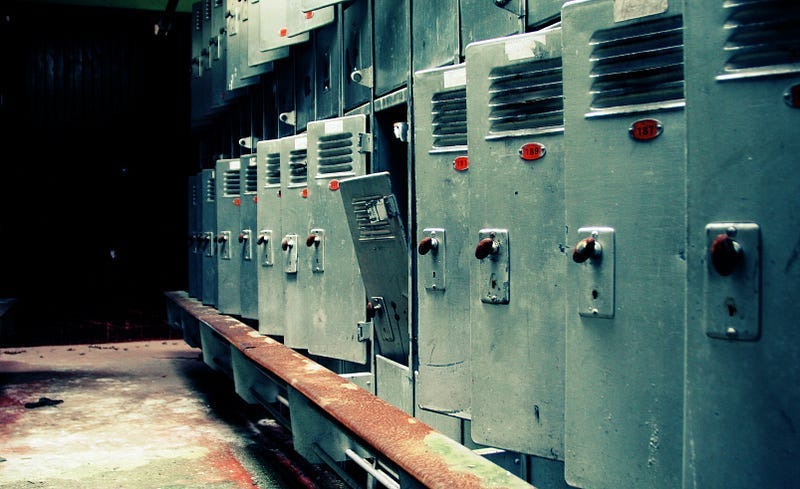
old lockers, some empty with the doors falling off
Photo by John Doyle

“The buck stopped with no one,” said lawyer Bob Weaver to the Portland Public School Board during an investigation of sexual abuse by school faculty. In 2017, the school board had ordered an investigation into the treatment of Mitch Whitehurst, a teacher who had demonstrated a pattern of misconduct with students.

In his first year as a teacher, Whitehurst’s conduct with students was so noticeably inappropriate that a vice-principal reported it to school police. The next year, there was another complaint about Whitehurst from a student’s mother. Years later, in the late 90s, school police were again notified about Whitehurst. The school district heard all of these complaints and did nothing.

In 2001, Whitehurst told high school student Rose Soto that he wanted to unzip her pants and take her to a motel. “I must not have mattered enough. I sure as hell didn’t feel protected by anybody,” Soto told The Oregonian.

While the story of how Whitehurst’s persistent sexual harassment and abuse of students was apathetically ignored by the education system is certainly a repulsive one, it is also, unfortunately, not a very unique one. In Education Week’s sixth-month examination of the issue, they discovered “244 cases, involving everything from unwanted touching to years-long sexual relationships and serial rape.”

“One reason such cases can prove so divisive is that they often involve teachers who are among the most popular and dedicated in the school.”

These cases included a coach who videotaped volleyball players in the changing room, an English teacher who fathered a child with a 16-year old student, and a 6th-grade teacher who had sex with four eleven-year-old boys. While more than 70% of the suspects were teachers- janitors, librarians, principals, and bus drivers were also on the list. “One reason such cases can prove so divisive is that they often involve teachers who are among the most popular and dedicated in the school,” writes Caroline Hendrie for Education Week.

In another year-long investigation by USA Today, it was found that education officials often cover up evidence of abuse by faculty. They found that “state education agencies across the country have ignored a federal ban on signing secrecy deals with teachers suspected of abusing minors, a practice informally known as ‘passing the trash,’” and that administrators are rarely punished for failing to report misconduct to state licensing officials.

In New Jersey, Montville Township Public Schools wanted to get rid of a first-grade teacher who was accused of asking students to sit on his lap. They did not, however, report the accusations to police. The teacher was hired by a nearby private school less than two months after resigning.

A teacher lost his license in Ohio after being accused of touching students in a “sexually suggestive manner,” and the district made efforts to keep the records of these accusations a secret. “In some cases, school districts agree to eliminate personnel records, making it all but impossible to tell what the teacher was accused of doing,” writes Steve Reilley for USA Today.


It’s in our nature to want to believe that the world is a safe place and that such terrible things could not go on in such vast numbers right under our noses– but it’s time for us to accept the reality of this situation.

We have to be careful that we aren’t committing the just-world fallacy, making the assumption that the world is a just place where people get what they deserve. Often, they do not.

According to Charol Shakeshaft, who studies educator abuse:

“In elementary schools, the abuser is often one of the people that students most like and that parents most trust. In my studies, the abusers of children younger than seventh grade have different patterns than those who abuse older children.

The educators who target elementary school children are often high achievers in the profession and, compared to their non-abusing counterparts, hold a disproportionate number of awards and teaching recognitions. They are more often recognized in the community, the state, and sometimes the nation as distinguished and dedicated educators.

While the issue of sexual assaults on college campuses has been discussed at length in the public sphere in the wake of the #metoo era, the similar problems in K-12 schools are often left out of the conversation. According to federal data, students reported about 9,700 incidents of rape and assault at elementary and secondary schools during the 2015–2016 school year.

“The physical sexual abuse of students in schools is likely more than 100 times the abuse by priests.”

NBC News reported on how new Title IX regulations might help, but the problem appears to be getting worse, not better. When we think of children in potentially predatory situations, we may think of the Boy Scouts, or of the Catholic Church, but we ignore the more common danger to which a larger number of kids are exposed. Charol Shakeshaft is quoted as saying: “the physical sexual abuse of students in schools is likely more than 100 times the abuse by priests.”

“What typically happens is you’ll have a teacher who’s spending a little too much time in a room with one child with the door shut,” says Sherryll Kraizer, executive director of the Denver-based Safe Child Program. This problem is so widespread because of the sheer amount of access that teachers and school faculty have to students.

Diane Cranley, the founder of TAALK, thinks that it is important that faculty are trained in how to recognize grooming behaviors. It’s important to recognize that the friendly grooming behavior of a teacher might not be much different from the behavior of a priest or a troop leader. “Even in churches, you might only have access to children once a week on Sundays … whereas with schools, it’s five days of the week, nine months of the year,” Cranley told The Voice of San Diego.

A US Department of Education report found that about one in ten students will experience sexual misconduct from a school employee before they graduate high school. A 2010 GAO report found that one offender can have as many as 73 victims. Low-income female high school students are the highest-risk demographic.

When a problem is this persistent, and there’s such an incredible commitment by so many to keep it hidden from the public, it’s troubling to think about how many victims probably exist who have not yet come forward.

Please talk to your children, fellow parents, friends, and schools about educator abuse.


Additional Resources:

Guidelines for Dealing With Educator Sexual Misconduct

7 Ways Teachers Can Help Prevent Child Sexual Abuse


Originally published on medium.com on August 29th, 2020. 

I Still Love Everyone I Have Ever Loved


And I always will

Photo by Aziz Acharki

“True love is eternal, infinite, and always like itself. It is equal and pure, without violent demonstrations: it is seen with white hairs and is always young in the heart.” — Honoré de Balzac

Throughout the course of my life, I’ve been lucky enough to fall in love more than once.

But what exactly is love, and how do we “fall” into it?

Anyone who’s ever experienced a passionate intimate relationship can probably relate to this feeling of “falling,” and I believe there’s a reason why we use that particular word to describe it.

Falling, in the figurative sense, certainly feels a bit like falling in a literal sense. It’s similarly exciting, overwhelming and scary. The euphoria associated with this kind of infatuation is how I imagine a skydiver or an astronaut probably feels, hurtling back towards Earth, while taking in a view which is vast and beautiful at an indescribable level.

As I’ve gotten older, I’ve learned that there’s a difference between “falling in love” and actually loving someone. The lust and drama of connecting on a deep level with another person can certainly feel earth-shatteringly meaningful– for a while. But when we crash from the high produced by the cocktail of oxytocin, serotonin, and dopamine that swirls in our brains during a romance, what is left?

The truth is that real love has nothing to do with bringing flowers, reciting poems, or fantasizing about your future children. It’s not about great sex, great conversation, or sweeping anyone off their feet. We think of love as something intense and epic, but in reality, it’s quite mundane.

Real love isn’t a fairytale story with princesses, knights, magic or prophecies. It isn’t thrilling and intoxicating- actually, it’s rather boring. It’s an everyday story that includes things like eating, sleeping, cleaning your house and paying the bills. It’s about dealing with the challenges of whatever journey you each happen to be on, together.

Real love is about seeing someone who they truly are, flawed like all human beings inevitably are, and accepting them, wholly and completely. Real love doesn’t fade as physical attraction does, and it doesn’t fizzle out like lustful passion.

Real love doesn’t even go away when you want it to.

You’ve probably seen the evidence of this in your own relationships. The people we love are often the ones who hurt us the most, but somehow, we love them anyway.

I’ve heard many people say, “love shouldn’t hurt,” but the truth is, no matter how good everyone’s intentions are, it’s bound to hurt sometimes. Often we are only hurt by those we love because of our love for them. If we didn’t care, it would be easier to be indifferent.

When I look back over my past relationships, I can now see the difference between having “fallen in love” and having “loved.” It’s an easy distinction for me to make because there’s a single measurement I can use to be sure: I still love everyone who I have ever truly loved.

True love is eternal. It’s not about physical beauty, sex, validation, or power. It’s about the essence of what makes us human, and the recognition of our humanness in each other. It’s about looking at another person in the eyes and seeing a part of yourself.

When you truly love someone, it is truly unconditional, and irrevocable.

Real love doesn’t go away because of hardship or conflict. It doesn’t end in the heat of an argument, or after the pain of betrayal. It isn’t reduced when someone loses their job, gains weight, or gets old– because things like that aren’t the real reasons why we love people.

Love has nothing to do with the temporary bodies we live in, or the temporary experience we have while we are alive. It is the act of accessing the innate, infinite knowledge programmed into our souls and our cells, and truly understanding that we will never really be separated from each other, despite any physical or emotional detachment.

The truth is that I still love everyone I’ve ever truly loved.

I’ll love them if they are poor or wealthy.

I’ll love them if they are sick or healthy.

I’ll love them if they marry somebody else, go to prison, join a cult, or lose all of their hair and teeth.

I’ll love them in spite of time, in spite of anger, in spite of distance, and in spite of death.

And I always will.

Anything less just isn’t love.


Originally published on medium.com on February 15th, 2020. 

The Problem With Porcupines


Stop avoiding the spiky parts

a porcupine
Photo by Dušan Smetana

The hedgehog’s dilemma, also called the porcupine’s dilemma, is a metaphor used to illustrate the more difficult aspects of human intimacy. Arthur Schopenhauer and Sigmund Freud both used this dilemma to describe how individuals relate to society and to each other.

The dilemma asks us to imagine a group of spiky mammals, who are trying to move more closely together in order to share body heat on a cold day. However, the spikiness of these creatures presents a problem. The closer they get to each other, the more they get hurt.

Since the critters are unable to cuddle without sticking each other with their spines, they aren’t able to achieve the close, symbiotic relationship that they are all aiming for.

“In the same way,” wrote Schopenhauer,

“the need of society drives the human porcupines together, only to be mutually repelled by the many prickly and disagreeable qualities of their nature.”

The main idea that this story hopes to communicate is a great irony of the human experience: we can’t have relationships, or indeed, even interact with each other, without risking harming each other.

Anyone who has ever experienced a bad breakup, a family fight or the end of a friendship can attest to the risks we take when we get close to each other. Really, the same is true for anyone who has ever met a rude stranger, cleaned up someone else’s mess, or been or cut off in traffic.

The potential negative consequence of this situation (besides the obvious pain that we can cause each other), is the fact that this may cause us to become overly cautious.

Our fear of mutual harm alienates us from each other and weakens our relationships. Since our hearts have been hurt, we build walls around them in order to protect ourselves.


This problem has never been more relevant than today when our technology seems to be enveloping us in individual, solipsistic wombs.

You can press a button on your phone, and your groceries will be delivered to your doorstep. Really, if you had enough money, you could go basically your whole life without ever having to leave your house. In Japan, there’s even a word for a person who lives like that: hikikomori.

The fact that we can be social through our media doesn’t exactly incentivize us to participate in what one Reddit forum calls “a free-to-play MMORPG with 7 billion+ active players,” or Outside, also known as the real world.

You certainly don’t need to go anywhere to socially interact with people– it’s just a click away. It’s too easy to become disconnected in this day and age, be it physically or emotionally.

It’s safer in our private bubbles, comfortable behind our manufactured images of ourselves and our two-dimensional perceptions of others. It’s neater and clener– anyway, who wants to deal with all that messiness?

That’s what humanity is– messy. It’s not edited for political correctness, smoothed by a filter, cropped into a square, or optimized to appeal to a target audience.

When we get close to people in the real world, we aren’t just seeing the highlight reel. Or at least, in my opinion, we shouldn’t be. If we never let the people we’re close to see us for who we really are, are our relationships even meaningful?

It’s becoming harder to want to be seen, warts and all. I think we’re starting to forget what warts look like.


I understand why it’s tempting to retreat into the relative safety of shallower interactions.

It’s just so much easier to see the Facebook version of your college roommate, smiling in photos with his husband and kids, than to hear about his sister’s cancer or the medication he started taking for his depression.

You don’t really want to argue about the merits of capitalism with your out-of-work, out-of-touch uncle or hear about the alcoholism your ex-girlfriend’s new fiancé. Your Instagram doesn’t have to include details about your childhood or your relationship with your parents. The Twitter user agreement doesn’t ask us to be honest with others or ourselves.

Even outside, when people ask us how we are, we say “fine.”

We might say “good,” or “great,” or “okay.” It’s rare that we say anything like: “I’m overcome with bliss,” “I’m overwhelmed by grief,” “I feel awkward in this situation,” or even “I’m having a bad day” or “my butt really itches in these pants.”

Those things are too prickly.

Why not leave these intimate details at arm’s length, and avoid getting poked? Why not mind your own business, and leave well enough alone?

Because raw, authentic human connection is a huge part of what makes life worth living. If you ask that girl out, she might break up with you, but if you don’t, you’ll never travel the world together.

Because we can’t ever have trust without placing our faith in people. If you confide in a friend, they might judge you, but if you don’t, they’ll never understand what you’re going through.

Because no one can ever really know you, or appreciate you, for who you are, if the only version of you they ever get it one that you’ve created to make others feel comfortable. Because joy doesn’t mean anything without the knowledge of pain.

Take the risk.

People aren’t always soft; sometimes they are sharp as hell, and sometimes they’re going to hurt. Still, screw the spines. It’s cold out there, and I would rather be warm.

Wouldn’t you?


Originally published on medium.com on February 3rd, 2020. 

The One Million Dollar Elk


Is my hometown f*ing serious?

Thompson Elk Statue 2006 | Photo: Wikimedia Commons
Thompson Elk Statue circa 2006, Photo: Wikimedia Commons

Oregon Public Broadcasting reports that 1.5 million dollars has been designated to replace the historic David P. Thompson elk statute downtown. 

I remember growing up with the elk statue! It’s near the college campus where I lived with my Mom when I was small. I was also a witness to the destruction of the elk statue over the past three years. Protestors really did some crazy stuff to mess up that elk, let me tell you. 

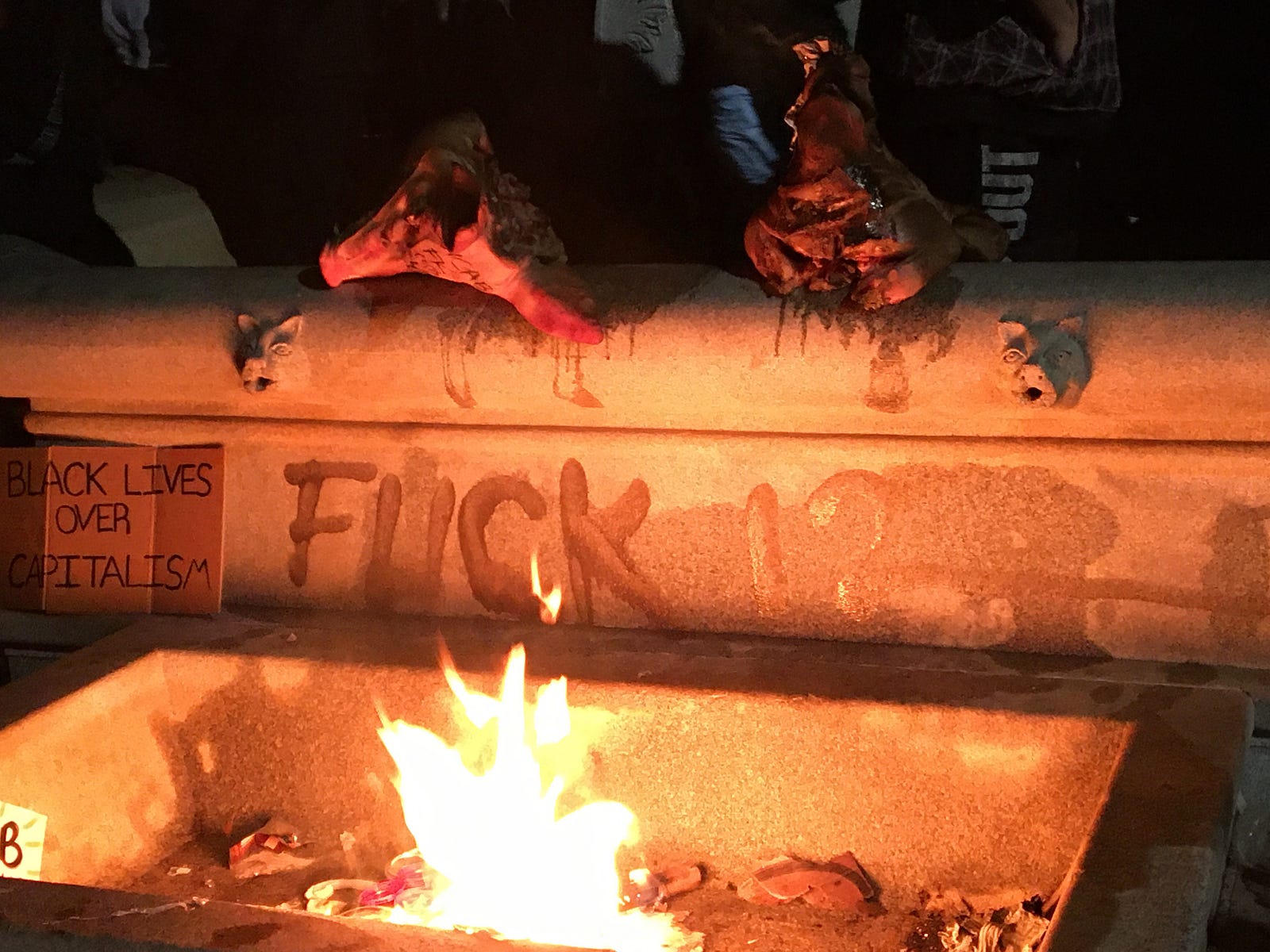
Here’s a photograph I took at a protest in May 2020: in this photo protestors are roasting pig’s heads over an open fire that they lit on the stone base of the statue. 

pigs heads being roasted on elk statue base with “fuck 12” graffiti and “black lives over capitalism” sign
Photo courtesy of author

Do we need a new elk?

While I loved the elk statue, and it made me sad to see it get totally destroyed, I understood the anger of the people who were doing it, and why they felt that destroying a piece of property might be an acceptable way to express that anger. 

Personally, I’m not really big on the “tear down statues” method of protesting. I get why it happens, but something like an elk (it’s an animal, dude) seems pretty benign to me. The elk was pretty to look at, and I’m pretty sure that the local elk population isn’t guilty of anything bad. 

It didn’t seem fair to me that the elk face the wrath of the protestor’s anger when it wasn’t really the elk’s fault or the fault of the artist who made the elk. 

I’m not opposed to replacing the elk. I kind of miss it. But one million dollars seems like a lot of money for an elk statue. Money that could be going to say, things like helping the homeless get off the street or deal with their drug addictions and mental illness. 

Or maybe the money could go to pushing for the kind of criminal justice reform which is needed in order to prevent the kind of misplaced rage in the populace which caused the destruction of the elk in the first place. 

Remember the tram? 

The one point five million approved for the elk reminds me of when the OHSU aerial tram was built in Portland. Essentially, the tram is a giant and terrifying way for the local hospital to give people more access to parking. 

The tram cost A LOT of money, and it didn’t really have the full support of the community. It was marketed as something that would It was marketed as something that would look good as a part of the Portland skyline. But not everyone was into it. 

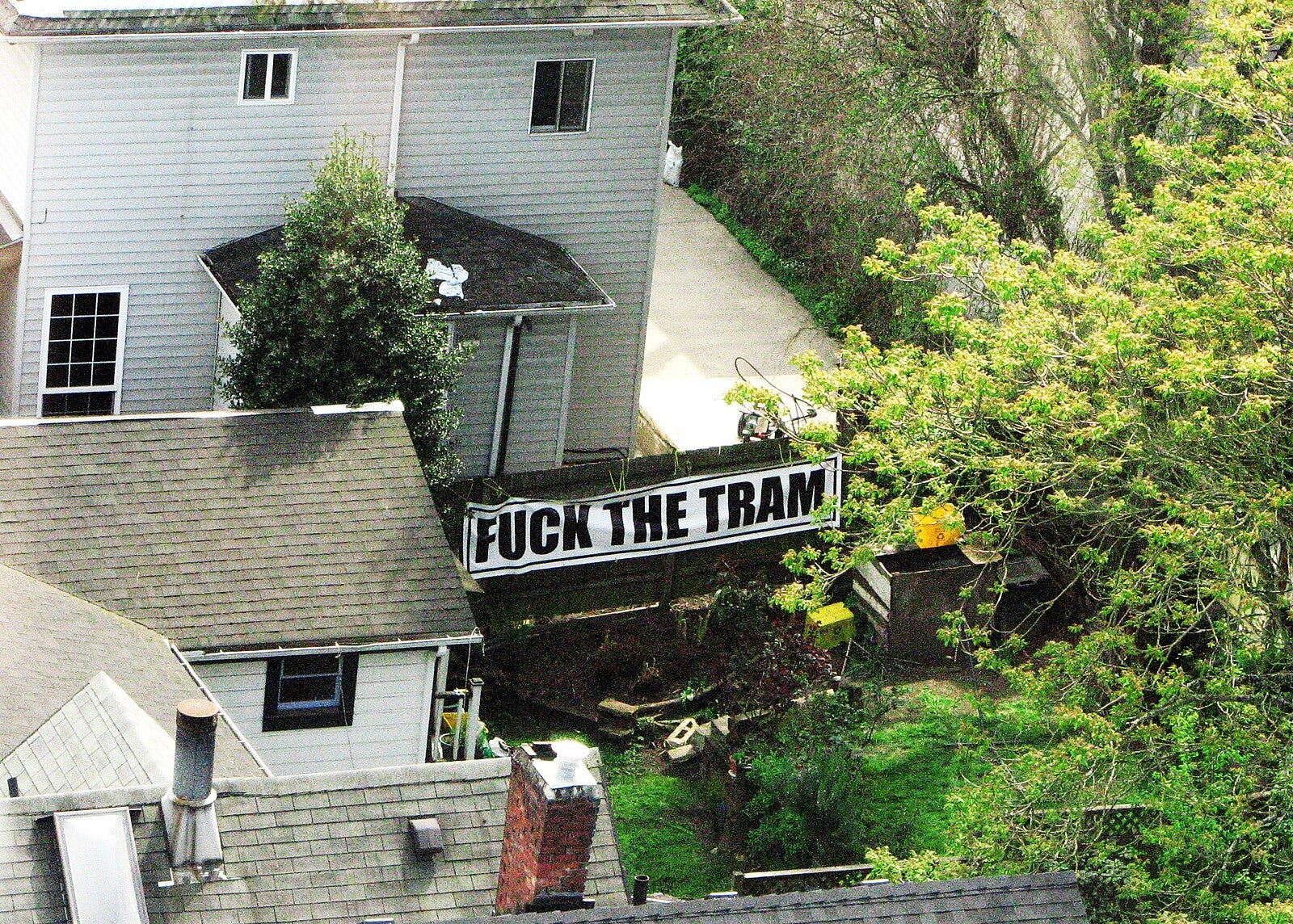
People who live underneath the tram even went as far as to put up a sign that said “Fuck the Tram.” They felt that it encroached upon their privacy and other rights. 

large sign on fence which reads “FUCK THE TRAM”
Photo: Wikimedia Commons

Is the elk another tram?

As OPB reports, ten years after the tram’s construction, the tram costs millions of dollars, much of which came straight out of the pockets of local taxpayers. It was controversial at the time of its construction and remains so today. 

“Accusations of mismanagement and subterfuge flew,” writes OPB’s Randy Gragg of the funds used to build the tram. The people who designed and built the tram ended up going way over budget. Gragg also notes that the affordable housing in the south Waterfront neighborhood went unfinished as the tram was finished. 

Is the new elk statute another expensive and ridiculous boondoggle put in place by the leaders of the city of Portland to make it seem like everything is going well when it isn’t? 

Wouldn’t the money be better spent feeding the homeless?

Why I Treat Spirituality Like a Buffet


There are truths in all traditions

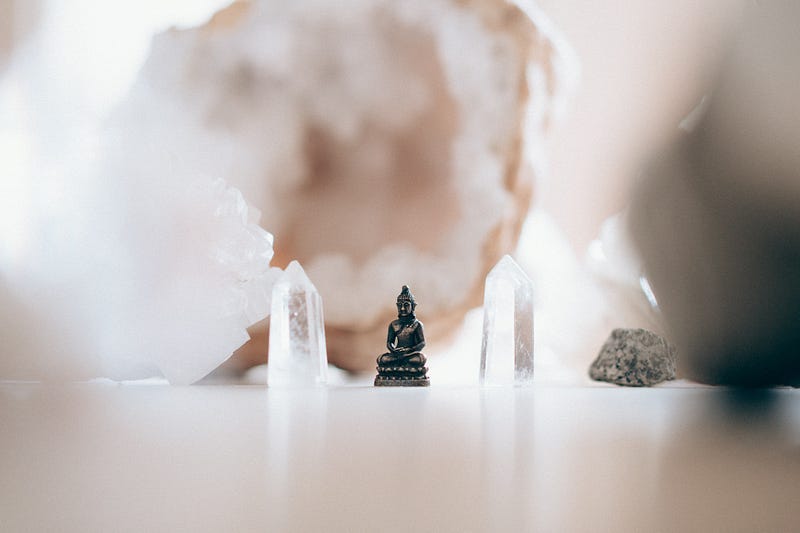
altar with Buddha statue and crystals
Photo by Samuel Austin

“The possession of knowledge does not kill the sense of wonder and mystery. There is always more mystery.”―Anais Nin

My mother was raised Catholic and is not totally happy about it. She has expressed to me that she experienced trauma related to ideas about original sin that were taught to her as a child. Not wanting to instill in me the same feelings of guilt and shame, she chose to raise me outside of organized religion.

Feeling unsure about her own spirituality but not wanting me to miss out on the experience, my mom ended up raising me in an eclectic neo-pagan tradition. She taught me about different spiritual practices from around the world and practiced a variety of rituals with me.

My mom is now a staunch Atheist, but I’m glad that she chose to raise me with some kind of spiritual tradition.

Growing up, we celebrated holidays like Christmas and Halloween, but we also celebrated things like Winter Solstice and Samhain. One year on May Day, we made gift baskets and left them on the unsuspecting doorsteps of our friends and family, a throwback to the pagan traditions of my Celtic roots. We attended church masses with our Catholic family and Passover Seders with our Jewish friends, and at home, we sometimes even cast spells.

In the absence of a strict religious dogma, my mom taught me ethics that were based on treating others how I would want to be treated.


The Golden Rule

To explain the Golden Rule my mom gave me a Wiccan rhyme:

“Ever mind the rule of three, what ye send out comes back to thee!”

These days, I relate this memory to things like Kant’s Categorical Imperative, Newton’s Third Law of Motion, and eastern ideas about Karma. I don’t take this idea totally literally. That is, I don’t believe a cartoon God sits in the sky punishing or rewarding us for our actions. Instead, I’ve come to accept this pervasive idea about the world as a useful, if more ambiguous kind of spiritual knowledge.

The Rule of Three is a kind of truth about the world that’s been expressed by many in many different ways and seems to be true in practice. While I don’t believe in an arbitrarily judgemental universe, it does seem that the scales of our lives and the world always “balance” themselves somehow in the end, however complex the circumstances are. While it’s true that sometimes bad things happen to people with good intentions and good things happen to those with ill ones, the wheel always turns.

My spirituality is based on finding ideas like The Rule of Three and applying them to my own life.

These are ideas about life that seem to persist throughout most faiths and practices, despite their vast diversity and disagreement. As I grew older and I read more philosophy, theology, and mythology, I discovered that there are many common themes like this throughout all faiths and cultures.

While we all have our own traditions and ideas about God, life, and morality, I truly believe that most of us share certain basic human values at a deep level.

My opinion is that it doesn’t matter if you’re religious or spiritual, what your practices are, or if you believe in God. There’s a utilitarian value in spirituality whether you’re a fanatical fringe zealot or a calm, rational atheist.

You don’t have to take it too seriously, either. Spirituality has a sense of humor.


The Spiritual Wisdom of Religion

Spirituality helps us understand the values that bond us together as human beings, across race, nationality, gender, age, class, and ideology. It helps us pass on fundamental truths about life, ethics, and meaning through rich and layered metaphors, through stories and speech, through dance and song, through food and wine. It helps us connect to our roots and stay grounded in rituals and traditions. It helps us stay supported and connected by creating community.

Sure, it’s easy to point out the atrocities perpetrated and justified by religion throughout history– but true spirituality isn’t about submitting to some false authority with human flaws. True spirituality is about love, introspection, learning, and growth. It’s about putting in an honest effort to be a better person, and connecting with others who are trying to do the same. It’s about allowing yourself to be at peace in an uncertain universe.

While I’ve never fully committed to any one spiritual tradition or practice, I try to treat spirituality like a buffet. Faced with unlimited options, I take what nourishes my mind and soul and leave the rest.

I guess I’m an Omnist — but I don’t really like to put a label on it. Labels are limiting.

Even if you believe that your particular holy book was literally written by God, you have to admit that s/he’s sort of hard to understand sometimes. I’ve never read a religious text that doesn’t try to say things without quite saying them outright, and in my opinion, this is because of the nature of what they’re really for.

Spiritual ideas aren’t instruction manuals for how to live. They exist in order to encourage us to write our own.

These stories and adages are designed to be a little bit confusing because they are for our souls what a puzzle might be for our minds. We don’t do puzzles to find the solution, we do them because we enjoy and benefit from the process of solving them. The relatable vagueness of these stories makes them accessible to a wide audience.

We shouldn’t be good people because we are told to be, or because we are afraid of punishment. It’s better to act in a way that you truly believe in your heart is right. This kind of honest intention always produces better results than following instructions or trying to avoid pain. No one can tell you what to believe, and belief has no power unless it’s authentic.

I’ve found spiritual wisdom in the Bhagavad Gita, The Vedas, The Bible, The Torah, and the Qu’ran, but I’ve also found it in children’s books, sci-fi novels, poems, songs, and folklore. I’ve also gained the same kind of insights from simply observing the people around me, or having a conversation with a random stranger. Opportunities to learn and grow are everywhere, as long as you’re paying attention.


Belief Has Power

Regardless of what you believe, you can’t deny that believing in something is a powerful thing to do. We’ve all experienced this in our own lives — it’s hard to accomplish anything if you don’t at least have faith in yourself.

I’m on the fence about a lot of things when it comes to spirituality. I’m not sure if there is God, or what God is, or of where, if anywhere, I’m going to go when I die. I’m not sure if I’m a good person for trying to learn and grow and be better, or if I’m a sucker for not doing whatever I want all of the time, regardless of the consequences. I’m not even completely sure if I have free will, or if my choices really matter.

I think there are many questions in life that we will probably never get the answers to. If our species figures out a way to survive after the Sun burns out, I think it’s likely that we will still be combing the universe for answers, desperately trying to satisfy the insatiable curiosity that is part of what makes a human being, a human being.

But belief is a choice. I can choose to believe in something because it makes me feel happier, or more at peace. I can choose to follow a rule because it benefits me and those around me. I can choose to practice a tradition in the service of programming my brain with positive habits and ideas. I can choose to believe that I live in a benevolent cosmos because it helps me sleep better at night.

So I will. I’m always nicer when I get a good night’s sleep.


Originally published on medium.com on December 25th, 2019. 

The Ship of Theseus and Human Identity


Are you still the same person you were yesterday?

old shipwreck washed up on a beach with people looking at it
Photo by Vasiliki Volkova

The mythical hero and founder king of Athens, Theseus, sailed into battle on a famous ship. Legend has it that the ship, displayed in a museum, began to rot and gradually had its pieces replaced.

The Ship of Theseus is a philosophical thought experiment that can help us to understand the metaphysics of identity. The basic question that it raises is if an object which has had all of its fundamental components replaced is still the same object.

With all of its original pieces replaced, is the Ship of Theseus still fundamentally the same ship?

This idea has interesting and uncomfortable implications when applied to our theories about the human mind and body.

For example: would you dare to step into a Star Trek transporter? If your atoms were disassembled by a tractor beam, would it be the same person reassembled on the other side? Could you tell the difference? Does it matter?

In an age when science fiction seems to be transforming into science fact at an alarming rate, we can’t help but begin to wonder about things like the continuity of consciousness.

Futurists imagine a world where human beings might attain a state approaching functional immortality through the use of technology. Some theorize about a technological singularity, in which the human race fuses with and becomes indistinguishable from our technology.

One day, will we be able to upload our own consciousness into clones of ourselves, or artificial bodies with a much later expiration date than our flimsy human ones? If we were able to do something like this, would we still be human? Would still be ourselves? Does this idea of ourselves even hold water?

These ideas are explored in many places in modern media, particularly in works of science fiction.

In the 2015 film Advantageous, a mother considers transferring her mind into a younger body in order to serve as the spokesperson for a corporation offering this service.

In L. Frank Baum’s turn-of-the-century novel The Wonderful Wizard of Oz, the Tin Woodsman’s origin story remembers him as a human who had all of his limbs gradually replaced with tin. The question of whether he is still the same man, Nick Chopper, is a running joke throughout the story.

The Tin Man eventually meets another version of himself, created from his discarded flesh. Which one is the real Nick Chopper?

In the 1999 film Bicentennial Man, we watch a robot slowly transition towards humanity through the slow replacement of his parts, much like the Ship of Theseus. Robin William’s leading character, Andrew and the Tin Man share a similar problem: if they only had a brain!

Stories like these hint at the idea that the brain– particularly the prefrontal cortex– might be part of what makes us human.


There are many proposed solutions to the Ship of Theseus problem, and how we decide to answer this question says lot about how we see ourselves, our lives, and our future.

Here are a few possible answers:

No identity over time

This theory suggests that there is no continuous “ship” which exists across time, but rather that the ship in each instant is a separate ship, an event existing only for that moment. Do you see yourself this way, a different being from moment to moment?

Continual identity over time via final cause

The Ship of Theseus had a purpose, after all; transporting the hero into battle. This purpose is the ship’s final cause.

Aristotle had the idea that there were four causes or reasons for a thing to be:

The formal cause is the design of the thing, like the ship’s shape, or the way the bones of your skeleton hang together.

The material cause is the type of matter the thing is made of, like the ship’s wood, or the cells of your body.

The efficient or moving cause is the agent that changes the thing, like the passage of time rotting the ship’s wood, or the experiences of your life, shaping your character.

The final cause is the intended purpose of a thing or the mystical possibility of an oak tree that lurks inside of an acorn. This final cause is the essence and identity of the ship, its reason for existing in the first place.

You might relate the final cause of the ship to the meaning of your own life, your telos, your ultimate aim. This way of solving the problem suggests that the ship is the same ship, as a function of its intended purpose.

Gradual loss of identity

This theory suggests that perhaps the ship was once the same ship, but stopped being that ship as it began to decompose.

If our identity is a function of our purpose, what happens when that purpose is unclear? Are we still ourselves if we aren’t serving the same purpose that we once were? If the parts of ourselves which once made us ourselves are gradually replaced, have we lost the essence of who we are?

There is no ship

Conceptualism argues that the ship is just a concept we invented. The new ship and the old ship are separate concepts. They must not be the same ships, then. Otherwise, how would we compare these ideas?

You can think about yourself this way, too. One could similarly argue that you are just a concept that you invented. There is no “you” only your ideas about who and what “you” are.

So, what is the ship?

Nobody actually knows.

How do you choose to view your identity?

Are you a fleeting part of the “now,” existing only within this moment until you become something else in the next moment?

Are you a function of your purpose, an instrument of the reason why you exist or the ideas by which you choose to live?

Are you a gradually degrading being, becoming less and less you as you age and your concept of yourself becomes fuzzier?

Do you have an identity at all? Do any of us? Are we all “special, unique snowflakes” or “all part of the same compost heap?”

What are you?

We’re moving into a future where our ideas about our identity and our humanness are becoming more important. These questions are no longer just abstract food for thought to ponder in the moments when we feel ideologically confused.

The time is coming when we’ll have to make tangible, materialistic ethical decisions related to the abstract concepts of our selves, our identity, and our humanness. We’ll have to decide which choices we’ll make when it comes to the ethics of our technology and our conscious evolution as a species.

What will the future of humanity look like based on those choices?

Regardless of what happens with clones, cyborgs, AI, data clouds, or anything in the science-future of the world, we also have to consider our perspective on this when we make decisions in our daily lives.

Our beliefs and our behavior are closely tied to our identities. Our ideas about who, what, and why we are influencing how we live our lives and how we will feel about the choices we make.

Who are you?

Why are you?

What makes you, you?

Think about it.


Originally published on medium.com on October 29th, 2019. 

Mass Incarceration of Nonviolent Offenders Harms Society


Criminal justice reform in the US can’t happen fast enough

a barbed wire fence outside of a prison
Photo by Hédi Benyounes

The United States incarcerates more people than any other nation on earth, with about 2.3 million people currently locked up in 2019. This includes 1,306,000 in state prisons, 221,000 in federal jails and prisons, 612,000 in local jails, and 61,000 in immigrant detention centers.

Over 540,000 people are incarcerated who have not been convicted or sentenced. Median bail levels are often too high for the typical citizen to pay when they are detained.

A staggering 7.1 million people in the United States are under some kind of criminal justice supervision, including probation or parole.

Spending on prisons and jails has increased at triple the rate of spending on Pre‐K‐12 public education in the last thirty years.

Mass incarceration perpetuates a cycle of poverty, addiction, illness, and violence. It’s a huge cost to taxpayers, a human rights fiasco, and a national embarrassment.


On average, incarcerating someone costs $80-$100 per day. While the annual cost of corrections, 80 billion dollars, is often cited as the cost of incarceration; there are many hidden social costs.

According to a recent study, incarceration generates an additional ten dollars in social costs for every dollar spent on corrections. More than half of these costs are borne by families, children, and community members.

The costs borne by the incarcerated include lost productivity, reducing an individual’s lifetime earnings between ten and forty percent. By age 48, the typical former inmate will have earned $179,000 less than if they had never been incarcerated.

Formerly incarcerated people can also be banned by law from working in many industries, living in public housing, and receiving governmental benefits. A criminal record can reduce the likelihood of a job offer or job callback by close to 50%.

These are only a few of the obstacles making re-entry to society after jail or prison so difficult.

Education levels, job skill levels, employment rates, earning power, and mental health are all often low among people in jail or prison before they enter. The time they spend there only makes these problems worse.


A parent’s income is one of the strongest indicators of a child’s chances for upward economic mobility.

Incarceration decreases economic mobility generationally.

More than 1.2 million inmates are parents of children under the age of 18. This means that about 1 in 28 or 3.2 percent of children in the US have a parent in jail or prison.

It’s even worse for African Americans, with 1 in 9 black children having an incarcerated parent. This is a figure that has quadrupled over the past 25 years.

Forty-two percent of children who start out in the bottom fifth of the income distribution get stuck there as adults. It is again worse for African Americans, with 54 percent remaining in the bottom fifth.

When a wage-earning parent is locked up, families often struggle to make ends meet. A study found that in the period that a father was behind bars, the average child’s family income fell 22 percent compared with that of the preceding year.

Having a parent in jail or prison disadvantages a child for life.


People in the system experience chronic health conditions, infectious diseases, substance use disorders, and mental illnesses at much higher rates than the general population.

More than half of all incarcerated people have a mental illness.

One in five incarcerated people is locked up for a drug offense and an estimated one-half of people incarcerated meet the criteria for drug abuse or dependence. Only 11 percent of these people receive treatment for their addictions while incarcerated.

About forty-five percent of people in local and state prisons have both a mental illness and an addiction.

Locking people up doesn’t fix addiction and mental illness.

People benefit more from receiving treatment for their mental illness or drug addiction than they do from incarceration.

Drug treatment is more cost-effective and more effective at preventing recidivism than incarceration. So why are we sending people to jail instead of rehab? It doesn’t make sense on a fiscal or legal level.


Our current system punishes people arbitrarily and causes more harm than it prevents. Society as a whole would benefit more from a system that involves efforts to educate, heal, and rehabilitate those who commit crimes.

Locking each other in cages as punishment for non-violent crimes is a primitive and barbaric way for human beings to behave. It doesn’t prevent crime, it doesn’t make us safer, and it causes immeasurable harm to families, communities and future generations.

It’s time to redesign our justice system to be just.


Originally posted on medium.com on July 29th, 2019. 

You Don’t Have to Show Your Art to Anyone


The joys of creating just for you

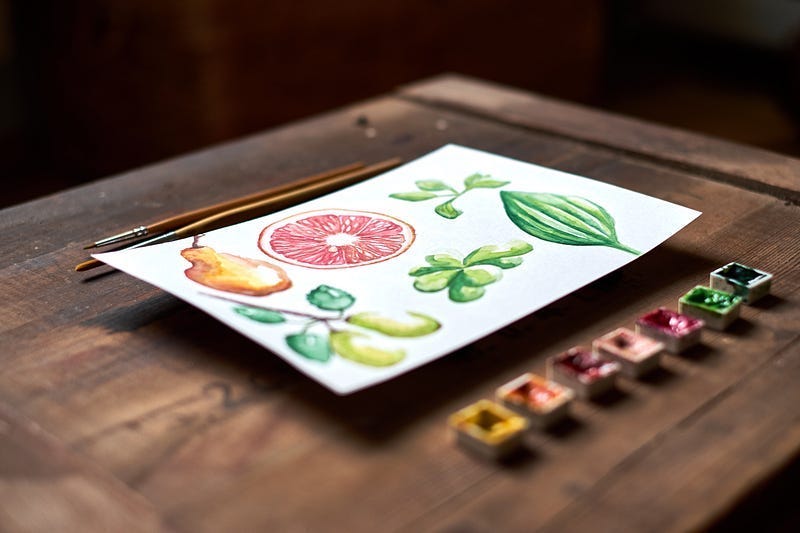
water color paints, paintbrushes, and a painting of fruit sitting on a wooden table
Photo by Atilla Taskiran

Why is it so easy sometimes, and so difficult other times?

There are lots of reasons for this, but sometimes it helps to simplify things a bit. When we make the decision to create something wholly for our own satisfaction and benefit, it can be a great cure for creative block, mostly just because it allows us to be ourselves with a little bit more comfort and ease.

Shaking off the fears of failure and judgment

When you make a piece of art just for yourself, the pressure to impress, please, or touch others is off. You don’t have to worry about who will like it, how it will be received, whether or not you can sell it, or if anyone will truly understand what you were trying to say. Taking this kind of pressure off of ourselves gives us more freedom to express ourselves honestly.

Be honest — when you put pen to paper (or whatever your equivalent is) don’t you hesitate sometimes, thinking about who will read what you’re about to write? I hate to think of the many great ideas that have been lost to the world because of an artist’s brief moment of doubt.

Artists are often perfectionists, and it’s easy to want to toss out a whole idea because it’s not up to our own standards, or to the standards by which we believe we will be judged. Throwing away the measuring stick is one of the best ways to encourage growth.

It’s a shame for anyone to have to be boxed in by the expectations of others, or discouraged by fear and the possibility of failure or embarrassment. We have to be free to create dangerously without limits. The best, most unique ideas come from thinking outside of the box, and it’s easy to be comfortable doing that when the potential consequences are less of an issue.

Art is about communication…

When we make a piece of art and show it to someone else, we are allowing that person to see the world from our point of view for a brief moment. One of the reasons why art is so necessary is that it helps us to feel less alone in a world that is sometimes scary and confusing.

Art is a means of communication that is often superior in many ways to more direct ones, despite often being far more ambiguous. When we make art, we can’t guarantee that others will understand what we are trying to say or feel the way we felt. Still, we’ve all experienced it– when you do feel that connection to another person’s art, it’s pretty hard to ignore.

…not just with others, but also with yourself

While art can be a great tool to express to others what you’re thinking and feeling, it’s often just as important, if not more so, to express your thoughts and feelings to yourself. Our minds are complicated, and sometimes it’s hard to decipher what we truly think and feel.

Art can be a powerful tool for introspection and self-reflection because it allows us to see the things that we are hiding from ourselves. Like our dreams, art tends to reveal recurring themes from our subconscious mind, which can otherwise be difficult to access with our conscious efforts.

Sometimes we don’t truly understand our own thoughts, feelings, hopes, fears, or motivations until we turn our focus inward to try and understand ourselves better. While others can enjoy and connect to your art, it’s important that we also take this inward step. If you aren’t looking inward first, how can you be confident in what you’re expressing outwardly?

Understanding our own subconscious drives is a powerful tool for taking ownership of our conscious actions. This is important for happiness because life becomes more meaningful the more our actions line up with our true beliefs. We can’t change our own thoughts or behaviors until we understand why we are thinking and behaving the way that we do.

Making art doesn’t just make you a better artist, it makes you a better person.

Learning to love the process

When I create art for myself, it reminds me that the true joy in art is in the creation of it, not in the final results. This is true about most things in life– you’ll be happier if you focus on the journey instead of the destination.

When you create just for the sake of creating, you remember that creating itself is the point. Creation is not just a means to an end but, also an end in itself. This is a very easy thing to forget.

Loving the process also improves our process. Often we can get hung up on a false dichotomy: quality vs quantity. The truth is that we can’t help but get better at the things we do frequently, and that quantity will eventually lead to quality, as long as we persevere. For every hundred scribbles we make on our own time, maybe we’ll find one that we want to share with the rest of the world– if we’re lucky. This might seem daunting, but really, it’s a good thing.

When we give our full attention and a healthy mindset to our practice, it becomes deliberate, helping us learn, improve, and dependably moving us closer to our goals. This kind of practice might not make us perfect, but it will make us just a little bit better than we were yesterday. The process is where we learn where our strengths and weaknesses are, what we like and dislike doing, and what feels meaningful to us.

No act of creation is ever a waste of time.

Brain benefits

In addition to getting your creative juices flowing, making art (even if it’s just for you) has a lot of other practical benefits.

Making art is just good for you.

In fact, it encourages the release of dopamine, a chemical that makes us feel good. It also lowers levels of cortisol, a hormone that makes us feel stressed. It’s also been shown in many studies that making art enhances cognitive function and improves mental health.

Creating art forges new neural pathways in the brain, allowing us to think more creatively at a tangible, physical level. This helps us to respond to the world in a way that is more intelligent and integrative, building connections between our logic, emotions, and imagination. Making art is also a proven method for treating substance abuse, and can help us heal from trauma.

It doesn’t even take a very big time investment to start seeing benefits. A 2016 study showed that just 45 minutes of making art is enough to improve your feelings of self-confidence. But you don’t need a study to tell you that– you’ve probably experienced it.

All of this in less than an hour.

All of this without rules, deadlines, or criticism.

All of this without worrying about likes, claps, or upvotes.

All of this from the safety and comfort of your own home.

You don’t even have to put pants on!


Originally published on medium.com on December 19th, 2019. 

War is Hell–As Usual 


Why Can’t We Stop?

Photo by UX Gun

If you wander about Oregon Country Fair enough you’ll find the free library! 

As a child, I found this book there: Addicted to War: Why the U.S. Can’t Kick Militarism. 

When I was a kid, I read this comic book about the military-industrial complex over and over again, and it really impacted me. Now when I read about conflicts like Russia and Ukraine or Israel and Palestine, I ask myself questions like: “who is going to profit from this?” and “what innocent people are going to suffer?” 

For many years, the US government has painted itself as a sort of “world cop,” interfering in global conflicts in what it claims to be the best interest of the countries it invades. In reality, this image couldn’t be further from the truth of what’s really going on. 

The truth is that it’s the same story over and over again. We recruit and train the very same terrorist forces that then attack us, and then we use their attacks to justify further violence. We sell weapons to the fabricated governments that we install to serve our interests. We arm both sides of conflicts, and then our construction companies rebuild the cities that are flattened by the same bombs and drones that we manufacture. 

We design some of the best medical treatments in the world and then withhold them from the women and and children whose hospitals and schools we flatten with our explosives, and to our own soldiers who come home maimed and betrayed by the country that they swore to defend. 

Like George Orwell said: “The war is not meant to be won, it is meant to be continuous.” The war doesn’t exist to defend freedom or fight evil, it exists to generate profits and to keep the vast majority of the planet on its knees in abject terror before a select few. 

We use the oppression of women to justify invading the middle east, and then oppress women at home under a similar guise of empowering them. Women in Afghanistan are “liberated” by sanctions that are starving their children to death before their eyes the same way women at here in the US are “liberated” by having their livelihoods taken away when they fight back against male violence. 

We complain about the lack of civil liberties in countries like Russia and China, and then we imprison or banish political dissidents at home, while bombarding our own populace with endless propaganda that is designed to stoke civil unrest and blind hatred between human beings. 

The United States is like the abusive parent who uses the threat of a foreign boogeyman to frighten its children into blind obedience in the household. Our government says to us: “how dare you complain about how I treat you? Would you rather I let the boogeyman get you?” 

These boogeymen are nothing more than old worn puppets, sewn hastily together for purposes of drumming up fear and coercing compliance. 

It turns my stomach knowing that any portion of the money I’ve paid in taxes throughout my life has gone towards murdering and crippling innocent people, but I can’t deny that it’s the case. I’m complicit because I’m afraid, and so are you. 

When I read about the atrocities committed by terrorist groups I do not see monsters and boogeymen. I see the faces of the women who kill their own children because they are abused by their spouses and the mentally ill who are shot by the police because they were abandoned time and time again by a broken system and became so ill that no one around them could see their humanity any longer. 

I see human beings. Human beings who were children once and who have hopes and dreams and families just like you and me. 

Kamikaze soldiers and militant dictators are not less human than you. They are very sick human beings whose personal and collective pain has exceeded their ability to cope with it in a sane way. 

In the United States, so many of us are so sheltered and so far removed from real violence that we have forgotten why it exists in the first place. Wherever there are people in pain, there will be people waiting to exploit that pain for their own nefarious purposes. 

Don’t be a pawn in their barbarous chess game. Think for yourself. Choose the path of peace.