
Are you still the same person you were yesterday?
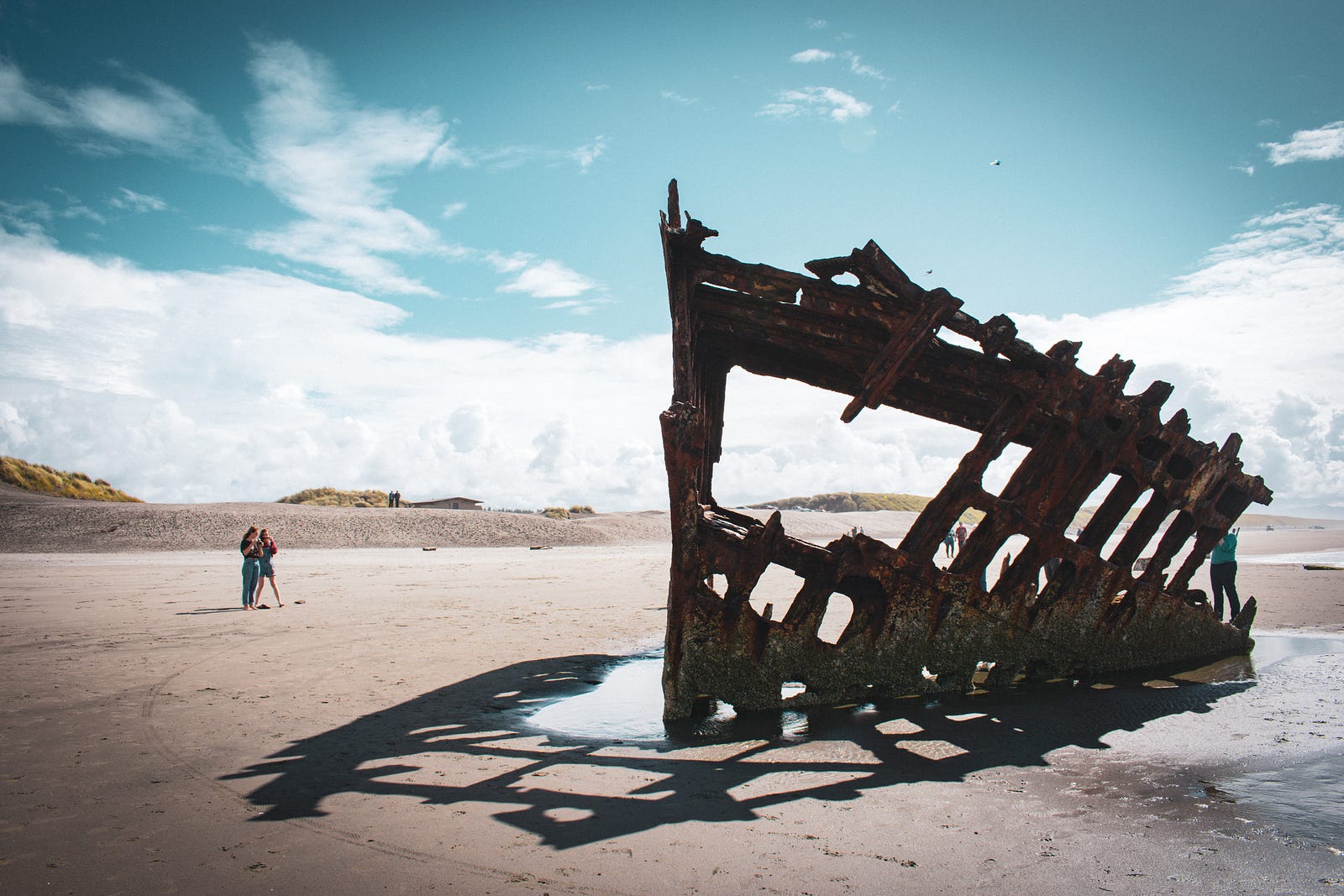
The mythical hero and founder king of Athens, Theseus, sailed into battle on a famous ship. Legend has it that the ship, displayed in a museum, began to rot and gradually had its pieces replaced.
The Ship of Theseus is a philosophical thought experiment that can help us to understand the metaphysics of identity. The basic question that it raises is if an object which has had all of its fundamental components replaced is still the same object.
With all of its original pieces replaced, is the Ship of Theseus still fundamentally the same ship?
This idea has interesting and uncomfortable implications when applied to our theories about the human mind and body.
For example: would you dare to step into a Star Trek transporter? If your atoms were disassembled by a tractor beam, would it be the same person reassembled on the other side? Could you tell the difference? Does it matter?
In an age when science fiction seems to be transforming into science fact at an alarming rate, we can’t help but begin to wonder about things like the continuity of consciousness.
Futurists imagine a world where human beings might attain a state approaching functional immortality through the use of technology. Some theorize about a technological singularity, in which the human race fuses with and becomes indistinguishable from our technology.
One day, will we be able to upload our own consciousness into clones of ourselves, or artificial bodies with a much later expiration date than our flimsy human ones? If we were able to do something like this, would we still be human? Would still be ourselves? Does this idea of ourselves even hold water?
These ideas are explored in many places in modern media, particularly in works of science fiction.
In the 2015 film Advantageous, a mother considers transferring her mind into a younger body in order to serve as the spokesperson for a corporation offering this service.
In L. Frank Baum’s turn-of-the-century novel The Wonderful Wizard of Oz, the Tin Woodsman’s origin story remembers him as a human who had all of his limbs gradually replaced with tin. The question of whether he is still the same man, Nick Chopper, is a running joke throughout the story.
The Tin Man eventually meets another version of himself, created from his discarded flesh. Which one is the real Nick Chopper?
In the 1999 film Bicentennial Man, we watch a robot slowly transition towards humanity through the slow replacement of his parts, much like the Ship of Theseus. Robin William’s leading character, Andrew and the Tin Man share a similar problem: if they only had a brain!
Stories like these hint at the idea that the brain– particularly the prefrontal cortex– might be part of what makes us human.
There are many proposed solutions to the Ship of Theseus problem, and how we decide to answer this question says lot about how we see ourselves, our lives, and our future.
Here are a few possible answers:
No identity over time
This theory suggests that there is no continuous “ship” which exists across time, but rather that the ship in each instant is a separate ship, an event existing only for that moment. Do you see yourself this way, a different being from moment to moment?
Continual identity over time via final cause
The Ship of Theseus had a purpose, after all; transporting the hero into battle. This purpose is the ship’s final cause.
Aristotle had the idea that there were four causes or reasons for a thing to be:
The formal cause is the design of the thing, like the ship’s shape, or the way the bones of your skeleton hang together.
The material cause is the type of matter the thing is made of, like the ship’s wood, or the cells of your body.
The efficient or moving cause is the agent that changes the thing, like the passage of time rotting the ship’s wood, or the experiences of your life, shaping your character.
The final cause is the intended purpose of a thing or the mystical possibility of an oak tree that lurks inside of an acorn. This final cause is the essence and identity of the ship, its reason for existing in the first place.
You might relate the final cause of the ship to the meaning of your own life, your telos, your ultimate aim. This way of solving the problem suggests that the ship is the same ship, as a function of its intended purpose.
Gradual loss of identity
This theory suggests that perhaps the ship was once the same ship, but stopped being that ship as it began to decompose.
If our identity is a function of our purpose, what happens when that purpose is unclear? Are we still ourselves if we aren’t serving the same purpose that we once were? If the parts of ourselves which once made us ourselves are gradually replaced, have we lost the essence of who we are?
There is no ship
Conceptualism argues that the ship is just a concept we invented. The new ship and the old ship are separate concepts. They must not be the same ships, then. Otherwise, how would we compare these ideas?
You can think about yourself this way, too. One could similarly argue that you are just a concept that you invented. There is no “you” only your ideas about who and what “you” are.
So, what is the ship?
Nobody actually knows.
How do you choose to view your identity?
Are you a fleeting part of the “now,” existing only within this moment until you become something else in the next moment?
Are you a function of your purpose, an instrument of the reason why you exist or the ideas by which you choose to live?
Are you a gradually degrading being, becoming less and less you as you age and your concept of yourself becomes fuzzier?
Do you have an identity at all? Do any of us? Are we all “special, unique snowflakes” or “all part of the same compost heap?”
What are you?
We’re moving into a future where our ideas about our identity and our humanness are becoming more important. These questions are no longer just abstract food for thought to ponder in the moments when we feel ideologically confused.
The time is coming when we’ll have to make tangible, materialistic ethical decisions related to the abstract concepts of our selves, our identity, and our humanness. We’ll have to decide which choices we’ll make when it comes to the ethics of our technology and our conscious evolution as a species.
What will the future of humanity look like based on those choices?
Regardless of what happens with clones, cyborgs, AI, data clouds, or anything in the science-future of the world, we also have to consider our perspective on this when we make decisions in our daily lives.
Our beliefs and our behavior are closely tied to our identities. Our ideas about who, what, and why we are influencing how we live our lives and how we will feel about the choices we make.
Who are you?
Why are you?
What makes you, you?
Think about it.
Originally published on medium.com on October 29th, 2019.
 Esoteric Epistemology