Why I see Spot’s future as more like a personal computer or car
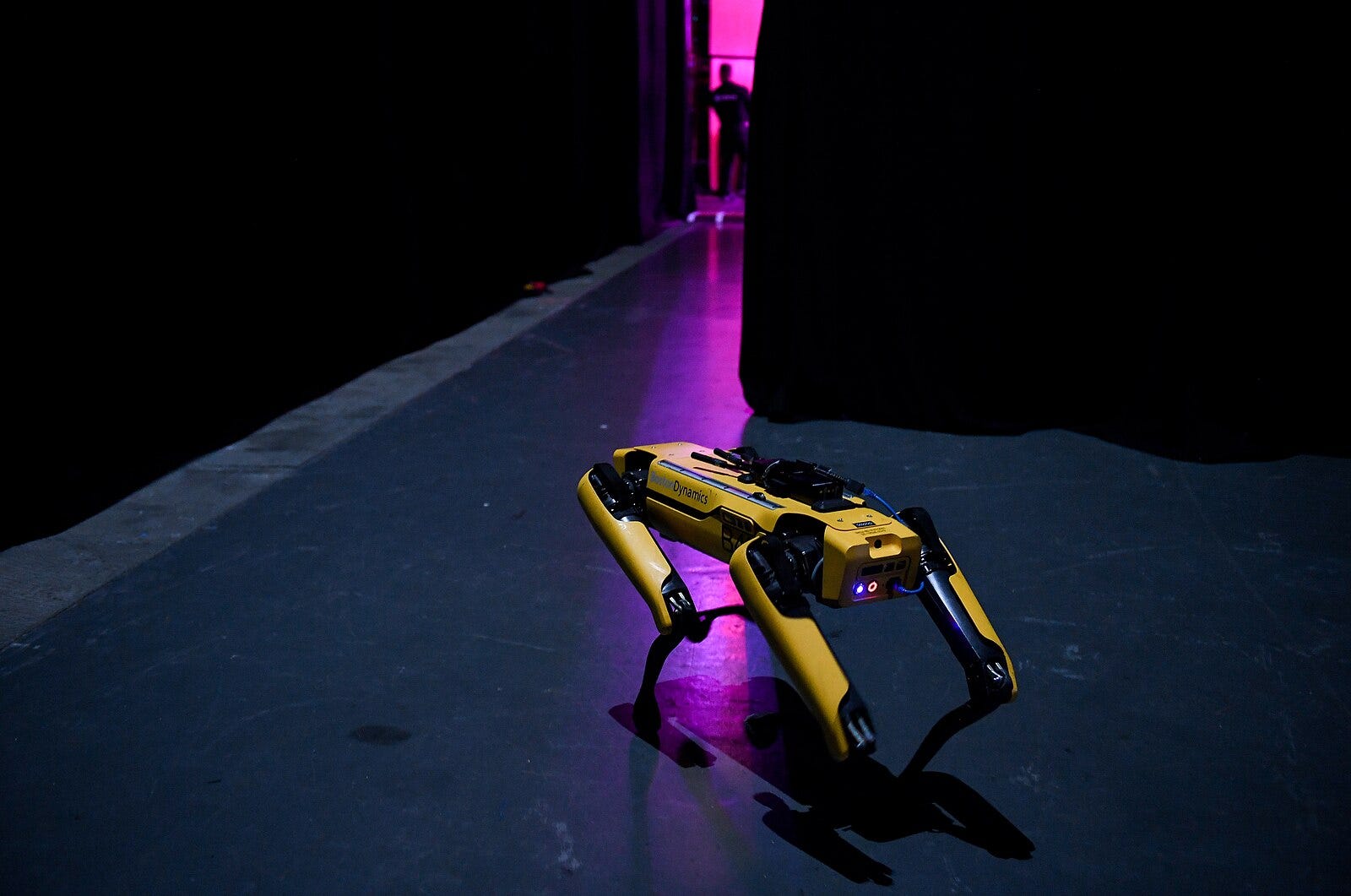
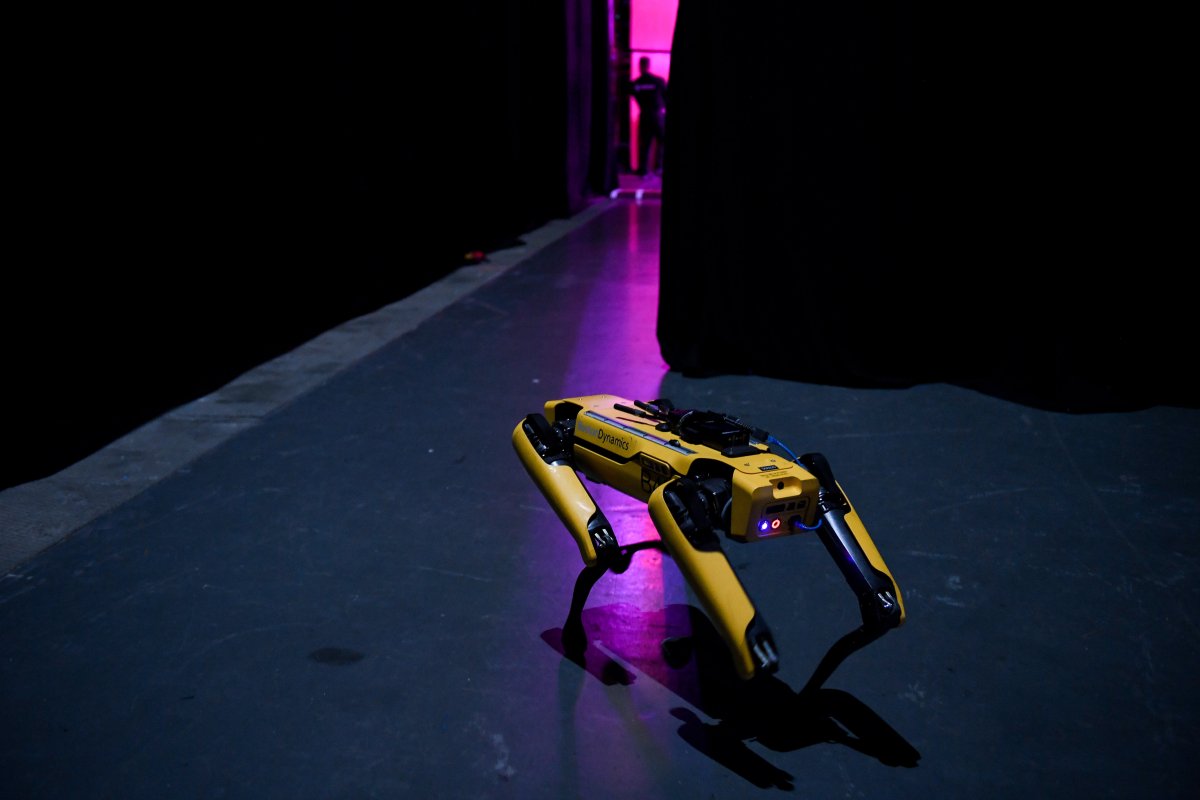
I’ve been following the evolution of the robot “Spot” for several years now. A four- legged innovation on from the company Boston Dynamics, Spot is capable of balancing, traversing difficult terrain, and more.
Spot now has a few competitors on the marketplace, such as the bots from Unitree Robotics, ANYBotics, and Ghost Robotics. It is currently being tested by various militaries for military applications.
I’ve seen videos of Spot dancing, and videos of similar robots used by the US military with guns strapped to them. I prefer the videos of Spot dancing.
Open Dynamic Robot Initiative is providing a low-cost, open-source alternative to the competitors.
I’m hoping that people continue working on this kind of robot in the spirit of open source and collaboration. I’d like to see these robots cheaper and available more widely. I also I don’t want them drafted into the military!
I see Spot and robots like it as a more likely candidate for personal transport. If the robots are electric, they could be a great alternative to wheelchairs, cars, bikes, and motorcycles. We could even build giant ones that could serve as public transportation like buses or trains.
Right now, these robots are really expensive. They are definitely out of the price range of most regular people. I’m hoping to see a transition with these robots where they become more widely available for regular consumers to purchase, like we saw with personal computers after computers were first used more exclusively by scientists and the military.
An all-terrain robot’s possible functions
This robot can go literally anywhere. That’s why I immediately recognize it as a great alternative to wheelchairs and other mobility devices for disabled people.
It seems like it would be much easier to ride one of these things around and to be able to go up and down stairs or over terrain that isn’t flat than it would be to use a wheelchair.
While I think disabled people should be given priority if personal transport robots become a thing, it would be great for the modern American who is lazy, too! Or for anyone who is trying to get anywhere, if they were made street legal.
Design concept: robot ponies
I imagine these robots essentially being used the way that horses, ponies, oxen and other beasts of burden have been used by humans for centuries.
We should be able to ride them up and down the street, sidewalk, or bike lane at the speed of a plodding pony, a bicycle, or a car. We should be able to tie them up to charge in the sun in front of the bar like stopping to water your horse on the trail. We should be able to use them to pull a cart full of produce or a sleigh in the snow.
I also thought it would be cool if designers designed these robots to look more like animals. These four-legged robots already look a lot like many animals, but the headless design is creepy and sterile. The addition to Spot of the robot arm that looks like a bit like a head and a neck gives it an appearance a bit like a giraffe, an emu, or brontosaurus.
It would be fun to be able to add mods to your robot pony to make it look more like a real pony or even an imaginary animal like a dragon or a unicorn. That would make the use of these robots as personal vehicles even more fun.
Rethinking how we use technology
Ethics are important in product design. It’s important to think about why we are creating something, especially when it comes to things that have the potential to change the world in massive ways, like robots.
One thing that I learned from studying permaculture design is the concept of biomimcry. Biomimicry guides design methodology and ethics by observing and mimicking the patterns of the natural world.
I think it would be cool if we designed infrastructure like transportation and technology like robots to mimic nature as well. That’s why I conceptualize Spot’s future as “Spot the cute pony” instead of “Spot the killing machine.”
Still, nature contains killing machines too! Human beings would be silly enough to design something to resemble an animal that could’ve naturally evolved and then turn that thing into a predator.
Please, no murderous robots
Philip K. Dick wrote a 1960 book called Vulcan’s Hammer in which robots become extremely powerful, controlling human society and slaughtering people when confused.
Netflix’s Black Mirror had an unsettling episode about a robot that looks similar to Spot going rouge and relentlessly hunting human beings through a post-apocalyptic wasteland. It is utterly terrifying to imagine these robots behaving like this in the real world.
I prefer to imagine a world in which these robots are more like creative and colorful art cars from Burning Man. I’d like to see cities that are more walkable and with more accessible public transportation. And there’s no reason why our personal vehicles can’t be fun and beautiful in addition to being functional.
Remember, product designers are driven by what consumers ask for, because they know that’s where the money is.
Personally, my design ethics demand robot ponies, not murderous K-9 units.
Think hard about what kind of future you want to see.


 Esoteric Epistemology
