Love, Understanding, and Blessedness

Spinoza on freeing ourselves from emotional bondage

woman looking at graffiti that says “freedom”
Photo by Hanna Zhyhar

In his Ethics, Baruch Spinoza explains that we are inextricably tied to our emotions. He teaches that we must learn to accommodate our bondage to our emotions in service of the good. We can overcome the emotions which assail us from the outside with the power of the emotions that come from our essence, the part of ourselves which seeks the good. If we do not understand what is good, we will be ruled by the less-powerful emotions that do not serve the good.

Spinoza believes that there is only one substance, and that this substance is God. Since we are all a part of that substance (God), we cannot act in our own best interest without considering the best interest of what we truly are: a vast and connected whole. We overcome our emotional bondage by doing what is within our own power to advance the pursuit of the good.

Understanding Emotions

Emotions are stronger according to how many external causes arouse them in us at the same time. The more we are personally affected by something, the more powerful our emotions about it will be. An emotion that can be attributed to many different causes is less potentially powerful than an emotion attributed to a single cause.

Emotions are only bad as far as they interfere with our ability to think. We are only ruled by our emotions as far as they interfere with our ability to use reason to determine what is good, and to work towards that good. Clearing this noise from our minds is how we attain freedom. Our emotions can only have power over us when we don’t understand them and their causes.

Good and Evil

We call things “good” or “evil” based on how they affect us positively or negatively emotionally. Emotions that we consciously cause in ourselves are stronger than emotions that are caused by external factors. We are more affected by things in the present, the recent past or the near future than things that have long ago passed or that are in the distant future. Emotions that we believe are necessary are more powerful than emotions that we think are unnecessary.

Emotions are also more powerful when they exist in relation to a thing that we believe is possible (while not currently existing), than when they are in relation to things that are subject to chance. Our emotions are more powerful when we believe we have the power to change something.

The power of our passions, as well as their persistence in existence, are determined by the measure of our own power against the power of external causes. Passionate emotions can best be overcome with contrary emotions. We can even more easily control our desires when they are concerned with what is contingent rather than what is present. Emotions that arise from pleasure are also stronger than emotions that arise from pain.

The carrot in front of us is a stronger motivator than the stick behind us. We are more powerful when we concern ourselves with seeking good than when we concern ourselves with escaping evil.

Using Reason

Reason should guide us towards acting in the best interest of all people, and this is the only way we can truly act in our own self-interest. An individual who is truly doing what’s best for themselves is someone who is doing what’s best for humanity. We can use reason to understand and to subsequently change our emotions. When we are guided by reason, our emotions can exist in service of the good. Reason allows us to organize ourselves in such a way that we will not be easily affected by evil emotions.

Reason leads to the understanding which allows us to identify the good, and our emotions will align with this understanding. We can use reason as a pathway to modify the mental world, which will in turn modify the physical world. The mind has power over emotions to the degree that it understands that all things are necessary. It’s not that “everything happens for a reason,” but rather that “everything happens.” Truly understanding this is the path to freedom from our emotional bondage.

Emotions as a Path to Blessedness

Our emotions are tools which are meant to steer us towards the good (what is useful) and away from evil (what interferes with finding what is useful). Emotions are “good” when they serve the good, and “evil” when they serve what is evil. One cannot truly act in self-interest while acting against the interests of others, because we and others are part of the same divine substance.

We rightly seek our own best interest, but we are only doing so skillfully when our own interests are aligned with the interests of others. To truly do what is best for you is to do what is best for the world at large. Real selfishness is, in fact, selflessness– since to be truly selfish is to act in the best interest of others, who are no different from us, in essence.

God is without passions– it does not love or hate. No one can hate God, because God is perfection, and we are God. If we want freedom, the love of God must occupy our consciousness. To love God is to love ourselves. To love ourselves is to love God. The love of God can never be turned into hate. It is not contingent upon receiving the love of God in return. It cannot be stained by envy or jealousy. By freeing ourselves from emotions that run contrary to our nature, we may be free to sculpt our universal body to match our universal mind. The physical world will come to reflect the mental world.

We cannot change what we cannot understand. The more we understand ourselves, the closer we get to God. Understanding ourselves is the key to understanding the world and to attaining freedom. Blessedness occurs when we are driven by a love for God, which is also love for ourselves, a love for others, and love for all things.


Originally published on medium.com on August 12th, 2021.

The West Desperately Needs More Eastern Philosophy

Americans would benefit from more diversity in their spirituality

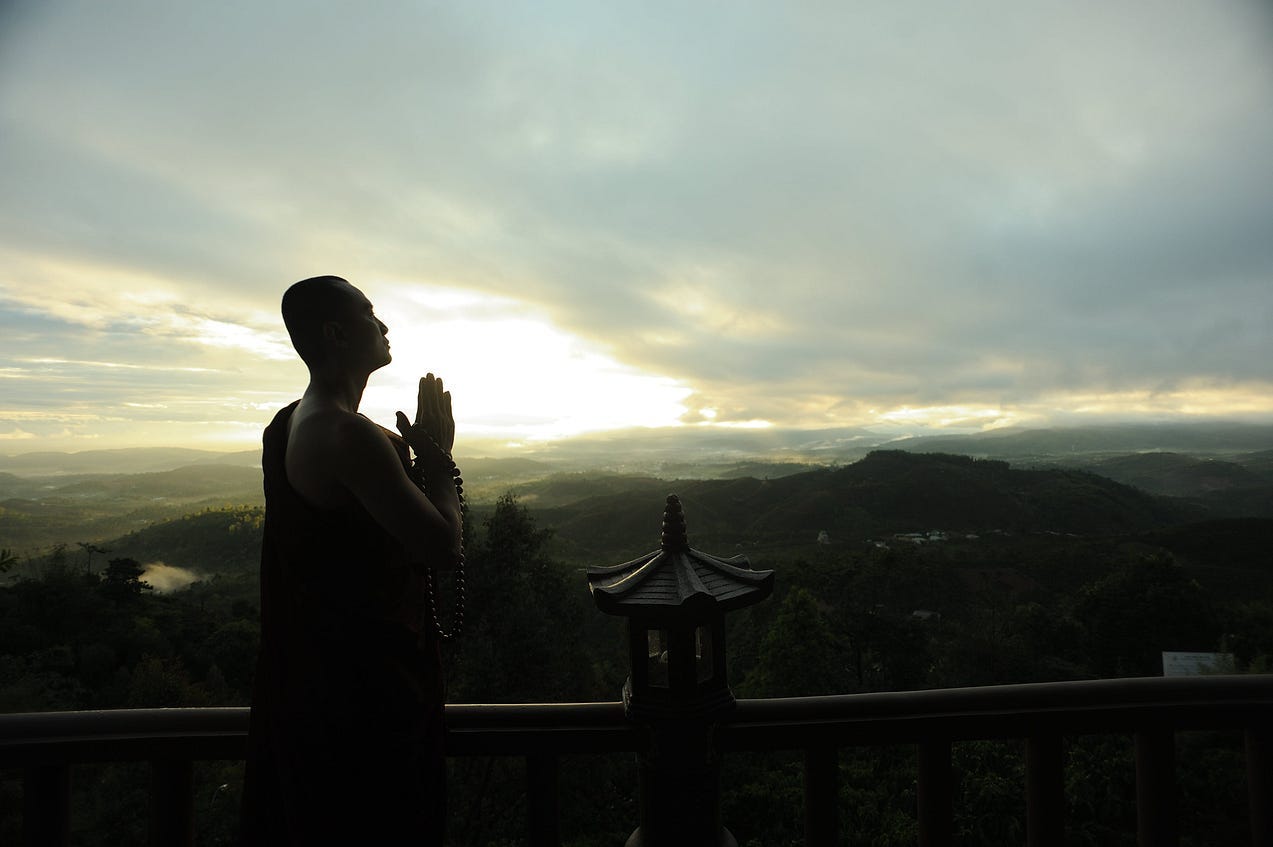
monk greeting the sunrise with “namaste”

Photo by THÁI NHÀN

I feel like being a spiritual or religious person is almost becoming taboo in my culture. People who are really into their religions tend to be seen as eccentric by your average, reasonable person.

Religion can seem a little crazy to anyone who is rational, and I certainly understand why. But I think a lot of people are sort of missing the point when it comes to religion. This isn’t their fault! It’s based on a lack of education on the matter.

I think it’s time that religions like Hinduism, Buddhism, and Taoism made a serious comeback in the West. I’d like to see the histories of these religions taught in schools more. I’d also like to see their philosophies taught in colleges more alongside the plethora of Western traditions available to college students.

Religion isn’t really about the supernatural. It’s about the natural. It’s a way of explaining the vast beauty of the natural that is beyond human comprehension. Eastern traditions helped me understand that, and I think they have the potential to help many people understand that.

Religion, in general, needs a comeback

Religion can offer a lot of things that many modern Westerners are really missing in their lives, like a sense of purpose, stronger connections to their local and/or faith community, a higher degree of self-mastery, and a greater ability to understand oneself.

A lot of people are sort of burnt out on religion in the US, where I live. Some of them have had bad experiences with it. They aren’t very willing to consider it as a possibility when it comes to life changes that could have a positive effect on their quality of life or on their family or community.

Religion, when done right, in my opinion, should make you a happier and better person. It can and certainly has been done wrong throughout history. It has also been done right on many occasions.

Religions and religious people have also done an immense amount of good in the world. I believe that we are undervaluing this potential for good in modern societies, especially in the West.

Religion can be traumatic and a lot of people hate it

Something I’ve noticed about all religions is that they all tend to preach peace, but the folklore and history behind them always tends to be wrought with violence. I think that people misunderstand their religious texts and believe that the violence of the Gods is something that is meant to be wielded by human beings.

Many Americans have religious trauma from growing up in major religions like Christianity, Islam, or Judaism. There are also a variety of cults that reside in the West. I’ve met a lot of people who have left religions or cults, often complaining of things like sexual abuse, psychological abuse, or ideological hypocrisy.

Personally, I’m not totally clear on what separates a cult from a religion besides the number of followers. The two seem pretty similar to me. I think that most people join cults because they are looking for meaning in their lives. The negative social connotations around cults come from the fact that cults are often scams which advertise spiritual meaning but don’t provide it to their followers. Religions can, unfortunately, be the same.

All faiths have good things and bad things in their histories and current practices. There will always be predatory or sanctimonious people within pretty much all of these communities. There will always be religious groups that will be nonfunctional as far as giving people the personal answers they seek on their spiritual journeys.

Changing religions can help

Some people become atheists or agnostics when they leave religion, sometimes because they’ve lost their faith in God or the divine. People also sometimes do this because of the bad experiences they’ve had with being raised in a religion or cult or with joining a religion or cult as an adult.

Some people still believe in the divine or in God but don’t want to associate with the religion, cult, or other spiritual group that traumatized them or to be reminded of it. Or perhaps there are things about the belief system or religious practices of the person’s religious alma mater that just don’t sit right with them.

It’s possible to feel negatively towards religion because of certain experiences you’ve had but also to still benefit from religion and spirituality. Offering Eastern traditions to people in the West gives them the chance to experience religion, spirituality, and philosophical questioning in a new way that might feel or function better for them.

Eastern traditions mostly preach peace

While there is violence in both the scriptures and history of the East, just like there is in both the scriptures and history of the West, Eastern traditions have a big emphasis on peace and nonviolence. Many Buddhists and Hindus, for example, are vegetarians and are vegetarian as an act of compassion towards animals. These kinds of acts of compassion are encouraged in Eastern traditions.

Eastern traditions have a lot in common, philosophically, with Western traditions, like the idea that stealing or murdering is wrong or the idea that prayer will produce good results in your life. They really aren’t that different, but I think some people get confused about things like their personal ethics when they learn them from Western traditions.

Something about Eastern religions that drew me to them more than I was drawn to Western religions is that I found it easier to make a connection between the religious practices and the positive results in my life. Certainly, this kind of tangible connection is possible in any religion. A Muslim might get a sense of community and belonging from daily prayers with other Muslims. A Christian might find a sense of purpose by feeding homeless people or caring for the sick. A Jewish person might gain a sense of personal identity from their Bar Mitzvah rite of passage.

Religious diversity and tolerance are good things

I think that different religions have a better chance of causing tangible positive changes in people’s lives based on what kinds of practices and beliefs are best suited to them. Everyone is different.

For me, certain beliefs and practices ring true and serve me better more than other ones. I think this is true for many people, partly because of how there are differences in the ways that different people’s brains work and because people have different life experiences and preferences, more generally. It’s kind of like “learning styles”– certain people “learn” religion better in different ways because that’s how they are wire.

More diversity in religion and better tolerance of different religions and religious practices would, I think, give many people an incentive to pursue a spiritual path. Spiritual paths can be long and winding. They aren’t always happy or fun, and sometimes they can be scary or painful. Doing spiritual work in your life is worth these risks, and people deserve as many opportunities as they can get to do that work.

Eastern religions can cut out the middle man

One thing that led me to Eastern spiritual practice is the idea that practice is often possible without the aid of a priest, monk, or other religious official. Something that people often don’t discover for way too long of a stretch on their spiritual path is that the answers they are looking for are usually available through internal reflection.

Eastern traditions, like meditation, encourage the kind of internal reflection that is necessary for spiritual growth. They also don’t necessarily require that you go to church or consult some kind of guru in order to have a relationship with the divine. They encourage a relationship with the divine that I feel, at least for me, is more personal. I think that more Western religious leaders could and should take note of that and encourage that kind of divine relationship in the faithful who follow them.

No one can really tell you who you are, what to believe, or how to behave in the world. Only your God or Gods really truly have that power. If you’re an atheist or agnostic, one thing you might have an easier time doing than most religious people is recognizing the strength of your internal power.

Personally, I believe that God/s lives within all of us and that everyone has access to spiritual truth through their own thoughts, words, and deeds.

If Christianity or Islam hasn’t been working for you, try Buddhism or Taosim! If you’ve just left a religion or cult, try reading religious scripture or making up your own religious rituals. You might find that some of the things you previously found fulfilling or comforting about your spirituality are still there! You don’t have to give it up entirely.

If you’re an atheist or agnostic, and you’re looking for more structure or meaning in your life, I’d recommend giving spirituality or religion another try. A belief in an anthropomorphic or wrathful supreme being actually isn’t necessary. You might also find that many religious practices work great when applied to a secular lifestyle!

Westerners: please give the peaceful traditions of the East your attention and consideration. I can’t promise anything, but you might find something there, even if it wasn’t what you were looking for.


Previously published on wordpress.com and medium.com

Don’t Shrink For Anyone

Pride is just as important as humility

a human hand holding a very small frog
Photo by Yoel Kamara

In the age of the “woke,” killing your ego has probably jumped to the top of your to-do list.

That pesky ego, you’ve got to be rid of it!

After all, how will you reach enlightenment with that presumptuous balloon of self-satisfaction swirling around your personality? Somebody’s getting too big for their britches.

Who the hell do you think you are, anyway?

Where’s your humility?

Humility is defined as “a modest or low view of one’s own importance.”

It’s good to have humility. It’s good to know that you’re small, relative to the vastness of the universe. It’s good to know that you’re not omniscient or omnipotent. You shouldn’t be expected to know or to do everything.

The kind of humility that makes you sure you aren’t qualified to perform brain surgery, the kind that reminds you to listen as well as speak in a conversation, the kind that lets you hear what other people have to teach you; that’s the kind you want.

It’s not about thinking less of yourself, right?

It’s about thinking of yourself less.

Worry about others. Be grateful for what you have. Being humble is always a wise choice, right?

How could any of this be bad advice?


It seems like the world is always encouraging us to cut ourselves down to size, but in my humble opinion, being humble isn’t always the best policy.

I’m here to introduce a new concept:

Toxic Humility

Do you sing in the shower?

I do.

Guess what: I don’t sound like Celine Dion. And I’m guessing you probably don’t either. Does that mean it’s not okay for me to enjoy the sound of my own voice, or for you to enjoy yours?

What if you look down at your body in the shower?

What if you think for a moment, *gasp*

“I’m attractive”?

That would be wrong, wouldn’t it? Self-obsession, vanity, conceit, ego.

Oh no, now you’re appreciating your new bathroom tile! Materialism! Your list of sins against your humble higher self is getting longer and longer, and you haven’t even had breakfast yet.

You might visualize Gandhi or Mother Teresa hovering above you in a cloud of ether, shaking their head and saying,

“tsk tsk.”

This is so not spiritual.

Why do you need to spend so much time humbling yourself, anyway?

After all, you probably weren’t even that great, to begin with.

There’s always going to be someone faster, stronger, smarter, or prettier than you. Everything you’re good at– there’s somebody who can do it better.

Also, the culture and economy that surrounds you is basically a giant conspiracy to tell you that you suck.

You’re not as strong as that athlete, but take these supplements and hire this trainer you might get close. You’re not as pretty as that model, but if you buy these clothes and wear this makeup, you might get close. You won’t ever be a famous millionaire, but you can read about famous millionaires and dream about what it would be like to live their lives.

The more you hate yourself, the easier it is to sell you things.

Maybe that’s why most of us hate ourselves, quite a bit of the time, more than we admit, to ourselves or to others.

We don’t want people to know we hate ourselves, but it’s leaking out anyway.

Self-deprecating humor is becoming popular these days. Popular to the point where joking about being suicidally depressed has become almost the norm. It’s all over the internet. We’ve all seen the memes– and we’ve all read the writing on the wall.

It’s just not cool to think you’re cool anymore.

…Except, you are, aren’t you? At least sometimes.

You were pretty cool when you helped your friend move. That was a lot of boxes you carried. You were rad when you learned that new oboe song. Remember when you couldn’t even play a scale?

That time you bought a sandwich for a homeless lady? I mean, you’re not Jesus or anything, but isn’t it ok to be proud of that?

How about when you graduated from college? Pretty groovy. The day you got that promotion? Weren’t you the friggin cat’s pajamas then?

Do you humble yourself to avoid making others uncomfortable?

If you’re making it obvious that you’re great, other people might not feel as great about themselves. Jealousy is frustration with something that you yourself lack, and others seeing you with what they wish they had won’t always make them friendly.

You might remember this from grade school.

You’re not smart, you’re a “know-it-all,” and you’re not well-behaved, you’re “teacher’s pet.” Maybe not everyone needs to know that you got an A on your spelling quiz. Don’t you want to have somebody to eat lunch with?

It’s natural to want to reign it in a bit. You wouldn’t want to make others uncomfortable. It’s a good instinct. Nobody likes the guy who only talks about how awesome he is.

Of course, you don’t want to be that douchebag– but it’s also possible to swing too far to the opposite end of the arrogance spectrum.

Sometimes we don’t want to be exceptional because we want people to like us. If we are good at things, or if we’ve done something good, or if there’s something inherently good about us, that makes us different, and this could be threatening to others.

Because what makes us exceptional also makes us different, we might end up destroying the best things about ourselves to satisfy our impulse to conform.

If you’ve threatened others in the past by being extraordinary, you might have some idea of what I’m talking about. You might have let this hold you back from trying things, or doing things, or being things.

You might have developed a bad habit–choosing the comfort of the people around you over your own freedom to be authentic and free.

Always putting other people first and neglecting your own needs doesn’t help you or them. It’s also just as egotistical as always putting your own needs first.

Not only are you selling yourself short when it comes to the things that matter to you, but you might even be allowing yourself to harbor resentment against others for something you’re doing.

This isn’t to say that there aren’t people who will take advantage of the space that you free up by keeping yourself small — but anything negative you feel towards them will only hurt you, and will undeniably be caused, if indirectly, by you.

Ironically, the person that you’ll turn into by trying to please others is probably not the person you thought they would like in the first place. Nobody likes a sychophant- they’re just as bad as the Chad who can’t stop patting himself on the back.

Come to think of it, these two archetypes really are peas in a pod, aren’t they?

There will always be the kind of person who thinks so highly of themselves that they believe they deserve everything, and there will always be the kind of person who thinks so lowly of themselves that they believe they have to give everything to the person who thinks highly of themselves.

From the outside, each of these characters might look like a hero, or a villain, at times. A martyr, a traitor, call them what you want; the truth is– they’re both doomed to suffer in the roles they’re playing.

You don’t want to be either of these people.

It’s true that you’re not above anybody. But you’re not below anybody, either.

It’s okay to try hard, it’s okay to be good at things, and it’s okay to be happy when you succeed. It’s okay to take pride in your skills and talents. It’s okay to think you’re smart. It’s okay to think you’re pretty. It’s okay to like yourself.

This isn’t an excuse to be greedy, to brag, or to otherwise be a jerk.

This is permission to let yourself be awesome; without any anxiety about how that might make others feel. If you’re making other people feel bad by being the best version of yourself, then they are the ones with the problem, not you.

Don’t shrink for them.

Take up space.


Originally published on medium.com on September 11th, 2019. 

The Overwhelmingly Vast Majority of Hindus Are Not Nazis 


Stop confusing the two!

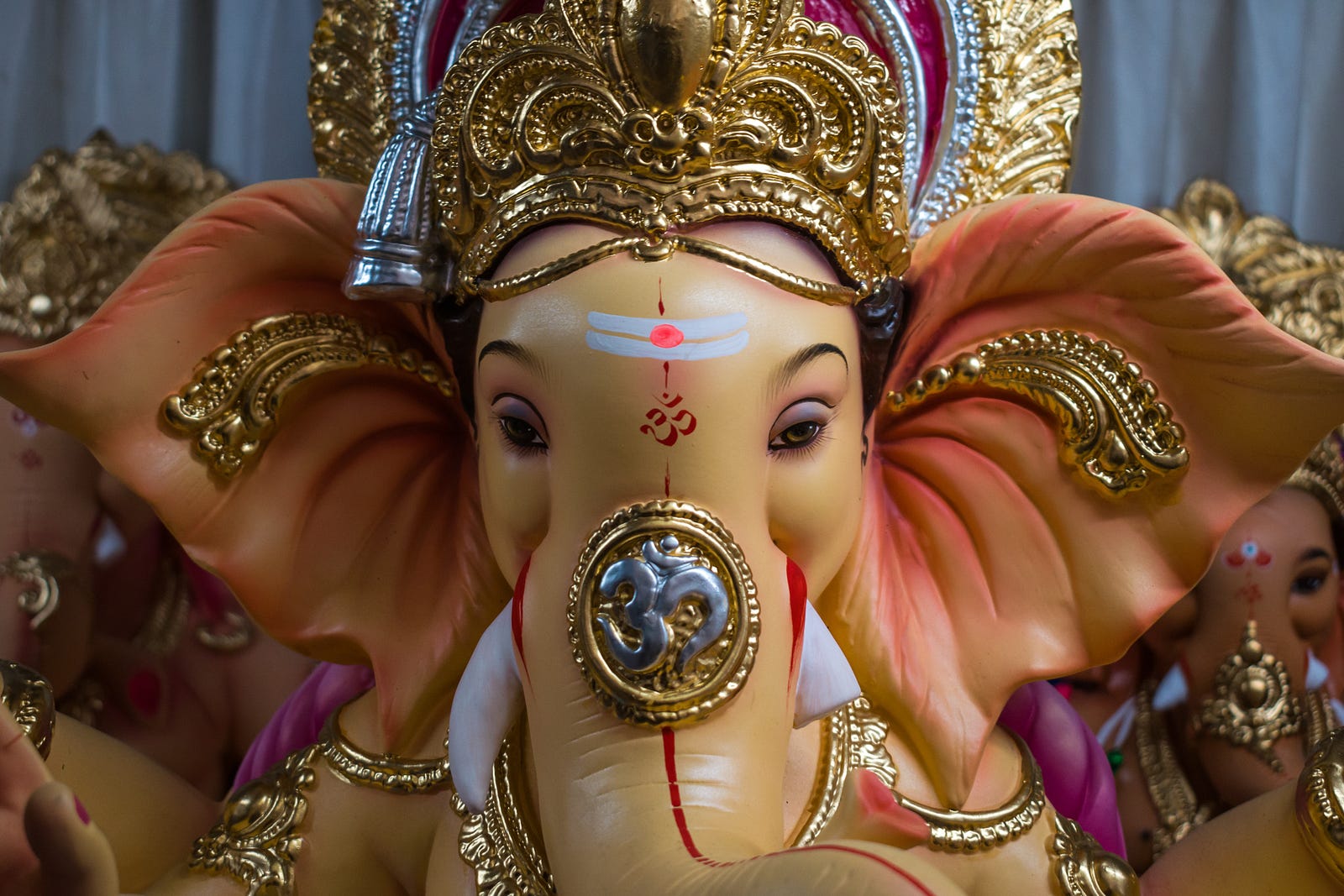
very pretty statue of lord ganesha
Photo by Sonika Agarwal

Explaining my religion is complicated. I was raised Wiccan or Neo-Pagan, and my family on that side is mostly Catholic. My family on the other side is mostly Protestant. I am a practicing Hindu. 

I came to be a practicing Hindu, not through simply deciding to be a Hindu, but by pursuing religion and spirituality in an abstract way, which led me, ultimately, to religious beliefs and practices that were consistent with Hinduism. I explored the world, I explored different spiritual practices, and I ended up repeating the ones that worked for me the best. Gradually, I found myself doing things like chanting traditional Hindu mantras and praying to Hindu Gods, and I began to identify as a Hindu. 

My current religious practices are a mix of how I was raised, Neo-Pagan practices, and the religion that I found on my own spiritual path as an adult, Hinduism. My Hindu practices are mostly consistent with a branch of Hinduism called Shaivism, and with a branch of Buddhism called Vajrayana Buddhism. I learned from research, after adopting many of my current practices, that my Buddhist practices have pretty obvious roots in ancient Vedic Hinduism. I’m also into Chaos Magic, but I don’t think that’s inconsistent with any of my other beliefs.  

I went on a quest to learn about the religion that I had found I was already practicing, because I wanted to engage with it more fully with on a spiritual level. On my quest, I did a bunch of research about Hinduism. I found it to be strangely associated with Nazism, largely through the influence of the philosopher Friedrich Nietzsche on a woman named Savitri Devi and Devi’s influence on Hitler and the the Third Reich. 

I no longer buy the narrative that Devi was Hitler’s Nazi priestess or the idea that that Nazism has any real roots in Hinduism. Nazism is built, in part, on horrific misinterpretations of Hindu philosophy, which honors the cycle of death and rebirth and the unique roles that living beings play during their time on the planet Earth. 

My theory is that Devi was basically Hitler’s hostage, and that her real beliefs about the world were twisted by Hitler to fit his Nazi ideology. Either that, or she became confused, as Nietzsche had been when learning about Eastern philosophy through the influence of the philosopher Arthur Schopenhauer. Schopenhauer studied Eastern philosophy, and one of his main takeaways was an Eastern interpretation of the concept of compassion. 

Compassion in Eastern traditions is a kind of compassion that more deeply understands the experience and mindset of the individual who is not oneself. Compassion in Western traditions is often associated with submissiveness and cowardice, and not honored or explained in quite the same way as it is in Eastern traditions, except maybe, through Western religions, sometimes. There are similar concepts of compassion and peace in Christianity, for example. 

Devi and Hitler, like many Hindus, were vegetarians. It would seem that they had some kind of compassion for the natural world. And yet, Hitler’s regime led to the torture and slaughter of millions of people.

This isn’t the kind of thing that my Hindu or Buddhist practices advocate for, and the confusion of the two, in my opinion, should be included in the list of Nazi crimes against humanity, as this kind of cultural erasure is, in itself, an act of genocide. The swastika, for example, which is important in Hinduism and also exists in many other cultures, has now come to globally symbolize Nazi philosophy. 

Hinduism, and the many Eastern faiths that have been spawned by its ancient Vedic roots overwhelmingly focus on practices of peace, nonviolence and self-discipline. Philosophically, they tend to focus on the importance of cultivating of love, compassion and understanding for all living beings on Earth. 

The self-discipline and personal growth aspects of the Hindu faith, I think, are where the Nazis began twisting Hindu philosophy to fit their nefarious ends. One theme in Hinduism is repetition, like the repetition of mantras and certain tasks. This kind of repetition leads to the kind of mastery of different skills or disciplines that would be valued in Nazi philosophy. This kind of repetition in the natural world leads to literal evolution. Practice might not make “perfect,” as they say, but you can’t deny that you usually get better at something if you do it a bunch of times. 

Evolution, I think is what the Nazis were attempting to force with their torture and killing of millions of people. I don’t think that their propaganda and ideology, which attempted to convince the world that huge populations of people were worthy of indiscriminate punishment based on their immutable physical characteristics or social classes alone, expressed their true goals. Their true goal was to place stress on humanity and to traumatize it in such an irrevocable way that it would be forced to evolve in a new direction. The cruelty itself was the point. 

If the Nazi goal was to create a version of humanity that was objectively better, I don’t think the path they chose to get there was effective. Humans, because of our powers of self-reflection and our ability to plan for the future, are different from the vast majority of living beings on this planet. Because of our differences we wield immense power. Massively traumatizing us, as through war, will not necessarily cause the kind of evolution we want. Sometimes trauma causes growth in people, but much more often it makes them terribly ill. 

War has made us sick as a species, and further traumatizing us through further wars will not force us to evolve fast enough to save ourselves from ourselves. We need to find a different approach to reigning in the chaos of humanity. War is everywhere. It’s even in the streets of my hometown, and it could always come to the streets of yours. 

We will not solve the world’s problems by torturing the populace. Every act of torture is an experiment, and every failed experiment runs the risk of becoming an act of terror or a horrific crime against humanity. Torturing people might make them stronger or more compassionate sometimes, but it’s a high stakes gamble. That’s not a bet that I’m willing to take for the sake of creating a better or stronger humanity. It doesn’t seem like it will work! 

People often get confused and think I’m a Nazi because I’m talking about Hinduism, or about Nietzsche or Schopenhauer or because they see the Hindu symbols tattooed on my body. I’m not really offended by this misunderstanding because I understand where it comes from, but I think it’s a shame that Westerners are being deprived of the wisdom that my religion and other religions like it have to offer by these unfair negative cultural associations between Hinduism and Nazism. 

Colonization in the East by the West began in ancient times and the warping of these traditions by the West has continued since then. It’s almost like the power of real, authentic love and compassion that is behind these traditions is too much power for the colonial West to allow anyone to hold besides itself. 

For the record: Hindus are not Nazis. 

We are mostly peaceful, and we often even take our peacefulness to extremes. I’m an extremist in some ways, and I know that means I won’t always get along with everyone. But I’d rather be an extremist for love, compassion, and peace than an extremist for hatred, bigotry, and war, and I just want to make sure that everyone knows which one I am. 

Why I Treat Spirituality Like a Buffet


There are truths in all traditions

altar with Buddha statue and crystals
Photo by Samuel Austin

“The possession of knowledge does not kill the sense of wonder and mystery. There is always more mystery.”―Anais Nin

My mother was raised Catholic and is not totally happy about it. She has expressed to me that she experienced trauma related to ideas about original sin that were taught to her as a child. Not wanting to instill in me the same feelings of guilt and shame, she chose to raise me outside of organized religion.

Feeling unsure about her own spirituality but not wanting me to miss out on the experience, my mom ended up raising me in an eclectic neo-pagan tradition. She taught me about different spiritual practices from around the world and practiced a variety of rituals with me.

My mom is now a staunch Atheist, but I’m glad that she chose to raise me with some kind of spiritual tradition.

Growing up, we celebrated holidays like Christmas and Halloween, but we also celebrated things like Winter Solstice and Samhain. One year on May Day, we made gift baskets and left them on the unsuspecting doorsteps of our friends and family, a throwback to the pagan traditions of my Celtic roots. We attended church masses with our Catholic family and Passover Seders with our Jewish friends, and at home, we sometimes even cast spells.

In the absence of a strict religious dogma, my mom taught me ethics that were based on treating others how I would want to be treated.


The Golden Rule

To explain the Golden Rule my mom gave me a Wiccan rhyme:

“Ever mind the rule of three, what ye send out comes back to thee!”

These days, I relate this memory to things like Kant’s Categorical Imperative, Newton’s Third Law of Motion, and eastern ideas about Karma. I don’t take this idea totally literally. That is, I don’t believe a cartoon God sits in the sky punishing or rewarding us for our actions. Instead, I’ve come to accept this pervasive idea about the world as a useful, if more ambiguous kind of spiritual knowledge.

The Rule of Three is a kind of truth about the world that’s been expressed by many in many different ways and seems to be true in practice. While I don’t believe in an arbitrarily judgemental universe, it does seem that the scales of our lives and the world always “balance” themselves somehow in the end, however complex the circumstances are. While it’s true that sometimes bad things happen to people with good intentions and good things happen to those with ill ones, the wheel always turns.

My spirituality is based on finding ideas like The Rule of Three and applying them to my own life.

These are ideas about life that seem to persist throughout most faiths and practices, despite their vast diversity and disagreement. As I grew older and I read more philosophy, theology, and mythology, I discovered that there are many common themes like this throughout all faiths and cultures.

While we all have our own traditions and ideas about God, life, and morality, I truly believe that most of us share certain basic human values at a deep level.

My opinion is that it doesn’t matter if you’re religious or spiritual, what your practices are, or if you believe in God. There’s a utilitarian value in spirituality whether you’re a fanatical fringe zealot or a calm, rational atheist.

You don’t have to take it too seriously, either. Spirituality has a sense of humor.


The Spiritual Wisdom of Religion

Spirituality helps us understand the values that bond us together as human beings, across race, nationality, gender, age, class, and ideology. It helps us pass on fundamental truths about life, ethics, and meaning through rich and layered metaphors, through stories and speech, through dance and song, through food and wine. It helps us connect to our roots and stay grounded in rituals and traditions. It helps us stay supported and connected by creating community.

Sure, it’s easy to point out the atrocities perpetrated and justified by religion throughout history– but true spirituality isn’t about submitting to some false authority with human flaws. True spirituality is about love, introspection, learning, and growth. It’s about putting in an honest effort to be a better person, and connecting with others who are trying to do the same. It’s about allowing yourself to be at peace in an uncertain universe.

While I’ve never fully committed to any one spiritual tradition or practice, I try to treat spirituality like a buffet. Faced with unlimited options, I take what nourishes my mind and soul and leave the rest.

I guess I’m an Omnist — but I don’t really like to put a label on it. Labels are limiting.

Even if you believe that your particular holy book was literally written by God, you have to admit that s/he’s sort of hard to understand sometimes. I’ve never read a religious text that doesn’t try to say things without quite saying them outright, and in my opinion, this is because of the nature of what they’re really for.

Spiritual ideas aren’t instruction manuals for how to live. They exist in order to encourage us to write our own.

These stories and adages are designed to be a little bit confusing because they are for our souls what a puzzle might be for our minds. We don’t do puzzles to find the solution, we do them because we enjoy and benefit from the process of solving them. The relatable vagueness of these stories makes them accessible to a wide audience.

We shouldn’t be good people because we are told to be, or because we are afraid of punishment. It’s better to act in a way that you truly believe in your heart is right. This kind of honest intention always produces better results than following instructions or trying to avoid pain. No one can tell you what to believe, and belief has no power unless it’s authentic.

I’ve found spiritual wisdom in the Bhagavad Gita, The Vedas, The Bible, The Torah, and the Qu’ran, but I’ve also found it in children’s books, sci-fi novels, poems, songs, and folklore. I’ve also gained the same kind of insights from simply observing the people around me, or having a conversation with a random stranger. Opportunities to learn and grow are everywhere, as long as you’re paying attention.


Belief Has Power

Regardless of what you believe, you can’t deny that believing in something is a powerful thing to do. We’ve all experienced this in our own lives — it’s hard to accomplish anything if you don’t at least have faith in yourself.

I’m on the fence about a lot of things when it comes to spirituality. I’m not sure if there is God, or what God is, or of where, if anywhere, I’m going to go when I die. I’m not sure if I’m a good person for trying to learn and grow and be better, or if I’m a sucker for not doing whatever I want all of the time, regardless of the consequences. I’m not even completely sure if I have free will, or if my choices really matter.

I think there are many questions in life that we will probably never get the answers to. If our species figures out a way to survive after the Sun burns out, I think it’s likely that we will still be combing the universe for answers, desperately trying to satisfy the insatiable curiosity that is part of what makes a human being, a human being.

But belief is a choice. I can choose to believe in something because it makes me feel happier, or more at peace. I can choose to follow a rule because it benefits me and those around me. I can choose to practice a tradition in the service of programming my brain with positive habits and ideas. I can choose to believe that I live in a benevolent cosmos because it helps me sleep better at night.

So I will. I’m always nicer when I get a good night’s sleep.


Originally published on medium.com on December 25th, 2019.