
And what you can do about it
While slavery might seem like a horrible relic of the past, the truth is that there are more slaves living on Earth today than at any other time during the history of our species. Part of this is due to population growth, but many people living in third world countries are ignorant of the other reasons why so many slaves exist in the world today.
There are around fifty million slaves alive on Earth. It’s difficult to get an accurate count.
Our current global economy cannot exist as it currently functions without slavery. Every industry that brings us a good quality of life in the first world is built on the backs of human slaves in the third world and on the bottom socioeconomic rungs of more developed countries. This is simply an unsustainable situation and it cannot continue forever.
For thousands of years, people around the world have demanded a higher degree of human and civil rights. Things like slavery and the movements for their abolition have helped to spur these kinds of movements. It is my hope that we will evolve morally enough as a species to be able to abolish or at least substantially reduce slavery in a meaningful way.
1. Prisons
Prisoners in many countries are forced or coerced into working for less than the minimum wage of their countries, or for no money at all. Prisoners are often subjected to inhumane and unsafe working and living conditions.
While completely legal in most cases, prison work programs often amount to what is basically slavery by all meaningful definitions of the word. According to the ACLU, 70% of prisoners are not even able to afford basic necessities of life within prison with their prison wages. Seventy-six percent report being forced to work under the threat of additional punishment.
2. The Garment Industry
Garment workers, who are usually women and children, are often subjected to long hours without breaks. Workers are sometimes forced into contracts that they can’t leave in the middle of without sacrificing all of their earnings.
“Fast fashion,” or the manufacture of cheap, low-quality clothing en masse, hugely drives human slavery on a global scale. This kind of marketing strategy is referred to as “planned obsolescence,” which basically just means, “made to break.” That crappy T-shirt you bought last week that already ripped at the seam? That seam may have been stitched by child slave labor.
3. The Mining Industry
The mining industry is one of the most dangerous and environmentally destructive industries on earth. It’s incredibly dangerous. Working a mining job puts you at risk of a serious accident and of long term health problems from working under hazardous conditions. Miners often do things like inhaling toxic chemicals on a daily basis.
Children are often employed as miners. Many of the products that most of the world uses on a daily basis depend on mining for their production. One horrifying example of this is the cobalt industry.
The cobalt industry seems almost to be a continuation of the stomach-churning abuses in the rubber industry that took place in the same parts of Africa, decades prior to cobalt being used for laptops and cell phones. The working conditions of both child and adult workers mostly amount to exploitation at best and slavery at worst in both situations.
4. The Agriculture Industry
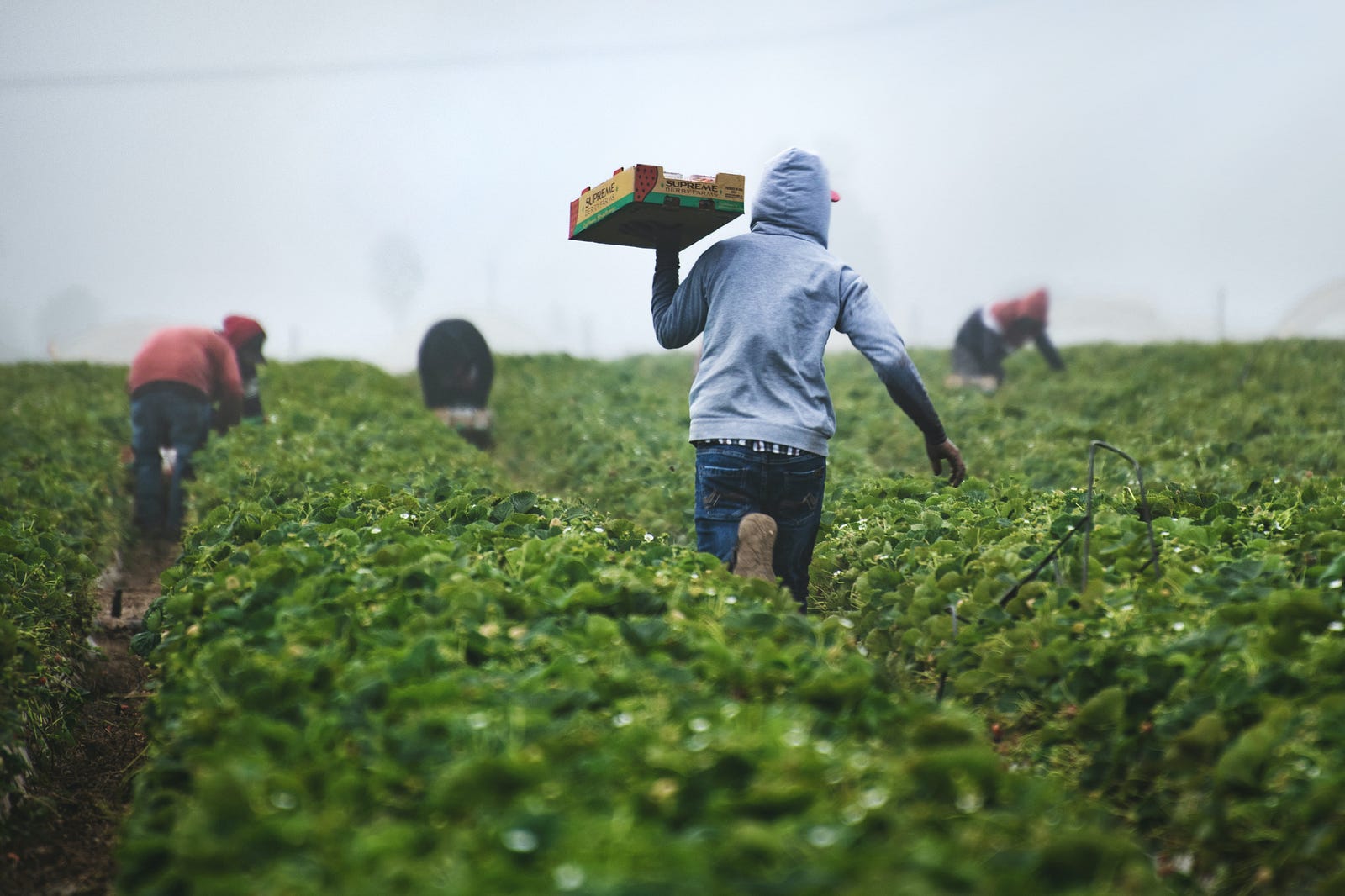
Like miners, agriculture workers are exposed to a lot of toxic chemicals, often from pesticides. They often also work long hours for minimal pay, often under a hot sun. Fruit picking is repetitive and boring labor, but it’s one kind of labor that machines can’t quite do just yet. Robots are, as of yet, unable to tell when a piece of fruit is ripe as well as a human can.
Agriculture workers who work in slaughterhouses run the risk of injuring themselves with the machinery and tools used in the trade. It’s also traumatic working in this industry because of the way the animals are treated in addition to the terrible working conditions.
In the United States, many immigrants from South and Central America end up working in the agriculture industry, either as fruit pickers or as slaughterhouse workers. They do the difficult jobs that no one else wants to do, and then are sometimes even imprisoned or deported, having committed no other crime than working hard and seeking a better life for themselves and their families.
5. The Sex Industry
The sex industry is global, huge, and very morally complicated. Many sex workers are voluntary participants in their trade, or have no other better options available to them. Many do not want to be “saved,” or removed from the industry and forced to work other jobs.
Women leaving the sex industry are often “rescued” and then enslaved again in the garment industry. They often resent this, rather than being grateful for it, because they make less money and are treated similarly poorly by management.
At the same time, many people are forced or coerced into the sex trade. Many people who do sex work voluntarily are also raped and sexually abused. Sometimes they are otherwise harassed and threatened due to their participation in it.
6. Adoption and Surrogacy
Adoption and surrogacy is another very morally complicated area of the global economy. While adoption and surrogacy sometimes work out great for everyone involved, and while many healthy families come out of these kinds of agreements, there is also slavery and abuse rampant in the industry.
Sometimes women will have their babies stolen and sold on the black market. Sometimes surrogates or birth mothers are coerced into agreements that they don’t understand or aren’t in full agreement with.
Sometimes people choose adoption because they aren’t able to raise a child, even though they don’t really want to give up their baby. Sometimes people choose to be surrogates or sperm or egg donors in exchange for money when they have no other options available to them.
Because of the delicate and personal nature of this industry, and because there are so many legal gray areas around it, the potential for abuse is high.
7. Forced Marriage
It’s estimated that around fifteen million people in the world are living in forced marriages. Many of the people forced into marriages are children.
While forced marriages are illegal in many places, they still happen extremely often. This is often in service of upholding cultural or religious traditions, but sometimes is also due to economic pressure. A child may be sold into a marriage to keep the rest of the family afloat financially, for example.
Slavery is everywhere — what can we do?
There are a few things you can do to make the situation better! You can do research about the products that you buy and where they come from. Vote with your dollars and support brands who care about labor ethics.
You can also reduce your consumption of consumer goods overall. Do you really need that extra sweater, just because it was on sale? Think about what you are buying and why. Take an inventory of the things you own and think about how often you use each thing. When you buy gifts for people, think about what they actually need and will use.
You can also reuse and recycle things more. Coffee grounds make great fertilizer for your roses and egg cartons make great planters for seedlings.
I also think it would be awesome if everyone would take the time to learn about what slavery is like from people who have actually been through it. It’s one thing to read a history book about something like colonization in India or chattel slavery in the United States, but there are many people alive today who have actually been enslaved, and their stories, in my opinion, are more relevant to discuss today. That said, learning and remembering history is very important.
Don’t Forget
Be grateful for what you have. Remember that someone probably worked just as hard as you did to get it, just to create conditions where it was possible for you to have it in the first place. Offer your positive thoughts and prayers to people who are still trapped in slavery. Try to be understanding and compassionate towards people who have lived through it.
The world today truly does run on slavery, but it doesn’t have to be that way. Don’t forget that slaves still exist!
 Esoteric Epistemology