You Don’t Have to Show Your Art to Anyone


The joys of creating just for you
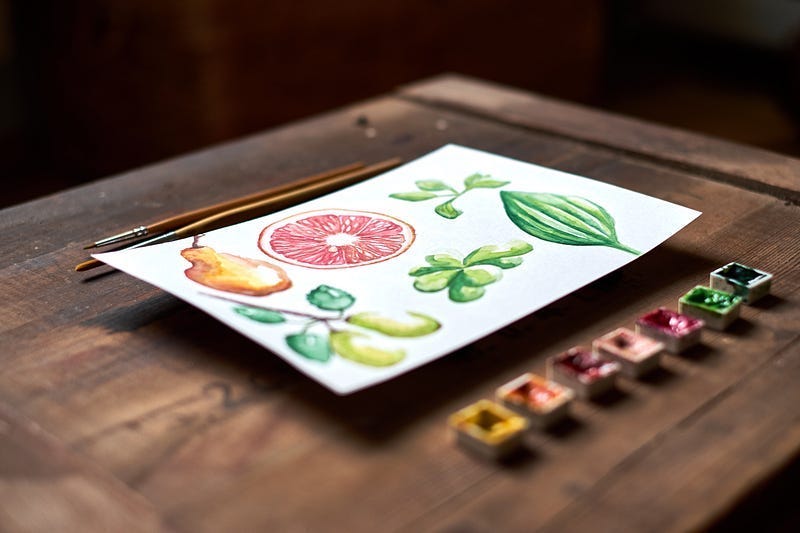
water color paints, paintbrushes, and a painting of fruit sitting on a wooden table
Photo by Atilla Taskiran

Why is it so easy sometimes, and so difficult other times?

There are lots of reasons for this, but sometimes it helps to simplify things a bit. When we make the decision to create something wholly for our own satisfaction and benefit, it can be a great cure for creative block, mostly just because it allows us to be ourselves with a little bit more comfort and ease.

Shaking off the fears of failure and judgment

When you make a piece of art just for yourself, the pressure to impress, please, or touch others is off. You don’t have to worry about who will like it, how it will be received, whether or not you can sell it, or if anyone will truly understand what you were trying to say. Taking this kind of pressure off of ourselves gives us more freedom to express ourselves honestly.

Be honest — when you put pen to paper (or whatever your equivalent is) don’t you hesitate sometimes, thinking about who will read what you’re about to write? I hate to think of the many great ideas that have been lost to the world because of an artist’s brief moment of doubt.

Artists are often perfectionists, and it’s easy to want to toss out a whole idea because it’s not up to our own standards, or to the standards by which we believe we will be judged. Throwing away the measuring stick is one of the best ways to encourage growth.

It’s a shame for anyone to have to be boxed in by the expectations of others, or discouraged by fear and the possibility of failure or embarrassment. We have to be free to create dangerously without limits. The best, most unique ideas come from thinking outside of the box, and it’s easy to be comfortable doing that when the potential consequences are less of an issue.

Art is about communication…

When we make a piece of art and show it to someone else, we are allowing that person to see the world from our point of view for a brief moment. One of the reasons why art is so necessary is that it helps us to feel less alone in a world that is sometimes scary and confusing.

Art is a means of communication that is often superior in many ways to more direct ones, despite often being far more ambiguous. When we make art, we can’t guarantee that others will understand what we are trying to say or feel the way we felt. Still, we’ve all experienced it– when you do feel that connection to another person’s art, it’s pretty hard to ignore.

…not just with others, but also with yourself

While art can be a great tool to express to others what you’re thinking and feeling, it’s often just as important, if not more so, to express your thoughts and feelings to yourself. Our minds are complicated, and sometimes it’s hard to decipher what we truly think and feel.

Art can be a powerful tool for introspection and self-reflection because it allows us to see the things that we are hiding from ourselves. Like our dreams, art tends to reveal recurring themes from our subconscious mind, which can otherwise be difficult to access with our conscious efforts.

Sometimes we don’t truly understand our own thoughts, feelings, hopes, fears, or motivations until we turn our focus inward to try and understand ourselves better. While others can enjoy and connect to your art, it’s important that we also take this inward step. If you aren’t looking inward first, how can you be confident in what you’re expressing outwardly?

Understanding our own subconscious drives is a powerful tool for taking ownership of our conscious actions. This is important for happiness because life becomes more meaningful the more our actions line up with our true beliefs. We can’t change our own thoughts or behaviors until we understand why we are thinking and behaving the way that we do.

Making art doesn’t just make you a better artist, it makes you a better person.

Learning to love the process

When I create art for myself, it reminds me that the true joy in art is in the creation of it, not in the final results. This is true about most things in life– you’ll be happier if you focus on the journey instead of the destination.

When you create just for the sake of creating, you remember that creating itself is the point. Creation is not just a means to an end but, also an end in itself. This is a very easy thing to forget.

Loving the process also improves our process. Often we can get hung up on a false dichotomy: quality vs quantity. The truth is that we can’t help but get better at the things we do frequently, and that quantity will eventually lead to quality, as long as we persevere. For every hundred scribbles we make on our own time, maybe we’ll find one that we want to share with the rest of the world– if we’re lucky. This might seem daunting, but really, it’s a good thing.

When we give our full attention and a healthy mindset to our practice, it becomes deliberate, helping us learn, improve, and dependably moving us closer to our goals. This kind of practice might not make us perfect, but it will make us just a little bit better than we were yesterday. The process is where we learn where our strengths and weaknesses are, what we like and dislike doing, and what feels meaningful to us.

No act of creation is ever a waste of time.

Brain benefits

In addition to getting your creative juices flowing, making art (even if it’s just for you) has a lot of other practical benefits.

Making art is just good for you.

In fact, it encourages the release of dopamine, a chemical that makes us feel good. It also lowers levels of cortisol, a hormone that makes us feel stressed. It’s also been shown in many studies that making art enhances cognitive function and improves mental health.

Creating art forges new neural pathways in the brain, allowing us to think more creatively at a tangible, physical level. This helps us to respond to the world in a way that is more intelligent and integrative, building connections between our logic, emotions, and imagination. Making art is also a proven method for treating substance abuse, and can help us heal from trauma.

It doesn’t even take a very big time investment to start seeing benefits. A 2016 study showed that just 45 minutes of making art is enough to improve your feelings of self-confidence. But you don’t need a study to tell you that– you’ve probably experienced it.

All of this in less than an hour.

All of this without rules, deadlines, or criticism.

All of this without worrying about likes, claps, or upvotes.

All of this from the safety and comfort of your own home.

You don’t even have to put pants on!


Originally published on medium.com on December 19th, 2019. 

Why I Started Eating Meat Again After 17 Years of Vegetarianism


The health and ethics of eating are complex

Photo: Idella Maeland/Unsplash

I became a vegetarian when I was eight years old, about three months before my ninth birthday.

I had been reading an article about vegetarianism in American Girl magazine, a periodical often subscribed to by eight-year-old girls. When I read the article, something clicked in my brain. I wasn’t sure why, but vegetarianism made sense to me. I went to my mom later that day and asked her if I could stop eating meat.

She was pretty receptive to the idea and recalled having had the desire to stop eating meat as a child, too, but said she’d been scoffed at by her own family, who insisted she’d get sick if she stopped eating meat. Eager to support my bodily autonomy in a way that her own parents didn’t, my mom told me that the decision to eat meat was entirely up to me.

We went to the grocery store and bought beans and rice, tofu dogs, veggie burgers, edamame, and lentils. My mom’s chief concern with my decision was me not getting enough protein, which I soon learned was a common concern among those unfamiliar with a vegetarian diet.

Later that week, she gave me Peter Singer’s book, Animal Liberation. Though perhaps a bit dense (and intense) for a person of that age, the book was an eye-opener for me. I loved animals and the fact that they suffered so needlessly for our benefit seemed like a horrible atrocity to me.

I decided to become an activist, joining PETA and placing the “meat is murder” stickers they sent me everywhere. As an adolescent, I became a fan of The Smiths’ 1985 album by the same name. Seeing a lack of vegetarian options in my middle school cafeteria, I wrote a letter to the superintendent of the school district asking for changes to the menu.

PETA sent me DVDs of footage from inside of factory farms, and the anguished screams of suffering cows, chickens, and pigs became burned into my consciousness. I didn’t understand how anyone could possibly eat meat. After a while, it didn’t even seem like food to me anymore– more like a gory biohazard.

It’s much easier to eat a low-fat diet as a vegetarian, and I figured that this made vegetarianism healthier.

Over time, I stopped being a fan of PETA, even as I still believed strongly in my vegetarianism years later. I got into many arguments with passionate meat-eaters and I began to see that the ethics of groups like PETA were far more extreme than my own actual beliefs. However, that didn’t stop me from continuing with my diet.

Whenever anyone asked me why I wasn’t eating meat, I was quick to engage them in a debate. I did a lot of research and memorized some main points defending my lifestyle. I brought them up so often that it became a habit:

Cruelty

Why should we eat meat when there are other options available? Why cause needless suffering to sentient beings?

The way we mass-produce meat in the modern world is unquestionably cruel. There’s lots of evidence that animals experience pain and suffering on factory farms. For me, this seemed the most obvious reason to be a vegetarian. I loved animals, and I didn’t like the idea of causing them pain.

Health

Many people think a vegetarian diet is healthier, and I certainly did when I was a vegetarian. Certainly, it’s possible to be very healthy on a vegetarian or vegan diet. It’s much easier to get protein than people realize, and it’s possible to supplement things like vitamin B12.

When I was a vegetarian, I thought things like high rates of cancer and heart disease were heavily linked to excess meat and dairy consumption. After all, fat is the culprit, right?

It’s much easier to eat a low-fat diet as a vegetarian, and I figured that this made vegetarianism healthier, along with an absence of consuming things like hormones and antibiotics that are fed to livestock on factory farms.

Hunger

Over 10 pounds of plant protein are used to produce one pound of beef protein. Wouldn’t it be better to feed those plants directly to humans, instead of to livestock? A 2014 Nature article found that 70% more food could be added to the world food supply if we did this.

This seemed like a no-brainer to me. Why were we feeding all this grain to cows, when we could be feeding it to hungry people? This is another perspective, like the animal cruelty perspective, which really tugged at my heartstrings.

Climate

There’s a pretty good argument for the environmental unsustainability of meat production. Factory farms definitely contribute to greenhouse gas emissions, and the meat industry is a huge contributor to deforestation.

I became aware of climate change around the same time I became a vegetarian, and a vegetarian diet seemed to fit right into a climate change-fighting lifestyle.

The first time I ate meat again

Over time, I began to realize that the ethics and sustainability of food were much more complicated than I originally thought.

I went from a fanatical vegetarian to a more calm vegetarian, to a vegetarian often annoyed by other fanatical vegetarians or vegans who were militant reminders of my own extreme speech and behavior as a kid.

I spent time talking with people who saw the meat issue differently from the way I saw it. Once I let myself hold my beliefs more loosely, I began to realize that they often made good points when we discussed the issue. Eventually, I took the plunge and started eating meat again.

After toying with the idea of reintroducing meat into my diet for some time, I had a moment of boldness while at brunch with a friend: I decided to order some Canadian bacon on a whim.

Anticipating a potential bad response from a digestive system that wasn’t used to handling meat, I ate slowly and deliberately. The bacon wasn’t the best thing in the world, I decided, but it was pretty good.

I felt fine after the meal and didn’t end up getting sick after all. On my next trip to the store for groceries, I bought a chicken breast.

Cruelty

What really started to change my opinion on the cruelty argument was the experience of speaking to people who hunt wild game.

Interested in nature and primitive skills as a hobby, I ended up reading articles and listening to podcasts about hunters and survivalists. While working on organic farms, I ended up hanging out in the woods with hunters and watching them clean and prepare the animals they ate.

Those who hunt wild game sometimes argue that killing a wild animal is actually an act of compassion because an animal in the wild is likely to have prolonged suffering before death from sickness, old age, or being eaten by a predator. A quick death by bullet is much less painful.

Overall, I stopped seeing the ethics of eating meat as black and white.

Death is also part of the natural cycle of life. Nothing wants to die but everything does, regardless. My own feelings about morality and spirituality changed over time, and my feelings about eating meat began to change, too.

Then I learned that the Dalai Lama eats meat and that Gandhi, who I thought of as a famous vegetarian, also ate meat sometimes. I learned that eating a plant-based diet didn’t totally prevent cruelty to animals, either. Many animals are also harmed in the process of plant-based food production.

Overall, I stopped seeing the ethics of eating meat as black and white.

I still think that factory farms are unnecessarily cruel, but I’ve learned that there are more compassionate ways to raise animals for food, and I no longer see the act of consuming an animal as inherently cruel.

Health

While you can definitely get sufficient protein from plant-based sources, meat is an extremely convenient source of protein and amino acids, as well as other essential nutrients like B vitamins, zinc, and iron.

As I learned more about nutrition over the years, I began to have different beliefs about what makes for a healthy human diet. I stopped believing that an excess of fat in the U.S. diet was the cause of many widespread chronic health problems, and became convinced that consuming an excess of carbohydrates and sugars was a more likely culprit.

I had no problem getting protein as a vegetarian, but when I first started trying to eat a diet higher in protein and fat and lower in carbohydrates, I began to realize that meat was a much more convenient source of protein because it’s lower in calories and carbohydrates than many plant-based protein sources.

I also found that I felt better eating this way.

I began to think that the qualityof food mattered more than thetype of food.

A diet that’s higher in fat and protein and lower in carbohydrates gives me more consistent energy levels and fewer feelings of hunger and fatigue. Eating meat again also improved my iron levels, which was surprising to me. Why? I ate plenty of iron-rich leafy greens as a vegetarian. But I later learned that the body more easily absorbs the heme iron found in meat, as opposed to the non-heme iron found in vegetables.

I also learned that it’s possible to buy meat that isn’t raised on factory farms and pumped full of hormones and antibiotics. I tried higher-quality meat, and I liked it more than the cheaper, factory-farmed meat.

I began to think that the quality of food mattered more than the type of food.

Hunger

I now see world hunger as more of a distribution issue than a supply issue. Economic inequality is a much bigger factor in food shortages than a lack of food production. Thus, it’s not that the world isn’t producing enough food to feed everyone — it’s that the food isn’t getting to the hungry people.

In the United States, for example, about half of all produce is thrown away before anyone gets the chance to eat it. And thus, I no longer believe that hunger is a practical issue; it’s an issue of our values as a culture and as human beings. It’s about what’s important to us, and where our priorities are.

Climate

About 13% to 18% percent of global human-caused greenhouse gas emissions come from animal agriculture, while about 64% comes from fossil fuels. In the United States, only about 3% comes from animal agriculture, while 80% comes from fossil fuels.

While the meat industry is a factor in climate change, it’s not the only factor, and it’s definitely not the biggest factor. In fact, even if we stopped all meat production today, the climate would still be in trouble. There are much bigger culprits to worry about when it comes to greenhouse gas emissions.

I do think it would be better for the climate if we ate less meat, but this argument tends to oversimplify the science of the issue. Still, I’m in favor of eating meat in moderation and finding ways to produce meat more sustainably.

How I eat now

I still eat a heavily plant-based diet, but I eat a lot less corn, wheat, soy, and sugar than I used to. Meat is now a regular part of my diet, but I eat it a lot less than the average American.

My ethics continue to evolve and change as I evolve and change as a person.

I prefer chicken, fish, and pork, while I have less of a taste for ruminant meats like beef, venison, and mutton. Some would argue that fish is healthier, or that eating chicken is more sustainable than consuming something like beef (because ruminant animals produce more methane), but I’m basing my choices more on personal preference than health or sustainability.

And after all of this, I have to admit that I could still be wrong about everything. I’m not a doctor or a scientist, and the conclusions I’ve come to about health and sustainability could be totally flawed. My moral compass could also be off. Maybe I’ve evolved to become a less ethical person, rather than a more open-minded one. My ethics continue to evolve and change as I evolve and change as a person.

But this whole journey has been an important learning experience for me. It’s a daily reminder that it’s possible for my entire worldview on something to shift, even if I feel very passionately about it. It’s an example of how a very polarized and emotionally charged issue is also a complicated and nuanced issue, and how there are valid arguments on both sides that are worth considering.

As I’ve aged, I’ve learned to become more tolerant of ideas and belief systems that are different from my own because I could just as easily be the person on the other side of the debate. In other words, I think and feel the way I do because of the life I’ve lived and the experiences I’ve had — but if I had lived a different life and had different experiences, I might have developed a very different worldview.

Now, every time I fry a slice of bacon or chew on a sushi roll, I remember: No matter how sure you are, you could always change your mind.


Originally published on medium.com on November 18th, 2019. 

When Creativity Comes in Waves


How to work with a flaky muse

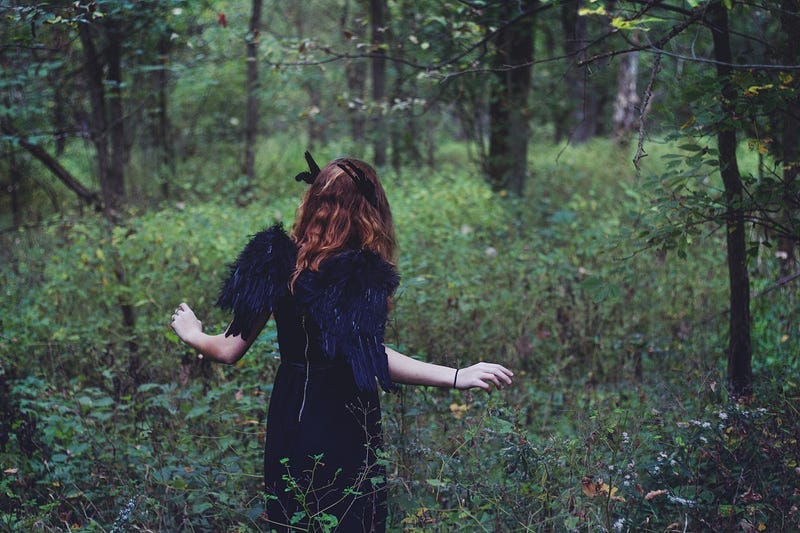
a woman wearing black angel wings wandering through the forest
Photo by Alex Grodkiewicz

Everyone’s creative process is different, but I’ve noticed a real trend among artists of ebbs and flows in inspiration and productivity.

An artistic temperament has often been associated with ups and downs in mood, which is unsurprising considering there seems to be a much-discussed relationship between creativity and mood disorders.

First, I think it’s important to make the distinction between illness and genius. Note that, at extremes, both positive and negative mood swings can actually impede creativity. There’s a problematic image of the “mad” artist in popular culture which I think often, unfortunately, becomes a self-fulfilling prophecy, but that’s not what I’m here to write about today.

Not all artists have mental illnesses; nonetheless, many creative people report experiencing something akin to mood swings when describing their creative process. The positive, functional moods which could be described as “strokes of inspiration” are something well-documented in the artistic world, and also increasingly in the realms of psychology and neuroscience.

You might have heard this referred to as a flow state, or “being in the zone”. Whatever you call it, I don’t think anyone experiences it all the time, and it’s always something to be grateful for when it comes around.

Since I’m a romantic sort of person who loves mythology and archetypes, I like to think of these moments in my creative life as “visits from my muse.” It helps me understand my own process better to personify the unknowable force which allows me to bring something forth from the nothingness that once was.

I’ve read a lot of articles about the psychology and neuroscience of creativity and productivity. I’ve read lots of guides detailing the logical steps you should take in order to optimize your ability to get into and maintain this sort of state.

While I think it’s helpful to understand things like this from a rational, materialistic, perspective– I think it can be a big leap bringing this comprehension from the conscious mind back into the unconscious programming which will drive our actual behavior.

In situations like this, I like to take a mystical perspective instead.

I like to imagine my muse as a temperamental diva who shows up either when the mood strikes her or when she believes I’m ready to hear what she has to say. Like most powerful and enigmatic women, my muse is complicated, and she isn’t easily wooed.

If your muse is anything like mine, it might be helpful to keep a few things in mind during your love affair.

Understand what attracts her

No self-respecting woman would be attracted to someone who doesn’t take care of themselves, and my muse is no exception. If I’m really screwing up when it comes to eating healthy, exercising, getting enough sleep, or any of the other basic responsibilities that I have to my beloved meat-suit, I’m a lot less likely to be able to get her to call me back.

Letting yourself go when it comes to caring for your physical, mental, or emotional health will certainly turn the daughters of Zeus all the way the off. I mean, who can blame them? No one wants to go out dancing with a lazy couch potato who can’t bother to shower and change out of those sweats and into a pair of dancing shoes.

Don’t be your muse’s Tinder left-swipe.

Also– don’t you think a gorgeous, intelligent goddess like your muse would want to hang out with somebody interesting?

My muse is happy to meet up for coffee and chat about that new book I just read or that interesting podcast I just listened to, but she isn’t really that impressed by the shallow gossip I heard or the hours of Netflix I binge-watched last week.

It’s not all about appearances– muses are attracted to people of substance.

Give her your full attention when she arrives

The thing about the muse is, you never really know how long she’s going to stay when she shows up. Muses can be fickle like that– they’re kind of afraid of commitment, so often you have to settle for a no-strings fling.

Make the most of it! When a woman like her steps into your world, you make the time to spend with her, if you know what’s good for you.

Practice active listening when you’re interacting with your muse. Really look her in the eyes. Repeat back what she says. Shut the hell up for a little while and stop talking about you.

And take notes!

Sometimes the muse will show up bearing all sorts of ideas, and no matter how much time you carve out of your busy schedule to accommodate her, it still won’t be enough. Write down the good ideas for later if you can’t get to work right this minute.

But don’t be too clingy

You can bring her flowers– but don’t be a stalker. Don’t try to force things, that will only make the situation awkward. You know what I’m talking about. If you’ve been calling her and she’s not picking up, cool off for a bit.

“When inspiration does not come, I go for a walk, go to the movie, talk to a friend, let go… The muse is bound to return again, especially if I turn my back! “ — Judy Collins

Show her you’re worth it

If you’re trying to show a fine woman that you’re worth her time, actions speak louder than words.

Be honest with your muse about the responsibilities you’re capable of taking on and the reasons why you want to take them on in the first place.

Hera didn’t raise any fools, and you’ll definitely regret trying to do this girl dirty. Muses can see right through your bullshit, and they know if you’re just blowing smoke when you say you’re ready to get serious. Like most relationships, you get what you give in your relationship with your muse.

Show up for her when it matters. She wants to know she can depend on you. You have to make her feel safe. Work on building trust with your muse.

“I show up in my writing room at approximately 10 A.M. every morning without fail. Sometimes my muse sees fit to join me there and sometimes she doesn’t, but she always knows where I’ll be. She doesn’t need to go hunting in the taverns or on the beach or drag the boulevard looking for me.” — Tom Robbins

Understand that she’s worth it

If you‘re hanging around a’ good woman and she realizes you don’t value her, she’ll be out the door before you can say “Melpomene.”

Having a muse by your side will make all the difference when it comes to fighting the battles of your creative process. She can teach you things about yourself and the world that you never imagined were possible, and make you feel things that you didn’t know you could feel, but don’t expect her to stick around if you don’t appreciate her.

When your muse gives you a good idea, don’t take it for granted. Show her that you’re actually paying attention to the words she whispers in your ear, and maybe next time she’ll sing you a song.


Originally published on medium.com on October 24, 2019.