Why You Should Embarrass Yourself

As much as possible

I blush easily, and all my friends know this. Once I get going, it’s easy to goad me into flushing a deeper and deeper shade of red. The more I blush, the more embarrassed I get, and the more embarrassed I get, the more I blush. It can turn into quite a vicious circle sometimes.

These days, I can usually end my blush circle by laughing. Once I remember that I live in an absurd world and that I don’t have to take anything (including myself) that seriously, it’s usually pretty easy to laugh anything off. But I wasn’t always this way.

When I was younger, being embarrassed used to make me very angry. I still get angry when I make mistakes, but usually at myself, and usually briefly. We all experience this– messing up is frustrating. It can make you doubt yourself, and lose self-confidence. Sometimes there are other, more tangible consequences.

It’s pretty rare these days that I feel the rage I’m describing. It’s sort of like the anger you feel when you stub your toe; nothing is really wrong, and you’re going to be fine, but you might see red for just a little while.

This kind of anger goes in a circle, kind of like my blush circle, but not anywhere near as cute. In fact– it’s not cute at all, according to everyone I’ve ever asked. This is a sort of blind, aimless rage, which isn’t directed in anything in particular, but at the same time is directed both at myself at the whole world.

Frankly, it’s unpleasant; and it’s a huge waste of time.

I don’t have to feel this kind of anger and frustration when I make a mistake, and I really don’t have to just because I did something silly. I also don’t have to feel anxious, ashamed, guilty, afraid, or like I’m worth any less as a person. And neither do you.

Don’t worry– forgetting that it’s okay to be embarrassed is just another thing that it’s okay to be embarrassed about.

Once you make a mistake, the prospect of making another mistake becomes a lot less scary

When I first started pole dancing, I had no idea what I was doing. I was in a position where I needed a job that paid well, fast, so I skipped the step of learning how to dance and just headed on down to the first strip club that called me back.

I never wore makeup much before I started dancing, but I put some on because I figured I should– badly. I borrowed a lacy outfit from a friend of mine, and it was a little big on me. I felt pretty awkward just walking in the door.

The DJ put me on stage almost immediately. Completely clueless, and terrified that I was going to fall off of the pole, I glanced around at what the other dancers were doing and walked up to the stage.

What happened?

I made a fool of myself

I couldn’t do any of the elegant spins or acrobatic flips that the other women could do. I didn’t know any choreography for the floor, and I could barely walk in the six-inch heels that I had just bought that day. On my first night, I didn’t dance like a pole dancer- I danced like a girl trying her best not to fall on her face.

What else happened?

I got over my fear

I realized I could do it. I went up there, I looked silly, and other people watched me look silly, and the world didn’t end. I laughed. Other people laughed. Some of them clapped. We laughed and clapped together. I got naked! I even made money!

I looked silly, but I had a good attitude, and it was obvious that I was putting in an effort. The positive responses that I got, as a result, were enough to propel me forward. I kept putting that effort in, and now I’m learning how to dance for real.

The more you make public mistakes, the less you care about what other people think

There was a couple of years during which I pretty much stopped writing, and when I started again, I was awful, by anybody’s standards. I’m still no Hemingway, but reading some of the stuff I was writing when I first started again, I cringe pretty hard.

In addition to cringing, I also feel proud. I’m glad I showed people my angsty poems and sprawling, rambly essays. I had to get through that phase of mega-suck in order to get my sea legs back. I’m sure in a while I’ll look back at this article and cringe.

The true joy really is in the process, and I’m over worrying about where I’ll end up or how I’ll be received. I’m just going to keep writing.

Writing, like any other skill, is a muscle that you have to work out if you want it to stay strong. When I stop doing push-ups in the morning, after a week or two I realize that I can‘t do as many. If I became really inactive, I probably wouldn’t even be able to do one pushup.

Boy, that would be embarrassing…


You might be blushing because you’re doing something that you shouldn’t be. Maybe that joke was tasteless. Maybe you farted because you’re trying to cut out dairy and shouldn’t have been eating that cheese.

In these cases, embarrassment is an alarm system for the spirit, much like pain is for the body. If you skin your knee, it hurts; kind of the body’s way of saying, “don’t do that!”

If you feel humiliated, there might be a good reason why. If you let yourself feel it, you might be able to learn and grow from the experience.

While feeling mortified is part of how we humble ourselves and keep our egos in check, it’s also part of how we build confidence.

Being confident is a prerequisite to doing almost anything well. Every time you feel silly, and decide to do the thing you’re doing anyway, you grow stronger. When you’re used to having your confidence shaken, it begins to become unshakeable.

So don’t dance like nobody is watching. Dance like everybody is.

They’re all going to laugh at you– and that’s okay.


Originally published on medium.com on August 23rd, 2019

How to Help Other People Without Hurting Yourself

It can be a challenge

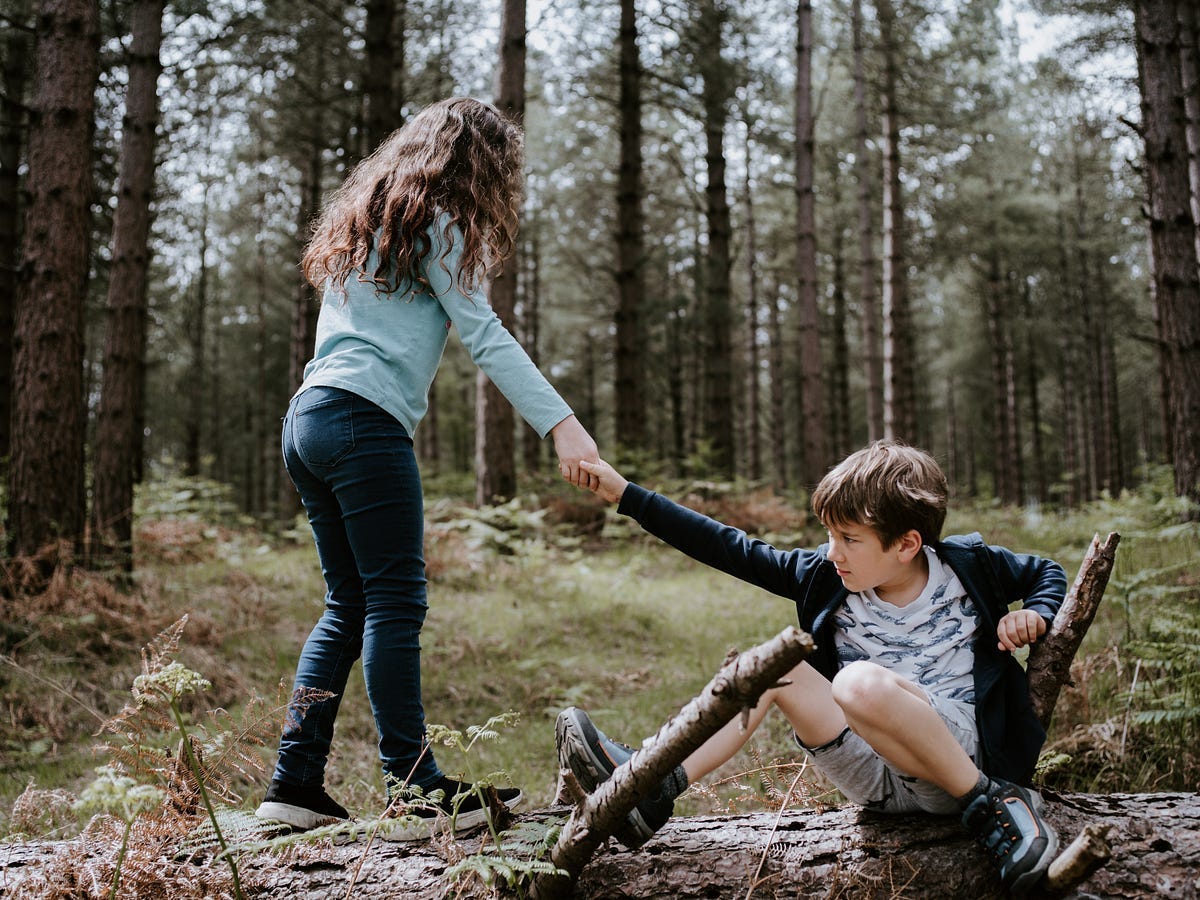
A child is helping another child stand up. They are in a forest.
Photo by Annie Spratt

There’s nothing like the joy that comes from helping others. It creates positive changes in the world that you can see before your eyes. It also has the added benefit of making you feel better about yourself.

Victories are more satisfying when you help others on their own journeys and these kinds of actions create a reciprocating cycle in which you are also helped on your own journey. You can take extra pride in your good grades if you helped your friend study. A home-cooked meal tastes better when it’s shared with a friend.

If nothing else, helping people just makes you feel good. It raises your self-esteem and increases your confidence in yourself. Anything that does that is not just a good deed, but an invaluable power move in the game of life. Giving others support has even been shown by science to have concrete neurological benefits.

Unfortunately, helping people feels so good that it can also be habit-forming. Like most habits, this habit can be healthy or unhealthy, depending on the person, the dosage and the frequency.

If you’re anything like me, helping people can even become a real problem. A UK doctor has even recognized this as a pattern in the friends and family of the drug addicts he treats, calling it compulsive helping.

Personally, I’ve found that I’m very prone to overextending myself, and susceptible to the very real consequences of doing so. Nevertheless, I still can’t seem to break my helping-people habit.

I think that helping can sometimes be a way for me to avoid dealing with my own problems, or a way to prop up my own ego. Being helpful can have this kind of dark side for many people. Sometimes it’s more about us than it is about the people we’re helping. We do it to compensate for something else we’re missing, or to feel valid and significant.

Helping others can energize and motivate you, but if you do it too much, it can leave you feeling physically, mentally, emotionally, and spiritually exhausted. It’s never good to let yourself get to that point– not just because it isn’t fair to you, but because an exhausted person isn’t capable of helping anyone.

Also, giving a lot and not getting much in return (even when you aren’t expecting anything), can leave you feeling bitter and resentful. The feelings of love and care you had for the person you were helping can turn sour by your own hand, and that, in itself, is a small tragedy.

After years of well-intentioned helping gone wrong, I’ve come to this conclusion: If you really want to help people, the key is finding the best strategy.

Understand your limits

Be honest with yourself about what your physical, mental, and emotional limits are when it comes to helping those around you. You can’t pour from an empty cup or an empty bank account. You need to secure your own oxygen mask first– just like you need to secure your own job, home, and self-worth.

Ask yourself if you’re doing it for the right reasons. Are you helping because you want to, or because you feel like you have to? Are you doing it out of love, kindness, and generosity, or guilt, obligation, and fear?

Take time to care for yourself, and make sure you actually have the energy that you’re about to give. Know when to stop.

Develop strong boundaries

Once you understand what you are and aren’t capable of, think about what you are aren’t willing to tolerate. Be uncompromising about what you will and won’t do.

Giving in to requests that you don’t feel comfortable fulfilling might relieve whatever guilt or pressure you’re feeling in the short term, but will probably become a source of regret in the long term.

Learning when and how to say “no” is one of the most important lessons that any of us can ever learn, and it can have a huge impact on what happens in our lives and how we feel about it. Never compromise your own integrity for somebody else’s sake.

Understand what actually helps

There’s a big difference between helping and enabling, and that, unfortunately, is something that many of us end up learning the hard way.

Helping someone who isn’t ready to help themselves can actually be destructive– the help you’re giving them could be fueling whatever it making their life difficult in the first place. Even if it isn’t, it could also create feelings of disempowerment in the person that you’re helping.

A person who is getting too much help can start to feel like they don’t have any power in the world or agency over their own lives. This feeling spirals into a consistent inability to help themselves. This is sometimes called learned helplessness, and it’s a phenomenon that is common enough to have been researched.

Ask yourself if what you are doing is really promoting the growth and independence of the other person. If it isn’t doing that, then it’s very possible that you’re actually feeding the irresponsibility, incompetence, and dependence of the other person.

And that doesn’t help anyone.

Do more with less effort

We can strategize at a very practical level to find a wider audience or create a broader reach with our good intentions.

For example: instead of spending hours talking to your friend with depression, you could write about how you overcame yours, and potentially help thousands of people.

Instead of going into debt trying to help your sister with her bills, you could help her find a steady job by calling that guy you know in her industry.

Instead of emptying your wallet giving money to every homeless person you see, you could go volunteer at your local shelter or food bank.

Focus on long term benefits. Create things with the potential to last. When giving gifts, try to make them the ones which keep on giving. Plant seeds.


If this article helped you, I’d like to thank you. You have already helped me, in return, by letting me be helpful in a way that’s healthy for me.

Helping people is a good thing. You should absolutely do it, and you have every right in the world to feel good about it. Just make sure your help is wanted, that you’re ready to give it, and that you’re doing it for the right reasons.

You’ve already helped someone else today– help yourself out.


Originally published on medium.com on February 8th, 2020 

Why Dogs Are Good for You

Having a pet made me care about myself more

two people and a dog walking on a beach on grey sky day
Photo by Emma Dau

I’ve had my dog for nearly six years. I’ve had her since she was a puppy, taking her home after I helped care for her unbearably adorable litter of nine. She’s a healthy and energetic mutt, who loves people, fetch, and a good chew on a bone. She’s lived with me in three different states and traveled with me on many adventures.

Dogs are “man’s best friend” for a reason. We’ve co-evolved with canines for about 14,000 years. Our two species have a long history of helping and influencing each other. My dog and have a very symbiotic relationship. She does quite a lot for me in exchange for head scratches and kibbles.

My life is better because I have a dog. Not just because she’s cute, fun to be around, and nice to cuddle with; but because taking responsibility for another sentient being has increased my sense of responsibility for myself.

You have to take care of your dog (and you)

Dogs need food, water, exercise, bathroom breaks, entertainment, and affection. Humans need all of these things as well, but for some reason, it’s sometimes easier for me to remember that my dog needs these things than it is to remember that I do.

I’m not just concerned with keeping a roof over my own head, but also my dog’s head. I chose to live near a beautiful park, so I could walk my dog there. My dog needs to have a routine, so I must also have a routine. Every time I feed my dog, I’m reminded that I also need to eat. Every time I pet her, I’m reminded that I also deserve love and affection.

I imagine that this is a similar sense of responsibility that I would feel if I had children, but perhaps without so much pressure to be a good parent. It’s pretty simple to be a good parent to a dog — feed her, walk her, take her to the vet once in a while, and rest assured that she’s probably not going to resent you when she grows up.

Dogs make you do stuff

I have to get out of bed in the morning whether I like it or not because my dog needs to go for a walk. When I’m feeling like wasting the day in bed … too bad. My dog definitely won’t stand for any of that nonsense. It’s get up, or face the horrors of the face-licking alarm clock.

As most people who have struggled with their mental health could tell you, getting out of bed can sometimes be a challenging thing to do if you’re not feeling your best. Having a dog makes it so I have no excuse, and walking her is a dose of exercise and sunlight that is built into my day.

I also sometimes meet people because of my dog, like when I ask someone at the dog park if their dog is friendly, or when my dog bumps noses with someone else’s at the pet store.

Dogs are a social lubricant — kind of like alcohol, but less damaging to the liver. It makes sense that dogs have been shown to be a conduit for getting to know people, friendship formation, and social support.

My dog also makes me want to get out into nature more. Anyone who has seen a dog sniff around in the forest knows how joyous it is. Because of my dog, I end up hiking more, which has both positive physical and mental benefits.

Dogs are good for your brain

Dog owners know from personal experience that our four-legged friends make us feel happier, but this idea is supported by science as well. Aside from encouraging you to get exercise, which is good for both physical and mental health, dogs have other positive effects on our minds.

Recently, researchers at Washington State University found that dog exposure lowered levels of the stress hormone cortisol in students. Playing with a dog can also help raise levels of serotonin and dopamine, which make you feel calm and happy.

In a 2009 study, companion dogs were shown to help seniors in a long-term care facility with anxiety and depression. Dogs have also been shown to help kids with ADD manage their symptoms.

I think dogs are good for mental health because they love unconditionally. Generally, if you’re nice to a dog, he will be nice to you. Dogs don’t care if you’re a hyperactive little kid or a grumpy old person. They don’t care how you dress, if you’re a good conversationalist, or if you’re a little weird at parties. They are very forgiving of mistakes, and they don’t hold grudges.

It’s clear: A dog is a powerful prescription for peace, and the worst side effect is that she might poop on your rug.

Having a pet isn’t for everyone, but if you’re feeling lost in life, or having a hard time finding the motivation to care for yourself, it might be something to consider.

I’m a better person because of my dog. This is because she creates accountability for me.

It’s not just my own quality of life that I have to be concerned with, it’s my dog’s as well. Taking on any kind of responsibility is usually a good strategy for feeling more confident and making your life feel more meaningful. My dog makes my life feel doubly meaningful because she’s a member of my family and a pure joy to be around.

There’s something about putting conscious love and attention into something living that is just plain good for you.

A goldfish might help, too. Hell, even a plant. But there’s nothing in this world like a dog.


Originally published on medium.com on January 21st, 2020. 

Your Choices Matter


Hard determinism is for defeatists

road sign with two arrows pointing to the left and right in the desert
Photo by Rosie Steggles

In philosophy’s problem of free will there are three major schools of thought. 

Determinism is the idea that there is no free will. Determinism says that everything that you and that everyone else does is predetermined and that there is pretty much nothing that you can do to change it. 

Free will says that you do have a say in your own choices and, probably, so does everyone else. 

Compatibilism is sort of in between free will and determinism. It’s the idea that some things are predetermined but that we have some degree of freedom. 

I’m a compatibilist. I believe that many things are beyond my control but that some things are within my control, and that the same is probably true for you. A person’s stance on free will says a lot about who they are as a person, because it can give you a clue as to what kind of reasons are driving the choices that they make. 

Why determinism sucks

It’s easy to fall into a deterministic mindset when it feels like things in your life or in the world are out of control. The problem that I have with hard determinism — or the very strong idea that all actions are predetermined, is that it encourages an attitude of passivity and helplessness in people. 

If you think that nothing you do matters, why do anything? Why care? Why try? Also, if we have no real control over the events around us or even over our own actions, how can anyone ever be held accountable for theirs? Is it just to punish someone for doing something bad or to reward someone for doing something good if they had little to no control over the act or over the outcome? 

We can’t know for sure 

The thing about free will and determinism is that it’s one of those problems that doesn’t really have an answer. It also doesn’t look like we are going to be coming up with an answer that has any kind of real certainty behind it any time soon. 

The free will problem as a philosophy problem is a fun thought experiment, but to solve it for real in the tangible, physical world in a way that you could depend on, you’d probably need an extremely brilliant physicist. Or, like, a team of them. 

So, if you can’t answer a question like this, why would you try to answer it anyway? 

I’d rather be free

My thinking on the problem is this: since I don’t know if I have freedom or not, it’s best for me to act as if I do. 

Why? 

Because if I feel powerless and trapped by the unending procession of time, I will be less motivated to do stuff. Also, if I am, in fact, responsible for my actions– or even if I’m not, I might face consequences for them. If I do have a choice, my actions are more meaningful, for better, or for worse. 

If I really knew for sure that nothing I did really mattered, I would probably do some pretty crazy stuff. But if that meant that hard determinism was true, then wouldn’t I have done the crazy stuff anyway, regardless of whether or not I wanted to or honestly attempted to? 

I really don’t know. But I’d rather live in a reality where I have a choice. And, I think, so would most people. 

I have no hard evidence for the idea that I have free will. Honestly, it’s a matter of faith. 

Reality is bleak either way 

If I think about the problem of free will for long enough I often arrive at the conclusion that, no matter who is right, reality is terrifying. 

I prefer a world in which I have at least a little bit of creative control over what kind of terrors I experience. 

So, even if I don’t have free will, I’ll pretend I do. 

Just in case. 

Don’t Shrink For Anyone

Pride is just as important as humility

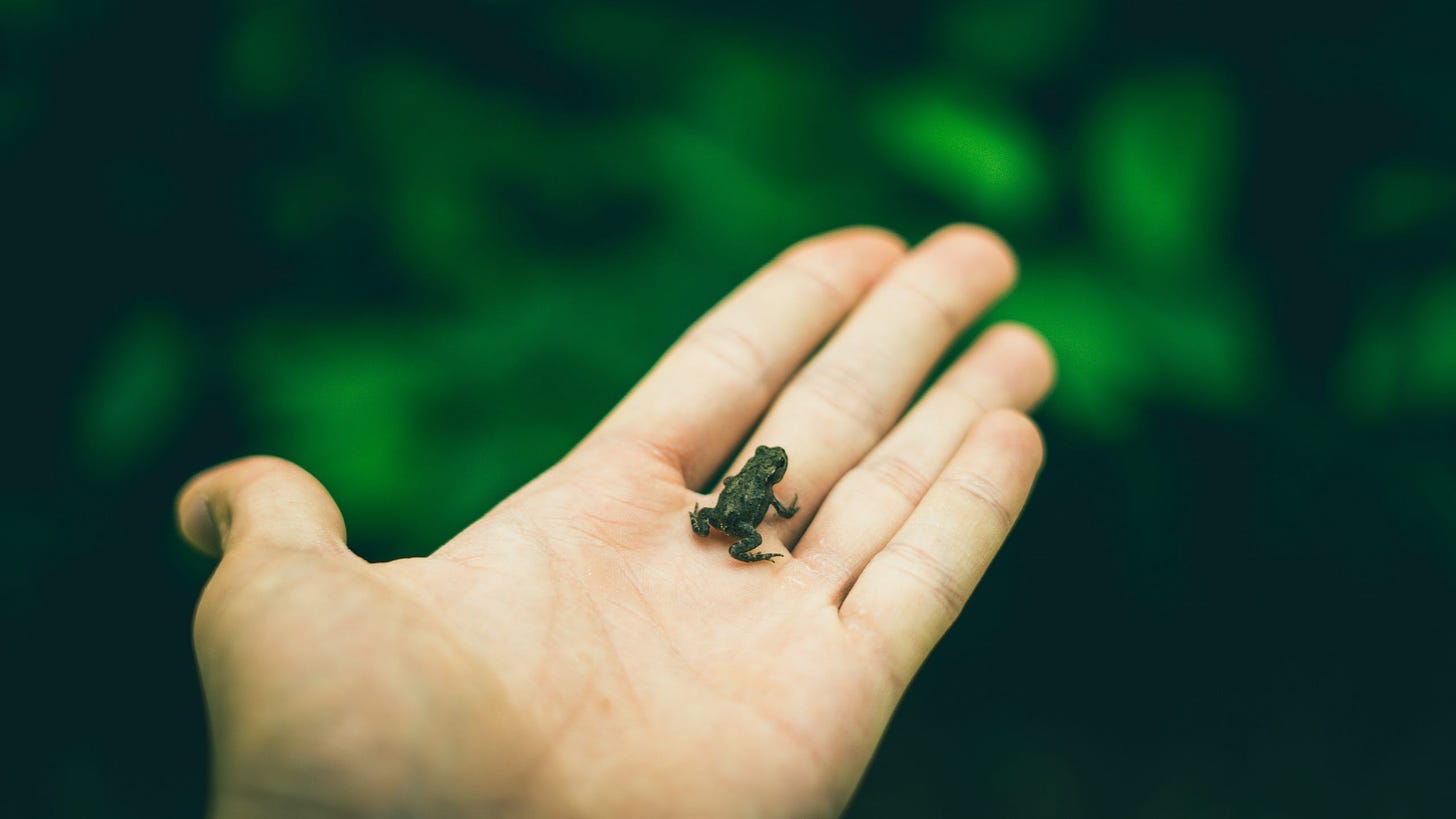
a human hand holding a very small frog
Photo by Yoel Kamara

In the age of the “woke,” killing your ego has probably jumped to the top of your to-do list.

That pesky ego, you’ve got to be rid of it!

After all, how will you reach enlightenment with that presumptuous balloon of self-satisfaction swirling around your personality? Somebody’s getting too big for their britches.

Who the hell do you think you are, anyway?

Where’s your humility?

Humility is defined as “a modest or low view of one’s own importance.”

It’s good to have humility. It’s good to know that you’re small, relative to the vastness of the universe. It’s good to know that you’re not omniscient or omnipotent. You shouldn’t be expected to know or to do everything.

The kind of humility that makes you sure you aren’t qualified to perform brain surgery, the kind that reminds you to listen as well as speak in a conversation, the kind that lets you hear what other people have to teach you; that’s the kind you want.

It’s not about thinking less of yourself, right?

It’s about thinking of yourself less.

Worry about others. Be grateful for what you have. Being humble is always a wise choice, right?

How could any of this be bad advice?


It seems like the world is always encouraging us to cut ourselves down to size, but in my humble opinion, being humble isn’t always the best policy.

I’m here to introduce a new concept:

Toxic Humility

Do you sing in the shower?

I do.

Guess what: I don’t sound like Celine Dion. And I’m guessing you probably don’t either. Does that mean it’s not okay for me to enjoy the sound of my own voice, or for you to enjoy yours?

What if you look down at your body in the shower?

What if you think for a moment, *gasp*

“I’m attractive”?

That would be wrong, wouldn’t it? Self-obsession, vanity, conceit, ego.

Oh no, now you’re appreciating your new bathroom tile! Materialism! Your list of sins against your humble higher self is getting longer and longer, and you haven’t even had breakfast yet.

You might visualize Gandhi or Mother Teresa hovering above you in a cloud of ether, shaking their head and saying,

“tsk tsk.”

This is so not spiritual.

Why do you need to spend so much time humbling yourself, anyway?

After all, you probably weren’t even that great, to begin with.

There’s always going to be someone faster, stronger, smarter, or prettier than you. Everything you’re good at– there’s somebody who can do it better.

Also, the culture and economy that surrounds you is basically a giant conspiracy to tell you that you suck.

You’re not as strong as that athlete, but take these supplements and hire this trainer you might get close. You’re not as pretty as that model, but if you buy these clothes and wear this makeup, you might get close. You won’t ever be a famous millionaire, but you can read about famous millionaires and dream about what it would be like to live their lives.

The more you hate yourself, the easier it is to sell you things.

Maybe that’s why most of us hate ourselves, quite a bit of the time, more than we admit, to ourselves or to others.

We don’t want people to know we hate ourselves, but it’s leaking out anyway.

Self-deprecating humor is becoming popular these days. Popular to the point where joking about being suicidally depressed has become almost the norm. It’s all over the internet. We’ve all seen the memes– and we’ve all read the writing on the wall.

It’s just not cool to think you’re cool anymore.

…Except, you are, aren’t you? At least sometimes.

You were pretty cool when you helped your friend move. That was a lot of boxes you carried. You were rad when you learned that new oboe song. Remember when you couldn’t even play a scale?

That time you bought a sandwich for a homeless lady? I mean, you’re not Jesus or anything, but isn’t it ok to be proud of that?

How about when you graduated from college? Pretty groovy. The day you got that promotion? Weren’t you the friggin cat’s pajamas then?

Do you humble yourself to avoid making others uncomfortable?

If you’re making it obvious that you’re great, other people might not feel as great about themselves. Jealousy is frustration with something that you yourself lack, and others seeing you with what they wish they had won’t always make them friendly.

You might remember this from grade school.

You’re not smart, you’re a “know-it-all,” and you’re not well-behaved, you’re “teacher’s pet.” Maybe not everyone needs to know that you got an A on your spelling quiz. Don’t you want to have somebody to eat lunch with?

It’s natural to want to reign it in a bit. You wouldn’t want to make others uncomfortable. It’s a good instinct. Nobody likes the guy who only talks about how awesome he is.

Of course, you don’t want to be that douchebag– but it’s also possible to swing too far to the opposite end of the arrogance spectrum.

Sometimes we don’t want to be exceptional because we want people to like us. If we are good at things, or if we’ve done something good, or if there’s something inherently good about us, that makes us different, and this could be threatening to others.

Because what makes us exceptional also makes us different, we might end up destroying the best things about ourselves to satisfy our impulse to conform.

If you’ve threatened others in the past by being extraordinary, you might have some idea of what I’m talking about. You might have let this hold you back from trying things, or doing things, or being things.

You might have developed a bad habit–choosing the comfort of the people around you over your own freedom to be authentic and free.

Always putting other people first and neglecting your own needs doesn’t help you or them. It’s also just as egotistical as always putting your own needs first.

Not only are you selling yourself short when it comes to the things that matter to you, but you might even be allowing yourself to harbor resentment against others for something you’re doing.

This isn’t to say that there aren’t people who will take advantage of the space that you free up by keeping yourself small — but anything negative you feel towards them will only hurt you, and will undeniably be caused, if indirectly, by you.

Ironically, the person that you’ll turn into by trying to please others is probably not the person you thought they would like in the first place. Nobody likes a sychophant- they’re just as bad as the Chad who can’t stop patting himself on the back.

Come to think of it, these two archetypes really are peas in a pod, aren’t they?

There will always be the kind of person who thinks so highly of themselves that they believe they deserve everything, and there will always be the kind of person who thinks so lowly of themselves that they believe they have to give everything to the person who thinks highly of themselves.

From the outside, each of these characters might look like a hero, or a villain, at times. A martyr, a traitor, call them what you want; the truth is– they’re both doomed to suffer in the roles they’re playing.

You don’t want to be either of these people.

It’s true that you’re not above anybody. But you’re not below anybody, either.

It’s okay to try hard, it’s okay to be good at things, and it’s okay to be happy when you succeed. It’s okay to take pride in your skills and talents. It’s okay to think you’re smart. It’s okay to think you’re pretty. It’s okay to like yourself.

This isn’t an excuse to be greedy, to brag, or to otherwise be a jerk.

This is permission to let yourself be awesome; without any anxiety about how that might make others feel. If you’re making other people feel bad by being the best version of yourself, then they are the ones with the problem, not you.

Don’t shrink for them.

Take up space.


Originally published on medium.com on September 11th, 2019. 

You Can Survive Anything


And you should

mountain towering over ocean, cloudy grey sky
Photo by Yuriy Rzhemovskiy

On January 15th, 1915, Endurance became frozen in an Antarctic ice floe. By February, expedition leader Ernest Shackleton realized the ship would be trapped until spring. He ordered that the ship’s normal routine be abandoned, and for his men to prepare to hunker down for the remaining months.

The ship was not free by spring. By October, it had begun to sink, finally sliding entirely beneath the surface on the 21st of November.

For two months, Shackleton’s men lived on a large, flat, floe of ice; hoping that it would drift towards nearby Paulet Island, 250 miles away. The crew ate the blubber from seals they killed and did their best to guard their digits against frostbite. They eventually moved to another floe after failed attempts to march across the first towards the island.

By the 17th of March, 1916, the new “Patience Camp” had drifted within 50 miles of the island, and on the 9th of April, the men attempted to reach it in lifeboats. Five days later, after 497 total days living on ice and at sea, the men landed their three lifeboats on Elephant Island, 346 miles from where the Endurance sank months before.

Since Elephant Island was far from any shipping routes, and rescue was unlikely, Shackleton planned another expedition in the James Caird, the most seaworthy of the 20-foot lifeboats. Shackleton knew that if he and his five chosen companions did not reach South Georgia within four weeks, the rest of the crew would be lost, so he refused to pack supplies for any longer than that amount of time.

After fifteen days of sailing and hurricane-force winds, the crew finally landed on an unoccupied southern shore. Their journey continued as Shackleton, Frank Worsely and Tom Crean crossed 32 miles of unforgiving terrain, armed with only boots into which they had pushed screws, carpenter’s adzes, and 50 feet of rope for scaling the icy mountains.

36 grueling hours later, the men reached the whaling station at Stromness, securing rescue for everyone. 24 of the 27 men in the original crew survived the long ordeal.

While many things about this story are astounding, the fact that stands out to me the most is that Shackleton planned another expedition to Antarctica later in life, still brave enough to return after his previous nightmarish experience.

Some of the former crew of Endurance even signed up to go back with their former boss. I couldn’t believe it when I read this; after all that, how could they go back?


It’s true that you never really know how strong you are until being strong is your only choice. This situation is something to be embraced, not feared.

I remember something a friend said to me once, while we were both being paid minimum wage to shovel manure for ten hours a day.

“It builds character.”

At the time, the phrase was just a little comic relief in an unpleasant moment, but in retrospect, I can see how wise it was.

I had the good fortune of first reading about Shackleton while I was doing another job involving intense labor in tough conditions. A youth crew building and maintaining wilderness trails, we camped at a high elevation near Crater Lake. It was unusually cold for autumn, and it soon began to snow and hail.

While shivering in my sleeping bag in a drafty tent after a day of hauling gravel uphill in a wheelbarrow, I thumbed through the pages of Endurance, Alfred Lansing’s account of Shackleton’s journey. Reading the story with numb fingers by the light of my headlamp, I felt grateful. “At least I still have my fingers,” I thought. “And my lamp is battery-powered!”


Life will always contain suffering, and suffering will always be relative. You might find, as I have, that your own suffering seems smaller to you the longer you spend out in the cold. If you focus on surviving, you might find that you begin to drift towards safer shores.

It’s easy to be afraid of what might happen in the future or to worry that you can’t handle what is happening right now. It’s important to realize that this kind of ruminating does nothing to help us. We’re better off kindling a fire and getting ready to roast whatever kind of seal blubber happens to be on the menu today.

You don’t have to be an explorer to know that being a human is terrifying, and it always will be– but it’s not all bad.

Yeah, you might end up losing a toe to frostbite, but you’ll probably also have some great stories to tell. There might not be many uncharted lands left on this planet, but life is still an adventure. Treat it like one.

Take a deep breath, stand up straight, and sail your ship straight into the frozen wilderness of life.

It builds character. You might even decide to go back for seconds.


Originally published on medium.com on August 20th, 2019. 

I Still Love Everyone I Have Ever Loved


And I always will

Photo by Aziz Acharki

“True love is eternal, infinite, and always like itself. It is equal and pure, without violent demonstrations: it is seen with white hairs and is always young in the heart.” — Honoré de Balzac

Throughout the course of my life, I’ve been lucky enough to fall in love more than once.

But what exactly is love, and how do we “fall” into it?

Anyone who’s ever experienced a passionate intimate relationship can probably relate to this feeling of “falling,” and I believe there’s a reason why we use that particular word to describe it.

Falling, in the figurative sense, certainly feels a bit like falling in a literal sense. It’s similarly exciting, overwhelming and scary. The euphoria associated with this kind of infatuation is how I imagine a skydiver or an astronaut probably feels, hurtling back towards Earth, while taking in a view which is vast and beautiful at an indescribable level.

As I’ve gotten older, I’ve learned that there’s a difference between “falling in love” and actually loving someone. The lust and drama of connecting on a deep level with another person can certainly feel earth-shatteringly meaningful– for a while. But when we crash from the high produced by the cocktail of oxytocin, serotonin, and dopamine that swirls in our brains during a romance, what is left?

The truth is that real love has nothing to do with bringing flowers, reciting poems, or fantasizing about your future children. It’s not about great sex, great conversation, or sweeping anyone off their feet. We think of love as something intense and epic, but in reality, it’s quite mundane.

Real love isn’t a fairytale story with princesses, knights, magic or prophecies. It isn’t thrilling and intoxicating- actually, it’s rather boring. It’s an everyday story that includes things like eating, sleeping, cleaning your house and paying the bills. It’s about dealing with the challenges of whatever journey you each happen to be on, together.

Real love is about seeing someone who they truly are, flawed like all human beings inevitably are, and accepting them, wholly and completely. Real love doesn’t fade as physical attraction does, and it doesn’t fizzle out like lustful passion.

Real love doesn’t even go away when you want it to.

You’ve probably seen the evidence of this in your own relationships. The people we love are often the ones who hurt us the most, but somehow, we love them anyway.

I’ve heard many people say, “love shouldn’t hurt,” but the truth is, no matter how good everyone’s intentions are, it’s bound to hurt sometimes. Often we are only hurt by those we love because of our love for them. If we didn’t care, it would be easier to be indifferent.

When I look back over my past relationships, I can now see the difference between having “fallen in love” and having “loved.” It’s an easy distinction for me to make because there’s a single measurement I can use to be sure: I still love everyone who I have ever truly loved.

True love is eternal. It’s not about physical beauty, sex, validation, or power. It’s about the essence of what makes us human, and the recognition of our humanness in each other. It’s about looking at another person in the eyes and seeing a part of yourself.

When you truly love someone, it is truly unconditional, and irrevocable.

Real love doesn’t go away because of hardship or conflict. It doesn’t end in the heat of an argument, or after the pain of betrayal. It isn’t reduced when someone loses their job, gains weight, or gets old– because things like that aren’t the real reasons why we love people.

Love has nothing to do with the temporary bodies we live in, or the temporary experience we have while we are alive. It is the act of accessing the innate, infinite knowledge programmed into our souls and our cells, and truly understanding that we will never really be separated from each other, despite any physical or emotional detachment.

The truth is that I still love everyone I’ve ever truly loved.

I’ll love them if they are poor or wealthy.

I’ll love them if they are sick or healthy.

I’ll love them if they marry somebody else, go to prison, join a cult, or lose all of their hair and teeth.

I’ll love them in spite of time, in spite of anger, in spite of distance, and in spite of death.

And I always will.

Anything less just isn’t love.


Originally published on medium.com on February 15th, 2020. 

The Problem With Porcupines


Stop avoiding the spiky parts

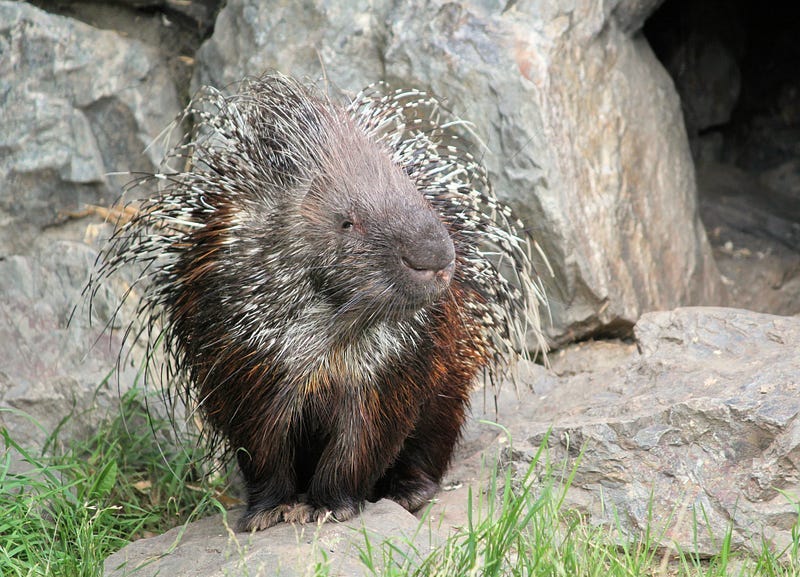
a porcupine
Photo by Dušan Smetana

The hedgehog’s dilemma, also called the porcupine’s dilemma, is a metaphor used to illustrate the more difficult aspects of human intimacy. Arthur Schopenhauer and Sigmund Freud both used this dilemma to describe how individuals relate to society and to each other.

The dilemma asks us to imagine a group of spiky mammals, who are trying to move more closely together in order to share body heat on a cold day. However, the spikiness of these creatures presents a problem. The closer they get to each other, the more they get hurt.

Since the critters are unable to cuddle without sticking each other with their spines, they aren’t able to achieve the close, symbiotic relationship that they are all aiming for.

“In the same way,” wrote Schopenhauer,

“the need of society drives the human porcupines together, only to be mutually repelled by the many prickly and disagreeable qualities of their nature.”

The main idea that this story hopes to communicate is a great irony of the human experience: we can’t have relationships, or indeed, even interact with each other, without risking harming each other.

Anyone who has ever experienced a bad breakup, a family fight or the end of a friendship can attest to the risks we take when we get close to each other. Really, the same is true for anyone who has ever met a rude stranger, cleaned up someone else’s mess, or been or cut off in traffic.

The potential negative consequence of this situation (besides the obvious pain that we can cause each other), is the fact that this may cause us to become overly cautious.

Our fear of mutual harm alienates us from each other and weakens our relationships. Since our hearts have been hurt, we build walls around them in order to protect ourselves.


This problem has never been more relevant than today when our technology seems to be enveloping us in individual, solipsistic wombs.

You can press a button on your phone, and your groceries will be delivered to your doorstep. Really, if you had enough money, you could go basically your whole life without ever having to leave your house. In Japan, there’s even a word for a person who lives like that: hikikomori.

The fact that we can be social through our media doesn’t exactly incentivize us to participate in what one Reddit forum calls “a free-to-play MMORPG with 7 billion+ active players,” or Outside, also known as the real world.

You certainly don’t need to go anywhere to socially interact with people– it’s just a click away. It’s too easy to become disconnected in this day and age, be it physically or emotionally.

It’s safer in our private bubbles, comfortable behind our manufactured images of ourselves and our two-dimensional perceptions of others. It’s neater and clener– anyway, who wants to deal with all that messiness?

That’s what humanity is– messy. It’s not edited for political correctness, smoothed by a filter, cropped into a square, or optimized to appeal to a target audience.

When we get close to people in the real world, we aren’t just seeing the highlight reel. Or at least, in my opinion, we shouldn’t be. If we never let the people we’re close to see us for who we really are, are our relationships even meaningful?

It’s becoming harder to want to be seen, warts and all. I think we’re starting to forget what warts look like.


I understand why it’s tempting to retreat into the relative safety of shallower interactions.

It’s just so much easier to see the Facebook version of your college roommate, smiling in photos with his husband and kids, than to hear about his sister’s cancer or the medication he started taking for his depression.

You don’t really want to argue about the merits of capitalism with your out-of-work, out-of-touch uncle or hear about the alcoholism your ex-girlfriend’s new fiancé. Your Instagram doesn’t have to include details about your childhood or your relationship with your parents. The Twitter user agreement doesn’t ask us to be honest with others or ourselves.

Even outside, when people ask us how we are, we say “fine.”

We might say “good,” or “great,” or “okay.” It’s rare that we say anything like: “I’m overcome with bliss,” “I’m overwhelmed by grief,” “I feel awkward in this situation,” or even “I’m having a bad day” or “my butt really itches in these pants.”

Those things are too prickly.

Why not leave these intimate details at arm’s length, and avoid getting poked? Why not mind your own business, and leave well enough alone?

Because raw, authentic human connection is a huge part of what makes life worth living. If you ask that girl out, she might break up with you, but if you don’t, you’ll never travel the world together.

Because we can’t ever have trust without placing our faith in people. If you confide in a friend, they might judge you, but if you don’t, they’ll never understand what you’re going through.

Because no one can ever really know you, or appreciate you, for who you are, if the only version of you they ever get it one that you’ve created to make others feel comfortable. Because joy doesn’t mean anything without the knowledge of pain.

Take the risk.

People aren’t always soft; sometimes they are sharp as hell, and sometimes they’re going to hurt. Still, screw the spines. It’s cold out there, and I would rather be warm.

Wouldn’t you?


Originally published on medium.com on February 3rd, 2020. 

Why I Treat Spirituality Like a Buffet


There are truths in all traditions

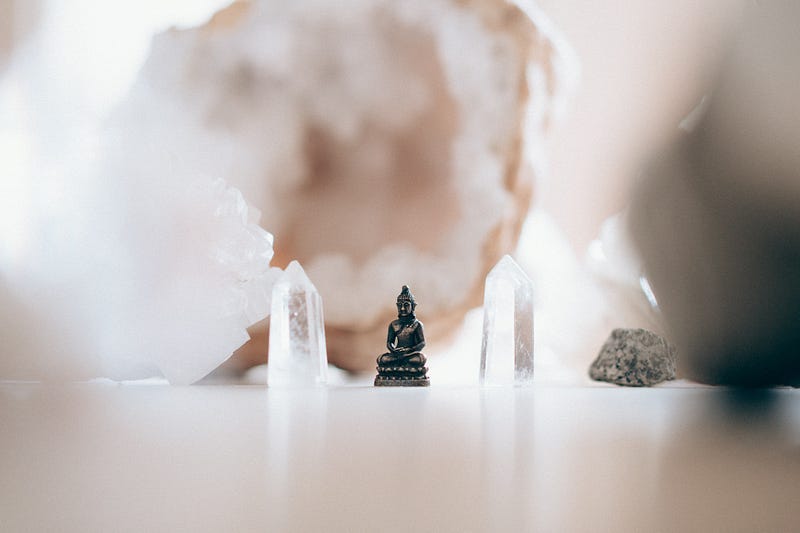
altar with Buddha statue and crystals
Photo by Samuel Austin

“The possession of knowledge does not kill the sense of wonder and mystery. There is always more mystery.”―Anais Nin

My mother was raised Catholic and is not totally happy about it. She has expressed to me that she experienced trauma related to ideas about original sin that were taught to her as a child. Not wanting to instill in me the same feelings of guilt and shame, she chose to raise me outside of organized religion.

Feeling unsure about her own spirituality but not wanting me to miss out on the experience, my mom ended up raising me in an eclectic neo-pagan tradition. She taught me about different spiritual practices from around the world and practiced a variety of rituals with me.

My mom is now a staunch Atheist, but I’m glad that she chose to raise me with some kind of spiritual tradition.

Growing up, we celebrated holidays like Christmas and Halloween, but we also celebrated things like Winter Solstice and Samhain. One year on May Day, we made gift baskets and left them on the unsuspecting doorsteps of our friends and family, a throwback to the pagan traditions of my Celtic roots. We attended church masses with our Catholic family and Passover Seders with our Jewish friends, and at home, we sometimes even cast spells.

In the absence of a strict religious dogma, my mom taught me ethics that were based on treating others how I would want to be treated.


The Golden Rule

To explain the Golden Rule my mom gave me a Wiccan rhyme:

“Ever mind the rule of three, what ye send out comes back to thee!”

These days, I relate this memory to things like Kant’s Categorical Imperative, Newton’s Third Law of Motion, and eastern ideas about Karma. I don’t take this idea totally literally. That is, I don’t believe a cartoon God sits in the sky punishing or rewarding us for our actions. Instead, I’ve come to accept this pervasive idea about the world as a useful, if more ambiguous kind of spiritual knowledge.

The Rule of Three is a kind of truth about the world that’s been expressed by many in many different ways and seems to be true in practice. While I don’t believe in an arbitrarily judgemental universe, it does seem that the scales of our lives and the world always “balance” themselves somehow in the end, however complex the circumstances are. While it’s true that sometimes bad things happen to people with good intentions and good things happen to those with ill ones, the wheel always turns.

My spirituality is based on finding ideas like The Rule of Three and applying them to my own life.

These are ideas about life that seem to persist throughout most faiths and practices, despite their vast diversity and disagreement. As I grew older and I read more philosophy, theology, and mythology, I discovered that there are many common themes like this throughout all faiths and cultures.

While we all have our own traditions and ideas about God, life, and morality, I truly believe that most of us share certain basic human values at a deep level.

My opinion is that it doesn’t matter if you’re religious or spiritual, what your practices are, or if you believe in God. There’s a utilitarian value in spirituality whether you’re a fanatical fringe zealot or a calm, rational atheist.

You don’t have to take it too seriously, either. Spirituality has a sense of humor.


The Spiritual Wisdom of Religion

Spirituality helps us understand the values that bond us together as human beings, across race, nationality, gender, age, class, and ideology. It helps us pass on fundamental truths about life, ethics, and meaning through rich and layered metaphors, through stories and speech, through dance and song, through food and wine. It helps us connect to our roots and stay grounded in rituals and traditions. It helps us stay supported and connected by creating community.

Sure, it’s easy to point out the atrocities perpetrated and justified by religion throughout history– but true spirituality isn’t about submitting to some false authority with human flaws. True spirituality is about love, introspection, learning, and growth. It’s about putting in an honest effort to be a better person, and connecting with others who are trying to do the same. It’s about allowing yourself to be at peace in an uncertain universe.

While I’ve never fully committed to any one spiritual tradition or practice, I try to treat spirituality like a buffet. Faced with unlimited options, I take what nourishes my mind and soul and leave the rest.

I guess I’m an Omnist — but I don’t really like to put a label on it. Labels are limiting.

Even if you believe that your particular holy book was literally written by God, you have to admit that s/he’s sort of hard to understand sometimes. I’ve never read a religious text that doesn’t try to say things without quite saying them outright, and in my opinion, this is because of the nature of what they’re really for.

Spiritual ideas aren’t instruction manuals for how to live. They exist in order to encourage us to write our own.

These stories and adages are designed to be a little bit confusing because they are for our souls what a puzzle might be for our minds. We don’t do puzzles to find the solution, we do them because we enjoy and benefit from the process of solving them. The relatable vagueness of these stories makes them accessible to a wide audience.

We shouldn’t be good people because we are told to be, or because we are afraid of punishment. It’s better to act in a way that you truly believe in your heart is right. This kind of honest intention always produces better results than following instructions or trying to avoid pain. No one can tell you what to believe, and belief has no power unless it’s authentic.

I’ve found spiritual wisdom in the Bhagavad Gita, The Vedas, The Bible, The Torah, and the Qu’ran, but I’ve also found it in children’s books, sci-fi novels, poems, songs, and folklore. I’ve also gained the same kind of insights from simply observing the people around me, or having a conversation with a random stranger. Opportunities to learn and grow are everywhere, as long as you’re paying attention.


Belief Has Power

Regardless of what you believe, you can’t deny that believing in something is a powerful thing to do. We’ve all experienced this in our own lives — it’s hard to accomplish anything if you don’t at least have faith in yourself.

I’m on the fence about a lot of things when it comes to spirituality. I’m not sure if there is God, or what God is, or of where, if anywhere, I’m going to go when I die. I’m not sure if I’m a good person for trying to learn and grow and be better, or if I’m a sucker for not doing whatever I want all of the time, regardless of the consequences. I’m not even completely sure if I have free will, or if my choices really matter.

I think there are many questions in life that we will probably never get the answers to. If our species figures out a way to survive after the Sun burns out, I think it’s likely that we will still be combing the universe for answers, desperately trying to satisfy the insatiable curiosity that is part of what makes a human being, a human being.

But belief is a choice. I can choose to believe in something because it makes me feel happier, or more at peace. I can choose to follow a rule because it benefits me and those around me. I can choose to practice a tradition in the service of programming my brain with positive habits and ideas. I can choose to believe that I live in a benevolent cosmos because it helps me sleep better at night.

So I will. I’m always nicer when I get a good night’s sleep.


Originally published on medium.com on December 25th, 2019. 

The Ship of Theseus and Human Identity


Are you still the same person you were yesterday?

old shipwreck washed up on a beach with people looking at it
Photo by Vasiliki Volkova

The mythical hero and founder king of Athens, Theseus, sailed into battle on a famous ship. Legend has it that the ship, displayed in a museum, began to rot and gradually had its pieces replaced.

The Ship of Theseus is a philosophical thought experiment that can help us to understand the metaphysics of identity. The basic question that it raises is if an object which has had all of its fundamental components replaced is still the same object.

With all of its original pieces replaced, is the Ship of Theseus still fundamentally the same ship?

This idea has interesting and uncomfortable implications when applied to our theories about the human mind and body.

For example: would you dare to step into a Star Trek transporter? If your atoms were disassembled by a tractor beam, would it be the same person reassembled on the other side? Could you tell the difference? Does it matter?

In an age when science fiction seems to be transforming into science fact at an alarming rate, we can’t help but begin to wonder about things like the continuity of consciousness.

Futurists imagine a world where human beings might attain a state approaching functional immortality through the use of technology. Some theorize about a technological singularity, in which the human race fuses with and becomes indistinguishable from our technology.

One day, will we be able to upload our own consciousness into clones of ourselves, or artificial bodies with a much later expiration date than our flimsy human ones? If we were able to do something like this, would we still be human? Would still be ourselves? Does this idea of ourselves even hold water?

These ideas are explored in many places in modern media, particularly in works of science fiction.

In the 2015 film Advantageous, a mother considers transferring her mind into a younger body in order to serve as the spokesperson for a corporation offering this service.

In L. Frank Baum’s turn-of-the-century novel The Wonderful Wizard of Oz, the Tin Woodsman’s origin story remembers him as a human who had all of his limbs gradually replaced with tin. The question of whether he is still the same man, Nick Chopper, is a running joke throughout the story.

The Tin Man eventually meets another version of himself, created from his discarded flesh. Which one is the real Nick Chopper?

In the 1999 film Bicentennial Man, we watch a robot slowly transition towards humanity through the slow replacement of his parts, much like the Ship of Theseus. Robin William’s leading character, Andrew and the Tin Man share a similar problem: if they only had a brain!

Stories like these hint at the idea that the brain– particularly the prefrontal cortex– might be part of what makes us human.


There are many proposed solutions to the Ship of Theseus problem, and how we decide to answer this question says lot about how we see ourselves, our lives, and our future.

Here are a few possible answers:

No identity over time

This theory suggests that there is no continuous “ship” which exists across time, but rather that the ship in each instant is a separate ship, an event existing only for that moment. Do you see yourself this way, a different being from moment to moment?

Continual identity over time via final cause

The Ship of Theseus had a purpose, after all; transporting the hero into battle. This purpose is the ship’s final cause.

Aristotle had the idea that there were four causes or reasons for a thing to be:

The formal cause is the design of the thing, like the ship’s shape, or the way the bones of your skeleton hang together.

The material cause is the type of matter the thing is made of, like the ship’s wood, or the cells of your body.

The efficient or moving cause is the agent that changes the thing, like the passage of time rotting the ship’s wood, or the experiences of your life, shaping your character.

The final cause is the intended purpose of a thing or the mystical possibility of an oak tree that lurks inside of an acorn. This final cause is the essence and identity of the ship, its reason for existing in the first place.

You might relate the final cause of the ship to the meaning of your own life, your telos, your ultimate aim. This way of solving the problem suggests that the ship is the same ship, as a function of its intended purpose.

Gradual loss of identity

This theory suggests that perhaps the ship was once the same ship, but stopped being that ship as it began to decompose.

If our identity is a function of our purpose, what happens when that purpose is unclear? Are we still ourselves if we aren’t serving the same purpose that we once were? If the parts of ourselves which once made us ourselves are gradually replaced, have we lost the essence of who we are?

There is no ship

Conceptualism argues that the ship is just a concept we invented. The new ship and the old ship are separate concepts. They must not be the same ships, then. Otherwise, how would we compare these ideas?

You can think about yourself this way, too. One could similarly argue that you are just a concept that you invented. There is no “you” only your ideas about who and what “you” are.

So, what is the ship?

Nobody actually knows.

How do you choose to view your identity?

Are you a fleeting part of the “now,” existing only within this moment until you become something else in the next moment?

Are you a function of your purpose, an instrument of the reason why you exist or the ideas by which you choose to live?

Are you a gradually degrading being, becoming less and less you as you age and your concept of yourself becomes fuzzier?

Do you have an identity at all? Do any of us? Are we all “special, unique snowflakes” or “all part of the same compost heap?”

What are you?

We’re moving into a future where our ideas about our identity and our humanness are becoming more important. These questions are no longer just abstract food for thought to ponder in the moments when we feel ideologically confused.

The time is coming when we’ll have to make tangible, materialistic ethical decisions related to the abstract concepts of our selves, our identity, and our humanness. We’ll have to decide which choices we’ll make when it comes to the ethics of our technology and our conscious evolution as a species.

What will the future of humanity look like based on those choices?

Regardless of what happens with clones, cyborgs, AI, data clouds, or anything in the science-future of the world, we also have to consider our perspective on this when we make decisions in our daily lives.

Our beliefs and our behavior are closely tied to our identities. Our ideas about who, what, and why we are influencing how we live our lives and how we will feel about the choices we make.

Who are you?

Why are you?

What makes you, you?

Think about it.


Originally published on medium.com on October 29th, 2019.