Just How Smart Are Octopuses?

Are claims of “octopus civilization” credible? 
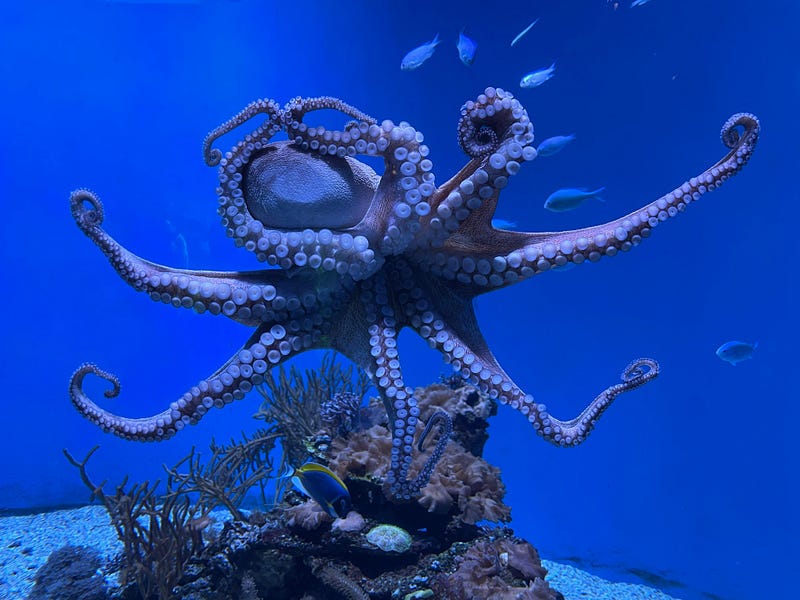
Octopuses are undeniably fascinating creatures. Possessing superpowers that human beings can only dream of, they have the ability to regrow limbs, “taste” with their arms, and change their appearance at will. These fascinating skills are just a small part of why octopuses are of interest to science and to anyone who is curious about the natural world. 

I’ve always thought octopuses were pretty neat, but I became way more became more interested in our eight-legged buddies after I read The Soul of an Octopus by Sy Montgomery and after I saw the Netflix documentary My Octopus Teacher. These pieces of media were made by people who got up close and personal with octopuses and really got to know what they were like, kind of like Jane Goodall studying chimps, but underwater. 

Speaking of chimps, I’ve also been reading about Nim Chimpsky, a chimp who was taught sign language and other human-like behaviors by a team of researchers. Nim became so human-like that he would even smoke and ask for marijuana. While the ethics of smoking weed with a chimp are dubious, the reality of Nim’s life and the lives of other animals like him will forever fascinate science. 

After reading the work of biologists and animal behaviorists, I’ve become really interested in animal intelligence. Well-known for being some of the smartest and most unique creatures on the planet, octopuses keep popping up everywhere I look.

Octopuses have been spotted using tools, including carrying coconut shells for shelter. They are also well known for their ability to solve puzzles, often escaping their enclosures. They’ve figured out how to do things like open jars or the lids of fish tanks for example, in order to get food or in a bid for freedom. It’s no wonder that we find octopuses endlessly entertaining.

Octopus Obsession

Octopus-themed media seems more common these days. Like most animals when studied up close, it’s difficult to avoid anthropomorphizing octopuses. Also like most animals, octopuses have personalities. It seems like they have individual tastes and preferences, relationships, and the ability to problem-solve: in other words, everything that makes up a mind. But how similar to a human mind is a cephalopod’s mind, really? How much of my own ideas about what a mind is am I projecting onto the octopus? 

There’s uncomfortable questions that I always ask myself when I think about animal intelligence. What would we do if we discovered that they were as smart as people? Would that mean that they deserved rights? To be treated as a foreign nation rather than as a research project, a science experiment or a meal? 

Part of why octopuses are so spellbinding is because of how alien they are in both appearance and demeanor. What if we encountered a species of aliens that were as different from us in appearance as octopuses, and as intelligent as people? Would we be able to accept them as intelligent? Or would we treat them the way we treat animals on earth– as living beings that are “below” humans in a moral way, and undeserving of the same rights?

Octlantis and Octopolis: Octopus Cities? 

I was startled when I first read about alleged “octopus civilization” online. I saw some clickbait-y stuff about it popping up in my Facebook feed and decided to look for more information to find out how credible the claim was. 

I was stunned to immediately find a Wikipedia page that describes clusters of octopus dens as “non-human settlements.” Wikipedia was quick to clarify that despite being called “Octlantis” and “Octopolis,” that referring to these sites as “cities” is something that researchers might find to be “misleading.” Still, “non-human-settlements”? With my curiosity about octopuses, I was hooked. I knew I had to investigate further.

Researchers Martin Hing and Peter Godfrey-Smith published a piece in The Conversation in which they discussed to what degree the octopus “cities” they studied were “intentional” on the part of the octopuses. Hing and Godfrey-Smith were part of scholarly research into the matter, in which they stated that “city” is is not an accurate description of the sites they observed, contrary to the bold claims made by The Guardian, Science, and Discover, for example. 

“In a series of news reports written about our paper, a tendency has grown to exaggerate what we reported,”

say Hing and Godfrey-Smith in a subsequent paper. 

The media is often quick to sensationalize stories like this, while real scientists maintain their skepticism. I do think it’s reasonable for these researchers to try and clear up any confusion and to urge people to temper their expectations when it comes to such claims. Still, I’m not totally convinced by the debunking done by Hing and Godfrey-Smith. To me, it doesn’t seem that far-fetched that a non-human species could do something like build a city. Octopuses don’t seem like an unlikely candidate. 

I kept reading and I found that other researchers, like Jennifer Mather, are also making a case for octopus consciousness. 

“…the capacity not just to acquire information and store it across time but to guide information extraction when the octopus is producing motor play goes beyond a cognitive foundation, perhaps to consciousness,”

writes Mather. 

Others, like Piero Amodio, think it’s better to remain “agnostic” about the topic. Still, Amodio speculates:

“Future research may eventually support Mather’s view that octopuses are capable of future planning and causal reasoning.”

 It seems to me that the debate about octopus intelligence is far from over.

Octopus Abuse 

Thinking about how intelligent octopuses are makes it really uncomfortable to accept how they are treated by humans.

I used to find it upsetting that people in some countries eat octopuses while they are still alive– it seemed cruel to me compared to killing any animal prior to eating it. Still, in the wild, an octopus might get eaten. Eating another living creature or being eaten isn’t a foreign concept to an octopus. What humans do to octopuses for medical research is far more cruel (in my opinion) than what happens in nature.

For example, researchers studying limb regeneration routinely cut the tentacles off of octopuses in order to observe them growing back. While Smithsonian Magazine insists that something like this is “no sweat for the cephalopod,” to me, this seems like animal cruelty, something that should probably be illegal. 

Research suggests that octopuses feel pain. Spending your whole life tied up and having your arms or legs cut off over and over again sounds way worse than being eaten, even if they grow back! At least if you are eaten, it’s over relatively quickly. Imagine if aliens kidnapped you and pulled out your fingernails and toenails or teeth to study their regrowth. Imagine if they did that to your family members. Would you be upset? I would. 

Now imagine if someone dumped a bunch of trash in your neighborhood. Can you see where I’m going with this? Should we be treating such intelligent creatures, who are capable of so many incredible things, with such callus cruelty? Is it something we will come to regret as a species in the future?

What if we’re wrong? 

Sometimes I think about the deep ocean, and how little we actually know about what’s really down there. Beyond a certain depth, human beings and most of our scientific instruments would be crushed by the pressure of the ocean water, limiting our investigations of its mysterious depths.

What if researchers are wrong about octopus “cities” being the stuff of overzealous clickbait? What if we aren’t taking them seriously enough? I think that when researches reduce animal behavior to things like “looking or food” or “attempting to attract a mate,” they often forget that that these things are also what comprise much of human behavior. Maybe we just don’t understand their culture. 

Also, octopuses aren’t the only water-dwelling creatures who show signs of intelligence. Dolphins have been shown to recognize themselves in mirrors and pufferfish create beautiful sand mandalas to dazzle their mates, for instance. How many creatures are living at depths that humans can’t travel to? What are they like? How smart are they?

If I were an intelligent water-dwelling creature and knew that I could avoid humans by staying in the deep ocean, I probably would. After all, humans are known for treating non-human creatures horribly. We’ve done it throughout most of human history. Like octopus researcher Peter Godfrey-Smith, I think that if there’s a species in the deep ocean that’s as smart as us, interacting with them would almost be like interacting with an alien civilization. Just like with space, if anyone is out there (or under there), they might just be smart enough to steer clear of human beings. 

I’ll never stop imagining the massive krakens that could be living in the deep ocean, or worrying about whether or not they are smart enough to understand what humans are doing to their habitat and relatives. While claims of non-human underwater civilizations are unsubstantiated thus far, I’m keeping an open mind.
Traumatic Brain Injury Treatments That You Can Try at Home

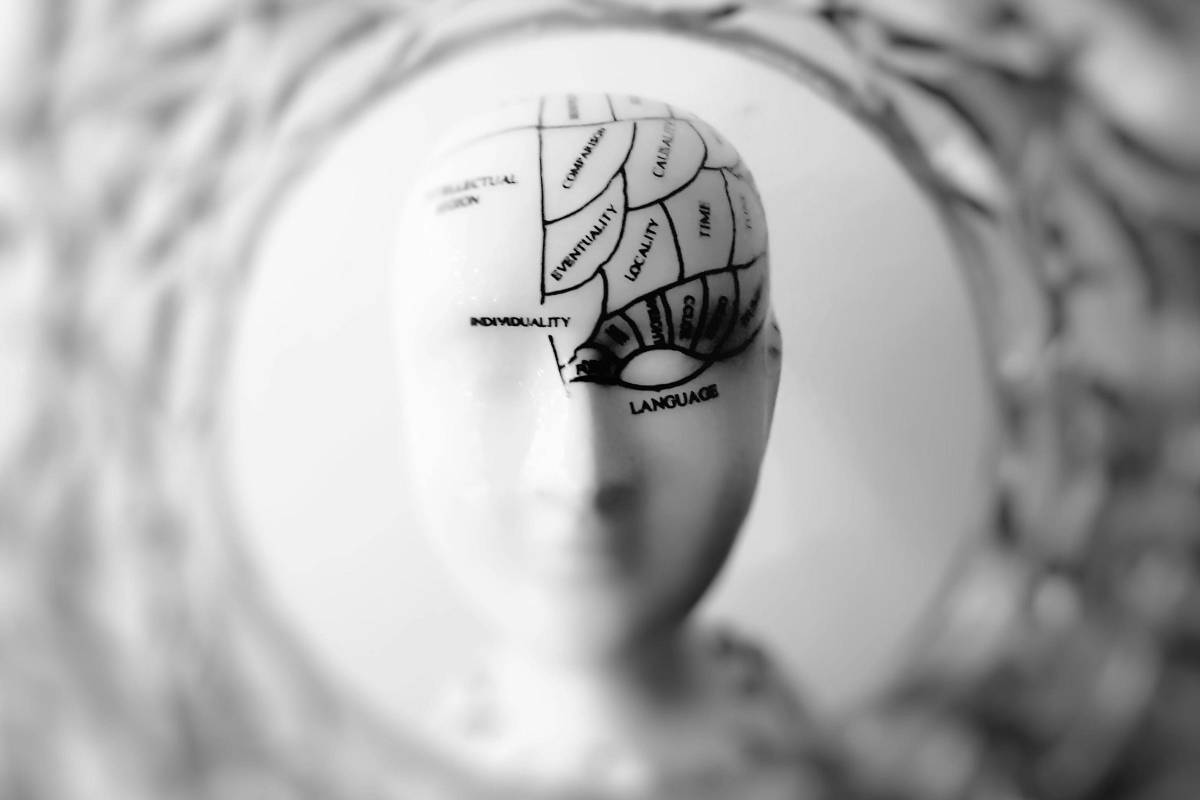
A ceramic model of the human brain

Affordable and accessible options backed by scientific evidence

Photo by meo

Like an estimated five million Americans, I am living with a disability caused by a traumatic brain injury. Brain injuries can be caused by many things, including genetics, head injuries, drugs, trauma, and disease.

Disabilities are expensive! For many people living with traumatic brain injuries, it can be difficult to get adequate care. Like most disabled people, I’ve found several free or cheap options to help mitigate the effects of my disability. I chose a few treatments based on reading scientific research about them and tried them at home myself. I listed them along with the research supporting their efficacy for anyone else who wants to try them.

Here are some things that you can do at home, for free or for relatively cheap, to help heal your injured brain:

Language Lessons

Learning a new language is great for your brain! It’s good for memory and critical thinking skills. It also has many other benefits, like being able to make new friends among people who speak the languages. According to the University of Potomac, learning a foreign language can help you improve at your first language, as well!

A 2013 study found that “lifelong bilingualism can maintain youthful cognitive control abilities in aging.” A 2014 study found similar results, including that bilingualism seems to slow the onset of dementia. A 2016 study found that learning a foreign language increases attention span and ones’ ability to control one’s own behavior.

Apps

I use an app called Duolingo which turns learning language into a fun game. The app is a time investment of as little as five minutes a day– but you, like me, might find it to be an addictive alternative to social media apps. Duolingo has a free version, and there are paid upgrades that remove ads and improve the lessons. Please take note that you can turn off some the annoying noises that this app makes by default, in your settings!

I also use another app called Lingvano which is like Duolingo, but for sign language. Lingvano offers American Sign Language, British Sign Language, and Austrian Sign Language.

Alternatives to Apps

If you can’t find an app you like, or are over using apps, other great ways to practice learning language include watching movies in other languages (even with subtitles in your home language), or reading or listening to books on tape in a foreign language.

You can also use old school tools like flash cards. I visited an alternative school once that labeled objects all around the school with the words for those objects in foreign languages. This is a great way to learn, and I recommend doing this at home.

Nature Exposure

A very recent study, released in June 2025, showed that exposure to nature can help people with brain injuries at all stages of their recovery. I found it interesting that people in the study were initially exposed to nature through gardening. A 2019 study revealed similar positive effects on the brain from gardening in people with brain injury.

I like gardening myself, and I also like spending time hiking in local parks and walking on local beaches to get my fill of this treatment.

Earlier this year, thru hiker and biologist Emily Wastson-Cook wrote about how hiking helped her repair her brain after a stroke and brain surgery:

“Have you ever mentally zoned out while picking your way through talus, up a rocky streambed, or over tangles of roots? Thanks to the automatic process of proprioception, the body is able to regulate muscle tension to maintain balance. This allows you to walk and hike without constant mental engagement. Strokes, traumatic brain injuries (TBIs), and various other neurological conditions can impact proprioception,”

explains Watson-Cook.

Watson-Cook goes on to explain how proprioceptive training like “dance, yoga, walking, and hiking” can improve motor functions and reduce the risk of injuries in people recovering from brain injuries.

Yoga Stretches

Yoga is a great low impact exercise that pretty much anyone can do. There are yoga stretches that work every single muscle in the body, which can be great for repairing your brain’s connections to those parts of your body.

A 2019 literature review found that yoga improved overall mental health, reducing stress, depression, and anxiety. A study published in the Journal of Traumatic Stress showed that yoga can reduce the hyperarousal symptoms associated with Post Traumatic Stress Disorder (a common symptom of brain injury) along with reducing anxiety.

Yoga builds self-awareness and self-discipline. It’s a great practice for many reasons, along with being curative. If you can’t afford classes, there are endless videos on the internet on YouTube and pretty much every other single platform with videos that contain free yoga classes. You can also find diagrams and photos on platforms like Instagram or Pinterest. This makes yoga accessible to pretty much anyone with an internet connection.

Sometimes you can also find public yoga classes that are cheap or donation based, like Portland Yoga Collective or Yoga on Yamhill here in Portland.

Mindfulness Meditation

Mindfulness meditation is about slowing down and focusing on what’s going on in the present moment. Almost any activity can be turned into a mindfulness meditation exercise.

Mindfulness meditation has been shown to have numerous positive effects on the brain, including improving emotional regulation and focus. If your brain injury causes stress, brain fog, or problems regulating your emotions, mindfulness meditation might be for you. Mindfulness also improves memory.

Any task that you can get really absorbed in can be used for mindfulness meditation. You can also try things like mindful eating, to get more enjoyment out of everyday life and to build a greater awareness of the connections between your mind and body.

Walking

Walking is a low impact exercise that almost anyone can do.If you’re currently sedentary and capable of walking, I suggest getting up and going for a short walk. Even just around the block! Get the blood flowing to your brain again! If the weather isn’t nice, you can even start a walking routine inside your house.

Walking can help reprogram your brain’s neural connections to the muscles that control your movements.

Walking can also be used as a form of meditation. A type of mindfulness meditation, walking meditation reduces stress and improves focus. Try being mindful and deliberate about observing the scenery where you place your feet when you walk. Pay attention to your breathing and the thoughts that pass through your head.

Supplements

There are many supplements that you can take to help heal your brain injury. All the supplements listed below are available over the counter.

Vitamin D

Vitamin D has been shown to reduce inflammation and injury to neurons from traumatic brain injury. Vitamin D deficiency is more common in the winter months and in climates that get less sunlight, since sun exposure helps your body produce Vitamin D.

Vitamin B12

Vitamin B12 can help your nerves repair themselves after an injury to your brain or central nervous system. Vegetarians and vegans are sometimes more deficient in B12, since it can be difficult to find plant-based sources of B12. B12 can be found in meat and dairy products, and in plant-based sources like mushrooms and seaweed.

Omega-3 Fatty Acids

A 2014 study found that Omega-3s can reduce inflammation in the brain and also help to “restore synaptic circuits.” A 2017 study found that repeated and prolonged exposure to Omega-3s can help with tissue regeneration in people with traumatic brain injury.

Creatine

Creatine can help protect the brain from injury by reducing stress on the that is caused by a lack of adequate blood or oxygen flowing to the brain. There is growing evidence that creatine is effective in treating both neurodegenerative diseases like Parkinson’s and Huntington’s along with more common brain problems like depression and schizophrenia.

Lion’s Mane Mushrooms

A 2014 study showed that Lion’s Mane Mushrooms can help nerve cells repair themselves. While there’s lots of anecdotal evidence and non-human studies which present evidence for the neuroprotective effects of Lion’s Mane mushrooms on the brain, more human studies are needed.

Curcumin

A staple in Ayurvedic Medicine, curcumin is a compound commonly found in the spice turmeric. A 2020 study found that curcumin can help improve spatial memory and reduce inflammation after a traumatic brain injury. Another 2025 study supports the theory that curcumin reduces inflammation in the brain

Caring for a brain injury long term

Remember that the process of healing isn’t linear, and that everyone has their ups and downs along their healing journey. Good habits that have been abandoned can always be picked back up again, and progress that has stalled can always be continued in the future.

Human brains are programmed through repetition and consistency. It’s key to make these therapies a part of your regular routine and to practice them consistently in order to get good results.

Good luck healing your brain!

This Robot Should Not Be Used As a Weapon of War 

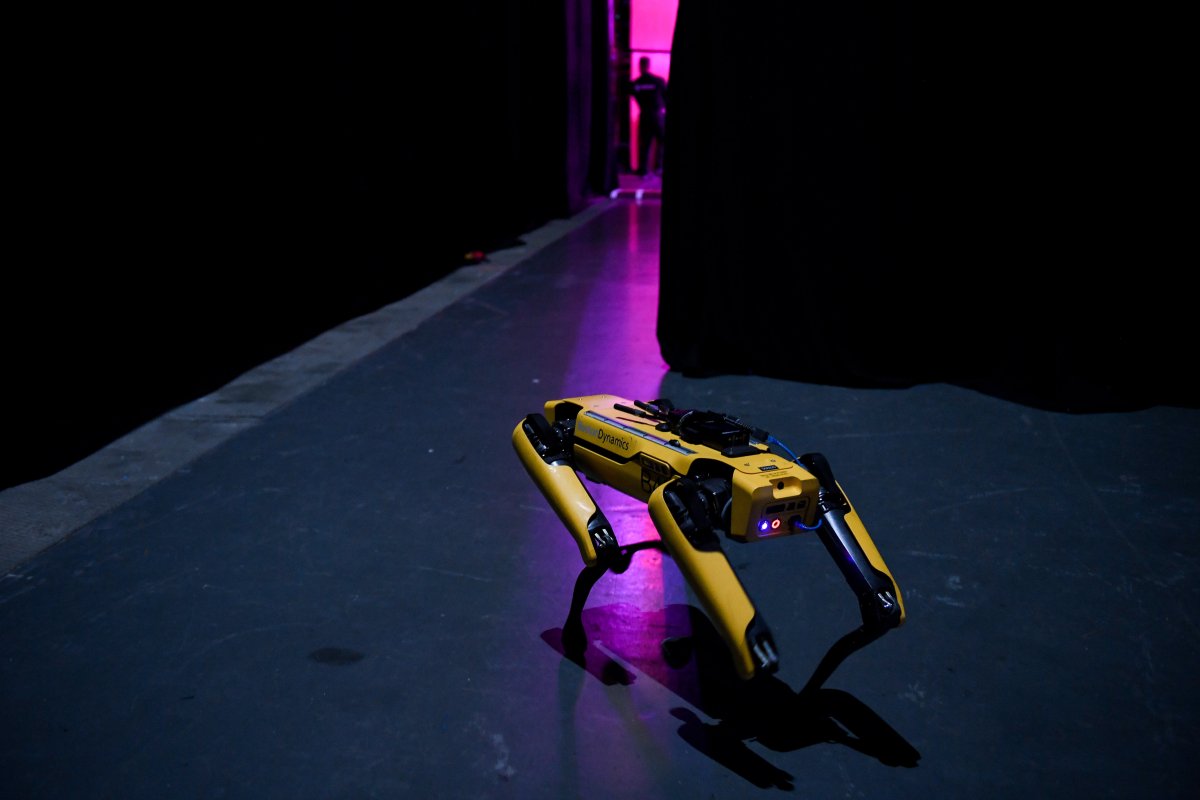
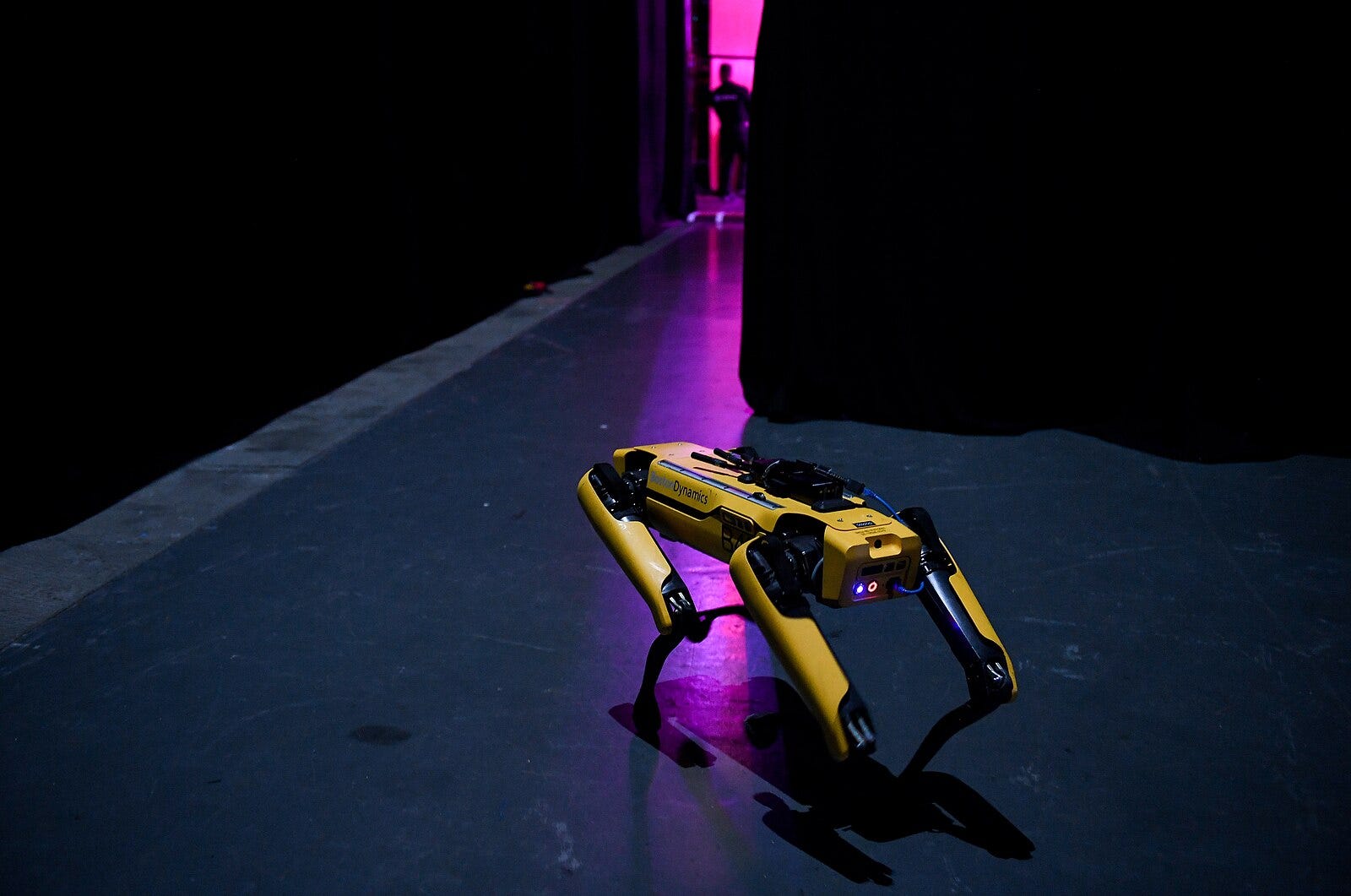
Spot, the Boston Dynamics robot in 2019

Why I see Spot’s future as more like a personal computer or car

Spot, the Boston Dynamics Robot in 2019
Photo by Harry Murphy

I’ve been following the evolution of the robot “Spot” for several years now. A four- legged innovation on from the company Boston Dynamics, Spot is capable of balancing, traversing difficult terrain, and more. 

Spot now has a few competitors on the marketplace, such as the bots from Unitree Robotics, ANYBotics, and Ghost Robotics. It is currently being tested by various militaries for military applications.

I’ve seen videos of Spot dancing, and videos of similar robots used by the US military with guns strapped to them. I prefer the videos of Spot dancing. 

Open Dynamic Robot Initiative is providing a low-cost, open-source alternative to the competitors. 

I’m hoping that people continue working on this kind of robot in the spirit of open source and collaboration. I’d like to see these robots cheaper and available more widely. I also I don’t want them drafted into the military!

I see Spot and robots like it as a more likely candidate for personal transport. If the robots are electric, they could be a great alternative to wheelchairs, cars, bikes, and motorcycles. We could even build giant ones that could serve as public transportation like buses or trains. 

Right now, these robots are really expensive. They are definitely out of the price range of most regular people. I’m hoping to see a transition with these robots where they become more widely available for regular consumers to purchase, like we saw with personal computers after computers were first used more exclusively by scientists and the military. 

An all-terrain robot’s possible functions

This robot can go literally anywhere. That’s why I immediately recognize it as a great alternative to wheelchairs and other mobility devices for disabled people. 

It seems like it would be much easier to ride one of these things around and to be able to go up and down stairs or over terrain that isn’t flat than it would be to use a wheelchair. 

While I think disabled people should be given priority if personal transport robots become a thing, it would be great for the modern American who is lazy, too! Or for anyone who is trying to get anywhere, if they were made street legal.

Design concept: robot ponies

I imagine these robots essentially being used the way that horses, ponies, oxen and other beasts of burden have been used by humans for centuries. 

We should be able to ride them up and down the street, sidewalk, or bike lane at the speed of a plodding pony, a bicycle, or a car. We should be able to tie them up to charge in the sun in front of the bar like stopping to water your horse on the trail. We should be able to use them to pull a cart full of produce or a sleigh in the snow. 

I also thought it would be cool if designers designed these robots to look more like animals. These four-legged robots already look a lot like many animals, but the headless design is creepy and sterile. The addition to Spot of the robot arm that looks like a bit like a head and a neck gives it an appearance a bit like a giraffe, an emu, or brontosaurus. 

It would be fun to be able to add mods to your robot pony to make it look more like a real pony or even an imaginary animal like a dragon or a unicorn. That would make the use of these robots as personal vehicles even more fun. 

Rethinking how we use technology

Ethics are important in product design. It’s important to think about why we are creating something, especially when it comes to things that have the potential to change the world in massive ways, like robots. 

One thing that I learned from studying permaculture design is the concept of biomimcry. Biomimicry guides design methodology and ethics by observing and mimicking the patterns of the natural world. 

I think it would be cool if we designed infrastructure like transportation and technology like robots to mimic nature as well. That’s why I conceptualize Spot’s future as “Spot the cute pony” instead of “Spot the killing machine.” 

Still, nature contains killing machines too! Human beings would be silly enough to design something to resemble an animal that could’ve naturally evolved and then turn that thing into a predator.

Please, no murderous robots 

Philip K. Dick wrote a 1960 book called Vulcan’s Hammer in which robots become extremely powerful, controlling human society and slaughtering people when confused.

Netflix’s Black Mirror had an unsettling episode about a robot that looks similar to Spot going rouge and relentlessly hunting human beings through a post-apocalyptic wasteland. It is utterly terrifying to imagine these robots behaving like this in the real world. 

I prefer to imagine a world in which these robots are more like creative and colorful art cars from Burning Man. I’d like to see cities that are more walkable and with more accessible public transportation. And there’s no reason why our personal vehicles can’t be fun and beautiful in addition to being functional. 

Remember, product designers are driven by what consumers ask for, because they know that’s where the money is.

Personally, my design ethics demand robot ponies, not murderous K-9 units. 

Think hard about what kind of future you want to see. 

A Surprising Number of Animals Are Returning from Extinction 

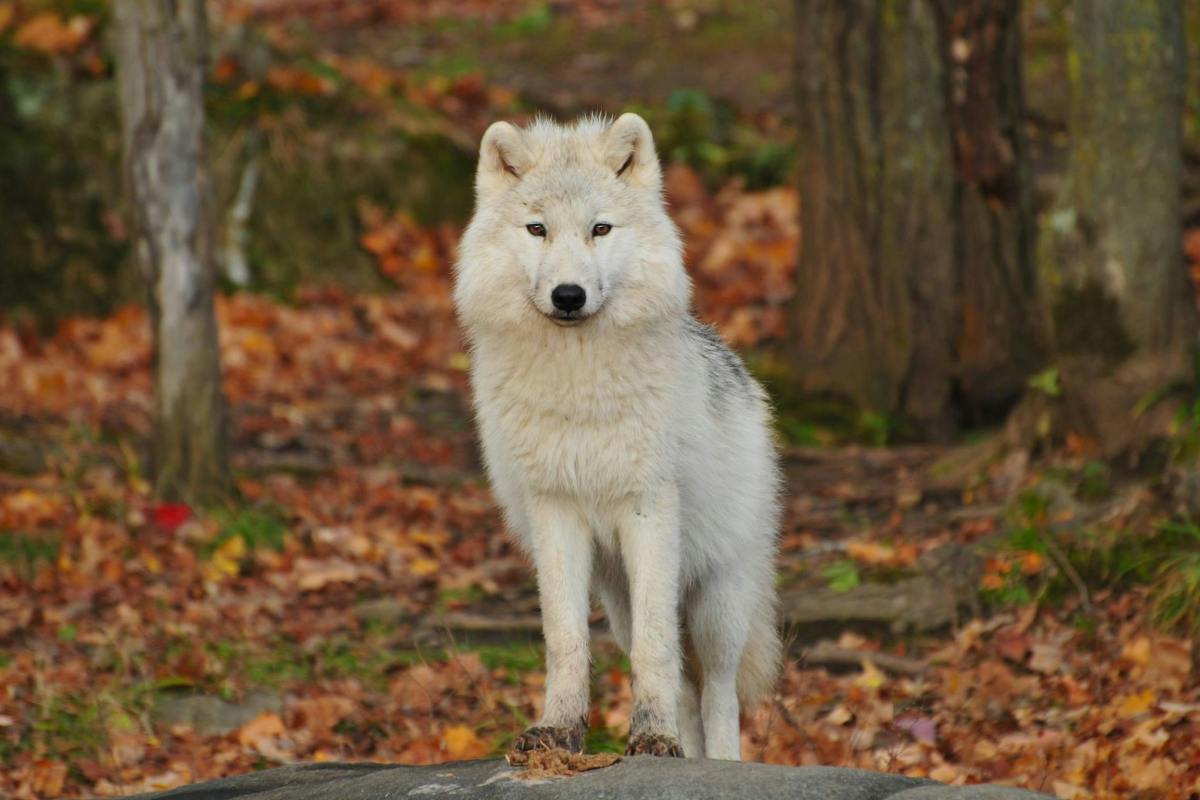
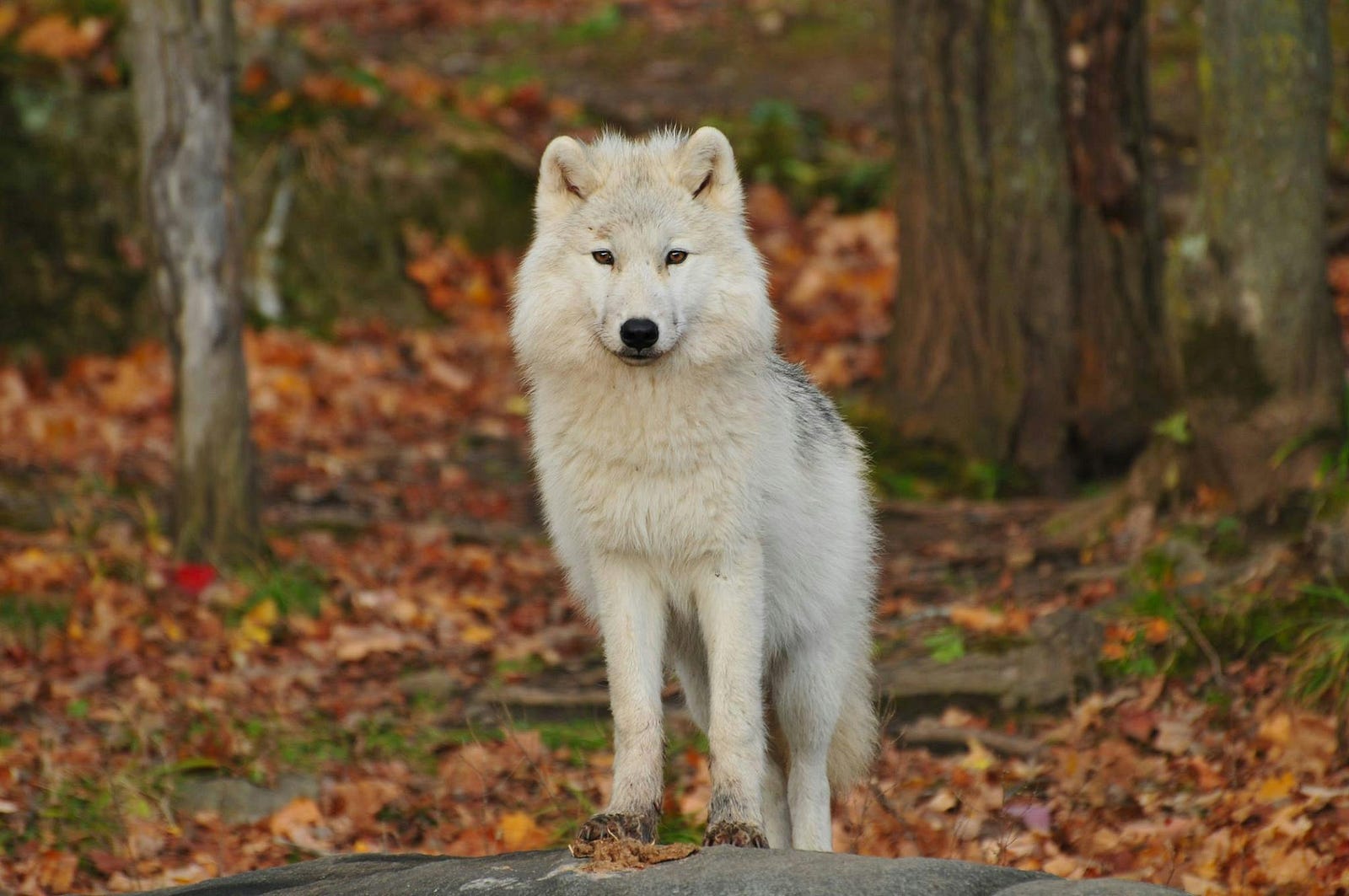
A white wolf standing in colorful fall leaves.

Earth’s biodiversity howls from beyond the grave

a white wolf staring into the camera against a backdrop of fall leaves
Photo by Steve on Pexels

As a resident of the planet Earth, I’ve been concerned about large numbers of animals and plants going extinct.

We are currently living through a mass extinction event. Scientists at the University of Zurich found that the current rates of animals and plants going extinct are between 100 and 1000 times greater than pre-human levels. They think that this discrepancy is largely caused by the actions of human beings.

This event is referred to by scientists as the Holocene extinction, Anthropocene extinction or Sixth mass extinction.

It’s been said before, but of course bears repeating: it seems like we should probably pay more attention to the effect that we are having on the environment as a species.

All this news of ecological destruction can be stressful. It’s a big, daunting problem, and it can be difficult to want to pay attention to it consistently because it’s so depressing. Fortunately, while I was looking into it, I found that there is also some better news on the horizon when it comes to Earth’s rapid loss of biodiversity.

While we might be losing some species, many other species are also making comebacks! Here’s a few examples of species that are rising from the grave.

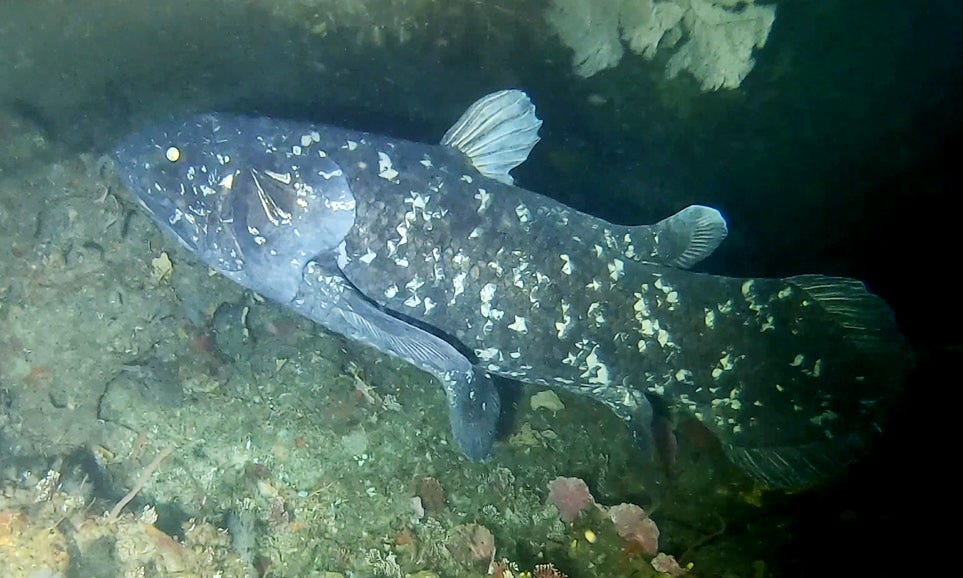
Coelacanth (Sarcopterygii)

Photo by Bruce Henderson on Wikimedia Commons

As a kid, I learned that these scaly fish were thought to be extinct for millions of years before a living specimen was captured in 1938.

Coelacanths are the animal that got me interested in cryptozoology. Cryptozoology is the study of animals that may or may not by mythical, like Bigfoot and the Loch Ness Monster.

Cryptozoologists are also interested in verified, real animals that once existed that may or may not be extinct today. Like conservationists, they often discuss species of animals that are currently threatened or endangered due to their small population.

Coelacanths changed the way that I view natural history as a whole. Learning about the return of this species made me skeptical of extinction claims made about any other species. They also made me less skeptical of scientific claims that cryptids are not always the stuff of legend and folklore. Some may be living animals currently unknown or little known to science!

Subscribe to continue reading

Become a paid subscriber to get access to the rest of this post and other exclusive content.

Vegan Fashion Alternatives That You Didn’t Know Existed

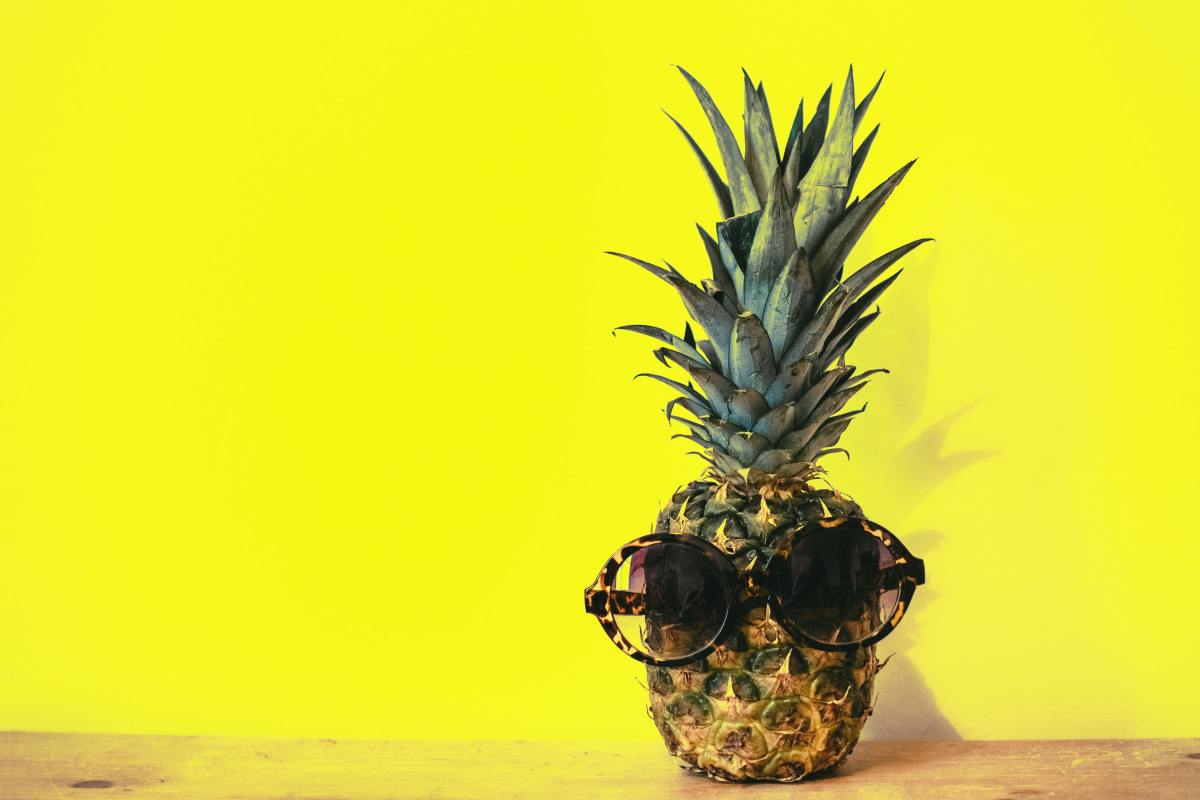
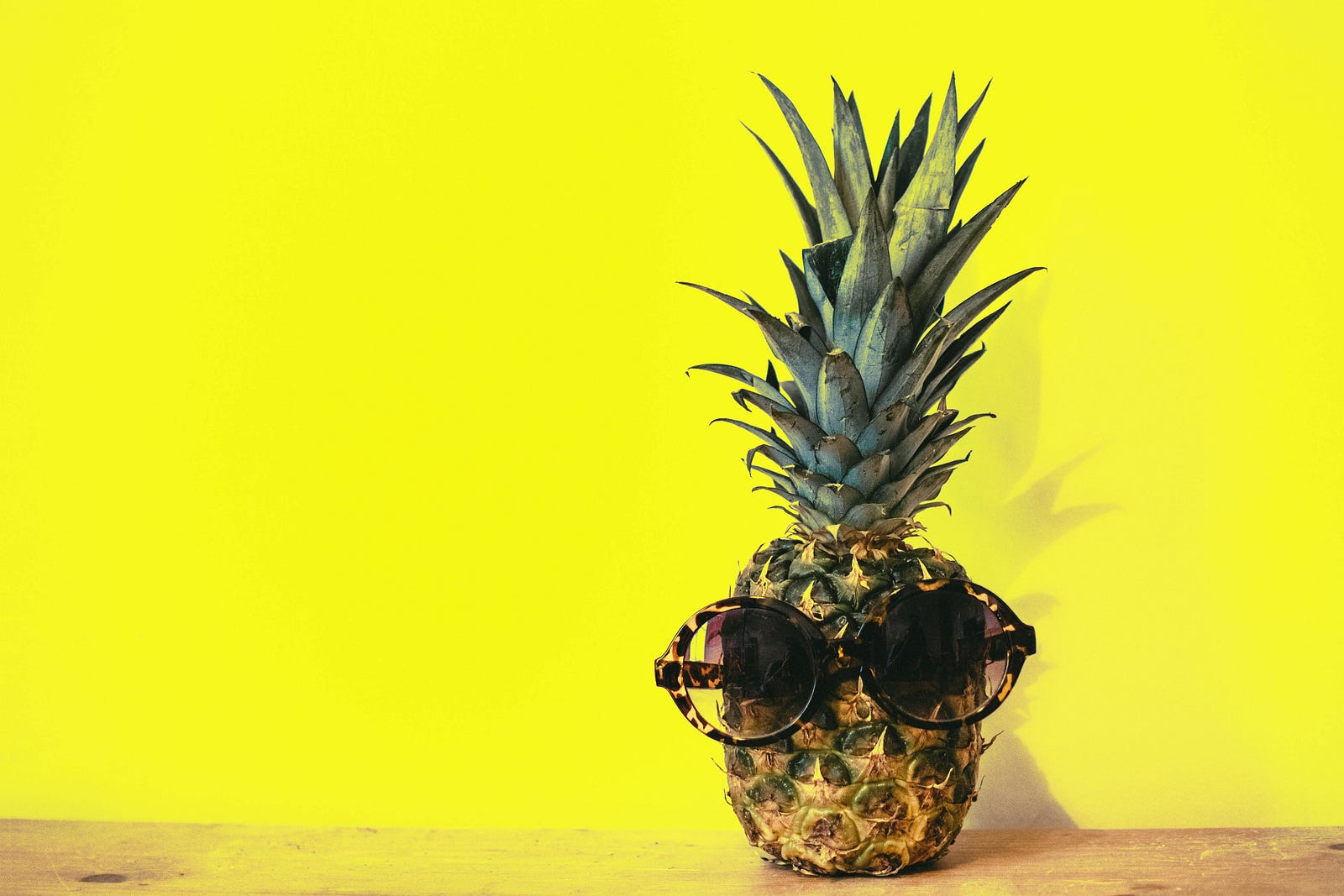
a pineapple wearing sunglasses placed on a wooden table in front of a yellow wall

Cactus leather and more

a pineapple wearing sunglasses, placed on a wooden table in front of a yellow wall
Photo by Lisa From Pexels

Looking for a vegan alternative to products like leather and wool? Me too. If you’re like me and have already done a little bit of background research, you have probably run products like hemp, bamboo, and organic cotton, while looking for sustainable alternatives to the animal products used in your clothes and accessories.

There are also plastic alternatives to the animal products we consume — and they are often less sustainable than the aforementioned hemp and bamboo. 

Here are a few more alternatives that you might not know existed. These alternatives can help to replace both animal products and some of the less sustainable vegan alternatives that are made out of plastics. 

1. Seaweed

Vegans already have a reason to love seaweed, because it’s one of the only plant-based sources of vitamin B-12 with a high concentration of the vitamin. 

A company called SeaCell has developed a fiber from seaweed which has many practical uses. According to the company the fiber has a “soft and silky” feel, and is easy on sensitive skin. It’s also biodegradable and helps to regulate moisture. 

I think the fact that seaweed is chalk full of B-12 and can also be used for vegan fabrics is a good argument for cultivating seaweed! Some people are even growing seaweed at home

2. Nettle

Apple Oak Fibre Works makes handwoven fabrics out of stinging nettle fibers. 

Nettle fabric is said to look a bit like silk and is sometimes spun together with cotton. Like cotton, the fibers are breathable, absorbent, and soft. 

Nettle (Urtica dioica) is also edible and can be used medicinally to reduce inflammation and may help control both blood sugar and blood pressure. 

However, nettle fabrics are more often made from Himalayan Nettle (Girardinia diversifolia), a different species of nettle which has fibers with different qualities. The Himalyan Nettle grows in countries like India, Nepal, Bhutan, and China. A third species Ramie (Boehmeria nivea), has also been used in Asia along with in Ancient Egypt and feudal Europe. 

3. Cactus Leather

Looking for a product that is tough, durable, and water-resistant like leather, but not made from the skin of an animal? Cactus leather might be a good alternative for you. 

Cactus leather can be a good alternative to the existing plastic vegan alternatives to things like shoes and handbags. The leather created by Mexican designers Adrián López Velarde and Marte Cázarez was shown to be breathable, durable for up to 10 years, partially biodegradable and a more sustainable alternative to current synthetics. 

Cactus leather like the kind made by the company Desserto can sometimes be made from agave fibers, which are a byproduct of the tequila industry. Finding a use for this waste makes it a sustainable alternative. Desserto also swears by “holistic sustainable” farming practices. 

4. Fruit Leather

Like cactus leather, fruit leather is an alternative to leather that is made from plants. Like real leather, it can be durable, heat resistant, and water resistant. 

The vegan company Vegatex makes a product out of apple skins that are byproduct of cider production. It’s called AppleSkin.The company also has a product called BarleySkin that is made from the spent grain used by brewers, and another product called LemonSkin made from lemons. 

The company Ananas Anam makes a similar product called Pinatex out of pineapple leaves, which are recyclable and compostable. Again, this is a way of reducing waste, increasing the sustainability of the product in addition to providing a vegan alternative. 

5. Mushroom Leather 

A company called MycoWorks makes leather-like fabrics from Reishi mushrooms. They also make a product from the mushroom’s mycelium

MycoWorks Designer Philip Ross has a background in mycology. Philip first used reishi mushrooms for medicinal purposes after discovering their immune-boosting qualities while working in AIDS hospice in San Francisco. 

Mushroom leather is said to feel like real leather and is sustainable in addition to being vegan because it takes a small amount water and energy to produce relative to other products. It’s also extremely stylish — everyone at the party will know you’re a “fun guy.”  

The sky is the limit

I really think that product designers are leaving a lot of money on the table when it comes to producing vegan and/or more sustainable alternatives to the products we love. 

It’s not only a matter of ethics, it’s a matter of money! There is a lot of money to be made selling products like these. Vote with your dollars! Buy the products which are durable and functional, and which are produced sustainably and ethically.