How to Help Other People Without Hurting Yourself

It can be a challenge
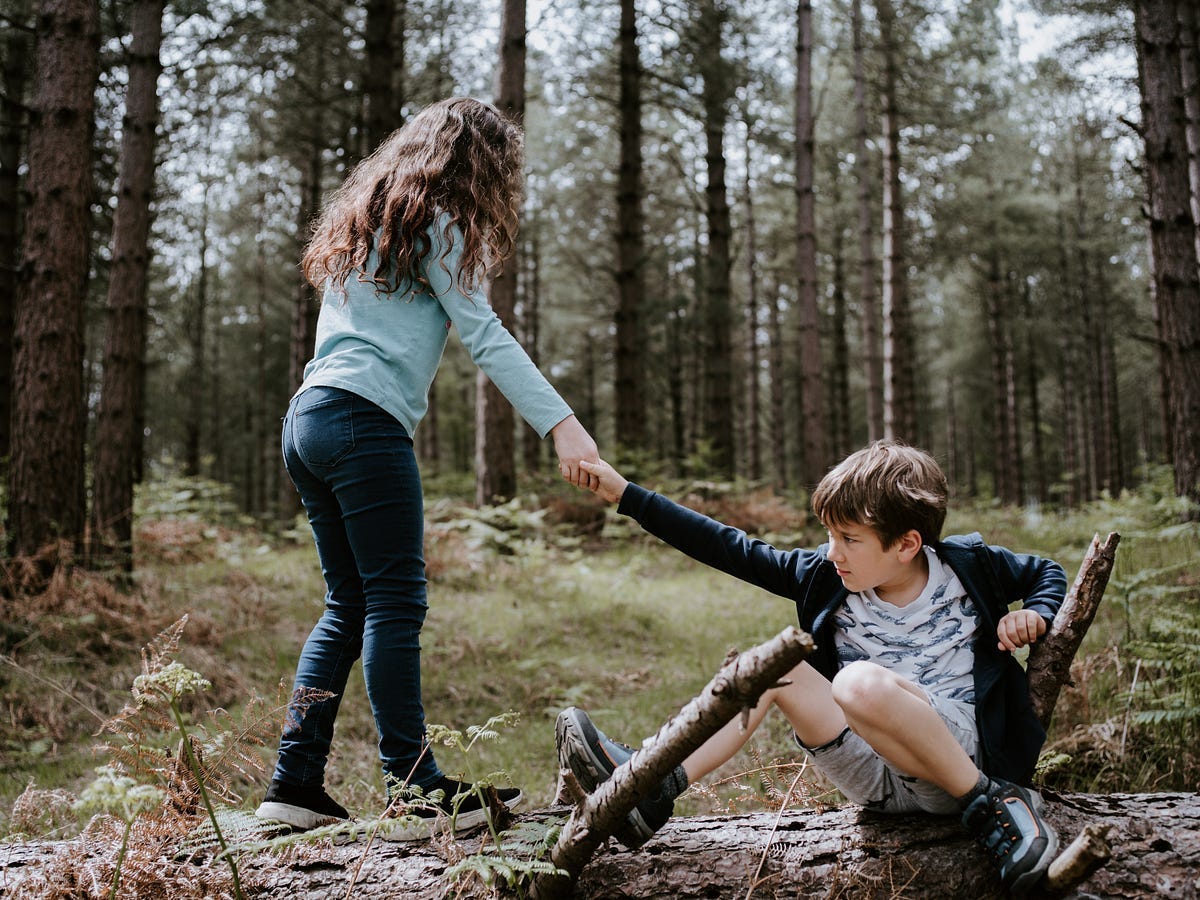
A child is helping another child stand up. They are in a forest.
Photo by Annie Spratt

There’s nothing like the joy that comes from helping others. It creates positive changes in the world that you can see before your eyes. It also has the added benefit of making you feel better about yourself.

Victories are more satisfying when you help others on their own journeys and these kinds of actions create a reciprocating cycle in which you are also helped on your own journey. You can take extra pride in your good grades if you helped your friend study. A home-cooked meal tastes better when it’s shared with a friend.

If nothing else, helping people just makes you feel good. It raises your self-esteem and increases your confidence in yourself. Anything that does that is not just a good deed, but an invaluable power move in the game of life. Giving others support has even been shown by science to have concrete neurological benefits.

Unfortunately, helping people feels so good that it can also be habit-forming. Like most habits, this habit can be healthy or unhealthy, depending on the person, the dosage and the frequency.

If you’re anything like me, helping people can even become a real problem. A UK doctor has even recognized this as a pattern in the friends and family of the drug addicts he treats, calling it compulsive helping.

Personally, I’ve found that I’m very prone to overextending myself, and susceptible to the very real consequences of doing so. Nevertheless, I still can’t seem to break my helping-people habit.

I think that helping can sometimes be a way for me to avoid dealing with my own problems, or a way to prop up my own ego. Being helpful can have this kind of dark side for many people. Sometimes it’s more about us than it is about the people we’re helping. We do it to compensate for something else we’re missing, or to feel valid and significant.

Helping others can energize and motivate you, but if you do it too much, it can leave you feeling physically, mentally, emotionally, and spiritually exhausted. It’s never good to let yourself get to that point– not just because it isn’t fair to you, but because an exhausted person isn’t capable of helping anyone.

Also, giving a lot and not getting much in return (even when you aren’t expecting anything), can leave you feeling bitter and resentful. The feelings of love and care you had for the person you were helping can turn sour by your own hand, and that, in itself, is a small tragedy.

After years of well-intentioned helping gone wrong, I’ve come to this conclusion: If you really want to help people, the key is finding the best strategy.

Understand your limits

Be honest with yourself about what your physical, mental, and emotional limits are when it comes to helping those around you. You can’t pour from an empty cup or an empty bank account. You need to secure your own oxygen mask first– just like you need to secure your own job, home, and self-worth.

Ask yourself if you’re doing it for the right reasons. Are you helping because you want to, or because you feel like you have to? Are you doing it out of love, kindness, and generosity, or guilt, obligation, and fear?

Take time to care for yourself, and make sure you actually have the energy that you’re about to give. Know when to stop.

Develop strong boundaries

Once you understand what you are and aren’t capable of, think about what you are aren’t willing to tolerate. Be uncompromising about what you will and won’t do.

Giving in to requests that you don’t feel comfortable fulfilling might relieve whatever guilt or pressure you’re feeling in the short term, but will probably become a source of regret in the long term.

Learning when and how to say “no” is one of the most important lessons that any of us can ever learn, and it can have a huge impact on what happens in our lives and how we feel about it. Never compromise your own integrity for somebody else’s sake.

Understand what actually helps

There’s a big difference between helping and enabling, and that, unfortunately, is something that many of us end up learning the hard way.

Helping someone who isn’t ready to help themselves can actually be destructive– the help you’re giving them could be fueling whatever it making their life difficult in the first place. Even if it isn’t, it could also create feelings of disempowerment in the person that you’re helping.

A person who is getting too much help can start to feel like they don’t have any power in the world or agency over their own lives. This feeling spirals into a consistent inability to help themselves. This is sometimes called learned helplessness, and it’s a phenomenon that is common enough to have been researched.

Ask yourself if what you are doing is really promoting the growth and independence of the other person. If it isn’t doing that, then it’s very possible that you’re actually feeding the irresponsibility, incompetence, and dependence of the other person.

And that doesn’t help anyone.

Do more with less effort

We can strategize at a very practical level to find a wider audience or create a broader reach with our good intentions.

For example: instead of spending hours talking to your friend with depression, you could write about how you overcame yours, and potentially help thousands of people.

Instead of going into debt trying to help your sister with her bills, you could help her find a steady job by calling that guy you know in her industry.

Instead of emptying your wallet giving money to every homeless person you see, you could go volunteer at your local shelter or food bank.

Focus on long term benefits. Create things with the potential to last. When giving gifts, try to make them the ones which keep on giving. Plant seeds.


If this article helped you, I’d like to thank you. You have already helped me, in return, by letting me be helpful in a way that’s healthy for me.

Helping people is a good thing. You should absolutely do it, and you have every right in the world to feel good about it. Just make sure your help is wanted, that you’re ready to give it, and that you’re doing it for the right reasons.

You’ve already helped someone else today– help yourself out.


Originally published on medium.com on February 8th, 2020 

I Still Love Everyone I Have Ever Loved


And I always will

Photo by Aziz Acharki

“True love is eternal, infinite, and always like itself. It is equal and pure, without violent demonstrations: it is seen with white hairs and is always young in the heart.” — Honoré de Balzac

Throughout the course of my life, I’ve been lucky enough to fall in love more than once.

But what exactly is love, and how do we “fall” into it?

Anyone who’s ever experienced a passionate intimate relationship can probably relate to this feeling of “falling,” and I believe there’s a reason why we use that particular word to describe it.

Falling, in the figurative sense, certainly feels a bit like falling in a literal sense. It’s similarly exciting, overwhelming and scary. The euphoria associated with this kind of infatuation is how I imagine a skydiver or an astronaut probably feels, hurtling back towards Earth, while taking in a view which is vast and beautiful at an indescribable level.

As I’ve gotten older, I’ve learned that there’s a difference between “falling in love” and actually loving someone. The lust and drama of connecting on a deep level with another person can certainly feel earth-shatteringly meaningful– for a while. But when we crash from the high produced by the cocktail of oxytocin, serotonin, and dopamine that swirls in our brains during a romance, what is left?

The truth is that real love has nothing to do with bringing flowers, reciting poems, or fantasizing about your future children. It’s not about great sex, great conversation, or sweeping anyone off their feet. We think of love as something intense and epic, but in reality, it’s quite mundane.

Real love isn’t a fairytale story with princesses, knights, magic or prophecies. It isn’t thrilling and intoxicating- actually, it’s rather boring. It’s an everyday story that includes things like eating, sleeping, cleaning your house and paying the bills. It’s about dealing with the challenges of whatever journey you each happen to be on, together.

Real love is about seeing someone who they truly are, flawed like all human beings inevitably are, and accepting them, wholly and completely. Real love doesn’t fade as physical attraction does, and it doesn’t fizzle out like lustful passion.

Real love doesn’t even go away when you want it to.

You’ve probably seen the evidence of this in your own relationships. The people we love are often the ones who hurt us the most, but somehow, we love them anyway.

I’ve heard many people say, “love shouldn’t hurt,” but the truth is, no matter how good everyone’s intentions are, it’s bound to hurt sometimes. Often we are only hurt by those we love because of our love for them. If we didn’t care, it would be easier to be indifferent.

When I look back over my past relationships, I can now see the difference between having “fallen in love” and having “loved.” It’s an easy distinction for me to make because there’s a single measurement I can use to be sure: I still love everyone who I have ever truly loved.

True love is eternal. It’s not about physical beauty, sex, validation, or power. It’s about the essence of what makes us human, and the recognition of our humanness in each other. It’s about looking at another person in the eyes and seeing a part of yourself.

When you truly love someone, it is truly unconditional, and irrevocable.

Real love doesn’t go away because of hardship or conflict. It doesn’t end in the heat of an argument, or after the pain of betrayal. It isn’t reduced when someone loses their job, gains weight, or gets old– because things like that aren’t the real reasons why we love people.

Love has nothing to do with the temporary bodies we live in, or the temporary experience we have while we are alive. It is the act of accessing the innate, infinite knowledge programmed into our souls and our cells, and truly understanding that we will never really be separated from each other, despite any physical or emotional detachment.

The truth is that I still love everyone I’ve ever truly loved.

I’ll love them if they are poor or wealthy.

I’ll love them if they are sick or healthy.

I’ll love them if they marry somebody else, go to prison, join a cult, or lose all of their hair and teeth.

I’ll love them in spite of time, in spite of anger, in spite of distance, and in spite of death.

And I always will.

Anything less just isn’t love.


Originally published on medium.com on February 15th, 2020. 

The Problem With Porcupines


Stop avoiding the spiky parts

a porcupine
Photo by Dušan Smetana

The hedgehog’s dilemma, also called the porcupine’s dilemma, is a metaphor used to illustrate the more difficult aspects of human intimacy. Arthur Schopenhauer and Sigmund Freud both used this dilemma to describe how individuals relate to society and to each other.

The dilemma asks us to imagine a group of spiky mammals, who are trying to move more closely together in order to share body heat on a cold day. However, the spikiness of these creatures presents a problem. The closer they get to each other, the more they get hurt.

Since the critters are unable to cuddle without sticking each other with their spines, they aren’t able to achieve the close, symbiotic relationship that they are all aiming for.

“In the same way,” wrote Schopenhauer,

“the need of society drives the human porcupines together, only to be mutually repelled by the many prickly and disagreeable qualities of their nature.”

The main idea that this story hopes to communicate is a great irony of the human experience: we can’t have relationships, or indeed, even interact with each other, without risking harming each other.

Anyone who has ever experienced a bad breakup, a family fight or the end of a friendship can attest to the risks we take when we get close to each other. Really, the same is true for anyone who has ever met a rude stranger, cleaned up someone else’s mess, or been or cut off in traffic.

The potential negative consequence of this situation (besides the obvious pain that we can cause each other), is the fact that this may cause us to become overly cautious.

Our fear of mutual harm alienates us from each other and weakens our relationships. Since our hearts have been hurt, we build walls around them in order to protect ourselves.


This problem has never been more relevant than today when our technology seems to be enveloping us in individual, solipsistic wombs.

You can press a button on your phone, and your groceries will be delivered to your doorstep. Really, if you had enough money, you could go basically your whole life without ever having to leave your house. In Japan, there’s even a word for a person who lives like that: hikikomori.

The fact that we can be social through our media doesn’t exactly incentivize us to participate in what one Reddit forum calls “a free-to-play MMORPG with 7 billion+ active players,” or Outside, also known as the real world.

You certainly don’t need to go anywhere to socially interact with people– it’s just a click away. It’s too easy to become disconnected in this day and age, be it physically or emotionally.

It’s safer in our private bubbles, comfortable behind our manufactured images of ourselves and our two-dimensional perceptions of others. It’s neater and clener– anyway, who wants to deal with all that messiness?

That’s what humanity is– messy. It’s not edited for political correctness, smoothed by a filter, cropped into a square, or optimized to appeal to a target audience.

When we get close to people in the real world, we aren’t just seeing the highlight reel. Or at least, in my opinion, we shouldn’t be. If we never let the people we’re close to see us for who we really are, are our relationships even meaningful?

It’s becoming harder to want to be seen, warts and all. I think we’re starting to forget what warts look like.


I understand why it’s tempting to retreat into the relative safety of shallower interactions.

It’s just so much easier to see the Facebook version of your college roommate, smiling in photos with his husband and kids, than to hear about his sister’s cancer or the medication he started taking for his depression.

You don’t really want to argue about the merits of capitalism with your out-of-work, out-of-touch uncle or hear about the alcoholism your ex-girlfriend’s new fiancé. Your Instagram doesn’t have to include details about your childhood or your relationship with your parents. The Twitter user agreement doesn’t ask us to be honest with others or ourselves.

Even outside, when people ask us how we are, we say “fine.”

We might say “good,” or “great,” or “okay.” It’s rare that we say anything like: “I’m overcome with bliss,” “I’m overwhelmed by grief,” “I feel awkward in this situation,” or even “I’m having a bad day” or “my butt really itches in these pants.”

Those things are too prickly.

Why not leave these intimate details at arm’s length, and avoid getting poked? Why not mind your own business, and leave well enough alone?

Because raw, authentic human connection is a huge part of what makes life worth living. If you ask that girl out, she might break up with you, but if you don’t, you’ll never travel the world together.

Because we can’t ever have trust without placing our faith in people. If you confide in a friend, they might judge you, but if you don’t, they’ll never understand what you’re going through.

Because no one can ever really know you, or appreciate you, for who you are, if the only version of you they ever get it one that you’ve created to make others feel comfortable. Because joy doesn’t mean anything without the knowledge of pain.

Take the risk.

People aren’t always soft; sometimes they are sharp as hell, and sometimes they’re going to hurt. Still, screw the spines. It’s cold out there, and I would rather be warm.

Wouldn’t you?


Originally published on medium.com on February 3rd, 2020. 

The United States of America is Basically Doing the Holocaust

We should probably stop.

a series of grey boxes

Photo by Michael Fousert

During the Holocaust, specific groups of people became the target of propaganda and violence that was coordinated by the state. These groups included ethnic, cultural and social groups such as Jews, Catholics, Freemasons, gay people, trans people, disabled people, and sex workers.

People belonging to these groups became the targets of propaganda campaigns designed to destroy their reputations– but more importantly, to destroy their credibility. An important feature of the Holocaust was the culture of secrecy and the destruction of historical records. Because we do not, collectively, remember our history in a meaningful way, in a way which allows us to fully comprehend the horrors that human beings are capable of, we are continuing to perpetrate these horrors.

The philosopher Hannah Arendt wrote about how totalitarian governments created societies of people who were lonely; not just physically lonely, physically isolated, but spiritually isolated from one another. During World War II, Nazis used propaganda and violent threats to create a culture in which speaking the truth was punishable by social isolation, shaming, unjust incarceration, and physical torture. They created a world in which human beings were incapable of having real intimacy with one another because they were no longer able to express to each other the truth of their experiences. This weakened the social and familial bonds between people, which made them easier to control.

This kind of spiritual loneliness, according to Arendt, is what created the perfect conditions for governments to control the minds of their citizens. Unable to find real human connection under conditions where it was impossible to tell the truth, human beings sought comfort elsewhere — from the authority figures who became stand-ins for the real human relationships which could no longer exist. They became loyal to an amorphous, faceless authority instead of to one another. Even people who lived in the same house, worked at the same jobs or attended the same schools could no longer truly relate to one another. People became passionately terrified of one another. There was a culture of paranoia.

Fear is the seed of hatred. By causing immense fear, by torturing the populace en masse by making everyone afraid all the time, not just of the state, but of each other, Nazis made people more willing to participate in their atrocities. They created a world in which human beings were willing to harm the ones they loved the most in order to avoid pain. In which they were forced to denounce their most deeply held beliefs at the barrels of guns. In which they informed on and turned in their loved ones. In which they were coerced into implicating themselves and other innocent people in kangaroo courts in which facts and evidence didn’t matter. In which people were so confused, so tortured, that they no longer trusted their own memories or senses.

During the Holocaust, it was not just agents of the governments who committed atrocities, it was everyone. Every single person who participated was, to varying degrees, culpable. And yet, when the criminals were tried, a select few were disproportionately punished for crimes which were participated in, condoned, and concealed by nearly everyone. These people became the scapegoats for the crimes of everyone else. Perhaps collectively, as a species, after such an event, we believed that using these people as sacrifices would absolve the rest of us of our guilt.

But guilt doesn’t work that way. Morality doesn’t work that way. Human psychology doesn’t work that way. The world doesn’t work that way. When people commit atrocities, if they witness atrocities, even if they are forced to say, even, for a time, forced to believe that the atrocities didn’t happen, some part of them will still remember. And then, regardless of whether or not they are held accountable by the laws of any state, people will punish themselves, and each other, regardless of how much anyone involved deserves any of it. 

The collective guilt that resulted after the Holocaust led thousands of people to commit suicide and countless others to be left with permanent mental and spiritual scars that would never heal and would be passed down from generation to generation. The intergenerational trauma from the Holocaust and other genocides have left intergenerational traumas that fuel a cycle of hatred and fear and perpetuate unnecessary suffering across the planet.

The government and people of the country in which I live are perpetuating these same crimes, right now, as I speak. The government of my country perpetrates horrific crimes against humanity on what seems to be a perpetual basis, both at home and abroad.

In the country where I live, right now, as I speak, people are being locked away without due process and being treated in horrifying and inhumane ways while in captivity. They are being separated from their parents, children, brothers, and sisters. They are being denied medical treatment when they are sick. They are being asked to defend themselves at hearings in languages that they do not understand without representation by attorneys. People are being raped and sexually abused by government officials who are not held accountable for their actions. People are having their body parts, such as their reproductive organs, removed without their informed consent.

My country murders civilians en masse in foreign countries in order to maintain its control over global markets and natural resources. It relentlessly persecutes, tortures, and executes citizens who speak out against its atrocities.

During World War II, people with both immutable physical characteristics or religious, cultural and social associations like mine were tortured and murdered. Historically, the peaceful values of both my ancestral culture and both the religion in which I was raised and the one I currently practice were warped and distorted by state governments for propaganda of fear-mongering, hate-mongering, and social control.

During my lifetime, I have personally been subjected to treatment which constitutes torture and crimes against humanity. I know many other people belonging to the both the same and other cultural, religious, and social groups and as me who have been subjected to the same. My local, state and federal governments have condoned this treatment and failed to hold the perpetrators accountable. I have been subjected to this treatment, not, in fact, because of the groups that I belong to, but because I reported the atrocities that I witnessed and experienced and because I fought back. The same is true for many others around me, regardless of race, religion, culture, and the like.

It does not matter what ethnic, religious, social, or cultural group you belong to. During the reign of a totalitarian government, any person is potentially a member of a group that was referred to by Nazis during the Holocaust as “untermenschen,” or “subhumans.” This group still exists today, under the totalitarian government under which I live. Absolutely anyone can be labeled a member of this group, and absolutely anyone is a potential target.

Dear America — your human sacrifices do not absolve you of your crimes, and they will not absolve you of your guilt.

No matter who you are, one day you too, could one day be treated as “subhuman.” And also, no matter who you are, one day, you too could be the person who treats someone else that way. You might even be doing it right now. And if the propaganda and mind control that is inflicted on you every single day of your life has succeeded in breaking your consciousness to the point where you can no longer see the truth when it’s right in front of you — you might not even be aware of it. But you will be one day. And it’s gonna hurt.