Why I’m Against Mandatory Arrest Laws

Laws that mean well sometimes have unintended consequences
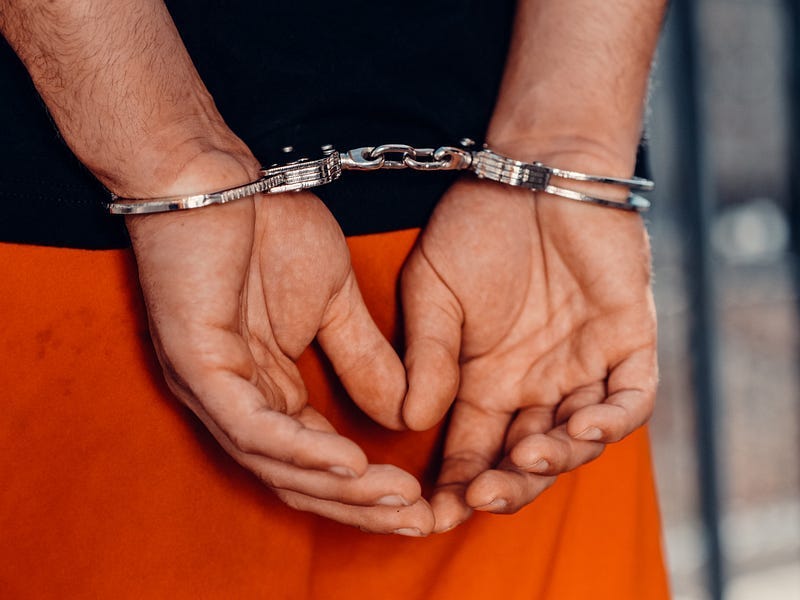
Photo by Kindel Media

Mandatory arrest laws ostensibly exist to protect victims of violence. They are designed to send the message that domestic violence is intolerable and will result in immediate consequences. While mandatory arrest laws seem to have been born of good intentions, in practice, they often have negative results. They amplify the existing systemic racism in the criminal justice system, and they can also negatively impact the victims of crimes in a variety of ways.

These laws don’t actually keep survivors safer. Instead, they create many incentives that actually discourage survivors from reporting abuse. I also oppose these laws for a purely practical reason: they fail to effectively interfere in the cycle of violence.

Survivors don’t always want their abuser arrested

People who are in intimate partnerships with their abusers may have complicated feelings. They don’t want to be harmed any more, but they may also not want any harm to come to their abuser. This may cause them to change their minds about wanting their abuser arrested if that was even something that they wanted in the first place.

The pro-mandatory arrest argument is that abusers should be arrested anyway because domestic violence is cyclical. They are likely to repeat the abuse, and the abuse is likely to escalate in the future. Some mandatory arrest laws also include a “no-drop” policy, which prevents charges against the abuser from being dropped if the survivor decides not to pursue them later on.

Mandatory arrests take the power of choice away from the survivor

Someone who has been in a manipulative, controlling relationship or who has been subjected to physical or sexual abuse may already have been traumatized by circumstances that have stripped them of their agency and autonomy. Being deprived of choices during the legal response to an abuse situation can create additional trauma for the survivor.

The survivor may also be physically dependent upon their abuser. If two incomes are necessary to make ends meet in a household, and the abuser goes to jail, the survivor may end up behind on bills or even homeless. Because of all of these factors, the knowledge that the abuser is guaranteed to be arrested may prevent victims from seeking help from law enforcement.

Survivors don’t want to be arrested

Another argument against mandatory arrest is the fact that survivors will sometimes become violent or aggressive themselves in their efforts to defend themselves against the abuse. While most reasonable people would find some degree of this kind of reactive violence to be morally justifiable, existing social stereotypes about overly emotional or “hysterical” women can create social and legal disadvantages for survivors in these situations.

As Mary Anne Franks explains in her discussion of “Stand Your Ground” vs. “Battered Women’s Syndrome” defenses to charges of violence, the social and legal responses to people who use violence in self-defense are gendered.

Men are celebrated and encouraged when they use violence in self-defense, whereas women are shamed

A woman is more likely to be judged as “crazy” or “out-of-control” if she resorts to the use of force, regardless of the circumstances. If they choose to defend themselves, mandatory arrest laws may lead to the arrest of the survivor. Not only can this be deeply traumatic, it can also have other consequences.

Because of stereotypes about women who use violence, it may also be more difficult for a woman in this situation to defend herself in court. If the survivor and the abuser have children together, and both the survivor and the abuser go to jail, custody of their children may go to the state. The survivor may lose their job or housing as a result of their arrest, and be unable to support themselves or their children independent of their abuser. They may end up with a violent crime on their criminal record, limiting their future options for things like housing, education, employment, or parental rights, even though they were acting in self-defense.

Mandatory arrest laws are racist

People of color, specifically the Black community, have a complicated relationship with the justice system in general. Some argue that mandatory arrest laws protect all women equally because all women suffer gendered discrimination regardless of race. This argument ignores the fact that the criminal justice system does not provide as much protection for Black women as it does for white women.

When a Black woman makes allegations of abuse, she is less likely to be believed by police, and even less likely if she is poor, pregnant, or an addict. If she responds to the abuse with physical force, she is more likely to be judged as the aggressor, and thus more likely to be arrested herself. The consequences of being arrested may also be more severe for a Black woman, as she may be treated with less fairness by the criminal justice system.

Black men are more likely than white men to be taken seriously as the perpetrators of violent crimes, especially if the victim is a white woman. A Black man is more likely to be killed by the police in a chaotic situation and is more likely to face severe legal consequences for a violent crime than a white man. When a Black woman calls the police, she may feel torn between her need to escape interpersonal violence and her need to protect her family and community from police violence.

Mandatory arrest laws don’t work

While science has shown that mandatory arrest laws reduce recidivism in the short term, this is deceptive. Domestic violence is a systemic problem at both social and political levels, and these policies fail to address the root causes of the problem.

The laws don’t address the cultural history of men holding a socially dominant position over women, or the resulting sense of entitlement that men may have to power over women’s bodies or authority over women’s lives. They don’t address the social stigma surrounding being a survivor of violence. They also don’t provide survivors with the resources they need to maintain independence. Instead, these laws may lead to situations where the survivor becomes more dependent upon their abuser.

These laws may also cause survivors to become entangled in a criminal justice or family court system that does not effectively address their needs. They uphold existing structures of patriarchy and white supremacy, re-enforcing a cultural attitude towards survivors of violence which is both painfully misinformed and counter-productively paternalistic.

Aside from being morally problematic, mandatory arrest laws simply don’t work.


Originally published on medium.com on June 26th, 2021. 

I Will Not Die For Your Stupid War


You gross old war pigs

child wanders through war rubble
Photo by Jordy Meow

We are literally at war with Russia right now. Take it from me. My grandpa literally fought the Nazis! 

You could call it a “proxy” war, because we are providing weapons to Ukraine, which Russia has invaded, but that does not make it any less of a war between Russia and the United States. 

We have a history of doing stuff like this! We arm one side of a conflict when we believe that it benefits our interests as a country. Sometimes we even arm both sides of a conflict and make ridiculous profits from selling weapons and construction contracts to rebuild the cities that are destroyed with American-made bombs. 

When I was a kid, my mom took me to anti-war protests and she made sure that I knew the phrase “conscientious objector.” She made me repeat that phrase back to her. 

My mom grew up during the cold war. She, like many members of my heavily military family, knows that war is always a possibility. She also knows that the last thing that someone like me wants is to participate in a war. 

I’m going to say it right now, because I want to make myself absolutely clear. 

I am not going to die for your war, you gross old war pigs. 

I am not going to sign up to get blown up or blow up other people so that you can secure access to natural resources or settle some old score among the lizard-brained overlords who treat the planet I live on like some kind of macabre chess board. 

I am not going to carry an assault rifle and use it to shoot kids or people who are adults but who already look like kids to me, at the ripe old age of thirty. 

I am not going to participate in propaganda campaigns smearing Russia and China as evil communists who need to be liberated by American freedom. It is reasonable to criticize the domestic and foreign policies of these countries, just as it is reasonable to criticize the domestic and foreign policies of this country. 

What is not reasonable is playing a gigantic game of Chicken or Russian Roulette with nuclear weapons pointed at all of our heads. 

I will not die for your war, you sick fucks. 

I’m staying home. 

War is Hell–As Usual 


Why Can’t We Stop?

Photo by UX Gun

If you wander about Oregon Country Fair enough you’ll find the free library! 

As a child, I found this book there: Addicted to War: Why the U.S. Can’t Kick Militarism. 

When I was a kid, I read this comic book about the military-industrial complex over and over again, and it really impacted me. Now when I read about conflicts like Russia and Ukraine or Israel and Palestine, I ask myself questions like: “who is going to profit from this?” and “what innocent people are going to suffer?” 

For many years, the US government has painted itself as a sort of “world cop,” interfering in global conflicts in what it claims to be the best interest of the countries it invades. In reality, this image couldn’t be further from the truth of what’s really going on. 

The truth is that it’s the same story over and over again. We recruit and train the very same terrorist forces that then attack us, and then we use their attacks to justify further violence. We sell weapons to the fabricated governments that we install to serve our interests. We arm both sides of conflicts, and then our construction companies rebuild the cities that are flattened by the same bombs and drones that we manufacture. 

We design some of the best medical treatments in the world and then withhold them from the women and and children whose hospitals and schools we flatten with our explosives, and to our own soldiers who come home maimed and betrayed by the country that they swore to defend. 

Like George Orwell said: “The war is not meant to be won, it is meant to be continuous.” The war doesn’t exist to defend freedom or fight evil, it exists to generate profits and to keep the vast majority of the planet on its knees in abject terror before a select few. 

We use the oppression of women to justify invading the middle east, and then oppress women at home under a similar guise of empowering them. Women in Afghanistan are “liberated” by sanctions that are starving their children to death before their eyes the same way women at here in the US are “liberated” by having their livelihoods taken away when they fight back against male violence. 

We complain about the lack of civil liberties in countries like Russia and China, and then we imprison or banish political dissidents at home, while bombarding our own populace with endless propaganda that is designed to stoke civil unrest and blind hatred between human beings. 

The United States is like the abusive parent who uses the threat of a foreign boogeyman to frighten its children into blind obedience in the household. Our government says to us: “how dare you complain about how I treat you? Would you rather I let the boogeyman get you?” 

These boogeymen are nothing more than old worn puppets, sewn hastily together for purposes of drumming up fear and coercing compliance. 

It turns my stomach knowing that any portion of the money I’ve paid in taxes throughout my life has gone towards murdering and crippling innocent people, but I can’t deny that it’s the case. I’m complicit because I’m afraid, and so are you. 

When I read about the atrocities committed by terrorist groups I do not see monsters and boogeymen. I see the faces of the women who kill their own children because they are abused by their spouses and the mentally ill who are shot by the police because they were abandoned time and time again by a broken system and became so ill that no one around them could see their humanity any longer. 

I see human beings. Human beings who were children once and who have hopes and dreams and families just like you and me. 

Kamikaze soldiers and militant dictators are not less human than you. They are very sick human beings whose personal and collective pain has exceeded their ability to cope with it in a sane way. 

In the United States, so many of us are so sheltered and so far removed from real violence that we have forgotten why it exists in the first place. Wherever there are people in pain, there will be people waiting to exploit that pain for their own nefarious purposes. 

Don’t be a pawn in their barbarous chess game. Think for yourself. Choose the path of peace. 

Sex Trafficking is Only Part of Human Slavery

So why aren’t we paying attention to the rest of it?

Photo by Jose Fontano

It’s estimated that there are at least 40 million human slaves alive today. This includes 25 million people in forced labor and 15 million people in forced marriage. Slavery occurs in every region of the world.

Women are disproportionately affected by human slavery– 28.7 million or about 71% percent of these people are women and girls.

As a woman, and as someone who is voluntarily employed in the sex industry, this is an issue that’s particularly close to my heart. As part of an effort to educate myself about the good and bad in my own industry, I’ve been reading a bit about commercial sex trafficking.

While doing this research, I’ve run across a lot of information about other kinds of human slavery happening in the world. I’ve been wondering why I haven’t been hearing more about other kinds of human slavery.

Forced labor is being forced to work under threat or coercion

and it generates profits of at least $150 billion dollars per year.

One-quarter of victims have their wages withheld, 17% have been threatened with physical violence, 16% have experienced acts of violence, and 17% have had their family members threatened. 7% of victims also reported sexual violence. This type of intimidation and abuse is how people are forced to work.

Forced marriage is generally forced labor and sexual coercion under the guise of “marriage.”

88% of percent of forced marriage victims are female, and 37% are children. Of the child victims, 44% are forced to marry before the age of 15.

Until recently, I had no idea how many people were forced to work in the agriculture and manufacturing industries, or how many child brides there were in the world.

Forced sexual exploitation accounts for a relatively small percentage of human slavery, at 4.8 million people or 12% of the 40 million people enslaved globally.

Besides involving sex, it’s not a whole lot different from the rest of human slavery. Being forced to work is still being forced to work, regardless of what kind of work you’re being forced to do. Often the same methods are used to coerce and intimidate victims.

So why does sex trafficking get so much more media coverage? Why can 12-year-olds still get married in the United States? Why doesn’t Lifetime make a movie about rescuing women who are being forced to work in agriculture or manufacturing?

Sex Sells

Duh.

I’ve found that sex sells better when there’s a fantasy involved; maybe one about a man rescuing a woman.

It’s a great mental image…

Burly FBI agents kick down the door of a seedy brothel, carrying damsels in distress over their shoulders. The helpless women blink their delicate, dark-expanded pupils in the sunlight.

Pimps in purple velour jogging suits are led out one by one, their gold chains and diamond watches confiscated and zipped into evidence bags. The bony, shivering victims are wrapped in emergency blankets and given warm mugs of hot chocolate.

“It’s going to be alright now,” says a fireman.

…except

not all sex workers are being forced into their labor.

They don’t all have pimps, and they aren’t all being exploited. Many of them really love sex (and money), and not all of them want to be rescued. I’m also pretty sure that 0% of them want to go to jail.

You see, in the real world, it’s the sex workers who are often the ones led out in handcuffs, whether they are victims of exploitation or not.

At the very least, a sex worker might be put in the unfortunate position of having lost their livelihood, as well as their sense of security, independence, and bodily autonomy.

Handcuffs or no, if someone busted into the strip club where I work to try and rescue me, I would be pissed.

Our focus on the sex industry is not based on the gravity of the problem relative to the global human slavery problem, but rather on a cultural obsession with sex, a history of puritanical repression, and the notion that women need to be rescued from the burden of deciding what to do with their own bodies.

Keeping sex work illegal doesn’t make sex workers safer

and it won’t end forced labor in the sex industry.

Much like prohibiting drugs does not stop drug use, and drives a violent black market; prohibiting sex work does not stop people from buying or selling sex– it just makes them less safe while they do it.

Focusing disproportionately on the sex industry when addressing the human slavery problem does not help to address the problem of human slavery, and it does not help sex workers.

It also creates a false justification for taking away a fundamental freedom that belongs to every human being: the right to do what you want with your own body, for love or money.

All of these issues need attention

It’s clear that anyone being forced to do any kind of work under the threat of violence is a threat to everyone’s fundamental human rights.

I think it’s incredible that we still condone things like forced labor or forced marriage as a species.

Shouldn’t we be past this by now?

Let us slip out of our archaic attitudes about sex, and focus on the real issue: protecting basic, inalienable human rights.


Originally published on medium.com on September 1st, 2019.