
The health and ethics of eating are complex
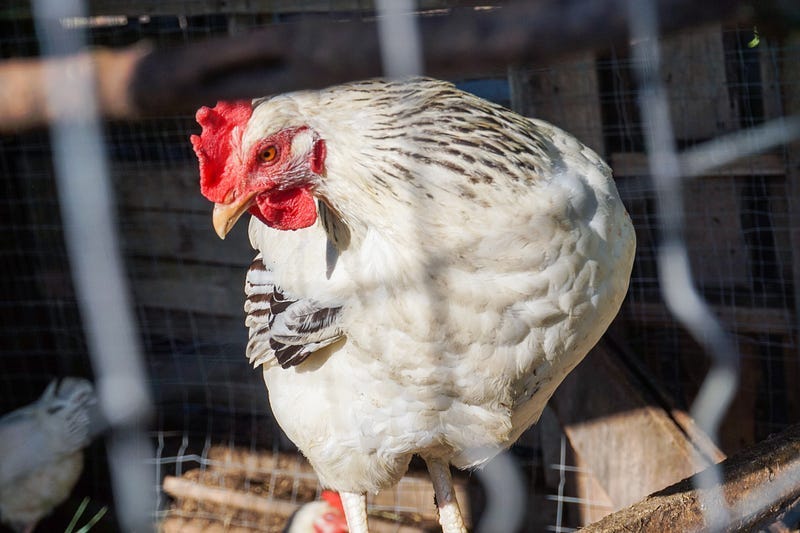
Photo: Idella Maeland/Unsplash
I became a vegetarian when I was eight years old, about three months before my ninth birthday.
I had been reading an article about vegetarianism in American Girl magazine, a periodical often subscribed to by eight-year-old girls. When I read the article, something clicked in my brain. I wasn’t sure why, but vegetarianism made sense to me. I went to my mom later that day and asked her if I could stop eating meat.
She was pretty receptive to the idea and recalled having had the desire to stop eating meat as a child, too, but said she’d been scoffed at by her own family, who insisted she’d get sick if she stopped eating meat. Eager to support my bodily autonomy in a way that her own parents didn’t, my mom told me that the decision to eat meat was entirely up to me.
We went to the grocery store and bought beans and rice, tofu dogs, veggie burgers, edamame, and lentils. My mom’s chief concern with my decision was me not getting enough protein, which I soon learned was a common concern among those unfamiliar with a vegetarian diet.
Later that week, she gave me Peter Singer’s book, Animal Liberation. Though perhaps a bit dense (and intense) for a person of that age, the book was an eye-opener for me. I loved animals and the fact that they suffered so needlessly for our benefit seemed like a horrible atrocity to me.
I decided to become an activist, joining PETA and placing the “meat is murder” stickers they sent me everywhere. As an adolescent, I became a fan of The Smiths’ 1985 album by the same name. Seeing a lack of vegetarian options in my middle school cafeteria, I wrote a letter to the superintendent of the school district asking for changes to the menu.
PETA sent me DVDs of footage from inside of factory farms, and the anguished screams of suffering cows, chickens, and pigs became burned into my consciousness. I didn’t understand how anyone could possibly eat meat. After a while, it didn’t even seem like food to me anymore– more like a gory biohazard.
It’s much easier to eat a low-fat diet as a vegetarian, and I figured that this made vegetarianism healthier.
Over time, I stopped being a fan of PETA, even as I still believed strongly in my vegetarianism years later. I got into many arguments with passionate meat-eaters and I began to see that the ethics of groups like PETA were far more extreme than my own actual beliefs. However, that didn’t stop me from continuing with my diet.
Whenever anyone asked me why I wasn’t eating meat, I was quick to engage them in a debate. I did a lot of research and memorized some main points defending my lifestyle. I brought them up so often that it became a habit:
Cruelty
Why should we eat meat when there are other options available? Why cause needless suffering to sentient beings?
The way we mass-produce meat in the modern world is unquestionably cruel. There’s lots of evidence that animals experience pain and suffering on factory farms. For me, this seemed the most obvious reason to be a vegetarian. I loved animals, and I didn’t like the idea of causing them pain.
Health
Many people think a vegetarian diet is healthier, and I certainly did when I was a vegetarian. Certainly, it’s possible to be very healthy on a vegetarian or vegan diet. It’s much easier to get protein than people realize, and it’s possible to supplement things like vitamin B12.
When I was a vegetarian, I thought things like high rates of cancer and heart disease were heavily linked to excess meat and dairy consumption. After all, fat is the culprit, right?
It’s much easier to eat a low-fat diet as a vegetarian, and I figured that this made vegetarianism healthier, along with an absence of consuming things like hormones and antibiotics that are fed to livestock on factory farms.
Hunger
Over 10 pounds of plant protein are used to produce one pound of beef protein. Wouldn’t it be better to feed those plants directly to humans, instead of to livestock? A 2014 Nature article found that 70% more food could be added to the world food supply if we did this.
This seemed like a no-brainer to me. Why were we feeding all this grain to cows, when we could be feeding it to hungry people? This is another perspective, like the animal cruelty perspective, which really tugged at my heartstrings.
Climate
There’s a pretty good argument for the environmental unsustainability of meat production. Factory farms definitely contribute to greenhouse gas emissions, and the meat industry is a huge contributor to deforestation.
I became aware of climate change around the same time I became a vegetarian, and a vegetarian diet seemed to fit right into a climate change-fighting lifestyle.
The first time I ate meat again
Over time, I began to realize that the ethics and sustainability of food were much more complicated than I originally thought.
I went from a fanatical vegetarian to a more calm vegetarian, to a vegetarian often annoyed by other fanatical vegetarians or vegans who were militant reminders of my own extreme speech and behavior as a kid.
I spent time talking with people who saw the meat issue differently from the way I saw it. Once I let myself hold my beliefs more loosely, I began to realize that they often made good points when we discussed the issue. Eventually, I took the plunge and started eating meat again.
After toying with the idea of reintroducing meat into my diet for some time, I had a moment of boldness while at brunch with a friend: I decided to order some Canadian bacon on a whim.
Anticipating a potential bad response from a digestive system that wasn’t used to handling meat, I ate slowly and deliberately. The bacon wasn’t the best thing in the world, I decided, but it was pretty good.
I felt fine after the meal and didn’t end up getting sick after all. On my next trip to the store for groceries, I bought a chicken breast.
Cruelty
What really started to change my opinion on the cruelty argument was the experience of speaking to people who hunt wild game.
Interested in nature and primitive skills as a hobby, I ended up reading articles and listening to podcasts about hunters and survivalists. While working on organic farms, I ended up hanging out in the woods with hunters and watching them clean and prepare the animals they ate.
Those who hunt wild game sometimes argue that killing a wild animal is actually an act of compassion because an animal in the wild is likely to have prolonged suffering before death from sickness, old age, or being eaten by a predator. A quick death by bullet is much less painful.
Overall, I stopped seeing the ethics of eating meat as black and white.
Death is also part of the natural cycle of life. Nothing wants to die but everything does, regardless. My own feelings about morality and spirituality changed over time, and my feelings about eating meat began to change, too.
Then I learned that the Dalai Lama eats meat and that Gandhi, who I thought of as a famous vegetarian, also ate meat sometimes. I learned that eating a plant-based diet didn’t totally prevent cruelty to animals, either. Many animals are also harmed in the process of plant-based food production.
Overall, I stopped seeing the ethics of eating meat as black and white.
I still think that factory farms are unnecessarily cruel, but I’ve learned that there are more compassionate ways to raise animals for food, and I no longer see the act of consuming an animal as inherently cruel.
Health
While you can definitely get sufficient protein from plant-based sources, meat is an extremely convenient source of protein and amino acids, as well as other essential nutrients like B vitamins, zinc, and iron.
As I learned more about nutrition over the years, I began to have different beliefs about what makes for a healthy human diet. I stopped believing that an excess of fat in the U.S. diet was the cause of many widespread chronic health problems, and became convinced that consuming an excess of carbohydrates and sugars was a more likely culprit.
I had no problem getting protein as a vegetarian, but when I first started trying to eat a diet higher in protein and fat and lower in carbohydrates, I began to realize that meat was a much more convenient source of protein because it’s lower in calories and carbohydrates than many plant-based protein sources.
I also found that I felt better eating this way.
I began to think that the qualityof food mattered more than thetype of food.
A diet that’s higher in fat and protein and lower in carbohydrates gives me more consistent energy levels and fewer feelings of hunger and fatigue. Eating meat again also improved my iron levels, which was surprising to me. Why? I ate plenty of iron-rich leafy greens as a vegetarian. But I later learned that the body more easily absorbs the heme iron found in meat, as opposed to the non-heme iron found in vegetables.
I also learned that it’s possible to buy meat that isn’t raised on factory farms and pumped full of hormones and antibiotics. I tried higher-quality meat, and I liked it more than the cheaper, factory-farmed meat.
I began to think that the quality of food mattered more than the type of food.
Hunger
I now see world hunger as more of a distribution issue than a supply issue. Economic inequality is a much bigger factor in food shortages than a lack of food production. Thus, it’s not that the world isn’t producing enough food to feed everyone — it’s that the food isn’t getting to the hungry people.
In the United States, for example, about half of all produce is thrown away before anyone gets the chance to eat it. And thus, I no longer believe that hunger is a practical issue; it’s an issue of our values as a culture and as human beings. It’s about what’s important to us, and where our priorities are.
Climate
About 13% to 18% percent of global human-caused greenhouse gas emissions come from animal agriculture, while about 64% comes from fossil fuels. In the United States, only about 3% comes from animal agriculture, while 80% comes from fossil fuels.
While the meat industry is a factor in climate change, it’s not the only factor, and it’s definitely not the biggest factor. In fact, even if we stopped all meat production today, the climate would still be in trouble. There are much bigger culprits to worry about when it comes to greenhouse gas emissions.
I do think it would be better for the climate if we ate less meat, but this argument tends to oversimplify the science of the issue. Still, I’m in favor of eating meat in moderation and finding ways to produce meat more sustainably.
How I eat now
I still eat a heavily plant-based diet, but I eat a lot less corn, wheat, soy, and sugar than I used to. Meat is now a regular part of my diet, but I eat it a lot less than the average American.
My ethics continue to evolve and change as I evolve and change as a person.
I prefer chicken, fish, and pork, while I have less of a taste for ruminant meats like beef, venison, and mutton. Some would argue that fish is healthier, or that eating chicken is more sustainable than consuming something like beef (because ruminant animals produce more methane), but I’m basing my choices more on personal preference than health or sustainability.
And after all of this, I have to admit that I could still be wrong about everything. I’m not a doctor or a scientist, and the conclusions I’ve come to about health and sustainability could be totally flawed. My moral compass could also be off. Maybe I’ve evolved to become a less ethical person, rather than a more open-minded one. My ethics continue to evolve and change as I evolve and change as a person.
But this whole journey has been an important learning experience for me. It’s a daily reminder that it’s possible for my entire worldview on something to shift, even if I feel very passionately about it. It’s an example of how a very polarized and emotionally charged issue is also a complicated and nuanced issue, and how there are valid arguments on both sides that are worth considering.
As I’ve aged, I’ve learned to become more tolerant of ideas and belief systems that are different from my own because I could just as easily be the person on the other side of the debate. In other words, I think and feel the way I do because of the life I’ve lived and the experiences I’ve had — but if I had lived a different life and had different experiences, I might have developed a very different worldview.
Now, every time I fry a slice of bacon or chew on a sushi roll, I remember: No matter how sure you are, you could always change your mind.
Originally published on medium.com on November 18th, 2019.

 Esoteric Epistemology