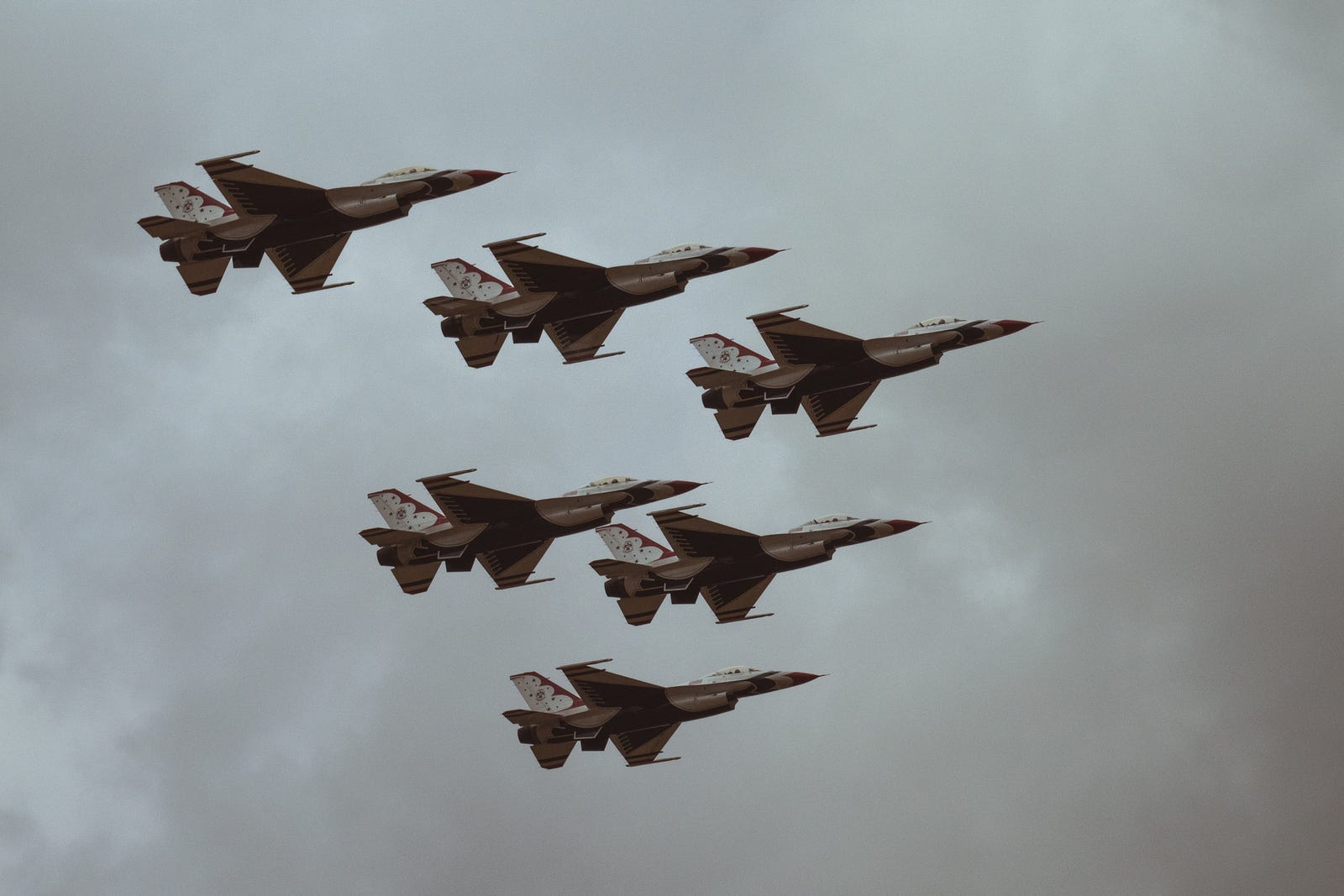
We are literally at war with Russia right now. Take it from me. My grandpa literally fought the Nazis!
You could call it a “proxy” war, because we are providing weapons to Ukraine, which Russia has invaded, but that does not make it any less of a war between Russia and the United States.
We have a history of doing stuff like this! We arm one side of a conflict when we believe that it benefits our interests as a country. Sometimes we even arm both sides of a conflict and make ridiculous profits from selling weapons and construction contracts to rebuild the cities that are destroyed with American-made bombs.
When I was a kid, my mom took me to anti-war protests and she made sure that I knew the phrase “conscientious objector.” She made me repeat that phrase back to her.
My mom grew up during the cold war. She, like many members of my heavily military family, knows that war is always a possibility. She also knows that the last thing that someone like me wants is to participate in a war.
I’m going to say it right now, because I want to make myself absolutely clear.
I am not going to die for your war, you gross old war pigs.
I am not going to sign up to get blown up or blow up other people so that you can secure access to natural resources or settle some old score among the lizard-brained overlords who treat the planet I live on like some kind of macabre chess board.
I am not going to carry an assault rifle and use it to shoot kids or people who are adults but who already look like kids to me, at the ripe old age of thirty.
I am not going to participate in propaganda campaigns smearing Russia and China as evil communists who need to be liberated by American freedom. It is reasonable to criticize the domestic and foreign policies of these countries, just as it is reasonable to criticize the domestic and foreign policies of this country.
What is not reasonable is playing a gigantic game of Chicken or Russian Roulette with nuclear weapons pointed at all of our heads.
When I was a kid, I read this comic book about the military-industrial complex over and over again, and it really impacted me. Now when I read about conflicts like Russia and Ukraine or Israel and Palestine, I ask myself questions like: “who is going to profit from this?” and “what innocent people are going to suffer?”
For many years, the US government has painted itself as a sort of “world cop,” interfering in global conflicts in what it claims to be the best interest of the countries it invades. In reality, this image couldn’t be further from the truth of what’s really going on.
The truth is that it’s the same story over and over again. We recruit and train the very same terrorist forces that then attack us, and then we use their attacks to justify further violence. We sell weapons to the fabricated governments that we install to serve our interests. We arm both sides of conflicts, and then our construction companies rebuild the cities that are flattened by the same bombs and drones that we manufacture.
We design some of the best medical treatments in the world and then withhold them from the women and and children whose hospitals and schools we flatten with our explosives, and to our own soldiers who come home maimed and betrayed by the country that they swore to defend.
Like George Orwell said: “The war is not meant to be won, it is meant to be continuous.” The war doesn’t exist to defend freedom or fight evil, it exists to generate profits and to keep the vast majority of the planet on its knees in abject terror before a select few.
We use the oppression of women to justify invading the middle east, and then oppress women at home under a similar guise of empowering them. Women in Afghanistan are “liberated” by sanctions that are starving their children to death before their eyes the same way women at here in the US are “liberated” by having their livelihoods taken away when they fight back against male violence.
We complain about the lack of civil liberties in countries like Russia and China, and then we imprison or banish political dissidents at home, while bombarding our own populace with endless propaganda that is designed to stoke civil unrest and blind hatred between human beings.
The United States is like the abusive parent who uses the threat of a foreign boogeyman to frighten its children into blind obedience in the household. Our government says to us: “how dare you complain about how I treat you? Would you rather I let the boogeyman get you?”
These boogeymen are nothing more than old worn puppets, sewn hastily together for purposes of drumming up fear and coercing compliance.
It turns my stomach knowing that any portion of the money I’ve paid in taxes throughout my life has gone towards murdering and crippling innocent people, but I can’t deny that it’s the case. I’m complicit because I’m afraid, and so are you.
When I read about the atrocities committed by terrorist groups I do not see monsters and boogeymen. I see the faces of the women who kill their own children because they are abused by their spouses and the mentally ill who are shot by the police because they were abandoned time and time again by a broken system and became so ill that no one around them could see their humanity any longer.
I see human beings. Human beings who were children once and who have hopes and dreams and families just like you and me.
Kamikaze soldiers and militant dictators are not less human than you. They are very sick human beings whose personal and collective pain has exceeded their ability to cope with it in a sane way.
In the United States, so many of us are so sheltered and so far removed from real violence that we have forgotten why it exists in the first place. Wherever there are people in pain, there will be people waiting to exploit that pain for their own nefarious purposes.
Don’t be a pawn in their barbarous chess game. Think for yourself. Choose the path of peace.
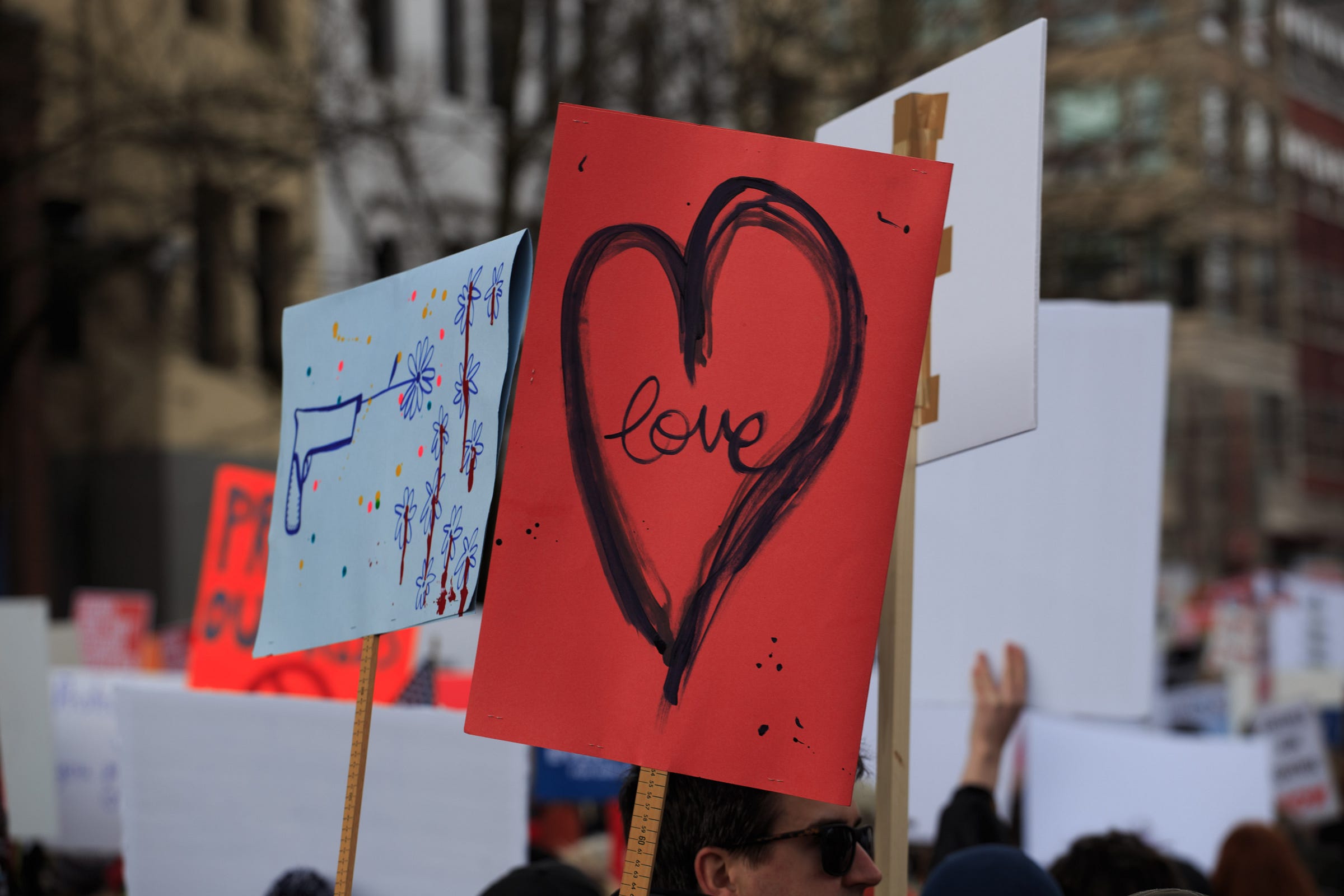
From Hong Kong to Chilé, and from Egypt to Ecuador, protests seem to be erupting across the planet right now. People all around the world are ready for shifts in power and changes in leadership.
We’re concerned about many issues: poverty, war, corruption, human rights, and climate change being some of the top ones. It seems that we live in a time when we are ready to go through some changes as a species, and growth is never comfortable.
Sometimes we see so much anger and violence in the media that it seems like that’s all the world is.
It’s easy to become afraid. It’s easy to let that fear turn into anger. It’s easy to let that anger turn into hate. It’s harder to choose a more difficult road and resist the slippery path to hatred.
I’ve been doing some reading about civil disobedience recently, and I came across Martin Luther King Jr.’s six principles of nonviolence, which he described in his book, Strive Towards Freedom. Reading these helped me remember just how powerful nonviolence can be, and what a wise person Dr. King was.
Martin Luther King had an indefatigable faith in love. So do I, and so should you.
1. Nonviolence is a way of life for courageous people
It takes a great deal of bravery to hold to nonviolent principles, especially when others around you are not. Being nonviolent doesn’t make you weak or wimpy, it makes you strong.
King believed that nonviolence should be active– spiritually, mentally, and emotionally. Active resistance.
“We will have to repent in this generation not merely for the hateful words and actions of the bad people but for the appalling silence of the good people.” ― Martin Luther King Jr., Letter from the Birmingham Jail
2. Nonviolence seeks to win friendship and understanding
King pointed out that the end goal of nonviolence should be redemption and reconciliation, and the “creation of the Beloved Community.” King had a vision of a global community where things like poverty, hunger, and homelessness would not be tolerated because human decency would not allow for it.
I see what he’s saying. I’ve noticed that there are some out there who claim to be preaching a message of peace but don’t seem to be trying to make friends with those who they claim to want peace with. I would guess that Dr. King saw this kind of hypocrisy, too.
What’s your goal? Do you really want peace, or do you just want to be right?
3. Nonviolence seeks to defeat injustice, not people
Dr. King recognized that people who do evil things are also victims themselves. After all: no one is born evil, and doing hateful things is painful and damaging to the soul. It’s a cycle of suffering, and the more we shame and blame, the more we contribute to it.
It’s hard to admit sometimes, but hurt people do hurt people. One of the reasons that the wheel of violence keeps turning because it’s difficult for us to see those who have harmed us or those we love as human.
As much as certain people might repulse us because of the things they say or do, it’s in everybody’s best interest to do our best to try to love them anyway– or at the very least, not to hurt them more.
4. Nonviolence holds that suffering can educate and transform
Here’s a hard one to swallow: Dr. King thought that nonviolence should accept suffering without retaliation. He also wanted us to recognize that “unearned suffering” has transformative powers.
If you can accept injustices perpetrated against you without retaliating, you’re not only creating a more peaceful world, you’re doing a lot to build your own character.
Even if you’re not ready to love your enemy, turn the other cheek anyway, for your own sake.
5. Nonviolence chooses love instead of hate
Martin Luther King believed that we should resist violence “of the spirit” as well as of the body. He believed nonviolent love was “spontaneous, unmotivated, unselfish, and creative.”
To be truly nonviolent is not just about putting down your gun or your fist. It’s not just about biting your tongue before you say something cruel. It’s about working at a deeper level to genuinely release the violence from your heart.
The goal here is to become strong enough to really choose love. Always.
6. Nonviolence believes that the universe is on the side of justice
Dr. King wanted us to have faith in justice, and to believe that we live in a benevolent world.
The cynic in me wants to say that this is foolish– the universe is random and it doesn’t care about us. Still, I can see the value in choosing to believe this, over the alternative, because we will probably never know for sure, anyway.
This is similar to how it’s valuable to believe that I have free will, even though I’ll never know. Even if I didn’t, it wouldn’t really help me to know. I choose to believe that I have agency because it feels more empowering than believing that I don’t.
Similarly, I choose to believe that the universe has my back, because I understand the power of faith. The power of faith can be used for both good and evil, but when it comes to the human heart, there are few things more powerful.
What do you choose to put your faith in? Dr. King wanted to know that, too:
“Will we be extremists for hate or will we be extremists for love? Will we be extremists for the preservation of injustice ― or will we be extremists for the cause of justice?”
I don’t know, but I’m pretty anxious to find out.
Originally published on medium.com on November 27, 2019.



 Esoteric Epistemology