How to Help Other People Without Hurting Yourself

It can be a challenge
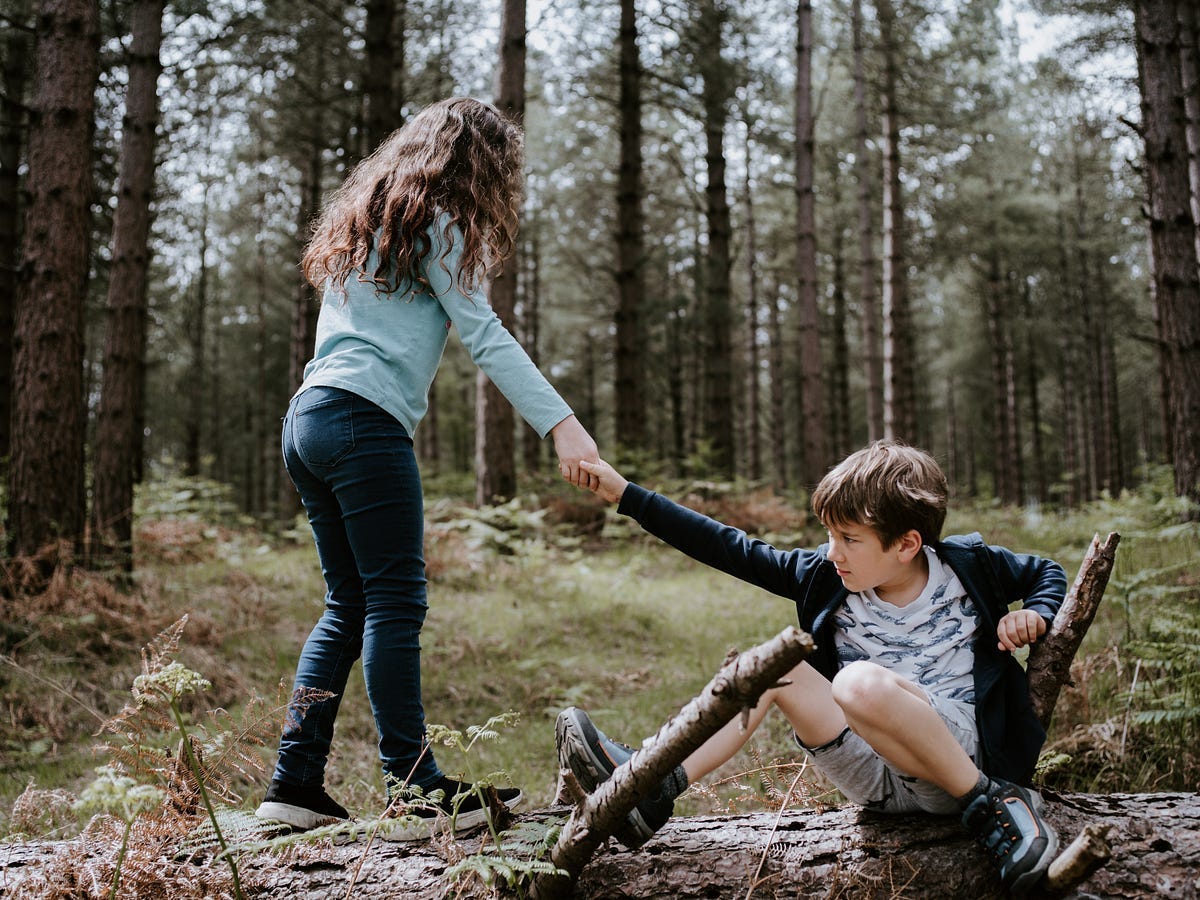
A child is helping another child stand up. They are in a forest.
Photo by Annie Spratt

There’s nothing like the joy that comes from helping others. It creates positive changes in the world that you can see before your eyes. It also has the added benefit of making you feel better about yourself.

Victories are more satisfying when you help others on their own journeys and these kinds of actions create a reciprocating cycle in which you are also helped on your own journey. You can take extra pride in your good grades if you helped your friend study. A home-cooked meal tastes better when it’s shared with a friend.

If nothing else, helping people just makes you feel good. It raises your self-esteem and increases your confidence in yourself. Anything that does that is not just a good deed, but an invaluable power move in the game of life. Giving others support has even been shown by science to have concrete neurological benefits.

Unfortunately, helping people feels so good that it can also be habit-forming. Like most habits, this habit can be healthy or unhealthy, depending on the person, the dosage and the frequency.

If you’re anything like me, helping people can even become a real problem. A UK doctor has even recognized this as a pattern in the friends and family of the drug addicts he treats, calling it compulsive helping.

Personally, I’ve found that I’m very prone to overextending myself, and susceptible to the very real consequences of doing so. Nevertheless, I still can’t seem to break my helping-people habit.

I think that helping can sometimes be a way for me to avoid dealing with my own problems, or a way to prop up my own ego. Being helpful can have this kind of dark side for many people. Sometimes it’s more about us than it is about the people we’re helping. We do it to compensate for something else we’re missing, or to feel valid and significant.

Helping others can energize and motivate you, but if you do it too much, it can leave you feeling physically, mentally, emotionally, and spiritually exhausted. It’s never good to let yourself get to that point– not just because it isn’t fair to you, but because an exhausted person isn’t capable of helping anyone.

Also, giving a lot and not getting much in return (even when you aren’t expecting anything), can leave you feeling bitter and resentful. The feelings of love and care you had for the person you were helping can turn sour by your own hand, and that, in itself, is a small tragedy.

After years of well-intentioned helping gone wrong, I’ve come to this conclusion: If you really want to help people, the key is finding the best strategy.

Understand your limits

Be honest with yourself about what your physical, mental, and emotional limits are when it comes to helping those around you. You can’t pour from an empty cup or an empty bank account. You need to secure your own oxygen mask first– just like you need to secure your own job, home, and self-worth.

Ask yourself if you’re doing it for the right reasons. Are you helping because you want to, or because you feel like you have to? Are you doing it out of love, kindness, and generosity, or guilt, obligation, and fear?

Take time to care for yourself, and make sure you actually have the energy that you’re about to give. Know when to stop.

Develop strong boundaries

Once you understand what you are and aren’t capable of, think about what you are aren’t willing to tolerate. Be uncompromising about what you will and won’t do.

Giving in to requests that you don’t feel comfortable fulfilling might relieve whatever guilt or pressure you’re feeling in the short term, but will probably become a source of regret in the long term.

Learning when and how to say “no” is one of the most important lessons that any of us can ever learn, and it can have a huge impact on what happens in our lives and how we feel about it. Never compromise your own integrity for somebody else’s sake.

Understand what actually helps

There’s a big difference between helping and enabling, and that, unfortunately, is something that many of us end up learning the hard way.

Helping someone who isn’t ready to help themselves can actually be destructive– the help you’re giving them could be fueling whatever it making their life difficult in the first place. Even if it isn’t, it could also create feelings of disempowerment in the person that you’re helping.

A person who is getting too much help can start to feel like they don’t have any power in the world or agency over their own lives. This feeling spirals into a consistent inability to help themselves. This is sometimes called learned helplessness, and it’s a phenomenon that is common enough to have been researched.

Ask yourself if what you are doing is really promoting the growth and independence of the other person. If it isn’t doing that, then it’s very possible that you’re actually feeding the irresponsibility, incompetence, and dependence of the other person.

And that doesn’t help anyone.

Do more with less effort

We can strategize at a very practical level to find a wider audience or create a broader reach with our good intentions.

For example: instead of spending hours talking to your friend with depression, you could write about how you overcame yours, and potentially help thousands of people.

Instead of going into debt trying to help your sister with her bills, you could help her find a steady job by calling that guy you know in her industry.

Instead of emptying your wallet giving money to every homeless person you see, you could go volunteer at your local shelter or food bank.

Focus on long term benefits. Create things with the potential to last. When giving gifts, try to make them the ones which keep on giving. Plant seeds.


If this article helped you, I’d like to thank you. You have already helped me, in return, by letting me be helpful in a way that’s healthy for me.

Helping people is a good thing. You should absolutely do it, and you have every right in the world to feel good about it. Just make sure your help is wanted, that you’re ready to give it, and that you’re doing it for the right reasons.

You’ve already helped someone else today– help yourself out.


Originally published on medium.com on February 8th, 2020 

I Still Love Everyone I Have Ever Loved


And I always will

Photo by Aziz Acharki

“True love is eternal, infinite, and always like itself. It is equal and pure, without violent demonstrations: it is seen with white hairs and is always young in the heart.” — Honoré de Balzac

Throughout the course of my life, I’ve been lucky enough to fall in love more than once.

But what exactly is love, and how do we “fall” into it?

Anyone who’s ever experienced a passionate intimate relationship can probably relate to this feeling of “falling,” and I believe there’s a reason why we use that particular word to describe it.

Falling, in the figurative sense, certainly feels a bit like falling in a literal sense. It’s similarly exciting, overwhelming and scary. The euphoria associated with this kind of infatuation is how I imagine a skydiver or an astronaut probably feels, hurtling back towards Earth, while taking in a view which is vast and beautiful at an indescribable level.

As I’ve gotten older, I’ve learned that there’s a difference between “falling in love” and actually loving someone. The lust and drama of connecting on a deep level with another person can certainly feel earth-shatteringly meaningful– for a while. But when we crash from the high produced by the cocktail of oxytocin, serotonin, and dopamine that swirls in our brains during a romance, what is left?

The truth is that real love has nothing to do with bringing flowers, reciting poems, or fantasizing about your future children. It’s not about great sex, great conversation, or sweeping anyone off their feet. We think of love as something intense and epic, but in reality, it’s quite mundane.

Real love isn’t a fairytale story with princesses, knights, magic or prophecies. It isn’t thrilling and intoxicating- actually, it’s rather boring. It’s an everyday story that includes things like eating, sleeping, cleaning your house and paying the bills. It’s about dealing with the challenges of whatever journey you each happen to be on, together.

Real love is about seeing someone who they truly are, flawed like all human beings inevitably are, and accepting them, wholly and completely. Real love doesn’t fade as physical attraction does, and it doesn’t fizzle out like lustful passion.

Real love doesn’t even go away when you want it to.

You’ve probably seen the evidence of this in your own relationships. The people we love are often the ones who hurt us the most, but somehow, we love them anyway.

I’ve heard many people say, “love shouldn’t hurt,” but the truth is, no matter how good everyone’s intentions are, it’s bound to hurt sometimes. Often we are only hurt by those we love because of our love for them. If we didn’t care, it would be easier to be indifferent.

When I look back over my past relationships, I can now see the difference between having “fallen in love” and having “loved.” It’s an easy distinction for me to make because there’s a single measurement I can use to be sure: I still love everyone who I have ever truly loved.

True love is eternal. It’s not about physical beauty, sex, validation, or power. It’s about the essence of what makes us human, and the recognition of our humanness in each other. It’s about looking at another person in the eyes and seeing a part of yourself.

When you truly love someone, it is truly unconditional, and irrevocable.

Real love doesn’t go away because of hardship or conflict. It doesn’t end in the heat of an argument, or after the pain of betrayal. It isn’t reduced when someone loses their job, gains weight, or gets old– because things like that aren’t the real reasons why we love people.

Love has nothing to do with the temporary bodies we live in, or the temporary experience we have while we are alive. It is the act of accessing the innate, infinite knowledge programmed into our souls and our cells, and truly understanding that we will never really be separated from each other, despite any physical or emotional detachment.

The truth is that I still love everyone I’ve ever truly loved.

I’ll love them if they are poor or wealthy.

I’ll love them if they are sick or healthy.

I’ll love them if they marry somebody else, go to prison, join a cult, or lose all of their hair and teeth.

I’ll love them in spite of time, in spite of anger, in spite of distance, and in spite of death.

And I always will.

Anything less just isn’t love.


Originally published on medium.com on February 15th, 2020. 

When Creativity Comes in Waves


How to work with a flaky muse

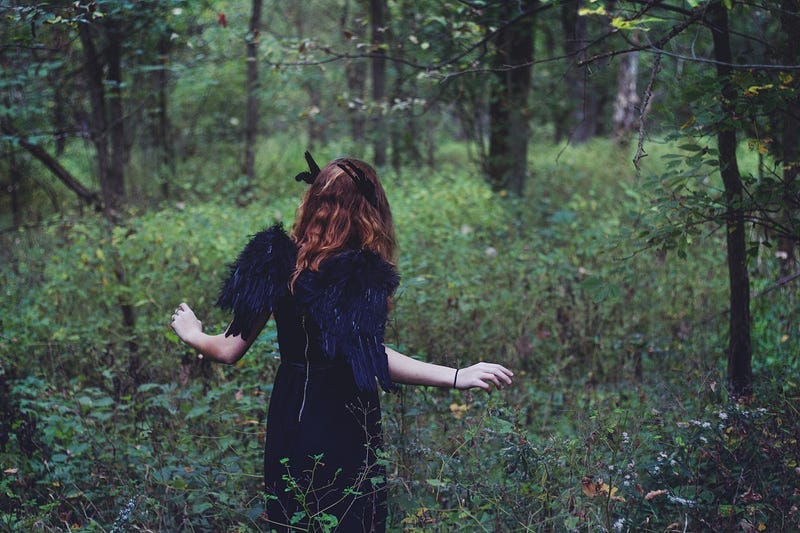
a woman wearing black angel wings wandering through the forest
Photo by Alex Grodkiewicz

Everyone’s creative process is different, but I’ve noticed a real trend among artists of ebbs and flows in inspiration and productivity.

An artistic temperament has often been associated with ups and downs in mood, which is unsurprising considering there seems to be a much-discussed relationship between creativity and mood disorders.

First, I think it’s important to make the distinction between illness and genius. Note that, at extremes, both positive and negative mood swings can actually impede creativity. There’s a problematic image of the “mad” artist in popular culture which I think often, unfortunately, becomes a self-fulfilling prophecy, but that’s not what I’m here to write about today.

Not all artists have mental illnesses; nonetheless, many creative people report experiencing something akin to mood swings when describing their creative process. The positive, functional moods which could be described as “strokes of inspiration” are something well-documented in the artistic world, and also increasingly in the realms of psychology and neuroscience.

You might have heard this referred to as a flow state, or “being in the zone”. Whatever you call it, I don’t think anyone experiences it all the time, and it’s always something to be grateful for when it comes around.

Since I’m a romantic sort of person who loves mythology and archetypes, I like to think of these moments in my creative life as “visits from my muse.” It helps me understand my own process better to personify the unknowable force which allows me to bring something forth from the nothingness that once was.

I’ve read a lot of articles about the psychology and neuroscience of creativity and productivity. I’ve read lots of guides detailing the logical steps you should take in order to optimize your ability to get into and maintain this sort of state.

While I think it’s helpful to understand things like this from a rational, materialistic, perspective– I think it can be a big leap bringing this comprehension from the conscious mind back into the unconscious programming which will drive our actual behavior.

In situations like this, I like to take a mystical perspective instead.

I like to imagine my muse as a temperamental diva who shows up either when the mood strikes her or when she believes I’m ready to hear what she has to say. Like most powerful and enigmatic women, my muse is complicated, and she isn’t easily wooed.

If your muse is anything like mine, it might be helpful to keep a few things in mind during your love affair.

Understand what attracts her

No self-respecting woman would be attracted to someone who doesn’t take care of themselves, and my muse is no exception. If I’m really screwing up when it comes to eating healthy, exercising, getting enough sleep, or any of the other basic responsibilities that I have to my beloved meat-suit, I’m a lot less likely to be able to get her to call me back.

Letting yourself go when it comes to caring for your physical, mental, or emotional health will certainly turn the daughters of Zeus all the way the off. I mean, who can blame them? No one wants to go out dancing with a lazy couch potato who can’t bother to shower and change out of those sweats and into a pair of dancing shoes.

Don’t be your muse’s Tinder left-swipe.

Also– don’t you think a gorgeous, intelligent goddess like your muse would want to hang out with somebody interesting?

My muse is happy to meet up for coffee and chat about that new book I just read or that interesting podcast I just listened to, but she isn’t really that impressed by the shallow gossip I heard or the hours of Netflix I binge-watched last week.

It’s not all about appearances– muses are attracted to people of substance.

Give her your full attention when she arrives

The thing about the muse is, you never really know how long she’s going to stay when she shows up. Muses can be fickle like that– they’re kind of afraid of commitment, so often you have to settle for a no-strings fling.

Make the most of it! When a woman like her steps into your world, you make the time to spend with her, if you know what’s good for you.

Practice active listening when you’re interacting with your muse. Really look her in the eyes. Repeat back what she says. Shut the hell up for a little while and stop talking about you.

And take notes!

Sometimes the muse will show up bearing all sorts of ideas, and no matter how much time you carve out of your busy schedule to accommodate her, it still won’t be enough. Write down the good ideas for later if you can’t get to work right this minute.

But don’t be too clingy

You can bring her flowers– but don’t be a stalker. Don’t try to force things, that will only make the situation awkward. You know what I’m talking about. If you’ve been calling her and she’s not picking up, cool off for a bit.

“When inspiration does not come, I go for a walk, go to the movie, talk to a friend, let go… The muse is bound to return again, especially if I turn my back! “ — Judy Collins

Show her you’re worth it

If you’re trying to show a fine woman that you’re worth her time, actions speak louder than words.

Be honest with your muse about the responsibilities you’re capable of taking on and the reasons why you want to take them on in the first place.

Hera didn’t raise any fools, and you’ll definitely regret trying to do this girl dirty. Muses can see right through your bullshit, and they know if you’re just blowing smoke when you say you’re ready to get serious. Like most relationships, you get what you give in your relationship with your muse.

Show up for her when it matters. She wants to know she can depend on you. You have to make her feel safe. Work on building trust with your muse.

“I show up in my writing room at approximately 10 A.M. every morning without fail. Sometimes my muse sees fit to join me there and sometimes she doesn’t, but she always knows where I’ll be. She doesn’t need to go hunting in the taverns or on the beach or drag the boulevard looking for me.” — Tom Robbins

Understand that she’s worth it

If you‘re hanging around a’ good woman and she realizes you don’t value her, she’ll be out the door before you can say “Melpomene.”

Having a muse by your side will make all the difference when it comes to fighting the battles of your creative process. She can teach you things about yourself and the world that you never imagined were possible, and make you feel things that you didn’t know you could feel, but don’t expect her to stick around if you don’t appreciate her.

When your muse gives you a good idea, don’t take it for granted. Show her that you’re actually paying attention to the words she whispers in your ear, and maybe next time she’ll sing you a song.


Originally published on medium.com on October 24, 2019.

Why Knowledge is Power


Seven Reasons You Don’t Want to Forget

Spiderman reading a book in a brick archway with the sun behind him
Photo by Raj Eiamworakul

“Scientia potentia est,” or, “knowledge is power” is a Latin aphorism most commonly attributed to 16th-century philosopher Francis Bacon.

This phrase has existed in various versions across cultures and across times. Earlier versions of the phrase date back to the 10th century, such as in the Nahj Al-Balagha:

“Knowledge is power and it can command obedience,”

or the words of the Persian poet Ferdowsi:

“Capable is he who is wise.”

There’s a Hebrew phrase in the biblical Book of Proverbs that was translated nearly the same; first into Latin as:

“Vir sapiens et fortis est et vir doctus robustus et validus,”

and then into the English King James Bible as:

“A wise man is strong, a man of knowledge increaseth strength.”

I’m sure we’ve all heard it before.

Most of us have probably heard it enough that it has become one of those corny, hackneyed phrases that we might roll our eyes at. It’s one of those things you know is true, but that you might feel like a dork saying.

Platitudinous though it may be, I feel this is a phrase worth remembering.

While knowledge and wisdom are not quite the same thing (like knowing what to say vs when you should say it), for these purposes they can both be thought of as valuable things that accumulate as one lives.

Here are some things to remember about wisdom and/or knowledge, to remind you why it is never a waste of time to pursue it:

It’s free

While you might pay a sort of karmic price for your golden nuggets of wisdom (like burning your hand when the stove is hot), you really can learn pretty much anything for free, if you put your mind to it.

There’s free articles, videos, textbooks, even open courseware for pretty much everything on the internet. Your local library probably has some cool stuff. Your grandpa probably knows some things that he’d be willing to tell you. Hell, a lot of things you can probably just figure out through trial and error, like how to kiss someone, or how to stand on your head.

Even if you’re paying for someone else to teach you something, it’s really you who ends up teaching yourself in the end, isn’t it? The time and attention you give something is the true price you pay for it, but it doesn’t always have to cost dollars.

It’s renewable

Knowledge doesn’t expire– you can use it over and over again.

As long as you remember where the blackberries grow you’ll be able to go and pick them. You can harvest a quail egg if you know the right bush to check underneath.

There’s no limit to sharing it

The renewability of your knowledge isn’t limited to you.

If you know where the berries grow and where the quail lay their eggs, you can teach your friends, and you and your friends can make berry pies and quails-egg omelets for you all to enjoy in the future.

It’s interesting

It’s another thing that sounds awfully cheesy to say, but learning is fun.

Did I need to know that certain animals– like mantis shrimp, pythons and some birds– can see a whole spectrum of color that we humans can’t even really comprehend?

No.

Do I have any current practical application for that knowledge?

No.

Am I still glad I found out?

Yes!

Why the hell wouldn’t I be? That’s fascinating.

Things like this are what make living on Earth exciting and engaging. Aren’t we lucky to exist on this badass planet? You only live once (theoretically), and you might as well discover some things to entertain you while you’re doing it, if you haven’t already.

It can’t be taken from you

Short of a Men in Black-style memory eraser wand type situation, I can’t imagine a situation where someone could take your knowledge from you.

Even if everything else was taken from you, like your possessions, your social status, or your health-– you would still have all the information you’ve learned that you could manage to remember.

Actually, you’d probably end up with more knowledge than you started with if you endured a worst-case scenario like that. Wisdom too, definitely. Which brings me to my next point:

It’s the best silver lining

No matter what totally crazy messed-up stuff goes down in your life, you will be wiser for the experience.

If things are horrible at this particular moment, you can at least take comfort in the fact that you’ll have this as a consolation prize. Sometimes it even turns out to add up to more than that- something tangibly useful instead of just an abstract life participation trophy.

You might end up finding that whatever you learned was more valuable than whatever you thought you lost, or decide that whatever pain you went through was worth what you found out about yourself or about life.

It liberates us

Knowledge gives us the ability to survive and thrive in the world. This is freedom, and you can’t have real power without freedom.

More knowledge makes us better able to make decisions, as well as to decide the logical and ethical grounds on which we want to be making our decisions.

Knowledge and wisdom help us to make better choices. We respect ourselves more when we make better choices, and when we respect ourselves more, we want to continue to make better choices. This cycle is powerful.

When it’s clear that we respect ourselves, others come to respect us more, which is also immensely powerful.


There’s no denying that knowledge is power– but it’s also important to remember that

with great power comes great responsibility.

Never stop learning, and remember to use your powers for good.


Originally published on medium.com on September 12, 2019.