Traumatic Brain Injury Treatments That You Can Try at Home

A ceramic model of the human brain

Affordable and accessible options backed by scientific evidence
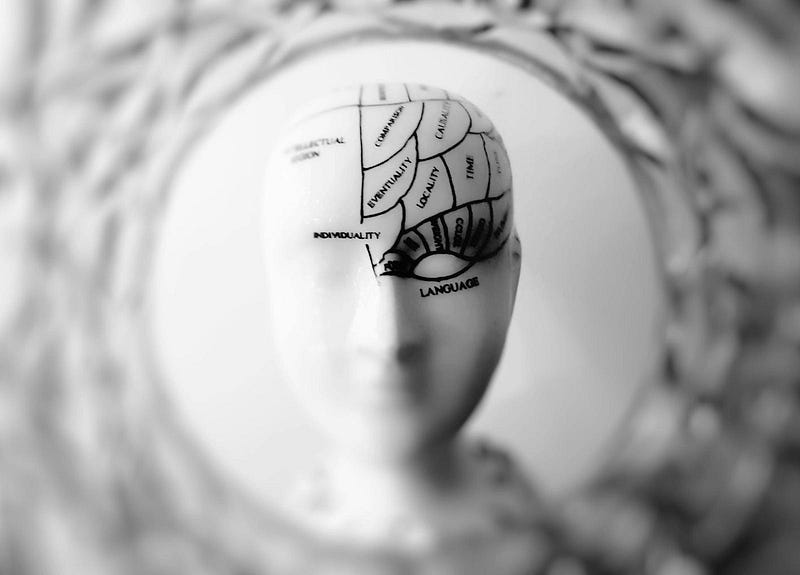
Photo by meo

Like an estimated five million Americans, I am living with a disability caused by a traumatic brain injury. Brain injuries can be caused by many things, including genetics, head injuries, drugs, trauma, and disease.

Disabilities are expensive! For many people living with traumatic brain injuries, it can be difficult to get adequate care. Like most disabled people, I’ve found several free or cheap options to help mitigate the effects of my disability. I chose a few treatments based on reading scientific research about them and tried them at home myself. I listed them along with the research supporting their efficacy for anyone else who wants to try them.

Here are some things that you can do at home, for free or for relatively cheap, to help heal your injured brain:

Language Lessons

Learning a new language is great for your brain! It’s good for memory and critical thinking skills. It also has many other benefits, like being able to make new friends among people who speak the languages. According to the University of Potomac, learning a foreign language can help you improve at your first language, as well!

A 2013 study found that “lifelong bilingualism can maintain youthful cognitive control abilities in aging.” A 2014 study found similar results, including that bilingualism seems to slow the onset of dementia. A 2016 study found that learning a foreign language increases attention span and ones’ ability to control one’s own behavior.

Apps

I use an app called Duolingo which turns learning language into a fun game. The app is a time investment of as little as five minutes a day– but you, like me, might find it to be an addictive alternative to social media apps. Duolingo has a free version, and there are paid upgrades that remove ads and improve the lessons. Please take note that you can turn off some the annoying noises that this app makes by default, in your settings!

I also use another app called Lingvano which is like Duolingo, but for sign language. Lingvano offers American Sign Language, British Sign Language, and Austrian Sign Language.

Alternatives to Apps

If you can’t find an app you like, or are over using apps, other great ways to practice learning language include watching movies in other languages (even with subtitles in your home language), or reading or listening to books on tape in a foreign language.

You can also use old school tools like flash cards. I visited an alternative school once that labeled objects all around the school with the words for those objects in foreign languages. This is a great way to learn, and I recommend doing this at home.

Nature Exposure

A very recent study, released in June 2025, showed that exposure to nature can help people with brain injuries at all stages of their recovery. I found it interesting that people in the study were initially exposed to nature through gardening. A 2019 study revealed similar positive effects on the brain from gardening in people with brain injury.

I like gardening myself, and I also like spending time hiking in local parks and walking on local beaches to get my fill of this treatment.

Earlier this year, thru hiker and biologist Emily Wastson-Cook wrote about how hiking helped her repair her brain after a stroke and brain surgery:

“Have you ever mentally zoned out while picking your way through talus, up a rocky streambed, or over tangles of roots? Thanks to the automatic process of proprioception, the body is able to regulate muscle tension to maintain balance. This allows you to walk and hike without constant mental engagement. Strokes, traumatic brain injuries (TBIs), and various other neurological conditions can impact proprioception,”

explains Watson-Cook.

Watson-Cook goes on to explain how proprioceptive training like “dance, yoga, walking, and hiking” can improve motor functions and reduce the risk of injuries in people recovering from brain injuries.

Yoga Stretches

Yoga is a great low impact exercise that pretty much anyone can do. There are yoga stretches that work every single muscle in the body, which can be great for repairing your brain’s connections to those parts of your body.

A 2019 literature review found that yoga improved overall mental health, reducing stress, depression, and anxiety. A study published in the Journal of Traumatic Stress showed that yoga can reduce the hyperarousal symptoms associated with Post Traumatic Stress Disorder (a common symptom of brain injury) along with reducing anxiety.

Yoga builds self-awareness and self-discipline. It’s a great practice for many reasons, along with being curative. If you can’t afford classes, there are endless videos on the internet on YouTube and pretty much every other single platform with videos that contain free yoga classes. You can also find diagrams and photos on platforms like Instagram or Pinterest. This makes yoga accessible to pretty much anyone with an internet connection.

Sometimes you can also find public yoga classes that are cheap or donation based, like Portland Yoga Collective or Yoga on Yamhill here in Portland.

Mindfulness Meditation

Mindfulness meditation is about slowing down and focusing on what’s going on in the present moment. Almost any activity can be turned into a mindfulness meditation exercise.

Mindfulness meditation has been shown to have numerous positive effects on the brain, including improving emotional regulation and focus. If your brain injury causes stress, brain fog, or problems regulating your emotions, mindfulness meditation might be for you. Mindfulness also improves memory.

Any task that you can get really absorbed in can be used for mindfulness meditation. You can also try things like mindful eating, to get more enjoyment out of everyday life and to build a greater awareness of the connections between your mind and body.

Walking

Walking is a low impact exercise that almost anyone can do.If you’re currently sedentary and capable of walking, I suggest getting up and going for a short walk. Even just around the block! Get the blood flowing to your brain again! If the weather isn’t nice, you can even start a walking routine inside your house.

Walking can help reprogram your brain’s neural connections to the muscles that control your movements.

Walking can also be used as a form of meditation. A type of mindfulness meditation, walking meditation reduces stress and improves focus. Try being mindful and deliberate about observing the scenery where you place your feet when you walk. Pay attention to your breathing and the thoughts that pass through your head.

Supplements

There are many supplements that you can take to help heal your brain injury. All the supplements listed below are available over the counter.

Vitamin D

Vitamin D has been shown to reduce inflammation and injury to neurons from traumatic brain injury. Vitamin D deficiency is more common in the winter months and in climates that get less sunlight, since sun exposure helps your body produce Vitamin D.

Vitamin B12

Vitamin B12 can help your nerves repair themselves after an injury to your brain or central nervous system. Vegetarians and vegans are sometimes more deficient in B12, since it can be difficult to find plant-based sources of B12. B12 can be found in meat and dairy products, and in plant-based sources like mushrooms and seaweed.

Omega-3 Fatty Acids

A 2014 study found that Omega-3s can reduce inflammation in the brain and also help to “restore synaptic circuits.” A 2017 study found that repeated and prolonged exposure to Omega-3s can help with tissue regeneration in people with traumatic brain injury.

Creatine

Creatine can help protect the brain from injury by reducing stress on the that is caused by a lack of adequate blood or oxygen flowing to the brain. There is growing evidence that creatine is effective in treating both neurodegenerative diseases like Parkinson’s and Huntington’s along with more common brain problems like depression and schizophrenia.

Lion’s Mane Mushrooms

A 2014 study showed that Lion’s Mane Mushrooms can help nerve cells repair themselves. While there’s lots of anecdotal evidence and non-human studies which present evidence for the neuroprotective effects of Lion’s Mane mushrooms on the brain, more human studies are needed.

Curcumin

A staple in Ayurvedic Medicine, curcumin is a compound commonly found in the spice turmeric. A 2020 study found that curcumin can help improve spatial memory and reduce inflammation after a traumatic brain injury. Another 2025 study supports the theory that curcumin reduces inflammation in the brain

Caring for a brain injury long term

Remember that the process of healing isn’t linear, and that everyone has their ups and downs along their healing journey. Good habits that have been abandoned can always be picked back up again, and progress that has stalled can always be continued in the future.

Human brains are programmed through repetition and consistency. It’s key to make these therapies a part of your regular routine and to practice them consistently in order to get good results.

Good luck healing your brain!

Why Dogs Are Good for You

Having a pet made me care about myself more

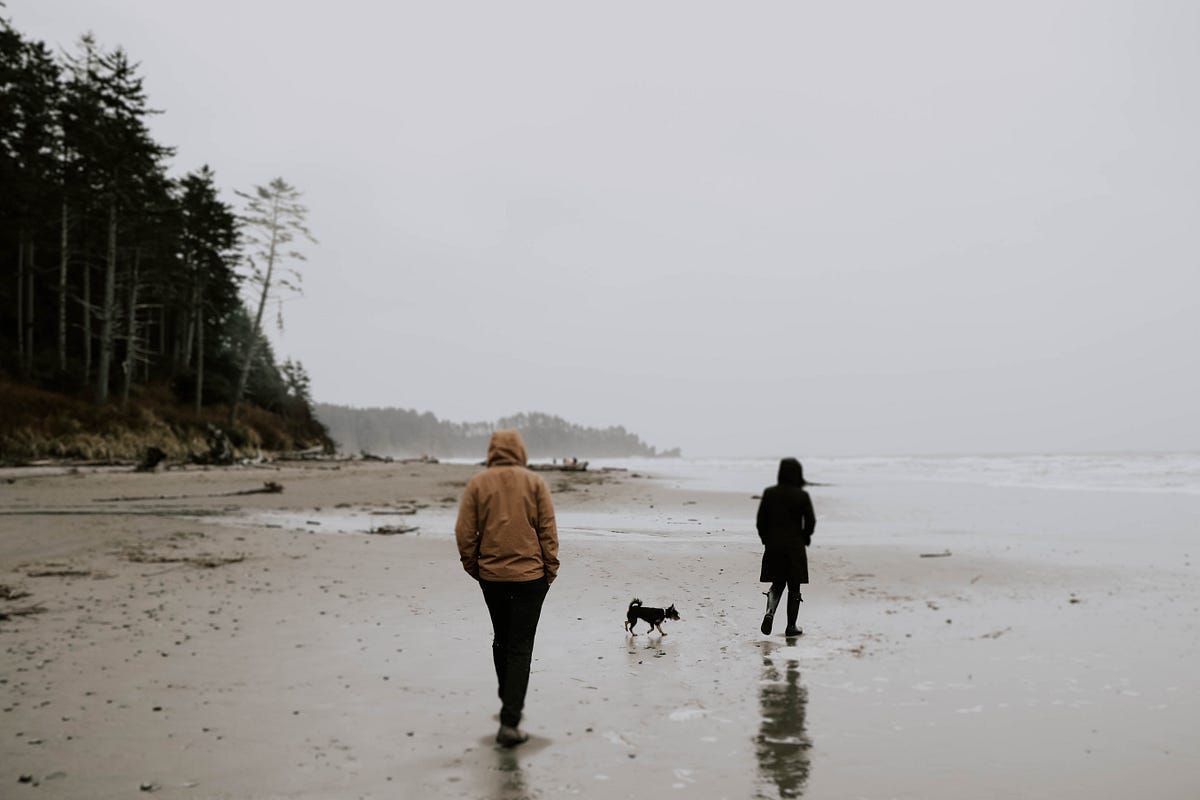
two people and a dog walking on a beach on grey sky day
Photo by Emma Dau

I’ve had my dog for nearly six years. I’ve had her since she was a puppy, taking her home after I helped care for her unbearably adorable litter of nine. She’s a healthy and energetic mutt, who loves people, fetch, and a good chew on a bone. She’s lived with me in three different states and traveled with me on many adventures.

Dogs are “man’s best friend” for a reason. We’ve co-evolved with canines for about 14,000 years. Our two species have a long history of helping and influencing each other. My dog and have a very symbiotic relationship. She does quite a lot for me in exchange for head scratches and kibbles.

My life is better because I have a dog. Not just because she’s cute, fun to be around, and nice to cuddle with; but because taking responsibility for another sentient being has increased my sense of responsibility for myself.

You have to take care of your dog (and you)

Dogs need food, water, exercise, bathroom breaks, entertainment, and affection. Humans need all of these things as well, but for some reason, it’s sometimes easier for me to remember that my dog needs these things than it is to remember that I do.

I’m not just concerned with keeping a roof over my own head, but also my dog’s head. I chose to live near a beautiful park, so I could walk my dog there. My dog needs to have a routine, so I must also have a routine. Every time I feed my dog, I’m reminded that I also need to eat. Every time I pet her, I’m reminded that I also deserve love and affection.

I imagine that this is a similar sense of responsibility that I would feel if I had children, but perhaps without so much pressure to be a good parent. It’s pretty simple to be a good parent to a dog — feed her, walk her, take her to the vet once in a while, and rest assured that she’s probably not going to resent you when she grows up.

Dogs make you do stuff

I have to get out of bed in the morning whether I like it or not because my dog needs to go for a walk. When I’m feeling like wasting the day in bed … too bad. My dog definitely won’t stand for any of that nonsense. It’s get up, or face the horrors of the face-licking alarm clock.

As most people who have struggled with their mental health could tell you, getting out of bed can sometimes be a challenging thing to do if you’re not feeling your best. Having a dog makes it so I have no excuse, and walking her is a dose of exercise and sunlight that is built into my day.

I also sometimes meet people because of my dog, like when I ask someone at the dog park if their dog is friendly, or when my dog bumps noses with someone else’s at the pet store.

Dogs are a social lubricant — kind of like alcohol, but less damaging to the liver. It makes sense that dogs have been shown to be a conduit for getting to know people, friendship formation, and social support.

My dog also makes me want to get out into nature more. Anyone who has seen a dog sniff around in the forest knows how joyous it is. Because of my dog, I end up hiking more, which has both positive physical and mental benefits.

Dogs are good for your brain

Dog owners know from personal experience that our four-legged friends make us feel happier, but this idea is supported by science as well. Aside from encouraging you to get exercise, which is good for both physical and mental health, dogs have other positive effects on our minds.

Recently, researchers at Washington State University found that dog exposure lowered levels of the stress hormone cortisol in students. Playing with a dog can also help raise levels of serotonin and dopamine, which make you feel calm and happy.

In a 2009 study, companion dogs were shown to help seniors in a long-term care facility with anxiety and depression. Dogs have also been shown to help kids with ADD manage their symptoms.

I think dogs are good for mental health because they love unconditionally. Generally, if you’re nice to a dog, he will be nice to you. Dogs don’t care if you’re a hyperactive little kid or a grumpy old person. They don’t care how you dress, if you’re a good conversationalist, or if you’re a little weird at parties. They are very forgiving of mistakes, and they don’t hold grudges.

It’s clear: A dog is a powerful prescription for peace, and the worst side effect is that she might poop on your rug.

Having a pet isn’t for everyone, but if you’re feeling lost in life, or having a hard time finding the motivation to care for yourself, it might be something to consider.

I’m a better person because of my dog. This is because she creates accountability for me.

It’s not just my own quality of life that I have to be concerned with, it’s my dog’s as well. Taking on any kind of responsibility is usually a good strategy for feeling more confident and making your life feel more meaningful. My dog makes my life feel doubly meaningful because she’s a member of my family and a pure joy to be around.

There’s something about putting conscious love and attention into something living that is just plain good for you.

A goldfish might help, too. Hell, even a plant. But there’s nothing in this world like a dog.


Originally published on medium.com on January 21st, 2020. 

Mentally Ill People Are Not Inherently Violent and Dangerous 


Negative stereotypes place vulnerable people at higher risk 

man in straight jacket and laughs to himself with a disturbed look on his face in a darkened room with one window and a small amount of light shining through the window
Photo by Marko Garic 

Billions of people worldwide suffer from mental illness. 

While it’s true that people with mental illness are more likely to be violent than the general population, they are also more likely to be violently victimized than the general population. In fact, the average mentally ill person is more likely to be violently victimized than they are to be the perpetrator of violent acts. If they have some other identity characteristic that is stigmatized, like if they are black or trans, the risk gets even higher.

The images of mentally ill and otherwise neurologically disabled people presented by the media aren’t helping the situation. Mentally ill people are often depicted in a dehumanized way, as evil villains or as monstrous, beastly, out-of-control characters who are disposable to plot lines by virtue of their differences.

Mentally ill people are also often portrayed as helpless victims. This false dichotomy obscures the reality of mental illness. As someone who suffers from mental illness myself, I know that the vast majority of people who do are pretty normal people. Most of us aren’t scary monsters or scared, witless adult children, regardless of how we are portrayed in the media. 

The media demonizes common mental health symptoms like psychosis, hypersexuality, or self harm, feeding into social stigmas surrounding these kinds of symptoms. This stigma makes it more difficult for people to talk about these symptoms. This makes it more difficult or frightening for people to seek treatment, which then leads to less people getting help for their illnesses. 

We have to accept the reality, as mentally ill people, if we want to be functional, that we are both more likely to be dangerous, and more likely to be placed in dangerous situations. It’s also good for us and the people around us to have an awareness of how these realities affect our lives and how they can best support us for our own good, their own good, and the good of everyone around us. 

Mentally Ill People Are More Likely to be Assaulted

Studies show that mentally ill people are more likely to be physically abused or sexually assaulted than the general population. We are also often targeted for property crimes, such as internet or phone scams that also target groups like the elderly. 

Mentally ill people are more likely to be targeted for such crimes for multiple reasons. One of these is that, because mentally ill people are perceived as violent, it’s easier for an abusive person to blame their violence on the mentally ill person who is their victim. Mentally ill people are seen as less credible in general. We are less likely to be believed if we go to the police or to anyone to report a crime. 

Mentally Ill People Are More Likely to be Shot by The Police

It’s estimated that between about one quarter and one half of all fatal police shootings involve someone with a mental illness. People with untreated mental illnesses are possibly as much as sixteen times more likely to be killed by law enforcement

In a police encounter, it may be difficult for an officer to determine whether or not a person with a mental illness really is or isn’t a violent threat. This problem is exacerbated by racial factors.

 Bad public policy creates a vicious cycle 

A lack of public resources for things like mental health, housing, and addictions contributes to these problems. 

When mentally ill people are violent, or when we become so sick that we are unable to care for ourselves, we often become the responsibility of the state. The state often seriously fumbles the care of vulnerable people with mental illness or other disabilities. 

If someone doesn’t get treatment for their mental illness, often it will get worse. And if they are arrested for a violent crime or another crime due to their mental illness, incarceration often makes things worse instead of better. The standard of care for people with mental illnesses in jails and prison is very low. According to NAMI, around two thirds of people with mental illness don’t get proper care while incarcerated.

Fight the stigma 

It’s vital to make sure that mentally ill people receive a high standard of care. 

When people with mental illness receive a high standard of care, we are less likely to become dangerous towards ourselves or anyone else. We are also less likely to end up in danger ourselves. The best way to make sure that we get the care we need is to help the world see us as fully human and deserving of the same level of respect as other humans. 

Remember that the schizophrenic man you see shouting racial slurs on the street corner is still a person. So is the woman who is huddled in an empty store doorway wrapped in wool blankets and talking to herself. So is your co-worker who has emotional outbursts. So is your family member who is so depressed that they can’t get out of bed. 

We don’t stop being human because we are sick. Being sick isn’t a moral failing, or at least not a moral failing of the individual who is sick. Civilization is built on cooperation towards common goals, like the safety-and well being of everyone. If we cannot help people who are sick or otherwise incapacitated live healthy, normal lives, we are failing as a civilized society. We are failing at the very thing which makes us a civilized society.

Your Gut: The Original Brain


Unwinding the mysteries of our bowels

a woman’s exposed midriff
Photo by Şahin Yeşilyaprak

You know the expression “go with your gut?” Have you ever made a decision based on a gut feeling? How about butterflies in your stomach– have you ever had those? Ever been so nervous that it made you nauseous? Have you ever hated someone’s guts?

You aren’t imagining things– there’s actually some pretty interesting science suggesting that our guts and brains are connected in ways that you may have never thought possible. We really do feel emotions in our digestive systems, so it might make sense to pay attention to your gut feelings.

I recently watched a documentary about the marvels of the human gut and its connection to our minds and emotions. Intrigued, I decided that I wanted to find out more.

I did some reading about the gut-brain connection and compiled some facts that I think are useful to know:

The gut was the original brain

Eukaryote cells first started figuring out how to digest things about two billion years ago, during the Proterozoic Era.

Some of the Earth’s earliest multi-celled organisms consisted of basically only a digestive system shaped liked bags two cells thick. These later evolved into tube-shaped creatures like roundworms. Stomachs started evolving around the end of the Proterozoic, about 542 million years ago.

Human fetuses start out looking like a primitive gut as well, around the 16th day of development. It almost seems like having a gut is more essential to being a living organism than having a regular brain.

The gut has its own nervous system

Did you know that your stomach’s brain has as almost as many neurons as an entire cat?

As powerful as the brains of many small animals, the enteric nervous system is a spiderweb of 500 million neurons that rule the gastrointestinal tract.

The ENS is smart enough to act independently of other systems like the sympathetic and parasympathetic nervous systems, and is often called “The Second Brain.” This brain usually communicates with your other brain through the vagus nerve– but can still operate even if the vagus nerve is severed.

The gut and the brain are connected

There’s so much biochemical signaling going on between your belly and your noggin that there’s even a name for the system: the gut-brain axis.

The vagus nerve is the largest lane on the gut-brain superhighway, sending signals in both directions. The connection is strengthened by chemicals called neurotransmitters, which produce feelings and emotions in the brain.

Gut microbes make chemicals that affect the brain

The huge population of microfauna in your gut also produces many other chemicals that affect the brain, mind, and emotions.

Microbes play an important role in the immune system, controlling what is absorbed into the body and what is excreted as waste. They produce short-chain fatty acids and amino acids, which also affect the brain in a myriad of ways.

The connection is clear- the gut is essential in many processes that regulate our mood and emotions. If your gut isn’t healthy, it makes sense that you’re feeling bad in other ways.

You can care for your gut-brain connection

One way to help the health of your gut and brain is by consuming bacteria called probiotics.

A study found that feeding mice probiotics reduced the level of stress hormones in their blood. Another found a reduction of the stress hormone cortisol in humans after three weeks of a certain probiotic.

You can also eat a diet that benefits your gut-brain connection. Fermented foods like yogurt and sauerkraut contain beneficial microbes that can aid your gut, and high-fiber foods like seeds, nuts and vegetables can aid your friendly bacteria.

Eating Omega-3s like the ones found in fish, walnuts, and chia seeds can help your gut bacteria as well as reducing the risk of certain brain disorders.

Eating foods high in tryptophan like turkey eggs, and cheese can help your gut fauna make serotonin– a chemical that produces feelings of happiness and contentment.

In fact, about 90% of the body’s serotonin exists in the gut, along with about 50% of the dopamine. Dopamine is responsible for helping us regulate mood, attention, and emotional responses, as well as aiding us in taking action towards goals by affecting pleasure and reward systems in the brain.

Understanding how our bodies and minds connect is a powerful way to learn to care for both. Now that I know my gut and brain are connected, I’m going to pay closer attention to both my food and mood.

How about you?

Anyway, happy eating– and remember to go with your gut.


Originally published on medium.com on October 3rd, 2019.