The Ethics of Fruitarianism

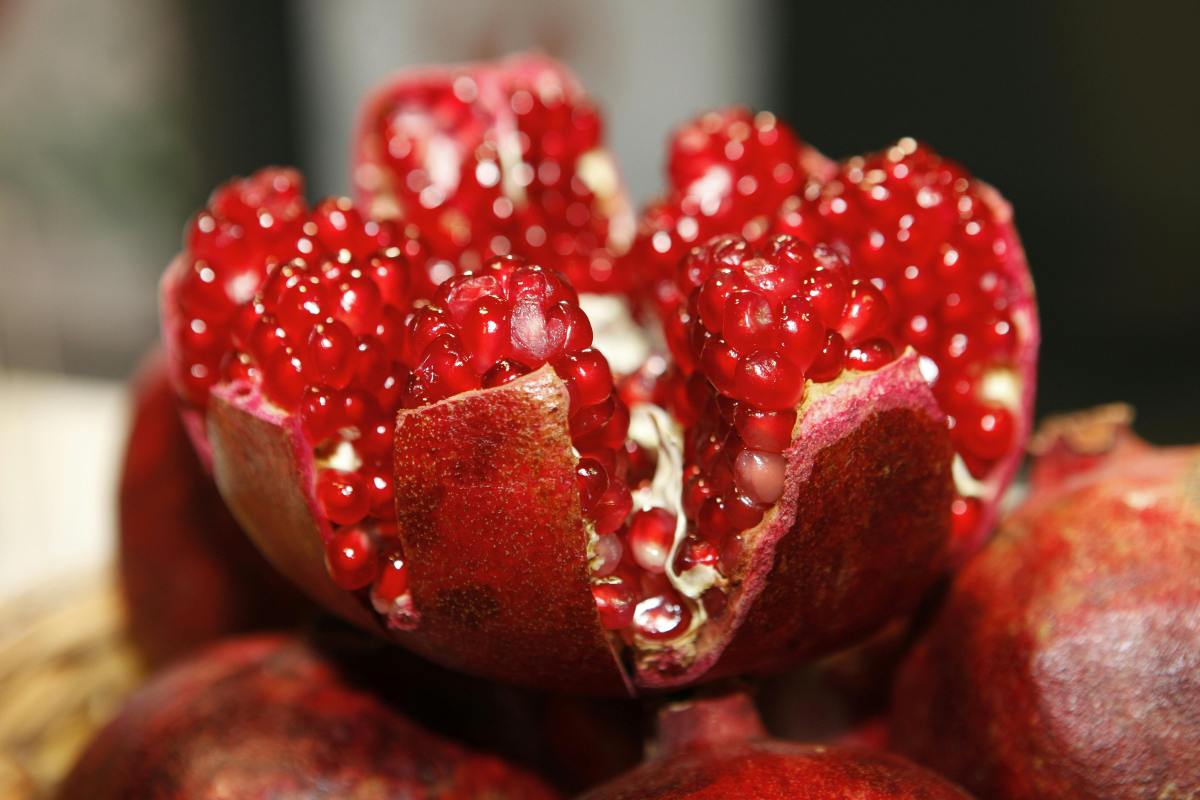
A sliced pomegranate

Compassionate lessons from Eastern philosophy
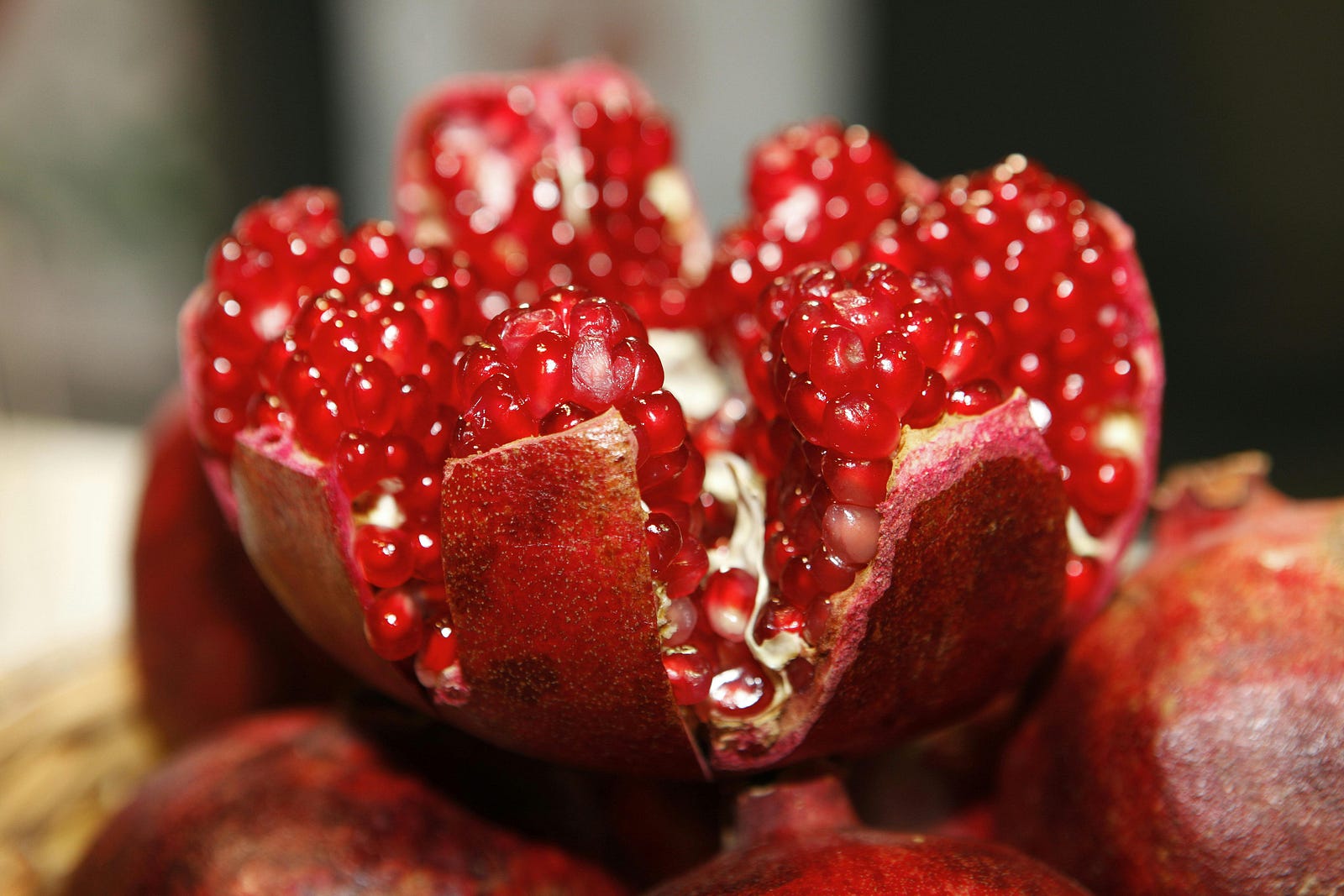
a sliced pomegranate
Photo by Pixabay

Due to the compassionate nature of Eastern philosophy, many Hindus and Buddhists choose to be vegetarians. I became a vegetarian myself at a young age to due to my feelings of empathy for animals. I also began studying religion because of my curiosity about the unknown.

I later learned more about vegetarianism, and found it to be a good expression of care for the natural world, more generally. Factory farming leads to vast amounts of ecological destruction, animal suffering, and human suffering. Being vegetarian or vegan is a good way to protest that status quo. It’s an effective form of protest that actually drives the markets that produce food. 

I also learned more about the early history of religion, like that vegetarianism is related to the principle of nonviolence in Hinduism and Buddhism, which is called Ahimsa in Sanskrit.

Jainism practices the principle of Ahimsa as well, some of its adherents going as far as to sweep the insects out of the way with a peacock-feather brush before sitting down in order to avoid violence to animals. Jains also have practices to avoid harming plants. Some Jains avoid eating root vegetables and try to only consume plants that they can harvest the fruits of without killing them

Vaishnava Hindus tend to believe that the ultimate reality of the universe is a deeply personal thing that can be known about through introspection. Jains and Buddhists have similar beliefs.

I believe that the introspection required by these non-violent Eastern faiths is what led to the compassionate ethics of vegetarianism in these faiths. If you’re trying to learn about the reality of the universe by self-reflecting, you aren’t going to get very far without thinking about what it’s like to be someone else. Meditate on that for long enough and you start to have empathy for every living thing. 

The utilitarian argument for fruitarianism

Meat eaters will often playfully tease vegetarians with the idea that plants might feel pain. While that argument might seem silly on the surface, it’s actually a great thought experiment.

In Western utilitarian ethics, the emphasis is on reducing the amount of suffering and to everyone involved in a situation. Strict utilitarians often become vegetarians or vegans for the same reasons as Hindus and Jains: to avoid causing pain and suffering to living creatures.

We don’t know if plants feel pain, but they are living things, and the idea that our compassion should extend to them isn’t that crazy. If you don’t believe plants have feelings, you can still make a pretty good utilitarian argument for fruitarianism on the basis of sustainability. Harvesting only the parts of the plants that you can eat without killing the entire plant, or only harvesting some of a plant and leaving the rest of its kind are both sustainable practices. 

Just thinking about the idea that vegetables might be conscious is a good ethics exercise. It’s more important to consider this type of idea than you might think, even if you’re only concerned about human suffering. Like vegetables, groups of human beings have been often accused of not being able to feel pain.

For example, Black people today are chronically under-treated for pain. This is probably a systemic echo of an early racist trope that Black people couldn’t feel pain or had a higher pain tolerance than white people. There are similar harmful stereotypes with similar historic roots and currently present consequences related to women and disabled people. For some disabled people there is the additional obstacle of an impaired ability to communicate about their pain.

This line of thinking also leads to other questions, like, does eating mostly fruit necessarily lead to less suffering overall? There’s a lot of human suffering and animal suffering associated with the industrial production of plants, as well. Humans suffer because of labor practices in agriculture, and animals suffer because of practices like deforestation. It’s a nightmare of utilitarian calculus. 

Ghandi, fruitarianism, and me 

One of my role models is Mahatma Ghandi, who is well known for teaching the principle of nonviolent Ahimsa. Influenced by his Vaishnava parents, Ghandi was a vegetarian for most of his life.

I learned from Ghandi’s autobiography that Ghandi was a fruitarian for several years, but stopped that diet due to health problems. Ghandi also ate meat for a period of time as a young man.

Like my mentor Ghandi, I also ate meat for a period of time after being a vegetarian for many years, during a period of time when I was questioning my identity. Later I reverted to my old ethics, became a vegetarian again, and now am mostly vegan. I avoid meat and dairy products and if I eat eggs I try to be particular about how the chickens are treated. 

Ghandi said in his autobiography that he tried meat because a friend of his older brother told him that it would make him stronger. The friend even argued (using an offensive poem) that eating meat had made the English stronger, giving them the power to rule over Indians. 

This story made me think about the impact of people practicing nonviolence in their daily lives overall. Was there a connection between the kind of hierarchical thinking associated with meat eating and the kind associated with colonialism, like what the British did to Indians? If more people thought about the suffering that they caused to other living beings on a daily basis, would we be able to avoid bigger and greater instances of authoritarian violence? 

Ghandi referred to his fruitarianism as “penance” for the guilt he felt over his various sins. I felt like doing “penance” as well for my meat eating after I stopped doing it. So I considered trying a fruitarian diet as a way of becoming more conscious of the things I eat. I tried to eat more fruits as a way of balancing the karma of the meat that I consumed during the period of time when my moral fiber had wavered. 

Is a fruitarian diet healthy? 

Besides helping me feel better about my own meat eating, I thought that a fruitarian diet might be a good option for any person who is trying to think about the utilitarian impact of their actions. 

It’s tough to get adequate nutrition eating only fruit, so I thought about what the Jains had to say about eating only the parts of the plants that one can harvest without killing them. This broadens the options a bit from a fruits-only diet. Then the diet could include nuts and seeds which are rich in fats and protein, and vegetables and grains and legumes which could provide more carbohydrates, protein, and other nutrients.

Assuming you’re keeping track of your micro and macro nutrients to make sure you’re getting enough healthy proteins, fats, carbohydrates and vitamins, a fruitarian diet with those restrictions is possible to maintain. The biggest problem I see with this diet is the difficulty in getting Vitamin B-12, which can be difficult in any vegan or vegetarian diet. Good vegan sources of B-12 include mushrooms and seaweed. 

Are mushrooms the “fruit” of the mycelium? You can certainly harvest them without killing the entire network beneath the soil. And seaweed can be found washed up on the beach, already dead. I could also harvest it, theoretically, without killing the entire seaweed plant. 

This thought experiment also got me thinking about the lack of Vitamin B-12 in other plant-based sources besides mushrooms and seaweed. While there are trace amount of the vitamin in many fruits and vegetables, it’s not as abundant as it is in say, the state mushroom of my home state Oregon, the chanterelle

Is this the result of industrial agriculture breeding plants for high yield instead of nutrition? I’ve heard from numerous sources that nutrition in produce in the United States is declining due to unsustainable farming practices. Maybe if we bred more fruits and vegetables for their B-12 content, everyone would get better nutrition? 

Why diet is important to personal ethics

One thing that pretty much begins to learn about when they begin to embark on any kind of restrictive diet is where they food they eat actually comes from. You can’t be vegetarian or fruitarian or keto or wheat-free without starting to read labels.

It is said that “you are what you eat.” That’s true, in a sense from a nutrition perspective, but I also think it’s true from a kind of cosmic, karmic perspective. Eating is a big part of the life of any living organism. Since food is such a big part of our lives, the story of where it comes from is important. 

We carry the suffering associated with the food we eat in a moral way the same way we might carry extra pounds if we eat too many calories. Still, it’s not a hopeless position to be in. Even if you eat meat, you can still reduce the suffering involved by choosing meat and dairy products that come from farms or hunters who have better practices

While factory farms are well-known to be awful, there are many things that farmers can do to reduce suffering to animals and to reduce the impact that farming animals and plants has on the planet. And many are doing it! Check into the environmental and labor practices of the companies that you’re getting you’re food from.

If you’re able, I recommend checking out a local farmer’s market. Eating locally-produced goods is one great way to eat ethically and sustainably. This is because of reduced shipping costs, the production of native plant and animal products, and the ease of following up with the farmer. Cut out the middleman and get your produce directly from the farm! 

As for me, I’ve been eating more fresh fruit and nuts as part of my diet. I’m still not fully fruitarian for health reasons, but keeping fruitarianism in mind is making me think more about where my food comes from overall. When it comes to eating ethically, that’s all that really matters. 
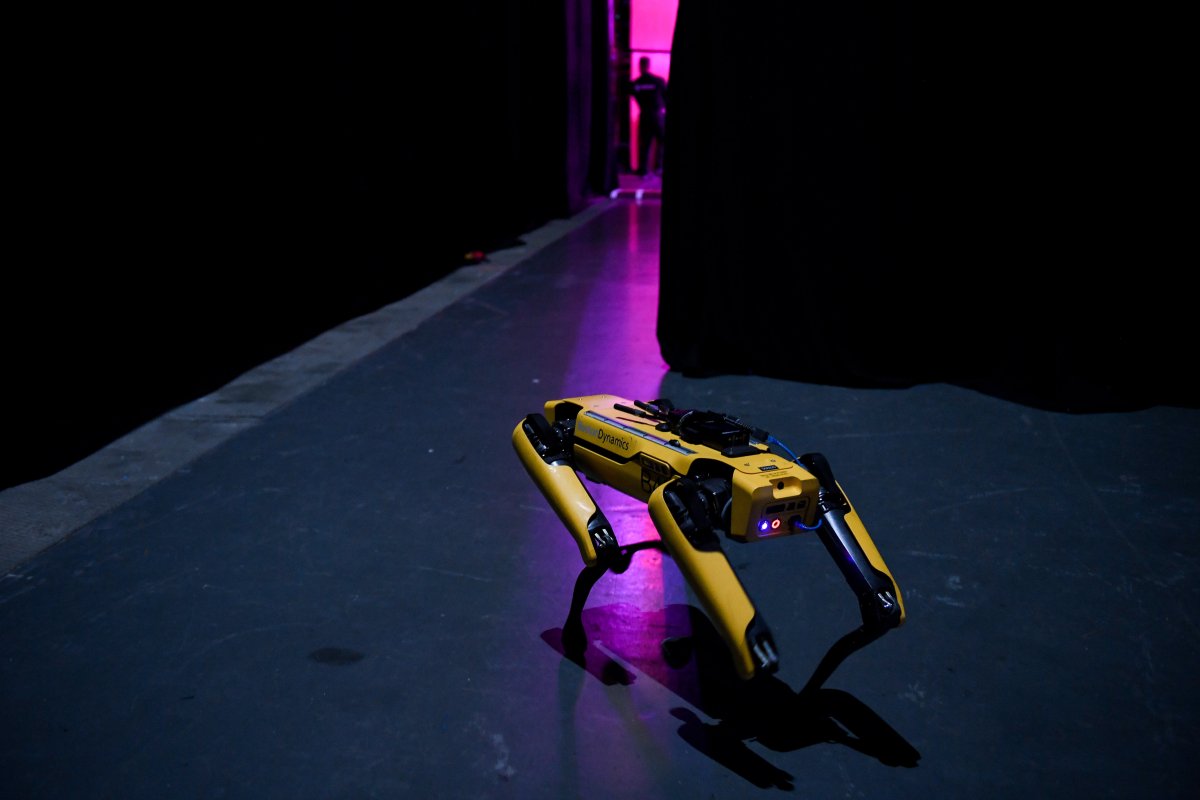
This Robot Should Not Be Used As a Weapon of War 

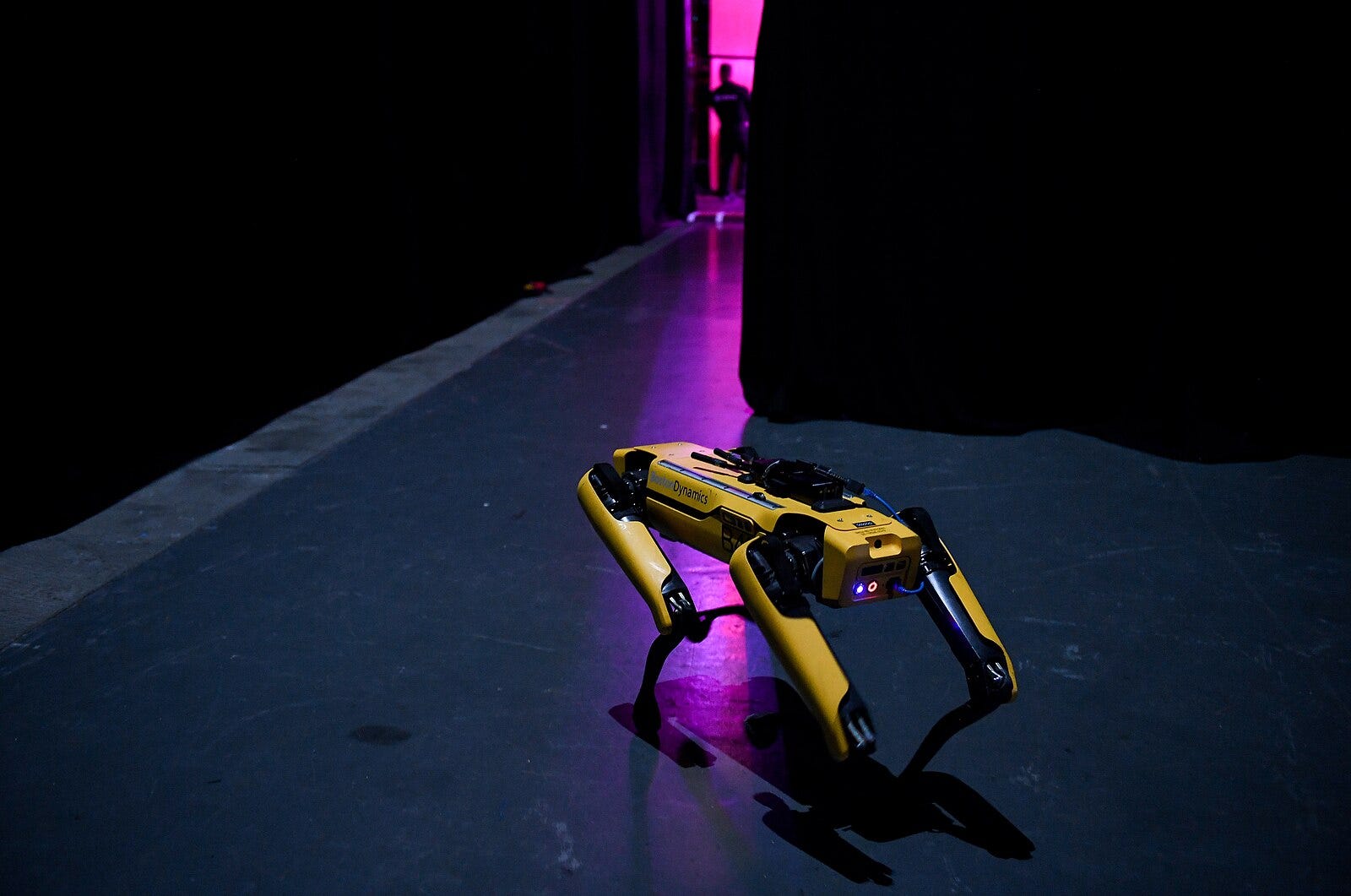
Spot, the Boston Dynamics robot in 2019

Why I see Spot’s future as more like a personal computer or car

Spot, the Boston Dynamics Robot in 2019
Photo by Harry Murphy

I’ve been following the evolution of the robot “Spot” for several years now. A four- legged innovation on from the company Boston Dynamics, Spot is capable of balancing, traversing difficult terrain, and more. 

Spot now has a few competitors on the marketplace, such as the bots from Unitree Robotics, ANYBotics, and Ghost Robotics. It is currently being tested by various militaries for military applications.

I’ve seen videos of Spot dancing, and videos of similar robots used by the US military with guns strapped to them. I prefer the videos of Spot dancing. 

Open Dynamic Robot Initiative is providing a low-cost, open-source alternative to the competitors. 

I’m hoping that people continue working on this kind of robot in the spirit of open source and collaboration. I’d like to see these robots cheaper and available more widely. I also I don’t want them drafted into the military!

I see Spot and robots like it as a more likely candidate for personal transport. If the robots are electric, they could be a great alternative to wheelchairs, cars, bikes, and motorcycles. We could even build giant ones that could serve as public transportation like buses or trains. 

Right now, these robots are really expensive. They are definitely out of the price range of most regular people. I’m hoping to see a transition with these robots where they become more widely available for regular consumers to purchase, like we saw with personal computers after computers were first used more exclusively by scientists and the military. 

An all-terrain robot’s possible functions

This robot can go literally anywhere. That’s why I immediately recognize it as a great alternative to wheelchairs and other mobility devices for disabled people. 

It seems like it would be much easier to ride one of these things around and to be able to go up and down stairs or over terrain that isn’t flat than it would be to use a wheelchair. 

While I think disabled people should be given priority if personal transport robots become a thing, it would be great for the modern American who is lazy, too! Or for anyone who is trying to get anywhere, if they were made street legal.

Design concept: robot ponies

I imagine these robots essentially being used the way that horses, ponies, oxen and other beasts of burden have been used by humans for centuries. 

We should be able to ride them up and down the street, sidewalk, or bike lane at the speed of a plodding pony, a bicycle, or a car. We should be able to tie them up to charge in the sun in front of the bar like stopping to water your horse on the trail. We should be able to use them to pull a cart full of produce or a sleigh in the snow. 

I also thought it would be cool if designers designed these robots to look more like animals. These four-legged robots already look a lot like many animals, but the headless design is creepy and sterile. The addition to Spot of the robot arm that looks like a bit like a head and a neck gives it an appearance a bit like a giraffe, an emu, or brontosaurus. 

It would be fun to be able to add mods to your robot pony to make it look more like a real pony or even an imaginary animal like a dragon or a unicorn. That would make the use of these robots as personal vehicles even more fun. 

Rethinking how we use technology

Ethics are important in product design. It’s important to think about why we are creating something, especially when it comes to things that have the potential to change the world in massive ways, like robots. 

One thing that I learned from studying permaculture design is the concept of biomimcry. Biomimicry guides design methodology and ethics by observing and mimicking the patterns of the natural world. 

I think it would be cool if we designed infrastructure like transportation and technology like robots to mimic nature as well. That’s why I conceptualize Spot’s future as “Spot the cute pony” instead of “Spot the killing machine.” 

Still, nature contains killing machines too! Human beings would be silly enough to design something to resemble an animal that could’ve naturally evolved and then turn that thing into a predator.

Please, no murderous robots 

Philip K. Dick wrote a 1960 book called Vulcan’s Hammer in which robots become extremely powerful, controlling human society and slaughtering people when confused.

Netflix’s Black Mirror had an unsettling episode about a robot that looks similar to Spot going rouge and relentlessly hunting human beings through a post-apocalyptic wasteland. It is utterly terrifying to imagine these robots behaving like this in the real world. 

I prefer to imagine a world in which these robots are more like creative and colorful art cars from Burning Man. I’d like to see cities that are more walkable and with more accessible public transportation. And there’s no reason why our personal vehicles can’t be fun and beautiful in addition to being functional. 

Remember, product designers are driven by what consumers ask for, because they know that’s where the money is.

Personally, my design ethics demand robot ponies, not murderous K-9 units. 

Think hard about what kind of future you want to see. 

Why I Started Eating Meat Again After 17 Years of Vegetarianism


The health and ethics of eating are complex

Photo: Idella Maeland/Unsplash

I became a vegetarian when I was eight years old, about three months before my ninth birthday.

I had been reading an article about vegetarianism in American Girl magazine, a periodical often subscribed to by eight-year-old girls. When I read the article, something clicked in my brain. I wasn’t sure why, but vegetarianism made sense to me. I went to my mom later that day and asked her if I could stop eating meat.

She was pretty receptive to the idea and recalled having had the desire to stop eating meat as a child, too, but said she’d been scoffed at by her own family, who insisted she’d get sick if she stopped eating meat. Eager to support my bodily autonomy in a way that her own parents didn’t, my mom told me that the decision to eat meat was entirely up to me.

We went to the grocery store and bought beans and rice, tofu dogs, veggie burgers, edamame, and lentils. My mom’s chief concern with my decision was me not getting enough protein, which I soon learned was a common concern among those unfamiliar with a vegetarian diet.

Later that week, she gave me Peter Singer’s book, Animal Liberation. Though perhaps a bit dense (and intense) for a person of that age, the book was an eye-opener for me. I loved animals and the fact that they suffered so needlessly for our benefit seemed like a horrible atrocity to me.

I decided to become an activist, joining PETA and placing the “meat is murder” stickers they sent me everywhere. As an adolescent, I became a fan of The Smiths’ 1985 album by the same name. Seeing a lack of vegetarian options in my middle school cafeteria, I wrote a letter to the superintendent of the school district asking for changes to the menu.

PETA sent me DVDs of footage from inside of factory farms, and the anguished screams of suffering cows, chickens, and pigs became burned into my consciousness. I didn’t understand how anyone could possibly eat meat. After a while, it didn’t even seem like food to me anymore– more like a gory biohazard.

It’s much easier to eat a low-fat diet as a vegetarian, and I figured that this made vegetarianism healthier.

Over time, I stopped being a fan of PETA, even as I still believed strongly in my vegetarianism years later. I got into many arguments with passionate meat-eaters and I began to see that the ethics of groups like PETA were far more extreme than my own actual beliefs. However, that didn’t stop me from continuing with my diet.

Whenever anyone asked me why I wasn’t eating meat, I was quick to engage them in a debate. I did a lot of research and memorized some main points defending my lifestyle. I brought them up so often that it became a habit:

Cruelty

Why should we eat meat when there are other options available? Why cause needless suffering to sentient beings?

The way we mass-produce meat in the modern world is unquestionably cruel. There’s lots of evidence that animals experience pain and suffering on factory farms. For me, this seemed the most obvious reason to be a vegetarian. I loved animals, and I didn’t like the idea of causing them pain.

Health

Many people think a vegetarian diet is healthier, and I certainly did when I was a vegetarian. Certainly, it’s possible to be very healthy on a vegetarian or vegan diet. It’s much easier to get protein than people realize, and it’s possible to supplement things like vitamin B12.

When I was a vegetarian, I thought things like high rates of cancer and heart disease were heavily linked to excess meat and dairy consumption. After all, fat is the culprit, right?

It’s much easier to eat a low-fat diet as a vegetarian, and I figured that this made vegetarianism healthier, along with an absence of consuming things like hormones and antibiotics that are fed to livestock on factory farms.

Hunger

Over 10 pounds of plant protein are used to produce one pound of beef protein. Wouldn’t it be better to feed those plants directly to humans, instead of to livestock? A 2014 Nature article found that 70% more food could be added to the world food supply if we did this.

This seemed like a no-brainer to me. Why were we feeding all this grain to cows, when we could be feeding it to hungry people? This is another perspective, like the animal cruelty perspective, which really tugged at my heartstrings.

Climate

There’s a pretty good argument for the environmental unsustainability of meat production. Factory farms definitely contribute to greenhouse gas emissions, and the meat industry is a huge contributor to deforestation.

I became aware of climate change around the same time I became a vegetarian, and a vegetarian diet seemed to fit right into a climate change-fighting lifestyle.

The first time I ate meat again

Over time, I began to realize that the ethics and sustainability of food were much more complicated than I originally thought.

I went from a fanatical vegetarian to a more calm vegetarian, to a vegetarian often annoyed by other fanatical vegetarians or vegans who were militant reminders of my own extreme speech and behavior as a kid.

I spent time talking with people who saw the meat issue differently from the way I saw it. Once I let myself hold my beliefs more loosely, I began to realize that they often made good points when we discussed the issue. Eventually, I took the plunge and started eating meat again.

After toying with the idea of reintroducing meat into my diet for some time, I had a moment of boldness while at brunch with a friend: I decided to order some Canadian bacon on a whim.

Anticipating a potential bad response from a digestive system that wasn’t used to handling meat, I ate slowly and deliberately. The bacon wasn’t the best thing in the world, I decided, but it was pretty good.

I felt fine after the meal and didn’t end up getting sick after all. On my next trip to the store for groceries, I bought a chicken breast.

Cruelty

What really started to change my opinion on the cruelty argument was the experience of speaking to people who hunt wild game.

Interested in nature and primitive skills as a hobby, I ended up reading articles and listening to podcasts about hunters and survivalists. While working on organic farms, I ended up hanging out in the woods with hunters and watching them clean and prepare the animals they ate.

Those who hunt wild game sometimes argue that killing a wild animal is actually an act of compassion because an animal in the wild is likely to have prolonged suffering before death from sickness, old age, or being eaten by a predator. A quick death by bullet is much less painful.

Overall, I stopped seeing the ethics of eating meat as black and white.

Death is also part of the natural cycle of life. Nothing wants to die but everything does, regardless. My own feelings about morality and spirituality changed over time, and my feelings about eating meat began to change, too.

Then I learned that the Dalai Lama eats meat and that Gandhi, who I thought of as a famous vegetarian, also ate meat sometimes. I learned that eating a plant-based diet didn’t totally prevent cruelty to animals, either. Many animals are also harmed in the process of plant-based food production.

Overall, I stopped seeing the ethics of eating meat as black and white.

I still think that factory farms are unnecessarily cruel, but I’ve learned that there are more compassionate ways to raise animals for food, and I no longer see the act of consuming an animal as inherently cruel.

Health

While you can definitely get sufficient protein from plant-based sources, meat is an extremely convenient source of protein and amino acids, as well as other essential nutrients like B vitamins, zinc, and iron.

As I learned more about nutrition over the years, I began to have different beliefs about what makes for a healthy human diet. I stopped believing that an excess of fat in the U.S. diet was the cause of many widespread chronic health problems, and became convinced that consuming an excess of carbohydrates and sugars was a more likely culprit.

I had no problem getting protein as a vegetarian, but when I first started trying to eat a diet higher in protein and fat and lower in carbohydrates, I began to realize that meat was a much more convenient source of protein because it’s lower in calories and carbohydrates than many plant-based protein sources.

I also found that I felt better eating this way.

I began to think that the qualityof food mattered more than thetype of food.

A diet that’s higher in fat and protein and lower in carbohydrates gives me more consistent energy levels and fewer feelings of hunger and fatigue. Eating meat again also improved my iron levels, which was surprising to me. Why? I ate plenty of iron-rich leafy greens as a vegetarian. But I later learned that the body more easily absorbs the heme iron found in meat, as opposed to the non-heme iron found in vegetables.

I also learned that it’s possible to buy meat that isn’t raised on factory farms and pumped full of hormones and antibiotics. I tried higher-quality meat, and I liked it more than the cheaper, factory-farmed meat.

I began to think that the quality of food mattered more than the type of food.

Hunger

I now see world hunger as more of a distribution issue than a supply issue. Economic inequality is a much bigger factor in food shortages than a lack of food production. Thus, it’s not that the world isn’t producing enough food to feed everyone — it’s that the food isn’t getting to the hungry people.

In the United States, for example, about half of all produce is thrown away before anyone gets the chance to eat it. And thus, I no longer believe that hunger is a practical issue; it’s an issue of our values as a culture and as human beings. It’s about what’s important to us, and where our priorities are.

Climate

About 13% to 18% percent of global human-caused greenhouse gas emissions come from animal agriculture, while about 64% comes from fossil fuels. In the United States, only about 3% comes from animal agriculture, while 80% comes from fossil fuels.

While the meat industry is a factor in climate change, it’s not the only factor, and it’s definitely not the biggest factor. In fact, even if we stopped all meat production today, the climate would still be in trouble. There are much bigger culprits to worry about when it comes to greenhouse gas emissions.

I do think it would be better for the climate if we ate less meat, but this argument tends to oversimplify the science of the issue. Still, I’m in favor of eating meat in moderation and finding ways to produce meat more sustainably.

How I eat now

I still eat a heavily plant-based diet, but I eat a lot less corn, wheat, soy, and sugar than I used to. Meat is now a regular part of my diet, but I eat it a lot less than the average American.

My ethics continue to evolve and change as I evolve and change as a person.

I prefer chicken, fish, and pork, while I have less of a taste for ruminant meats like beef, venison, and mutton. Some would argue that fish is healthier, or that eating chicken is more sustainable than consuming something like beef (because ruminant animals produce more methane), but I’m basing my choices more on personal preference than health or sustainability.

And after all of this, I have to admit that I could still be wrong about everything. I’m not a doctor or a scientist, and the conclusions I’ve come to about health and sustainability could be totally flawed. My moral compass could also be off. Maybe I’ve evolved to become a less ethical person, rather than a more open-minded one. My ethics continue to evolve and change as I evolve and change as a person.

But this whole journey has been an important learning experience for me. It’s a daily reminder that it’s possible for my entire worldview on something to shift, even if I feel very passionately about it. It’s an example of how a very polarized and emotionally charged issue is also a complicated and nuanced issue, and how there are valid arguments on both sides that are worth considering.

As I’ve aged, I’ve learned to become more tolerant of ideas and belief systems that are different from my own because I could just as easily be the person on the other side of the debate. In other words, I think and feel the way I do because of the life I’ve lived and the experiences I’ve had — but if I had lived a different life and had different experiences, I might have developed a very different worldview.

Now, every time I fry a slice of bacon or chew on a sushi roll, I remember: No matter how sure you are, you could always change your mind.


Originally published on medium.com on November 18th, 2019.