
And you should
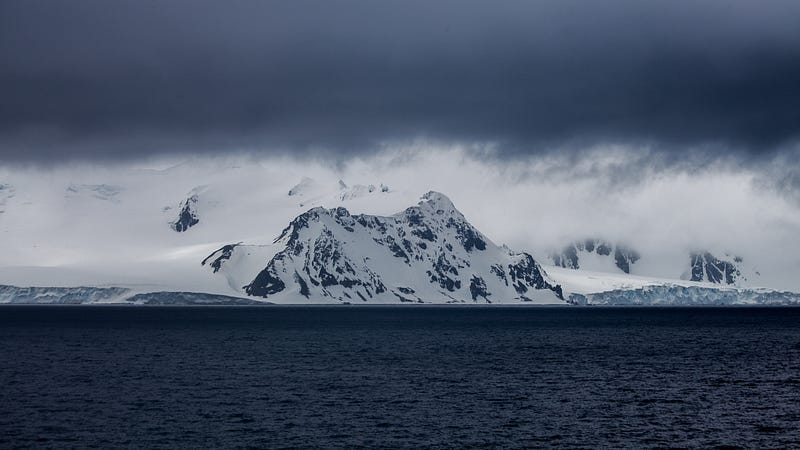
On January 15th, 1915, Endurance became frozen in an Antarctic ice floe. By February, expedition leader Ernest Shackleton realized the ship would be trapped until spring. He ordered that the ship’s normal routine be abandoned, and for his men to prepare to hunker down for the remaining months.
The ship was not free by spring. By October, it had begun to sink, finally sliding entirely beneath the surface on the 21st of November.
For two months, Shackleton’s men lived on a large, flat, floe of ice; hoping that it would drift towards nearby Paulet Island, 250 miles away. The crew ate the blubber from seals they killed and did their best to guard their digits against frostbite. They eventually moved to another floe after failed attempts to march across the first towards the island.
By the 17th of March, 1916, the new “Patience Camp” had drifted within 50 miles of the island, and on the 9th of April, the men attempted to reach it in lifeboats. Five days later, after 497 total days living on ice and at sea, the men landed their three lifeboats on Elephant Island, 346 miles from where the Endurance sank months before.
Since Elephant Island was far from any shipping routes, and rescue was unlikely, Shackleton planned another expedition in the James Caird, the most seaworthy of the 20-foot lifeboats. Shackleton knew that if he and his five chosen companions did not reach South Georgia within four weeks, the rest of the crew would be lost, so he refused to pack supplies for any longer than that amount of time.
After fifteen days of sailing and hurricane-force winds, the crew finally landed on an unoccupied southern shore. Their journey continued as Shackleton, Frank Worsely and Tom Crean crossed 32 miles of unforgiving terrain, armed with only boots into which they had pushed screws, carpenter’s adzes, and 50 feet of rope for scaling the icy mountains.
36 grueling hours later, the men reached the whaling station at Stromness, securing rescue for everyone. 24 of the 27 men in the original crew survived the long ordeal.
While many things about this story are astounding, the fact that stands out to me the most is that Shackleton planned another expedition to Antarctica later in life, still brave enough to return after his previous nightmarish experience.
Some of the former crew of Endurance even signed up to go back with their former boss. I couldn’t believe it when I read this; after all that, how could they go back?
It’s true that you never really know how strong you are until being strong is your only choice. This situation is something to be embraced, not feared.
I remember something a friend said to me once, while we were both being paid minimum wage to shovel manure for ten hours a day.
“It builds character.”
At the time, the phrase was just a little comic relief in an unpleasant moment, but in retrospect, I can see how wise it was.
I had the good fortune of first reading about Shackleton while I was doing another job involving intense labor in tough conditions. A youth crew building and maintaining wilderness trails, we camped at a high elevation near Crater Lake. It was unusually cold for autumn, and it soon began to snow and hail.
While shivering in my sleeping bag in a drafty tent after a day of hauling gravel uphill in a wheelbarrow, I thumbed through the pages of Endurance, Alfred Lansing’s account of Shackleton’s journey. Reading the story with numb fingers by the light of my headlamp, I felt grateful. “At least I still have my fingers,” I thought. “And my lamp is battery-powered!”
Life will always contain suffering, and suffering will always be relative. You might find, as I have, that your own suffering seems smaller to you the longer you spend out in the cold. If you focus on surviving, you might find that you begin to drift towards safer shores.
It’s easy to be afraid of what might happen in the future or to worry that you can’t handle what is happening right now. It’s important to realize that this kind of ruminating does nothing to help us. We’re better off kindling a fire and getting ready to roast whatever kind of seal blubber happens to be on the menu today.
You don’t have to be an explorer to know that being a human is terrifying, and it always will be– but it’s not all bad.
Yeah, you might end up losing a toe to frostbite, but you’ll probably also have some great stories to tell. There might not be many uncharted lands left on this planet, but life is still an adventure. Treat it like one.
Take a deep breath, stand up straight, and sail your ship straight into the frozen wilderness of life.
It builds character. You might even decide to go back for seconds.
Originally published on medium.com on August 20th, 2019.
 Esoteric Epistemology