Mentally Ill People Are Not Inherently Violent and Dangerous 


Negative stereotypes place vulnerable people at higher risk 
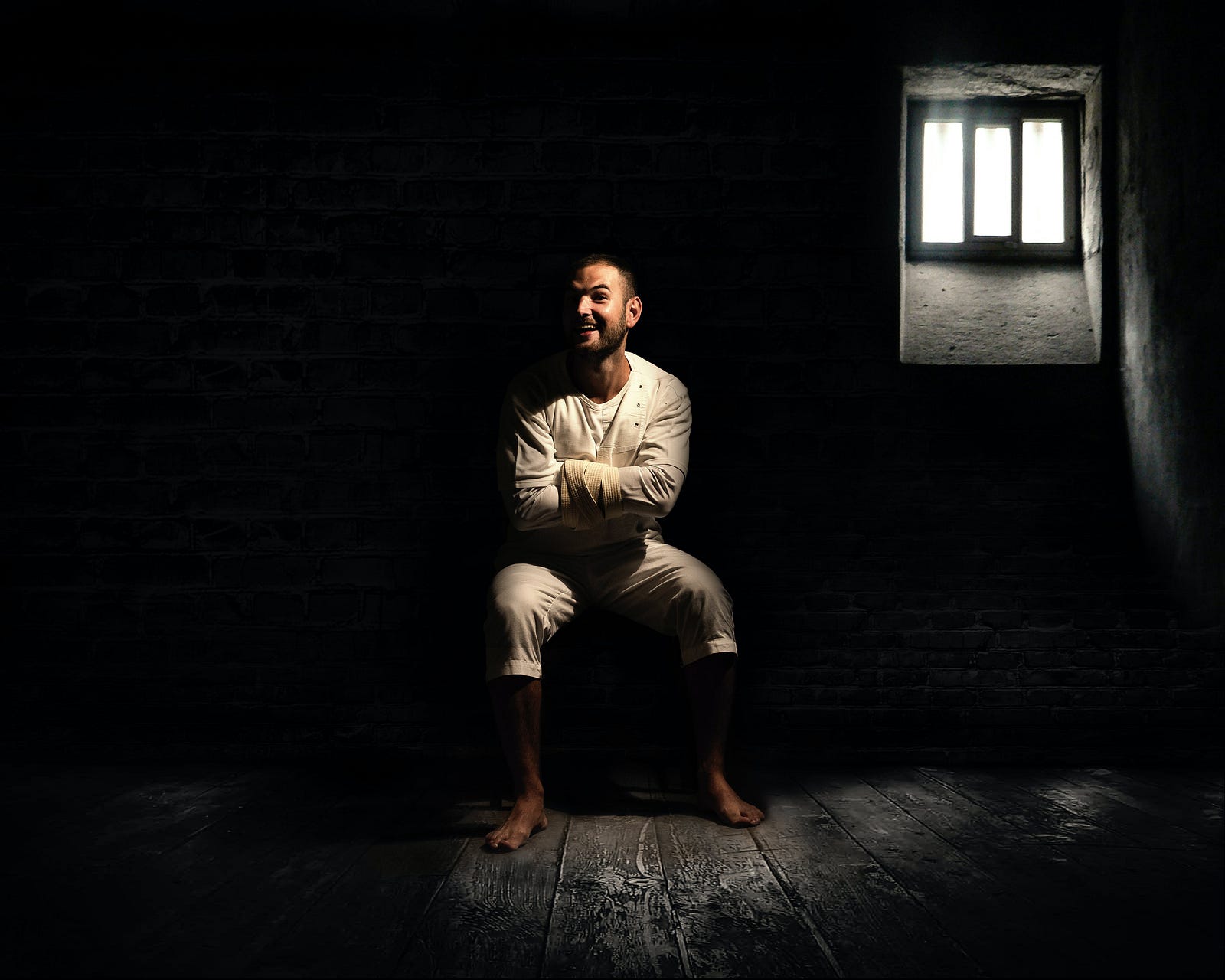
man in straight jacket and laughs to himself with a disturbed look on his face in a darkened room with one window and a small amount of light shining through the window
Photo by Marko Garic 

Billions of people worldwide suffer from mental illness. 

While it’s true that people with mental illness are more likely to be violent than the general population, they are also more likely to be violently victimized than the general population. In fact, the average mentally ill person is more likely to be violently victimized than they are to be the perpetrator of violent acts. If they have some other identity characteristic that is stigmatized, like if they are black or trans, the risk gets even higher.

The images of mentally ill and otherwise neurologically disabled people presented by the media aren’t helping the situation. Mentally ill people are often depicted in a dehumanized way, as evil villains or as monstrous, beastly, out-of-control characters who are disposable to plot lines by virtue of their differences.

Mentally ill people are also often portrayed as helpless victims. This false dichotomy obscures the reality of mental illness. As someone who suffers from mental illness myself, I know that the vast majority of people who do are pretty normal people. Most of us aren’t scary monsters or scared, witless adult children, regardless of how we are portrayed in the media. 

The media demonizes common mental health symptoms like psychosis, hypersexuality, or self harm, feeding into social stigmas surrounding these kinds of symptoms. This stigma makes it more difficult for people to talk about these symptoms. This makes it more difficult or frightening for people to seek treatment, which then leads to less people getting help for their illnesses. 

We have to accept the reality, as mentally ill people, if we want to be functional, that we are both more likely to be dangerous, and more likely to be placed in dangerous situations. It’s also good for us and the people around us to have an awareness of how these realities affect our lives and how they can best support us for our own good, their own good, and the good of everyone around us. 

Mentally Ill People Are More Likely to be Assaulted

Studies show that mentally ill people are more likely to be physically abused or sexually assaulted than the general population. We are also often targeted for property crimes, such as internet or phone scams that also target groups like the elderly. 

Mentally ill people are more likely to be targeted for such crimes for multiple reasons. One of these is that, because mentally ill people are perceived as violent, it’s easier for an abusive person to blame their violence on the mentally ill person who is their victim. Mentally ill people are seen as less credible in general. We are less likely to be believed if we go to the police or to anyone to report a crime. 

Mentally Ill People Are More Likely to be Shot by The Police

It’s estimated that between about one quarter and one half of all fatal police shootings involve someone with a mental illness. People with untreated mental illnesses are possibly as much as sixteen times more likely to be killed by law enforcement

In a police encounter, it may be difficult for an officer to determine whether or not a person with a mental illness really is or isn’t a violent threat. This problem is exacerbated by racial factors.

 Bad public policy creates a vicious cycle 

A lack of public resources for things like mental health, housing, and addictions contributes to these problems. 

When mentally ill people are violent, or when we become so sick that we are unable to care for ourselves, we often become the responsibility of the state. The state often seriously fumbles the care of vulnerable people with mental illness or other disabilities. 

If someone doesn’t get treatment for their mental illness, often it will get worse. And if they are arrested for a violent crime or another crime due to their mental illness, incarceration often makes things worse instead of better. The standard of care for people with mental illnesses in jails and prison is very low. According to NAMI, around two thirds of people with mental illness don’t get proper care while incarcerated.

Fight the stigma 

It’s vital to make sure that mentally ill people receive a high standard of care. 

When people with mental illness receive a high standard of care, we are less likely to become dangerous towards ourselves or anyone else. We are also less likely to end up in danger ourselves. The best way to make sure that we get the care we need is to help the world see us as fully human and deserving of the same level of respect as other humans. 

Remember that the schizophrenic man you see shouting racial slurs on the street corner is still a person. So is the woman who is huddled in an empty store doorway wrapped in wool blankets and talking to herself. So is your co-worker who has emotional outbursts. So is your family member who is so depressed that they can’t get out of bed. 

We don’t stop being human because we are sick. Being sick isn’t a moral failing, or at least not a moral failing of the individual who is sick. Civilization is built on cooperation towards common goals, like the safety-and well being of everyone. If we cannot help people who are sick or otherwise incapacitated live healthy, normal lives, we are failing as a civilized society. We are failing at the very thing which makes us a civilized society.

Mass Incarceration of Nonviolent Offenders Harms Society


Criminal justice reform in the US can’t happen fast enough

a barbed wire fence outside of a prison
Photo by Hédi Benyounes

The United States incarcerates more people than any other nation on earth, with about 2.3 million people currently locked up in 2019. This includes 1,306,000 in state prisons, 221,000 in federal jails and prisons, 612,000 in local jails, and 61,000 in immigrant detention centers.

Over 540,000 people are incarcerated who have not been convicted or sentenced. Median bail levels are often too high for the typical citizen to pay when they are detained.

A staggering 7.1 million people in the United States are under some kind of criminal justice supervision, including probation or parole.

Spending on prisons and jails has increased at triple the rate of spending on Pre‐K‐12 public education in the last thirty years.

Mass incarceration perpetuates a cycle of poverty, addiction, illness, and violence. It’s a huge cost to taxpayers, a human rights fiasco, and a national embarrassment.


On average, incarcerating someone costs $80-$100 per day. While the annual cost of corrections, 80 billion dollars, is often cited as the cost of incarceration; there are many hidden social costs.

According to a recent study, incarceration generates an additional ten dollars in social costs for every dollar spent on corrections. More than half of these costs are borne by families, children, and community members.

The costs borne by the incarcerated include lost productivity, reducing an individual’s lifetime earnings between ten and forty percent. By age 48, the typical former inmate will have earned $179,000 less than if they had never been incarcerated.

Formerly incarcerated people can also be banned by law from working in many industries, living in public housing, and receiving governmental benefits. A criminal record can reduce the likelihood of a job offer or job callback by close to 50%.

These are only a few of the obstacles making re-entry to society after jail or prison so difficult.

Education levels, job skill levels, employment rates, earning power, and mental health are all often low among people in jail or prison before they enter. The time they spend there only makes these problems worse.


A parent’s income is one of the strongest indicators of a child’s chances for upward economic mobility.

Incarceration decreases economic mobility generationally.

More than 1.2 million inmates are parents of children under the age of 18. This means that about 1 in 28 or 3.2 percent of children in the US have a parent in jail or prison.

It’s even worse for African Americans, with 1 in 9 black children having an incarcerated parent. This is a figure that has quadrupled over the past 25 years.

Forty-two percent of children who start out in the bottom fifth of the income distribution get stuck there as adults. It is again worse for African Americans, with 54 percent remaining in the bottom fifth.

When a wage-earning parent is locked up, families often struggle to make ends meet. A study found that in the period that a father was behind bars, the average child’s family income fell 22 percent compared with that of the preceding year.

Having a parent in jail or prison disadvantages a child for life.


People in the system experience chronic health conditions, infectious diseases, substance use disorders, and mental illnesses at much higher rates than the general population.

More than half of all incarcerated people have a mental illness.

One in five incarcerated people is locked up for a drug offense and an estimated one-half of people incarcerated meet the criteria for drug abuse or dependence. Only 11 percent of these people receive treatment for their addictions while incarcerated.

About forty-five percent of people in local and state prisons have both a mental illness and an addiction.

Locking people up doesn’t fix addiction and mental illness.

People benefit more from receiving treatment for their mental illness or drug addiction than they do from incarceration.

Drug treatment is more cost-effective and more effective at preventing recidivism than incarceration. So why are we sending people to jail instead of rehab? It doesn’t make sense on a fiscal or legal level.


Our current system punishes people arbitrarily and causes more harm than it prevents. Society as a whole would benefit more from a system that involves efforts to educate, heal, and rehabilitate those who commit crimes.

Locking each other in cages as punishment for non-violent crimes is a primitive and barbaric way for human beings to behave. It doesn’t prevent crime, it doesn’t make us safer, and it causes immeasurable harm to families, communities and future generations.

It’s time to redesign our justice system to be just.


Originally posted on medium.com on July 29th, 2019. 

The United States of America is Basically Doing the Holocaust

We should probably stop.

a series of grey boxes

Photo by Michael Fousert

During the Holocaust, specific groups of people became the target of propaganda and violence that was coordinated by the state. These groups included ethnic, cultural and social groups such as Jews, Catholics, Freemasons, gay people, trans people, disabled people, and sex workers.

People belonging to these groups became the targets of propaganda campaigns designed to destroy their reputations– but more importantly, to destroy their credibility. An important feature of the Holocaust was the culture of secrecy and the destruction of historical records. Because we do not, collectively, remember our history in a meaningful way, in a way which allows us to fully comprehend the horrors that human beings are capable of, we are continuing to perpetrate these horrors.

The philosopher Hannah Arendt wrote about how totalitarian governments created societies of people who were lonely; not just physically lonely, physically isolated, but spiritually isolated from one another. During World War II, Nazis used propaganda and violent threats to create a culture in which speaking the truth was punishable by social isolation, shaming, unjust incarceration, and physical torture. They created a world in which human beings were incapable of having real intimacy with one another because they were no longer able to express to each other the truth of their experiences. This weakened the social and familial bonds between people, which made them easier to control.

This kind of spiritual loneliness, according to Arendt, is what created the perfect conditions for governments to control the minds of their citizens. Unable to find real human connection under conditions where it was impossible to tell the truth, human beings sought comfort elsewhere — from the authority figures who became stand-ins for the real human relationships which could no longer exist. They became loyal to an amorphous, faceless authority instead of to one another. Even people who lived in the same house, worked at the same jobs or attended the same schools could no longer truly relate to one another. People became passionately terrified of one another. There was a culture of paranoia.

Fear is the seed of hatred. By causing immense fear, by torturing the populace en masse by making everyone afraid all the time, not just of the state, but of each other, Nazis made people more willing to participate in their atrocities. They created a world in which human beings were willing to harm the ones they loved the most in order to avoid pain. In which they were forced to denounce their most deeply held beliefs at the barrels of guns. In which they informed on and turned in their loved ones. In which they were coerced into implicating themselves and other innocent people in kangaroo courts in which facts and evidence didn’t matter. In which people were so confused, so tortured, that they no longer trusted their own memories or senses.

During the Holocaust, it was not just agents of the governments who committed atrocities, it was everyone. Every single person who participated was, to varying degrees, culpable. And yet, when the criminals were tried, a select few were disproportionately punished for crimes which were participated in, condoned, and concealed by nearly everyone. These people became the scapegoats for the crimes of everyone else. Perhaps collectively, as a species, after such an event, we believed that using these people as sacrifices would absolve the rest of us of our guilt.

But guilt doesn’t work that way. Morality doesn’t work that way. Human psychology doesn’t work that way. The world doesn’t work that way. When people commit atrocities, if they witness atrocities, even if they are forced to say, even, for a time, forced to believe that the atrocities didn’t happen, some part of them will still remember. And then, regardless of whether or not they are held accountable by the laws of any state, people will punish themselves, and each other, regardless of how much anyone involved deserves any of it. 

The collective guilt that resulted after the Holocaust led thousands of people to commit suicide and countless others to be left with permanent mental and spiritual scars that would never heal and would be passed down from generation to generation. The intergenerational trauma from the Holocaust and other genocides have left intergenerational traumas that fuel a cycle of hatred and fear and perpetuate unnecessary suffering across the planet.

The government and people of the country in which I live are perpetuating these same crimes, right now, as I speak. The government of my country perpetrates horrific crimes against humanity on what seems to be a perpetual basis, both at home and abroad.

In the country where I live, right now, as I speak, people are being locked away without due process and being treated in horrifying and inhumane ways while in captivity. They are being separated from their parents, children, brothers, and sisters. They are being denied medical treatment when they are sick. They are being asked to defend themselves at hearings in languages that they do not understand without representation by attorneys. People are being raped and sexually abused by government officials who are not held accountable for their actions. People are having their body parts, such as their reproductive organs, removed without their informed consent.

My country murders civilians en masse in foreign countries in order to maintain its control over global markets and natural resources. It relentlessly persecutes, tortures, and executes citizens who speak out against its atrocities.

During World War II, people with both immutable physical characteristics or religious, cultural and social associations like mine were tortured and murdered. Historically, the peaceful values of both my ancestral culture and both the religion in which I was raised and the one I currently practice were warped and distorted by state governments for propaganda of fear-mongering, hate-mongering, and social control.

During my lifetime, I have personally been subjected to treatment which constitutes torture and crimes against humanity. I know many other people belonging to the both the same and other cultural, religious, and social groups and as me who have been subjected to the same. My local, state and federal governments have condoned this treatment and failed to hold the perpetrators accountable. I have been subjected to this treatment, not, in fact, because of the groups that I belong to, but because I reported the atrocities that I witnessed and experienced and because I fought back. The same is true for many others around me, regardless of race, religion, culture, and the like.

It does not matter what ethnic, religious, social, or cultural group you belong to. During the reign of a totalitarian government, any person is potentially a member of a group that was referred to by Nazis during the Holocaust as “untermenschen,” or “subhumans.” This group still exists today, under the totalitarian government under which I live. Absolutely anyone can be labeled a member of this group, and absolutely anyone is a potential target.

Dear America — your human sacrifices do not absolve you of your crimes, and they will not absolve you of your guilt.

No matter who you are, one day you too, could one day be treated as “subhuman.” And also, no matter who you are, one day, you too could be the person who treats someone else that way. You might even be doing it right now. And if the propaganda and mind control that is inflicted on you every single day of your life has succeeded in breaking your consciousness to the point where you can no longer see the truth when it’s right in front of you — you might not even be aware of it. But you will be one day. And it’s gonna hurt.