The Ethics of Fruitarianism

A sliced pomegranate

Compassionate lessons from Eastern philosophy

a sliced pomegranate
Photo by Pixabay

Due to the compassionate nature of Eastern philosophy, many Hindus and Buddhists choose to be vegetarians. I became a vegetarian myself at a young age to due to my feelings of empathy for animals. I also began studying religion because of my curiosity about the unknown.

I later learned more about vegetarianism, and found it to be a good expression of care for the natural world, more generally. Factory farming leads to vast amounts of ecological destruction, animal suffering, and human suffering. Being vegetarian or vegan is a good way to protest that status quo. It’s an effective form of protest that actually drives the markets that produce food. 

I also learned more about the early history of religion, like that vegetarianism is related to the principle of nonviolence in Hinduism and Buddhism, which is called Ahimsa in Sanskrit.

Jainism practices the principle of Ahimsa as well, some of its adherents going as far as to sweep the insects out of the way with a peacock-feather brush before sitting down in order to avoid violence to animals. Jains also have practices to avoid harming plants. Some Jains avoid eating root vegetables and try to only consume plants that they can harvest the fruits of without killing them

Vaishnava Hindus tend to believe that the ultimate reality of the universe is a deeply personal thing that can be known about through introspection. Jains and Buddhists have similar beliefs.

I believe that the introspection required by these non-violent Eastern faiths is what led to the compassionate ethics of vegetarianism in these faiths. If you’re trying to learn about the reality of the universe by self-reflecting, you aren’t going to get very far without thinking about what it’s like to be someone else. Meditate on that for long enough and you start to have empathy for every living thing. 

The utilitarian argument for fruitarianism

Meat eaters will often playfully tease vegetarians with the idea that plants might feel pain. While that argument might seem silly on the surface, it’s actually a great thought experiment.

In Western utilitarian ethics, the emphasis is on reducing the amount of suffering and to everyone involved in a situation. Strict utilitarians often become vegetarians or vegans for the same reasons as Hindus and Jains: to avoid causing pain and suffering to living creatures.

We don’t know if plants feel pain, but they are living things, and the idea that our compassion should extend to them isn’t that crazy. If you don’t believe plants have feelings, you can still make a pretty good utilitarian argument for fruitarianism on the basis of sustainability. Harvesting only the parts of the plants that you can eat without killing the entire plant, or only harvesting some of a plant and leaving the rest of its kind are both sustainable practices. 

Just thinking about the idea that vegetables might be conscious is a good ethics exercise. It’s more important to consider this type of idea than you might think, even if you’re only concerned about human suffering. Like vegetables, groups of human beings have been often accused of not being able to feel pain.

For example, Black people today are chronically under-treated for pain. This is probably a systemic echo of an early racist trope that Black people couldn’t feel pain or had a higher pain tolerance than white people. There are similar harmful stereotypes with similar historic roots and currently present consequences related to women and disabled people. For some disabled people there is the additional obstacle of an impaired ability to communicate about their pain.

This line of thinking also leads to other questions, like, does eating mostly fruit necessarily lead to less suffering overall? There’s a lot of human suffering and animal suffering associated with the industrial production of plants, as well. Humans suffer because of labor practices in agriculture, and animals suffer because of practices like deforestation. It’s a nightmare of utilitarian calculus. 

Ghandi, fruitarianism, and me 

One of my role models is Mahatma Ghandi, who is well known for teaching the principle of nonviolent Ahimsa. Influenced by his Vaishnava parents, Ghandi was a vegetarian for most of his life.

I learned from Ghandi’s autobiography that Ghandi was a fruitarian for several years, but stopped that diet due to health problems. Ghandi also ate meat for a period of time as a young man.

Like my mentor Ghandi, I also ate meat for a period of time after being a vegetarian for many years, during a period of time when I was questioning my identity. Later I reverted to my old ethics, became a vegetarian again, and now am mostly vegan. I avoid meat and dairy products and if I eat eggs I try to be particular about how the chickens are treated. 

Ghandi said in his autobiography that he tried meat because a friend of his older brother told him that it would make him stronger. The friend even argued (using an offensive poem) that eating meat had made the English stronger, giving them the power to rule over Indians. 

This story made me think about the impact of people practicing nonviolence in their daily lives overall. Was there a connection between the kind of hierarchical thinking associated with meat eating and the kind associated with colonialism, like what the British did to Indians? If more people thought about the suffering that they caused to other living beings on a daily basis, would we be able to avoid bigger and greater instances of authoritarian violence? 

Ghandi referred to his fruitarianism as “penance” for the guilt he felt over his various sins. I felt like doing “penance” as well for my meat eating after I stopped doing it. So I considered trying a fruitarian diet as a way of becoming more conscious of the things I eat. I tried to eat more fruits as a way of balancing the karma of the meat that I consumed during the period of time when my moral fiber had wavered. 

Is a fruitarian diet healthy? 

Besides helping me feel better about my own meat eating, I thought that a fruitarian diet might be a good option for any person who is trying to think about the utilitarian impact of their actions. 

It’s tough to get adequate nutrition eating only fruit, so I thought about what the Jains had to say about eating only the parts of the plants that one can harvest without killing them. This broadens the options a bit from a fruits-only diet. Then the diet could include nuts and seeds which are rich in fats and protein, and vegetables and grains and legumes which could provide more carbohydrates, protein, and other nutrients.

Assuming you’re keeping track of your micro and macro nutrients to make sure you’re getting enough healthy proteins, fats, carbohydrates and vitamins, a fruitarian diet with those restrictions is possible to maintain. The biggest problem I see with this diet is the difficulty in getting Vitamin B-12, which can be difficult in any vegan or vegetarian diet. Good vegan sources of B-12 include mushrooms and seaweed. 

Are mushrooms the “fruit” of the mycelium? You can certainly harvest them without killing the entire network beneath the soil. And seaweed can be found washed up on the beach, already dead. I could also harvest it, theoretically, without killing the entire seaweed plant. 

This thought experiment also got me thinking about the lack of Vitamin B-12 in other plant-based sources besides mushrooms and seaweed. While there are trace amount of the vitamin in many fruits and vegetables, it’s not as abundant as it is in say, the state mushroom of my home state Oregon, the chanterelle

Is this the result of industrial agriculture breeding plants for high yield instead of nutrition? I’ve heard from numerous sources that nutrition in produce in the United States is declining due to unsustainable farming practices. Maybe if we bred more fruits and vegetables for their B-12 content, everyone would get better nutrition? 

Why diet is important to personal ethics

One thing that pretty much begins to learn about when they begin to embark on any kind of restrictive diet is where they food they eat actually comes from. You can’t be vegetarian or fruitarian or keto or wheat-free without starting to read labels.

It is said that “you are what you eat.” That’s true, in a sense from a nutrition perspective, but I also think it’s true from a kind of cosmic, karmic perspective. Eating is a big part of the life of any living organism. Since food is such a big part of our lives, the story of where it comes from is important. 

We carry the suffering associated with the food we eat in a moral way the same way we might carry extra pounds if we eat too many calories. Still, it’s not a hopeless position to be in. Even if you eat meat, you can still reduce the suffering involved by choosing meat and dairy products that come from farms or hunters who have better practices

While factory farms are well-known to be awful, there are many things that farmers can do to reduce suffering to animals and to reduce the impact that farming animals and plants has on the planet. And many are doing it! Check into the environmental and labor practices of the companies that you’re getting you’re food from.

If you’re able, I recommend checking out a local farmer’s market. Eating locally-produced goods is one great way to eat ethically and sustainably. This is because of reduced shipping costs, the production of native plant and animal products, and the ease of following up with the farmer. Cut out the middleman and get your produce directly from the farm! 

As for me, I’ve been eating more fresh fruit and nuts as part of my diet. I’m still not fully fruitarian for health reasons, but keeping fruitarianism in mind is making me think more about where my food comes from overall. When it comes to eating ethically, that’s all that really matters. 

The West Desperately Needs More Eastern Philosophy

Americans would benefit from more diversity in their spirituality

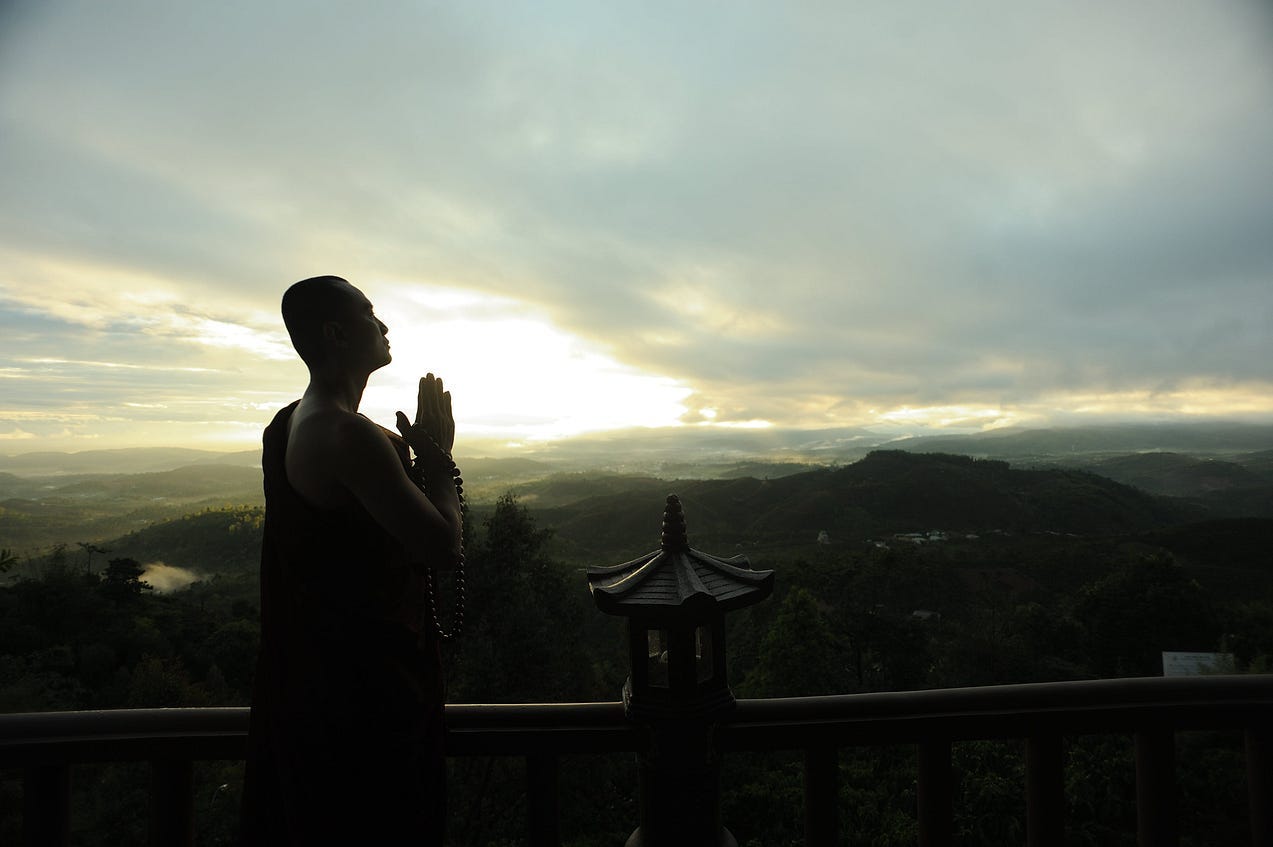
monk greeting the sunrise with “namaste”

Photo by THÁI NHÀN

I feel like being a spiritual or religious person is almost becoming taboo in my culture. People who are really into their religions tend to be seen as eccentric by your average, reasonable person.

Religion can seem a little crazy to anyone who is rational, and I certainly understand why. But I think a lot of people are sort of missing the point when it comes to religion. This isn’t their fault! It’s based on a lack of education on the matter.

I think it’s time that religions like Hinduism, Buddhism, and Taoism made a serious comeback in the West. I’d like to see the histories of these religions taught in schools more. I’d also like to see their philosophies taught in colleges more alongside the plethora of Western traditions available to college students.

Religion isn’t really about the supernatural. It’s about the natural. It’s a way of explaining the vast beauty of the natural that is beyond human comprehension. Eastern traditions helped me understand that, and I think they have the potential to help many people understand that.

Religion, in general, needs a comeback

Religion can offer a lot of things that many modern Westerners are really missing in their lives, like a sense of purpose, stronger connections to their local and/or faith community, a higher degree of self-mastery, and a greater ability to understand oneself.

A lot of people are sort of burnt out on religion in the US, where I live. Some of them have had bad experiences with it. They aren’t very willing to consider it as a possibility when it comes to life changes that could have a positive effect on their quality of life or on their family or community.

Religion, when done right, in my opinion, should make you a happier and better person. It can and certainly has been done wrong throughout history. It has also been done right on many occasions.

Religions and religious people have also done an immense amount of good in the world. I believe that we are undervaluing this potential for good in modern societies, especially in the West.

Religion can be traumatic and a lot of people hate it

Something I’ve noticed about all religions is that they all tend to preach peace, but the folklore and history behind them always tends to be wrought with violence. I think that people misunderstand their religious texts and believe that the violence of the Gods is something that is meant to be wielded by human beings.

Many Americans have religious trauma from growing up in major religions like Christianity, Islam, or Judaism. There are also a variety of cults that reside in the West. I’ve met a lot of people who have left religions or cults, often complaining of things like sexual abuse, psychological abuse, or ideological hypocrisy.

Personally, I’m not totally clear on what separates a cult from a religion besides the number of followers. The two seem pretty similar to me. I think that most people join cults because they are looking for meaning in their lives. The negative social connotations around cults come from the fact that cults are often scams which advertise spiritual meaning but don’t provide it to their followers. Religions can, unfortunately, be the same.

All faiths have good things and bad things in their histories and current practices. There will always be predatory or sanctimonious people within pretty much all of these communities. There will always be religious groups that will be nonfunctional as far as giving people the personal answers they seek on their spiritual journeys.

Changing religions can help

Some people become atheists or agnostics when they leave religion, sometimes because they’ve lost their faith in God or the divine. People also sometimes do this because of the bad experiences they’ve had with being raised in a religion or cult or with joining a religion or cult as an adult.

Some people still believe in the divine or in God but don’t want to associate with the religion, cult, or other spiritual group that traumatized them or to be reminded of it. Or perhaps there are things about the belief system or religious practices of the person’s religious alma mater that just don’t sit right with them.

It’s possible to feel negatively towards religion because of certain experiences you’ve had but also to still benefit from religion and spirituality. Offering Eastern traditions to people in the West gives them the chance to experience religion, spirituality, and philosophical questioning in a new way that might feel or function better for them.

Eastern traditions mostly preach peace

While there is violence in both the scriptures and history of the East, just like there is in both the scriptures and history of the West, Eastern traditions have a big emphasis on peace and nonviolence. Many Buddhists and Hindus, for example, are vegetarians and are vegetarian as an act of compassion towards animals. These kinds of acts of compassion are encouraged in Eastern traditions.

Eastern traditions have a lot in common, philosophically, with Western traditions, like the idea that stealing or murdering is wrong or the idea that prayer will produce good results in your life. They really aren’t that different, but I think some people get confused about things like their personal ethics when they learn them from Western traditions.

Something about Eastern religions that drew me to them more than I was drawn to Western religions is that I found it easier to make a connection between the religious practices and the positive results in my life. Certainly, this kind of tangible connection is possible in any religion. A Muslim might get a sense of community and belonging from daily prayers with other Muslims. A Christian might find a sense of purpose by feeding homeless people or caring for the sick. A Jewish person might gain a sense of personal identity from their Bar Mitzvah rite of passage.

Religious diversity and tolerance are good things

I think that different religions have a better chance of causing tangible positive changes in people’s lives based on what kinds of practices and beliefs are best suited to them. Everyone is different.

For me, certain beliefs and practices ring true and serve me better more than other ones. I think this is true for many people, partly because of how there are differences in the ways that different people’s brains work and because people have different life experiences and preferences, more generally. It’s kind of like “learning styles”– certain people “learn” religion better in different ways because that’s how they are wire.

More diversity in religion and better tolerance of different religions and religious practices would, I think, give many people an incentive to pursue a spiritual path. Spiritual paths can be long and winding. They aren’t always happy or fun, and sometimes they can be scary or painful. Doing spiritual work in your life is worth these risks, and people deserve as many opportunities as they can get to do that work.

Eastern religions can cut out the middle man

One thing that led me to Eastern spiritual practice is the idea that practice is often possible without the aid of a priest, monk, or other religious official. Something that people often don’t discover for way too long of a stretch on their spiritual path is that the answers they are looking for are usually available through internal reflection.

Eastern traditions, like meditation, encourage the kind of internal reflection that is necessary for spiritual growth. They also don’t necessarily require that you go to church or consult some kind of guru in order to have a relationship with the divine. They encourage a relationship with the divine that I feel, at least for me, is more personal. I think that more Western religious leaders could and should take note of that and encourage that kind of divine relationship in the faithful who follow them.

No one can really tell you who you are, what to believe, or how to behave in the world. Only your God or Gods really truly have that power. If you’re an atheist or agnostic, one thing you might have an easier time doing than most religious people is recognizing the strength of your internal power.

Personally, I believe that God/s lives within all of us and that everyone has access to spiritual truth through their own thoughts, words, and deeds.

If Christianity or Islam hasn’t been working for you, try Buddhism or Taosim! If you’ve just left a religion or cult, try reading religious scripture or making up your own religious rituals. You might find that some of the things you previously found fulfilling or comforting about your spirituality are still there! You don’t have to give it up entirely.

If you’re an atheist or agnostic, and you’re looking for more structure or meaning in your life, I’d recommend giving spirituality or religion another try. A belief in an anthropomorphic or wrathful supreme being actually isn’t necessary. You might also find that many religious practices work great when applied to a secular lifestyle!

Westerners: please give the peaceful traditions of the East your attention and consideration. I can’t promise anything, but you might find something there, even if it wasn’t what you were looking for.


Previously published on wordpress.com and medium.com

The Overwhelmingly Vast Majority of Hindus Are Not Nazis 


Stop confusing the two!

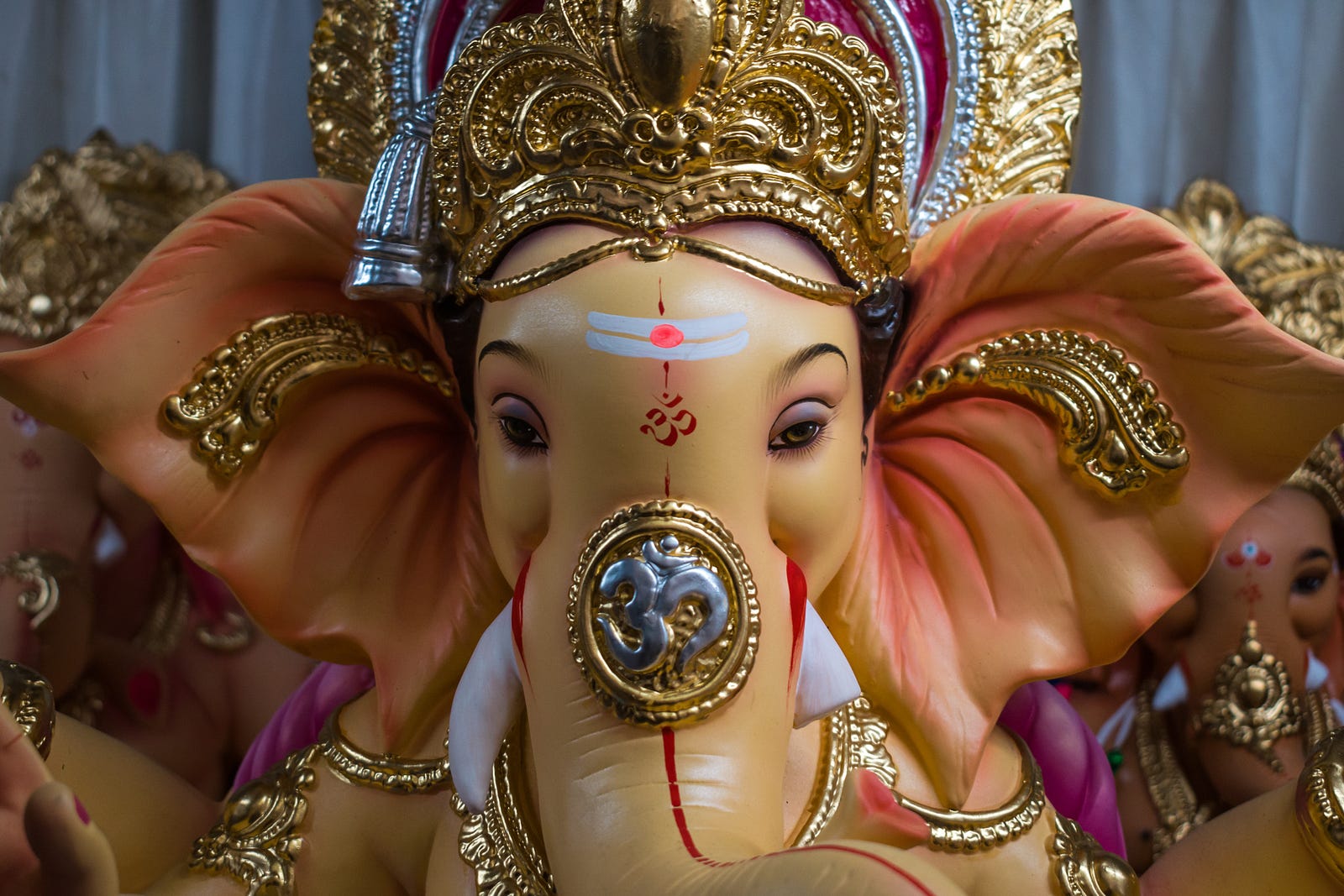
very pretty statue of lord ganesha
Photo by Sonika Agarwal

Explaining my religion is complicated. I was raised Wiccan or Neo-Pagan, and my family on that side is mostly Catholic. My family on the other side is mostly Protestant. I am a practicing Hindu. 

I came to be a practicing Hindu, not through simply deciding to be a Hindu, but by pursuing religion and spirituality in an abstract way, which led me, ultimately, to religious beliefs and practices that were consistent with Hinduism. I explored the world, I explored different spiritual practices, and I ended up repeating the ones that worked for me the best. Gradually, I found myself doing things like chanting traditional Hindu mantras and praying to Hindu Gods, and I began to identify as a Hindu. 

My current religious practices are a mix of how I was raised, Neo-Pagan practices, and the religion that I found on my own spiritual path as an adult, Hinduism. My Hindu practices are mostly consistent with a branch of Hinduism called Shaivism, and with a branch of Buddhism called Vajrayana Buddhism. I learned from research, after adopting many of my current practices, that my Buddhist practices have pretty obvious roots in ancient Vedic Hinduism. I’m also into Chaos Magic, but I don’t think that’s inconsistent with any of my other beliefs.  

I went on a quest to learn about the religion that I had found I was already practicing, because I wanted to engage with it more fully with on a spiritual level. On my quest, I did a bunch of research about Hinduism. I found it to be strangely associated with Nazism, largely through the influence of the philosopher Friedrich Nietzsche on a woman named Savitri Devi and Devi’s influence on Hitler and the the Third Reich. 

I no longer buy the narrative that Devi was Hitler’s Nazi priestess or the idea that that Nazism has any real roots in Hinduism. Nazism is built, in part, on horrific misinterpretations of Hindu philosophy, which honors the cycle of death and rebirth and the unique roles that living beings play during their time on the planet Earth. 

My theory is that Devi was basically Hitler’s hostage, and that her real beliefs about the world were twisted by Hitler to fit his Nazi ideology. Either that, or she became confused, as Nietzsche had been when learning about Eastern philosophy through the influence of the philosopher Arthur Schopenhauer. Schopenhauer studied Eastern philosophy, and one of his main takeaways was an Eastern interpretation of the concept of compassion. 

Compassion in Eastern traditions is a kind of compassion that more deeply understands the experience and mindset of the individual who is not oneself. Compassion in Western traditions is often associated with submissiveness and cowardice, and not honored or explained in quite the same way as it is in Eastern traditions, except maybe, through Western religions, sometimes. There are similar concepts of compassion and peace in Christianity, for example. 

Devi and Hitler, like many Hindus, were vegetarians. It would seem that they had some kind of compassion for the natural world. And yet, Hitler’s regime led to the torture and slaughter of millions of people.

This isn’t the kind of thing that my Hindu or Buddhist practices advocate for, and the confusion of the two, in my opinion, should be included in the list of Nazi crimes against humanity, as this kind of cultural erasure is, in itself, an act of genocide. The swastika, for example, which is important in Hinduism and also exists in many other cultures, has now come to globally symbolize Nazi philosophy. 

Hinduism, and the many Eastern faiths that have been spawned by its ancient Vedic roots overwhelmingly focus on practices of peace, nonviolence and self-discipline. Philosophically, they tend to focus on the importance of cultivating of love, compassion and understanding for all living beings on Earth. 

The self-discipline and personal growth aspects of the Hindu faith, I think, are where the Nazis began twisting Hindu philosophy to fit their nefarious ends. One theme in Hinduism is repetition, like the repetition of mantras and certain tasks. This kind of repetition leads to the kind of mastery of different skills or disciplines that would be valued in Nazi philosophy. This kind of repetition in the natural world leads to literal evolution. Practice might not make “perfect,” as they say, but you can’t deny that you usually get better at something if you do it a bunch of times. 

Evolution, I think is what the Nazis were attempting to force with their torture and killing of millions of people. I don’t think that their propaganda and ideology, which attempted to convince the world that huge populations of people were worthy of indiscriminate punishment based on their immutable physical characteristics or social classes alone, expressed their true goals. Their true goal was to place stress on humanity and to traumatize it in such an irrevocable way that it would be forced to evolve in a new direction. The cruelty itself was the point. 

If the Nazi goal was to create a version of humanity that was objectively better, I don’t think the path they chose to get there was effective. Humans, because of our powers of self-reflection and our ability to plan for the future, are different from the vast majority of living beings on this planet. Because of our differences we wield immense power. Massively traumatizing us, as through war, will not necessarily cause the kind of evolution we want. Sometimes trauma causes growth in people, but much more often it makes them terribly ill. 

War has made us sick as a species, and further traumatizing us through further wars will not force us to evolve fast enough to save ourselves from ourselves. We need to find a different approach to reigning in the chaos of humanity. War is everywhere. It’s even in the streets of my hometown, and it could always come to the streets of yours. 

We will not solve the world’s problems by torturing the populace. Every act of torture is an experiment, and every failed experiment runs the risk of becoming an act of terror or a horrific crime against humanity. Torturing people might make them stronger or more compassionate sometimes, but it’s a high stakes gamble. That’s not a bet that I’m willing to take for the sake of creating a better or stronger humanity. It doesn’t seem like it will work! 

People often get confused and think I’m a Nazi because I’m talking about Hinduism, or about Nietzsche or Schopenhauer or because they see the Hindu symbols tattooed on my body. I’m not really offended by this misunderstanding because I understand where it comes from, but I think it’s a shame that Westerners are being deprived of the wisdom that my religion and other religions like it have to offer by these unfair negative cultural associations between Hinduism and Nazism. 

Colonization in the East by the West began in ancient times and the warping of these traditions by the West has continued since then. It’s almost like the power of real, authentic love and compassion that is behind these traditions is too much power for the colonial West to allow anyone to hold besides itself. 

For the record: Hindus are not Nazis. 

We are mostly peaceful, and we often even take our peacefulness to extremes. I’m an extremist in some ways, and I know that means I won’t always get along with everyone. But I’d rather be an extremist for love, compassion, and peace than an extremist for hatred, bigotry, and war, and I just want to make sure that everyone knows which one I am.