Just How Smart Are Octopuses?

Are claims of “octopus civilization” credible? 
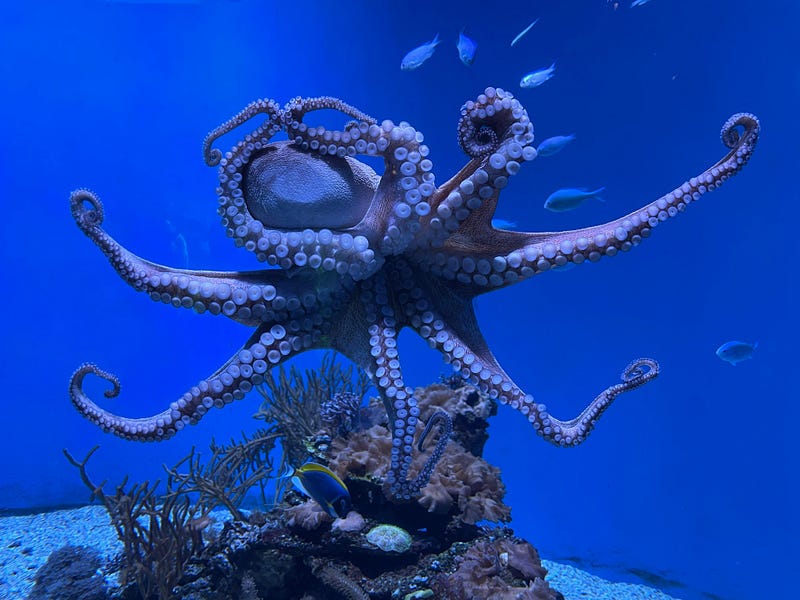
Octopuses are undeniably fascinating creatures. Possessing superpowers that human beings can only dream of, they have the ability to regrow limbs, “taste” with their arms, and change their appearance at will. These fascinating skills are just a small part of why octopuses are of interest to science and to anyone who is curious about the natural world. 

I’ve always thought octopuses were pretty neat, but I became way more became more interested in our eight-legged buddies after I read The Soul of an Octopus by Sy Montgomery and after I saw the Netflix documentary My Octopus Teacher. These pieces of media were made by people who got up close and personal with octopuses and really got to know what they were like, kind of like Jane Goodall studying chimps, but underwater. 

Speaking of chimps, I’ve also been reading about Nim Chimpsky, a chimp who was taught sign language and other human-like behaviors by a team of researchers. Nim became so human-like that he would even smoke and ask for marijuana. While the ethics of smoking weed with a chimp are dubious, the reality of Nim’s life and the lives of other animals like him will forever fascinate science. 

After reading the work of biologists and animal behaviorists, I’ve become really interested in animal intelligence. Well-known for being some of the smartest and most unique creatures on the planet, octopuses keep popping up everywhere I look.

Octopuses have been spotted using tools, including carrying coconut shells for shelter. They are also well known for their ability to solve puzzles, often escaping their enclosures. They’ve figured out how to do things like open jars or the lids of fish tanks for example, in order to get food or in a bid for freedom. It’s no wonder that we find octopuses endlessly entertaining.

Octopus Obsession

Octopus-themed media seems more common these days. Like most animals when studied up close, it’s difficult to avoid anthropomorphizing octopuses. Also like most animals, octopuses have personalities. It seems like they have individual tastes and preferences, relationships, and the ability to problem-solve: in other words, everything that makes up a mind. But how similar to a human mind is a cephalopod’s mind, really? How much of my own ideas about what a mind is am I projecting onto the octopus? 

There’s uncomfortable questions that I always ask myself when I think about animal intelligence. What would we do if we discovered that they were as smart as people? Would that mean that they deserved rights? To be treated as a foreign nation rather than as a research project, a science experiment or a meal? 

Part of why octopuses are so spellbinding is because of how alien they are in both appearance and demeanor. What if we encountered a species of aliens that were as different from us in appearance as octopuses, and as intelligent as people? Would we be able to accept them as intelligent? Or would we treat them the way we treat animals on earth– as living beings that are “below” humans in a moral way, and undeserving of the same rights?

Octlantis and Octopolis: Octopus Cities? 

I was startled when I first read about alleged “octopus civilization” online. I saw some clickbait-y stuff about it popping up in my Facebook feed and decided to look for more information to find out how credible the claim was. 

I was stunned to immediately find a Wikipedia page that describes clusters of octopus dens as “non-human settlements.” Wikipedia was quick to clarify that despite being called “Octlantis” and “Octopolis,” that referring to these sites as “cities” is something that researchers might find to be “misleading.” Still, “non-human-settlements”? With my curiosity about octopuses, I was hooked. I knew I had to investigate further.

Researchers Martin Hing and Peter Godfrey-Smith published a piece in The Conversation in which they discussed to what degree the octopus “cities” they studied were “intentional” on the part of the octopuses. Hing and Godfrey-Smith were part of scholarly research into the matter, in which they stated that “city” is is not an accurate description of the sites they observed, contrary to the bold claims made by The Guardian, Science, and Discover, for example. 

“In a series of news reports written about our paper, a tendency has grown to exaggerate what we reported,”

say Hing and Godfrey-Smith in a subsequent paper. 

The media is often quick to sensationalize stories like this, while real scientists maintain their skepticism. I do think it’s reasonable for these researchers to try and clear up any confusion and to urge people to temper their expectations when it comes to such claims. Still, I’m not totally convinced by the debunking done by Hing and Godfrey-Smith. To me, it doesn’t seem that far-fetched that a non-human species could do something like build a city. Octopuses don’t seem like an unlikely candidate. 

I kept reading and I found that other researchers, like Jennifer Mather, are also making a case for octopus consciousness. 

“…the capacity not just to acquire information and store it across time but to guide information extraction when the octopus is producing motor play goes beyond a cognitive foundation, perhaps to consciousness,”

writes Mather. 

Others, like Piero Amodio, think it’s better to remain “agnostic” about the topic. Still, Amodio speculates:

“Future research may eventually support Mather’s view that octopuses are capable of future planning and causal reasoning.”

 It seems to me that the debate about octopus intelligence is far from over.

Octopus Abuse 

Thinking about how intelligent octopuses are makes it really uncomfortable to accept how they are treated by humans.

I used to find it upsetting that people in some countries eat octopuses while they are still alive– it seemed cruel to me compared to killing any animal prior to eating it. Still, in the wild, an octopus might get eaten. Eating another living creature or being eaten isn’t a foreign concept to an octopus. What humans do to octopuses for medical research is far more cruel (in my opinion) than what happens in nature.

For example, researchers studying limb regeneration routinely cut the tentacles off of octopuses in order to observe them growing back. While Smithsonian Magazine insists that something like this is “no sweat for the cephalopod,” to me, this seems like animal cruelty, something that should probably be illegal. 

Research suggests that octopuses feel pain. Spending your whole life tied up and having your arms or legs cut off over and over again sounds way worse than being eaten, even if they grow back! At least if you are eaten, it’s over relatively quickly. Imagine if aliens kidnapped you and pulled out your fingernails and toenails or teeth to study their regrowth. Imagine if they did that to your family members. Would you be upset? I would. 

Now imagine if someone dumped a bunch of trash in your neighborhood. Can you see where I’m going with this? Should we be treating such intelligent creatures, who are capable of so many incredible things, with such callus cruelty? Is it something we will come to regret as a species in the future?

What if we’re wrong? 

Sometimes I think about the deep ocean, and how little we actually know about what’s really down there. Beyond a certain depth, human beings and most of our scientific instruments would be crushed by the pressure of the ocean water, limiting our investigations of its mysterious depths.

What if researchers are wrong about octopus “cities” being the stuff of overzealous clickbait? What if we aren’t taking them seriously enough? I think that when researches reduce animal behavior to things like “looking or food” or “attempting to attract a mate,” they often forget that that these things are also what comprise much of human behavior. Maybe we just don’t understand their culture. 

Also, octopuses aren’t the only water-dwelling creatures who show signs of intelligence. Dolphins have been shown to recognize themselves in mirrors and pufferfish create beautiful sand mandalas to dazzle their mates, for instance. How many creatures are living at depths that humans can’t travel to? What are they like? How smart are they?

If I were an intelligent water-dwelling creature and knew that I could avoid humans by staying in the deep ocean, I probably would. After all, humans are known for treating non-human creatures horribly. We’ve done it throughout most of human history. Like octopus researcher Peter Godfrey-Smith, I think that if there’s a species in the deep ocean that’s as smart as us, interacting with them would almost be like interacting with an alien civilization. Just like with space, if anyone is out there (or under there), they might just be smart enough to steer clear of human beings. 

I’ll never stop imagining the massive krakens that could be living in the deep ocean, or worrying about whether or not they are smart enough to understand what humans are doing to their habitat and relatives. While claims of non-human underwater civilizations are unsubstantiated thus far, I’m keeping an open mind.
A Surprising Number of Animals Are Returning from Extinction 

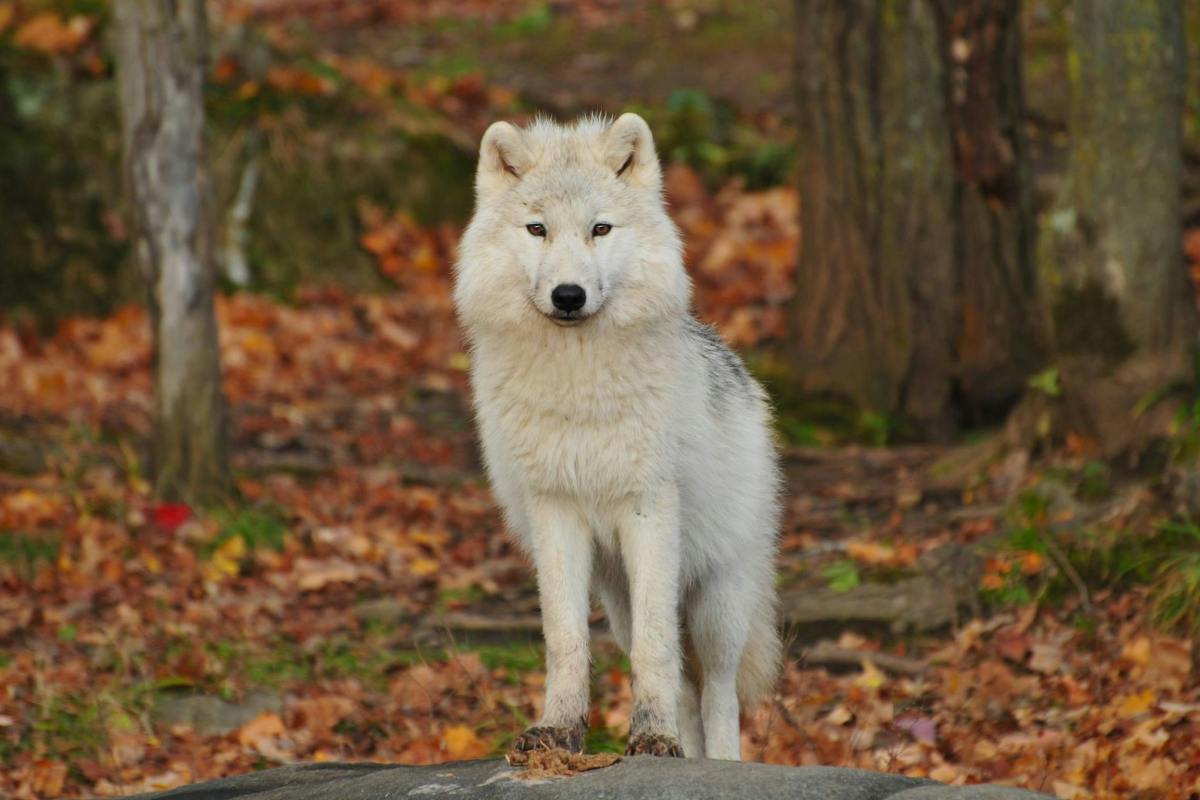
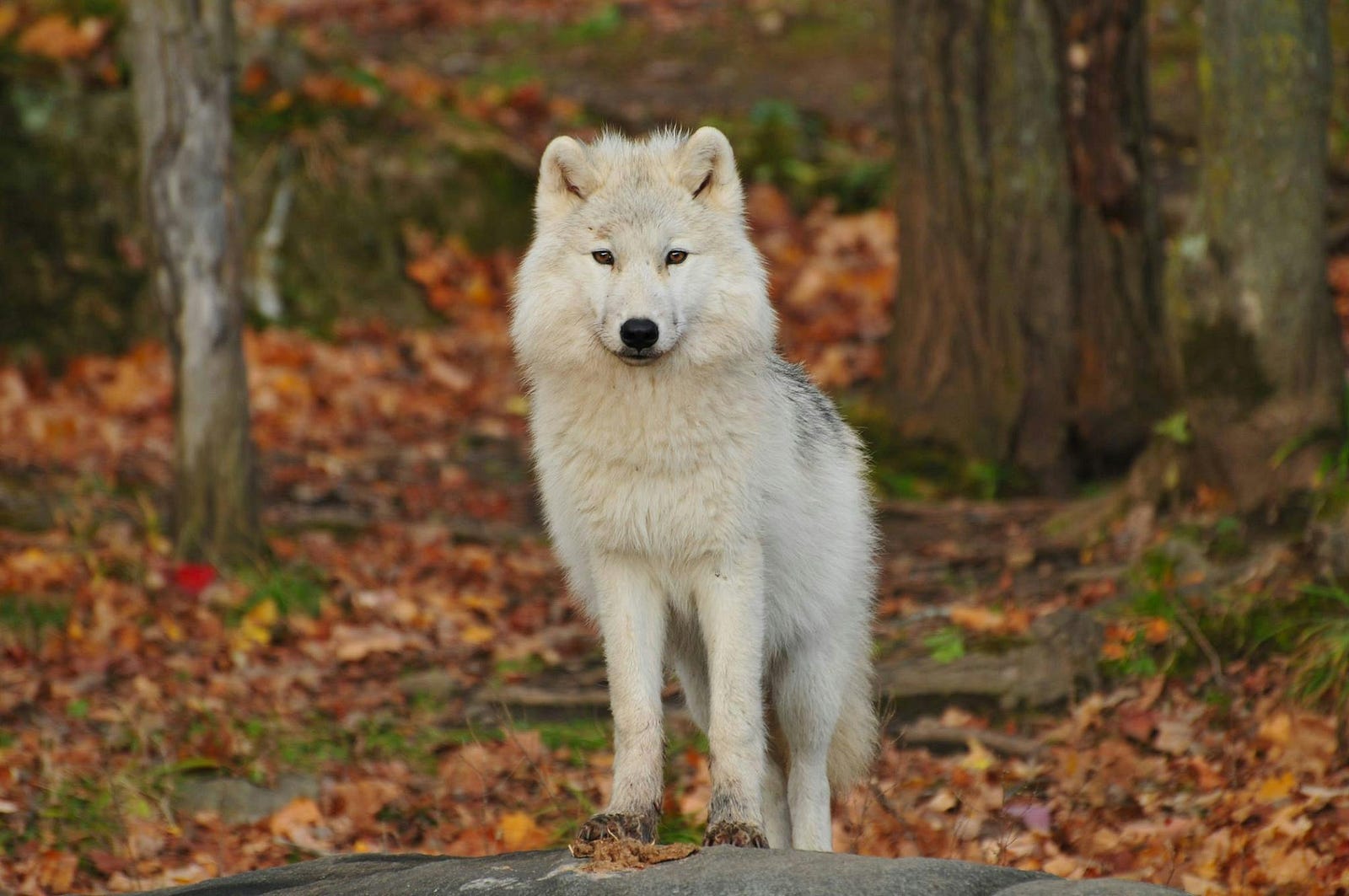
A white wolf standing in colorful fall leaves.

Earth’s biodiversity howls from beyond the grave

a white wolf staring into the camera against a backdrop of fall leaves
Photo by Steve on Pexels

As a resident of the planet Earth, I’ve been concerned about large numbers of animals and plants going extinct.

We are currently living through a mass extinction event. Scientists at the University of Zurich found that the current rates of animals and plants going extinct are between 100 and 1000 times greater than pre-human levels. They think that this discrepancy is largely caused by the actions of human beings.

This event is referred to by scientists as the Holocene extinction, Anthropocene extinction or Sixth mass extinction.

It’s been said before, but of course bears repeating: it seems like we should probably pay more attention to the effect that we are having on the environment as a species.

All this news of ecological destruction can be stressful. It’s a big, daunting problem, and it can be difficult to want to pay attention to it consistently because it’s so depressing. Fortunately, while I was looking into it, I found that there is also some better news on the horizon when it comes to Earth’s rapid loss of biodiversity.

While we might be losing some species, many other species are also making comebacks! Here’s a few examples of species that are rising from the grave.

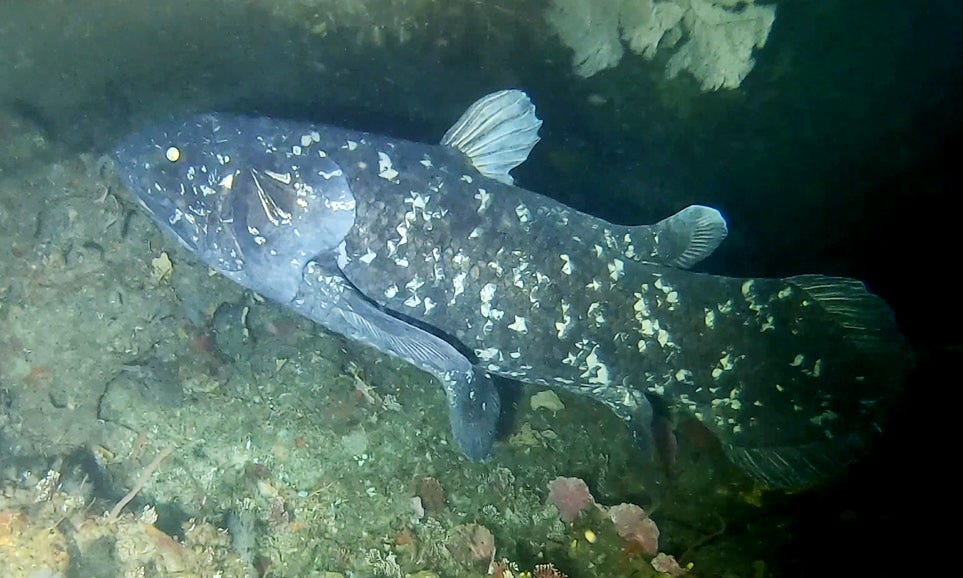
Coelacanth (Sarcopterygii)

Photo by Bruce Henderson on Wikimedia Commons

As a kid, I learned that these scaly fish were thought to be extinct for millions of years before a living specimen was captured in 1938.

Coelacanths are the animal that got me interested in cryptozoology. Cryptozoology is the study of animals that may or may not by mythical, like Bigfoot and the Loch Ness Monster.

Cryptozoologists are also interested in verified, real animals that once existed that may or may not be extinct today. Like conservationists, they often discuss species of animals that are currently threatened or endangered due to their small population.

Coelacanths changed the way that I view natural history as a whole. Learning about the return of this species made me skeptical of extinction claims made about any other species. They also made me less skeptical of scientific claims that cryptids are not always the stuff of legend and folklore. Some may be living animals currently unknown or little known to science!

Subscribe to continue reading

Become a paid subscriber to get access to the rest of this post and other exclusive content.

Why Dogs Are Good for You

Having a pet made me care about myself more

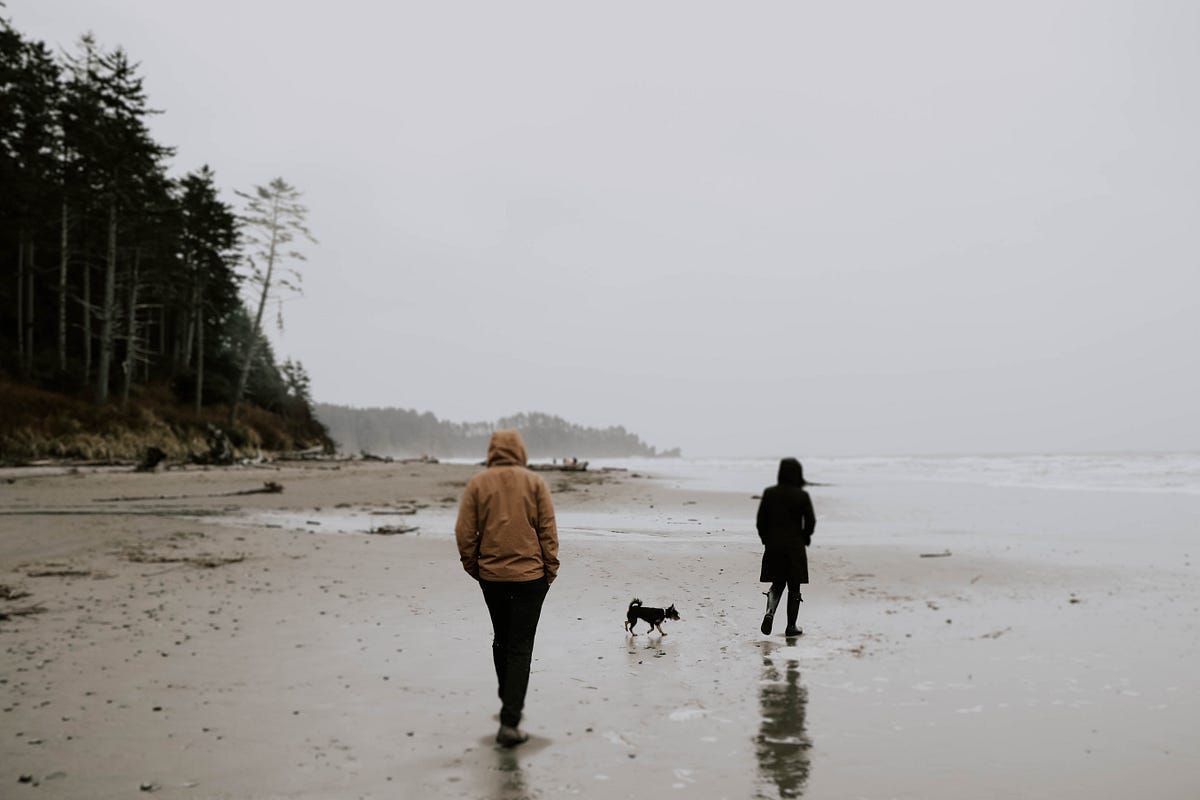
two people and a dog walking on a beach on grey sky day
Photo by Emma Dau

I’ve had my dog for nearly six years. I’ve had her since she was a puppy, taking her home after I helped care for her unbearably adorable litter of nine. She’s a healthy and energetic mutt, who loves people, fetch, and a good chew on a bone. She’s lived with me in three different states and traveled with me on many adventures.

Dogs are “man’s best friend” for a reason. We’ve co-evolved with canines for about 14,000 years. Our two species have a long history of helping and influencing each other. My dog and have a very symbiotic relationship. She does quite a lot for me in exchange for head scratches and kibbles.

My life is better because I have a dog. Not just because she’s cute, fun to be around, and nice to cuddle with; but because taking responsibility for another sentient being has increased my sense of responsibility for myself.

You have to take care of your dog (and you)

Dogs need food, water, exercise, bathroom breaks, entertainment, and affection. Humans need all of these things as well, but for some reason, it’s sometimes easier for me to remember that my dog needs these things than it is to remember that I do.

I’m not just concerned with keeping a roof over my own head, but also my dog’s head. I chose to live near a beautiful park, so I could walk my dog there. My dog needs to have a routine, so I must also have a routine. Every time I feed my dog, I’m reminded that I also need to eat. Every time I pet her, I’m reminded that I also deserve love and affection.

I imagine that this is a similar sense of responsibility that I would feel if I had children, but perhaps without so much pressure to be a good parent. It’s pretty simple to be a good parent to a dog — feed her, walk her, take her to the vet once in a while, and rest assured that she’s probably not going to resent you when she grows up.

Dogs make you do stuff

I have to get out of bed in the morning whether I like it or not because my dog needs to go for a walk. When I’m feeling like wasting the day in bed … too bad. My dog definitely won’t stand for any of that nonsense. It’s get up, or face the horrors of the face-licking alarm clock.

As most people who have struggled with their mental health could tell you, getting out of bed can sometimes be a challenging thing to do if you’re not feeling your best. Having a dog makes it so I have no excuse, and walking her is a dose of exercise and sunlight that is built into my day.

I also sometimes meet people because of my dog, like when I ask someone at the dog park if their dog is friendly, or when my dog bumps noses with someone else’s at the pet store.

Dogs are a social lubricant — kind of like alcohol, but less damaging to the liver. It makes sense that dogs have been shown to be a conduit for getting to know people, friendship formation, and social support.

My dog also makes me want to get out into nature more. Anyone who has seen a dog sniff around in the forest knows how joyous it is. Because of my dog, I end up hiking more, which has both positive physical and mental benefits.

Dogs are good for your brain

Dog owners know from personal experience that our four-legged friends make us feel happier, but this idea is supported by science as well. Aside from encouraging you to get exercise, which is good for both physical and mental health, dogs have other positive effects on our minds.

Recently, researchers at Washington State University found that dog exposure lowered levels of the stress hormone cortisol in students. Playing with a dog can also help raise levels of serotonin and dopamine, which make you feel calm and happy.

In a 2009 study, companion dogs were shown to help seniors in a long-term care facility with anxiety and depression. Dogs have also been shown to help kids with ADD manage their symptoms.

I think dogs are good for mental health because they love unconditionally. Generally, if you’re nice to a dog, he will be nice to you. Dogs don’t care if you’re a hyperactive little kid or a grumpy old person. They don’t care how you dress, if you’re a good conversationalist, or if you’re a little weird at parties. They are very forgiving of mistakes, and they don’t hold grudges.

It’s clear: A dog is a powerful prescription for peace, and the worst side effect is that she might poop on your rug.

Having a pet isn’t for everyone, but if you’re feeling lost in life, or having a hard time finding the motivation to care for yourself, it might be something to consider.

I’m a better person because of my dog. This is because she creates accountability for me.

It’s not just my own quality of life that I have to be concerned with, it’s my dog’s as well. Taking on any kind of responsibility is usually a good strategy for feeling more confident and making your life feel more meaningful. My dog makes my life feel doubly meaningful because she’s a member of my family and a pure joy to be around.

There’s something about putting conscious love and attention into something living that is just plain good for you.

A goldfish might help, too. Hell, even a plant. But there’s nothing in this world like a dog.


Originally published on medium.com on January 21st, 2020. 

Why I Started Eating Meat Again After 17 Years of Vegetarianism


The health and ethics of eating are complex

Photo: Idella Maeland/Unsplash

I became a vegetarian when I was eight years old, about three months before my ninth birthday.

I had been reading an article about vegetarianism in American Girl magazine, a periodical often subscribed to by eight-year-old girls. When I read the article, something clicked in my brain. I wasn’t sure why, but vegetarianism made sense to me. I went to my mom later that day and asked her if I could stop eating meat.

She was pretty receptive to the idea and recalled having had the desire to stop eating meat as a child, too, but said she’d been scoffed at by her own family, who insisted she’d get sick if she stopped eating meat. Eager to support my bodily autonomy in a way that her own parents didn’t, my mom told me that the decision to eat meat was entirely up to me.

We went to the grocery store and bought beans and rice, tofu dogs, veggie burgers, edamame, and lentils. My mom’s chief concern with my decision was me not getting enough protein, which I soon learned was a common concern among those unfamiliar with a vegetarian diet.

Later that week, she gave me Peter Singer’s book, Animal Liberation. Though perhaps a bit dense (and intense) for a person of that age, the book was an eye-opener for me. I loved animals and the fact that they suffered so needlessly for our benefit seemed like a horrible atrocity to me.

I decided to become an activist, joining PETA and placing the “meat is murder” stickers they sent me everywhere. As an adolescent, I became a fan of The Smiths’ 1985 album by the same name. Seeing a lack of vegetarian options in my middle school cafeteria, I wrote a letter to the superintendent of the school district asking for changes to the menu.

PETA sent me DVDs of footage from inside of factory farms, and the anguished screams of suffering cows, chickens, and pigs became burned into my consciousness. I didn’t understand how anyone could possibly eat meat. After a while, it didn’t even seem like food to me anymore– more like a gory biohazard.

It’s much easier to eat a low-fat diet as a vegetarian, and I figured that this made vegetarianism healthier.

Over time, I stopped being a fan of PETA, even as I still believed strongly in my vegetarianism years later. I got into many arguments with passionate meat-eaters and I began to see that the ethics of groups like PETA were far more extreme than my own actual beliefs. However, that didn’t stop me from continuing with my diet.

Whenever anyone asked me why I wasn’t eating meat, I was quick to engage them in a debate. I did a lot of research and memorized some main points defending my lifestyle. I brought them up so often that it became a habit:

Cruelty

Why should we eat meat when there are other options available? Why cause needless suffering to sentient beings?

The way we mass-produce meat in the modern world is unquestionably cruel. There’s lots of evidence that animals experience pain and suffering on factory farms. For me, this seemed the most obvious reason to be a vegetarian. I loved animals, and I didn’t like the idea of causing them pain.

Health

Many people think a vegetarian diet is healthier, and I certainly did when I was a vegetarian. Certainly, it’s possible to be very healthy on a vegetarian or vegan diet. It’s much easier to get protein than people realize, and it’s possible to supplement things like vitamin B12.

When I was a vegetarian, I thought things like high rates of cancer and heart disease were heavily linked to excess meat and dairy consumption. After all, fat is the culprit, right?

It’s much easier to eat a low-fat diet as a vegetarian, and I figured that this made vegetarianism healthier, along with an absence of consuming things like hormones and antibiotics that are fed to livestock on factory farms.

Hunger

Over 10 pounds of plant protein are used to produce one pound of beef protein. Wouldn’t it be better to feed those plants directly to humans, instead of to livestock? A 2014 Nature article found that 70% more food could be added to the world food supply if we did this.

This seemed like a no-brainer to me. Why were we feeding all this grain to cows, when we could be feeding it to hungry people? This is another perspective, like the animal cruelty perspective, which really tugged at my heartstrings.

Climate

There’s a pretty good argument for the environmental unsustainability of meat production. Factory farms definitely contribute to greenhouse gas emissions, and the meat industry is a huge contributor to deforestation.

I became aware of climate change around the same time I became a vegetarian, and a vegetarian diet seemed to fit right into a climate change-fighting lifestyle.

The first time I ate meat again

Over time, I began to realize that the ethics and sustainability of food were much more complicated than I originally thought.

I went from a fanatical vegetarian to a more calm vegetarian, to a vegetarian often annoyed by other fanatical vegetarians or vegans who were militant reminders of my own extreme speech and behavior as a kid.

I spent time talking with people who saw the meat issue differently from the way I saw it. Once I let myself hold my beliefs more loosely, I began to realize that they often made good points when we discussed the issue. Eventually, I took the plunge and started eating meat again.

After toying with the idea of reintroducing meat into my diet for some time, I had a moment of boldness while at brunch with a friend: I decided to order some Canadian bacon on a whim.

Anticipating a potential bad response from a digestive system that wasn’t used to handling meat, I ate slowly and deliberately. The bacon wasn’t the best thing in the world, I decided, but it was pretty good.

I felt fine after the meal and didn’t end up getting sick after all. On my next trip to the store for groceries, I bought a chicken breast.

Cruelty

What really started to change my opinion on the cruelty argument was the experience of speaking to people who hunt wild game.

Interested in nature and primitive skills as a hobby, I ended up reading articles and listening to podcasts about hunters and survivalists. While working on organic farms, I ended up hanging out in the woods with hunters and watching them clean and prepare the animals they ate.

Those who hunt wild game sometimes argue that killing a wild animal is actually an act of compassion because an animal in the wild is likely to have prolonged suffering before death from sickness, old age, or being eaten by a predator. A quick death by bullet is much less painful.

Overall, I stopped seeing the ethics of eating meat as black and white.

Death is also part of the natural cycle of life. Nothing wants to die but everything does, regardless. My own feelings about morality and spirituality changed over time, and my feelings about eating meat began to change, too.

Then I learned that the Dalai Lama eats meat and that Gandhi, who I thought of as a famous vegetarian, also ate meat sometimes. I learned that eating a plant-based diet didn’t totally prevent cruelty to animals, either. Many animals are also harmed in the process of plant-based food production.

Overall, I stopped seeing the ethics of eating meat as black and white.

I still think that factory farms are unnecessarily cruel, but I’ve learned that there are more compassionate ways to raise animals for food, and I no longer see the act of consuming an animal as inherently cruel.

Health

While you can definitely get sufficient protein from plant-based sources, meat is an extremely convenient source of protein and amino acids, as well as other essential nutrients like B vitamins, zinc, and iron.

As I learned more about nutrition over the years, I began to have different beliefs about what makes for a healthy human diet. I stopped believing that an excess of fat in the U.S. diet was the cause of many widespread chronic health problems, and became convinced that consuming an excess of carbohydrates and sugars was a more likely culprit.

I had no problem getting protein as a vegetarian, but when I first started trying to eat a diet higher in protein and fat and lower in carbohydrates, I began to realize that meat was a much more convenient source of protein because it’s lower in calories and carbohydrates than many plant-based protein sources.

I also found that I felt better eating this way.

I began to think that the qualityof food mattered more than thetype of food.

A diet that’s higher in fat and protein and lower in carbohydrates gives me more consistent energy levels and fewer feelings of hunger and fatigue. Eating meat again also improved my iron levels, which was surprising to me. Why? I ate plenty of iron-rich leafy greens as a vegetarian. But I later learned that the body more easily absorbs the heme iron found in meat, as opposed to the non-heme iron found in vegetables.

I also learned that it’s possible to buy meat that isn’t raised on factory farms and pumped full of hormones and antibiotics. I tried higher-quality meat, and I liked it more than the cheaper, factory-farmed meat.

I began to think that the quality of food mattered more than the type of food.

Hunger

I now see world hunger as more of a distribution issue than a supply issue. Economic inequality is a much bigger factor in food shortages than a lack of food production. Thus, it’s not that the world isn’t producing enough food to feed everyone — it’s that the food isn’t getting to the hungry people.

In the United States, for example, about half of all produce is thrown away before anyone gets the chance to eat it. And thus, I no longer believe that hunger is a practical issue; it’s an issue of our values as a culture and as human beings. It’s about what’s important to us, and where our priorities are.

Climate

About 13% to 18% percent of global human-caused greenhouse gas emissions come from animal agriculture, while about 64% comes from fossil fuels. In the United States, only about 3% comes from animal agriculture, while 80% comes from fossil fuels.

While the meat industry is a factor in climate change, it’s not the only factor, and it’s definitely not the biggest factor. In fact, even if we stopped all meat production today, the climate would still be in trouble. There are much bigger culprits to worry about when it comes to greenhouse gas emissions.

I do think it would be better for the climate if we ate less meat, but this argument tends to oversimplify the science of the issue. Still, I’m in favor of eating meat in moderation and finding ways to produce meat more sustainably.

How I eat now

I still eat a heavily plant-based diet, but I eat a lot less corn, wheat, soy, and sugar than I used to. Meat is now a regular part of my diet, but I eat it a lot less than the average American.

My ethics continue to evolve and change as I evolve and change as a person.

I prefer chicken, fish, and pork, while I have less of a taste for ruminant meats like beef, venison, and mutton. Some would argue that fish is healthier, or that eating chicken is more sustainable than consuming something like beef (because ruminant animals produce more methane), but I’m basing my choices more on personal preference than health or sustainability.

And after all of this, I have to admit that I could still be wrong about everything. I’m not a doctor or a scientist, and the conclusions I’ve come to about health and sustainability could be totally flawed. My moral compass could also be off. Maybe I’ve evolved to become a less ethical person, rather than a more open-minded one. My ethics continue to evolve and change as I evolve and change as a person.

But this whole journey has been an important learning experience for me. It’s a daily reminder that it’s possible for my entire worldview on something to shift, even if I feel very passionately about it. It’s an example of how a very polarized and emotionally charged issue is also a complicated and nuanced issue, and how there are valid arguments on both sides that are worth considering.

As I’ve aged, I’ve learned to become more tolerant of ideas and belief systems that are different from my own because I could just as easily be the person on the other side of the debate. In other words, I think and feel the way I do because of the life I’ve lived and the experiences I’ve had — but if I had lived a different life and had different experiences, I might have developed a very different worldview.

Now, every time I fry a slice of bacon or chew on a sushi roll, I remember: No matter how sure you are, you could always change your mind.


Originally published on medium.com on November 18th, 2019.