Why You Should Embarrass Yourself

As much as possible

I blush easily, and all my friends know this. Once I get going, it’s easy to goad me into flushing a deeper and deeper shade of red. The more I blush, the more embarrassed I get, and the more embarrassed I get, the more I blush. It can turn into quite a vicious circle sometimes.

These days, I can usually end my blush circle by laughing. Once I remember that I live in an absurd world and that I don’t have to take anything (including myself) that seriously, it’s usually pretty easy to laugh anything off. But I wasn’t always this way.

When I was younger, being embarrassed used to make me very angry. I still get angry when I make mistakes, but usually at myself, and usually briefly. We all experience this– messing up is frustrating. It can make you doubt yourself, and lose self-confidence. Sometimes there are other, more tangible consequences.

It’s pretty rare these days that I feel the rage I’m describing. It’s sort of like the anger you feel when you stub your toe; nothing is really wrong, and you’re going to be fine, but you might see red for just a little while.

This kind of anger goes in a circle, kind of like my blush circle, but not anywhere near as cute. In fact– it’s not cute at all, according to everyone I’ve ever asked. This is a sort of blind, aimless rage, which isn’t directed in anything in particular, but at the same time is directed both at myself at the whole world.

Frankly, it’s unpleasant; and it’s a huge waste of time.

I don’t have to feel this kind of anger and frustration when I make a mistake, and I really don’t have to just because I did something silly. I also don’t have to feel anxious, ashamed, guilty, afraid, or like I’m worth any less as a person. And neither do you.

Don’t worry– forgetting that it’s okay to be embarrassed is just another thing that it’s okay to be embarrassed about.

Once you make a mistake, the prospect of making another mistake becomes a lot less scary

When I first started pole dancing, I had no idea what I was doing. I was in a position where I needed a job that paid well, fast, so I skipped the step of learning how to dance and just headed on down to the first strip club that called me back.

I never wore makeup much before I started dancing, but I put some on because I figured I should– badly. I borrowed a lacy outfit from a friend of mine, and it was a little big on me. I felt pretty awkward just walking in the door.

The DJ put me on stage almost immediately. Completely clueless, and terrified that I was going to fall off of the pole, I glanced around at what the other dancers were doing and walked up to the stage.

What happened?

I made a fool of myself

I couldn’t do any of the elegant spins or acrobatic flips that the other women could do. I didn’t know any choreography for the floor, and I could barely walk in the six-inch heels that I had just bought that day. On my first night, I didn’t dance like a pole dancer- I danced like a girl trying her best not to fall on her face.

What else happened?

I got over my fear

I realized I could do it. I went up there, I looked silly, and other people watched me look silly, and the world didn’t end. I laughed. Other people laughed. Some of them clapped. We laughed and clapped together. I got naked! I even made money!

I looked silly, but I had a good attitude, and it was obvious that I was putting in an effort. The positive responses that I got, as a result, were enough to propel me forward. I kept putting that effort in, and now I’m learning how to dance for real.

The more you make public mistakes, the less you care about what other people think

There was a couple of years during which I pretty much stopped writing, and when I started again, I was awful, by anybody’s standards. I’m still no Hemingway, but reading some of the stuff I was writing when I first started again, I cringe pretty hard.

In addition to cringing, I also feel proud. I’m glad I showed people my angsty poems and sprawling, rambly essays. I had to get through that phase of mega-suck in order to get my sea legs back. I’m sure in a while I’ll look back at this article and cringe.

The true joy really is in the process, and I’m over worrying about where I’ll end up or how I’ll be received. I’m just going to keep writing.

Writing, like any other skill, is a muscle that you have to work out if you want it to stay strong. When I stop doing push-ups in the morning, after a week or two I realize that I can‘t do as many. If I became really inactive, I probably wouldn’t even be able to do one pushup.

Boy, that would be embarrassing…


You might be blushing because you’re doing something that you shouldn’t be. Maybe that joke was tasteless. Maybe you farted because you’re trying to cut out dairy and shouldn’t have been eating that cheese.

In these cases, embarrassment is an alarm system for the spirit, much like pain is for the body. If you skin your knee, it hurts; kind of the body’s way of saying, “don’t do that!”

If you feel humiliated, there might be a good reason why. If you let yourself feel it, you might be able to learn and grow from the experience.

While feeling mortified is part of how we humble ourselves and keep our egos in check, it’s also part of how we build confidence.

Being confident is a prerequisite to doing almost anything well. Every time you feel silly, and decide to do the thing you’re doing anyway, you grow stronger. When you’re used to having your confidence shaken, it begins to become unshakeable.

So don’t dance like nobody is watching. Dance like everybody is.

They’re all going to laugh at you– and that’s okay.


Originally published on medium.com on August 23rd, 2019

You Don’t Have to Show Your Art to Anyone


The joys of creating just for you

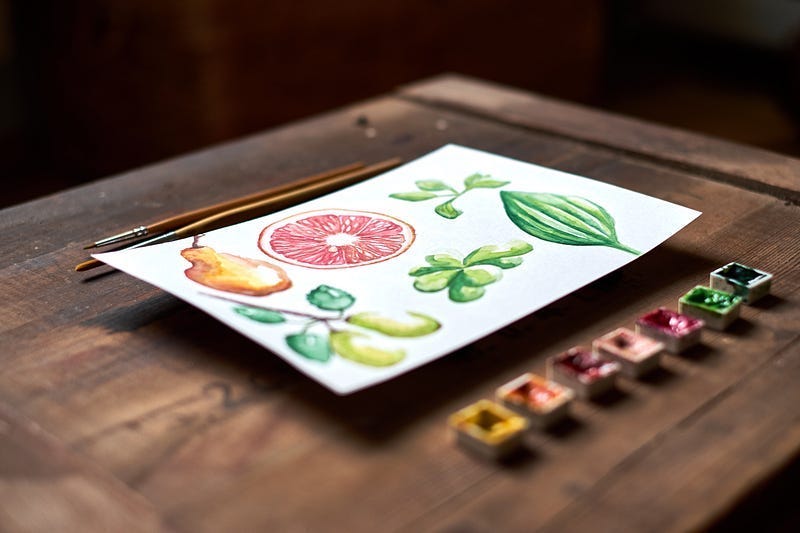
water color paints, paintbrushes, and a painting of fruit sitting on a wooden table
Photo by Atilla Taskiran

Why is it so easy sometimes, and so difficult other times?

There are lots of reasons for this, but sometimes it helps to simplify things a bit. When we make the decision to create something wholly for our own satisfaction and benefit, it can be a great cure for creative block, mostly just because it allows us to be ourselves with a little bit more comfort and ease.

Shaking off the fears of failure and judgment

When you make a piece of art just for yourself, the pressure to impress, please, or touch others is off. You don’t have to worry about who will like it, how it will be received, whether or not you can sell it, or if anyone will truly understand what you were trying to say. Taking this kind of pressure off of ourselves gives us more freedom to express ourselves honestly.

Be honest — when you put pen to paper (or whatever your equivalent is) don’t you hesitate sometimes, thinking about who will read what you’re about to write? I hate to think of the many great ideas that have been lost to the world because of an artist’s brief moment of doubt.

Artists are often perfectionists, and it’s easy to want to toss out a whole idea because it’s not up to our own standards, or to the standards by which we believe we will be judged. Throwing away the measuring stick is one of the best ways to encourage growth.

It’s a shame for anyone to have to be boxed in by the expectations of others, or discouraged by fear and the possibility of failure or embarrassment. We have to be free to create dangerously without limits. The best, most unique ideas come from thinking outside of the box, and it’s easy to be comfortable doing that when the potential consequences are less of an issue.

Art is about communication…

When we make a piece of art and show it to someone else, we are allowing that person to see the world from our point of view for a brief moment. One of the reasons why art is so necessary is that it helps us to feel less alone in a world that is sometimes scary and confusing.

Art is a means of communication that is often superior in many ways to more direct ones, despite often being far more ambiguous. When we make art, we can’t guarantee that others will understand what we are trying to say or feel the way we felt. Still, we’ve all experienced it– when you do feel that connection to another person’s art, it’s pretty hard to ignore.

…not just with others, but also with yourself

While art can be a great tool to express to others what you’re thinking and feeling, it’s often just as important, if not more so, to express your thoughts and feelings to yourself. Our minds are complicated, and sometimes it’s hard to decipher what we truly think and feel.

Art can be a powerful tool for introspection and self-reflection because it allows us to see the things that we are hiding from ourselves. Like our dreams, art tends to reveal recurring themes from our subconscious mind, which can otherwise be difficult to access with our conscious efforts.

Sometimes we don’t truly understand our own thoughts, feelings, hopes, fears, or motivations until we turn our focus inward to try and understand ourselves better. While others can enjoy and connect to your art, it’s important that we also take this inward step. If you aren’t looking inward first, how can you be confident in what you’re expressing outwardly?

Understanding our own subconscious drives is a powerful tool for taking ownership of our conscious actions. This is important for happiness because life becomes more meaningful the more our actions line up with our true beliefs. We can’t change our own thoughts or behaviors until we understand why we are thinking and behaving the way that we do.

Making art doesn’t just make you a better artist, it makes you a better person.

Learning to love the process

When I create art for myself, it reminds me that the true joy in art is in the creation of it, not in the final results. This is true about most things in life– you’ll be happier if you focus on the journey instead of the destination.

When you create just for the sake of creating, you remember that creating itself is the point. Creation is not just a means to an end but, also an end in itself. This is a very easy thing to forget.

Loving the process also improves our process. Often we can get hung up on a false dichotomy: quality vs quantity. The truth is that we can’t help but get better at the things we do frequently, and that quantity will eventually lead to quality, as long as we persevere. For every hundred scribbles we make on our own time, maybe we’ll find one that we want to share with the rest of the world– if we’re lucky. This might seem daunting, but really, it’s a good thing.

When we give our full attention and a healthy mindset to our practice, it becomes deliberate, helping us learn, improve, and dependably moving us closer to our goals. This kind of practice might not make us perfect, but it will make us just a little bit better than we were yesterday. The process is where we learn where our strengths and weaknesses are, what we like and dislike doing, and what feels meaningful to us.

No act of creation is ever a waste of time.

Brain benefits

In addition to getting your creative juices flowing, making art (even if it’s just for you) has a lot of other practical benefits.

Making art is just good for you.

In fact, it encourages the release of dopamine, a chemical that makes us feel good. It also lowers levels of cortisol, a hormone that makes us feel stressed. It’s also been shown in many studies that making art enhances cognitive function and improves mental health.

Creating art forges new neural pathways in the brain, allowing us to think more creatively at a tangible, physical level. This helps us to respond to the world in a way that is more intelligent and integrative, building connections between our logic, emotions, and imagination. Making art is also a proven method for treating substance abuse, and can help us heal from trauma.

It doesn’t even take a very big time investment to start seeing benefits. A 2016 study showed that just 45 minutes of making art is enough to improve your feelings of self-confidence. But you don’t need a study to tell you that– you’ve probably experienced it.

All of this in less than an hour.

All of this without rules, deadlines, or criticism.

All of this without worrying about likes, claps, or upvotes.

All of this from the safety and comfort of your own home.

You don’t even have to put pants on!


Originally published on medium.com on December 19th, 2019.