Why I Started Eating Meat Again After 17 Years of Vegetarianism


The health and ethics of eating are complex
Photo: Idella Maeland/Unsplash

I became a vegetarian when I was eight years old, about three months before my ninth birthday.

I had been reading an article about vegetarianism in American Girl magazine, a periodical often subscribed to by eight-year-old girls. When I read the article, something clicked in my brain. I wasn’t sure why, but vegetarianism made sense to me. I went to my mom later that day and asked her if I could stop eating meat.

She was pretty receptive to the idea and recalled having had the desire to stop eating meat as a child, too, but said she’d been scoffed at by her own family, who insisted she’d get sick if she stopped eating meat. Eager to support my bodily autonomy in a way that her own parents didn’t, my mom told me that the decision to eat meat was entirely up to me.

We went to the grocery store and bought beans and rice, tofu dogs, veggie burgers, edamame, and lentils. My mom’s chief concern with my decision was me not getting enough protein, which I soon learned was a common concern among those unfamiliar with a vegetarian diet.

Later that week, she gave me Peter Singer’s book, Animal Liberation. Though perhaps a bit dense (and intense) for a person of that age, the book was an eye-opener for me. I loved animals and the fact that they suffered so needlessly for our benefit seemed like a horrible atrocity to me.

I decided to become an activist, joining PETA and placing the “meat is murder” stickers they sent me everywhere. As an adolescent, I became a fan of The Smiths’ 1985 album by the same name. Seeing a lack of vegetarian options in my middle school cafeteria, I wrote a letter to the superintendent of the school district asking for changes to the menu.

PETA sent me DVDs of footage from inside of factory farms, and the anguished screams of suffering cows, chickens, and pigs became burned into my consciousness. I didn’t understand how anyone could possibly eat meat. After a while, it didn’t even seem like food to me anymore– more like a gory biohazard.

It’s much easier to eat a low-fat diet as a vegetarian, and I figured that this made vegetarianism healthier.

Over time, I stopped being a fan of PETA, even as I still believed strongly in my vegetarianism years later. I got into many arguments with passionate meat-eaters and I began to see that the ethics of groups like PETA were far more extreme than my own actual beliefs. However, that didn’t stop me from continuing with my diet.

Whenever anyone asked me why I wasn’t eating meat, I was quick to engage them in a debate. I did a lot of research and memorized some main points defending my lifestyle. I brought them up so often that it became a habit:

Cruelty

Why should we eat meat when there are other options available? Why cause needless suffering to sentient beings?

The way we mass-produce meat in the modern world is unquestionably cruel. There’s lots of evidence that animals experience pain and suffering on factory farms. For me, this seemed the most obvious reason to be a vegetarian. I loved animals, and I didn’t like the idea of causing them pain.

Health

Many people think a vegetarian diet is healthier, and I certainly did when I was a vegetarian. Certainly, it’s possible to be very healthy on a vegetarian or vegan diet. It’s much easier to get protein than people realize, and it’s possible to supplement things like vitamin B12.

When I was a vegetarian, I thought things like high rates of cancer and heart disease were heavily linked to excess meat and dairy consumption. After all, fat is the culprit, right?

It’s much easier to eat a low-fat diet as a vegetarian, and I figured that this made vegetarianism healthier, along with an absence of consuming things like hormones and antibiotics that are fed to livestock on factory farms.

Hunger

Over 10 pounds of plant protein are used to produce one pound of beef protein. Wouldn’t it be better to feed those plants directly to humans, instead of to livestock? A 2014 Nature article found that 70% more food could be added to the world food supply if we did this.

This seemed like a no-brainer to me. Why were we feeding all this grain to cows, when we could be feeding it to hungry people? This is another perspective, like the animal cruelty perspective, which really tugged at my heartstrings.

Climate

There’s a pretty good argument for the environmental unsustainability of meat production. Factory farms definitely contribute to greenhouse gas emissions, and the meat industry is a huge contributor to deforestation.

I became aware of climate change around the same time I became a vegetarian, and a vegetarian diet seemed to fit right into a climate change-fighting lifestyle.

The first time I ate meat again

Over time, I began to realize that the ethics and sustainability of food were much more complicated than I originally thought.

I went from a fanatical vegetarian to a more calm vegetarian, to a vegetarian often annoyed by other fanatical vegetarians or vegans who were militant reminders of my own extreme speech and behavior as a kid.

I spent time talking with people who saw the meat issue differently from the way I saw it. Once I let myself hold my beliefs more loosely, I began to realize that they often made good points when we discussed the issue. Eventually, I took the plunge and started eating meat again.

After toying with the idea of reintroducing meat into my diet for some time, I had a moment of boldness while at brunch with a friend: I decided to order some Canadian bacon on a whim.

Anticipating a potential bad response from a digestive system that wasn’t used to handling meat, I ate slowly and deliberately. The bacon wasn’t the best thing in the world, I decided, but it was pretty good.

I felt fine after the meal and didn’t end up getting sick after all. On my next trip to the store for groceries, I bought a chicken breast.

Cruelty

What really started to change my opinion on the cruelty argument was the experience of speaking to people who hunt wild game.

Interested in nature and primitive skills as a hobby, I ended up reading articles and listening to podcasts about hunters and survivalists. While working on organic farms, I ended up hanging out in the woods with hunters and watching them clean and prepare the animals they ate.

Those who hunt wild game sometimes argue that killing a wild animal is actually an act of compassion because an animal in the wild is likely to have prolonged suffering before death from sickness, old age, or being eaten by a predator. A quick death by bullet is much less painful.

Overall, I stopped seeing the ethics of eating meat as black and white.

Death is also part of the natural cycle of life. Nothing wants to die but everything does, regardless. My own feelings about morality and spirituality changed over time, and my feelings about eating meat began to change, too.

Then I learned that the Dalai Lama eats meat and that Gandhi, who I thought of as a famous vegetarian, also ate meat sometimes. I learned that eating a plant-based diet didn’t totally prevent cruelty to animals, either. Many animals are also harmed in the process of plant-based food production.

Overall, I stopped seeing the ethics of eating meat as black and white.

I still think that factory farms are unnecessarily cruel, but I’ve learned that there are more compassionate ways to raise animals for food, and I no longer see the act of consuming an animal as inherently cruel.

Health

While you can definitely get sufficient protein from plant-based sources, meat is an extremely convenient source of protein and amino acids, as well as other essential nutrients like B vitamins, zinc, and iron.

As I learned more about nutrition over the years, I began to have different beliefs about what makes for a healthy human diet. I stopped believing that an excess of fat in the U.S. diet was the cause of many widespread chronic health problems, and became convinced that consuming an excess of carbohydrates and sugars was a more likely culprit.

I had no problem getting protein as a vegetarian, but when I first started trying to eat a diet higher in protein and fat and lower in carbohydrates, I began to realize that meat was a much more convenient source of protein because it’s lower in calories and carbohydrates than many plant-based protein sources.

I also found that I felt better eating this way.

I began to think that the qualityof food mattered more than thetype of food.

A diet that’s higher in fat and protein and lower in carbohydrates gives me more consistent energy levels and fewer feelings of hunger and fatigue. Eating meat again also improved my iron levels, which was surprising to me. Why? I ate plenty of iron-rich leafy greens as a vegetarian. But I later learned that the body more easily absorbs the heme iron found in meat, as opposed to the non-heme iron found in vegetables.

I also learned that it’s possible to buy meat that isn’t raised on factory farms and pumped full of hormones and antibiotics. I tried higher-quality meat, and I liked it more than the cheaper, factory-farmed meat.

I began to think that the quality of food mattered more than the type of food.

Hunger

I now see world hunger as more of a distribution issue than a supply issue. Economic inequality is a much bigger factor in food shortages than a lack of food production. Thus, it’s not that the world isn’t producing enough food to feed everyone — it’s that the food isn’t getting to the hungry people.

In the United States, for example, about half of all produce is thrown away before anyone gets the chance to eat it. And thus, I no longer believe that hunger is a practical issue; it’s an issue of our values as a culture and as human beings. It’s about what’s important to us, and where our priorities are.

Climate

About 13% to 18% percent of global human-caused greenhouse gas emissions come from animal agriculture, while about 64% comes from fossil fuels. In the United States, only about 3% comes from animal agriculture, while 80% comes from fossil fuels.

While the meat industry is a factor in climate change, it’s not the only factor, and it’s definitely not the biggest factor. In fact, even if we stopped all meat production today, the climate would still be in trouble. There are much bigger culprits to worry about when it comes to greenhouse gas emissions.

I do think it would be better for the climate if we ate less meat, but this argument tends to oversimplify the science of the issue. Still, I’m in favor of eating meat in moderation and finding ways to produce meat more sustainably.

How I eat now

I still eat a heavily plant-based diet, but I eat a lot less corn, wheat, soy, and sugar than I used to. Meat is now a regular part of my diet, but I eat it a lot less than the average American.

My ethics continue to evolve and change as I evolve and change as a person.

I prefer chicken, fish, and pork, while I have less of a taste for ruminant meats like beef, venison, and mutton. Some would argue that fish is healthier, or that eating chicken is more sustainable than consuming something like beef (because ruminant animals produce more methane), but I’m basing my choices more on personal preference than health or sustainability.

And after all of this, I have to admit that I could still be wrong about everything. I’m not a doctor or a scientist, and the conclusions I’ve come to about health and sustainability could be totally flawed. My moral compass could also be off. Maybe I’ve evolved to become a less ethical person, rather than a more open-minded one. My ethics continue to evolve and change as I evolve and change as a person.

But this whole journey has been an important learning experience for me. It’s a daily reminder that it’s possible for my entire worldview on something to shift, even if I feel very passionately about it. It’s an example of how a very polarized and emotionally charged issue is also a complicated and nuanced issue, and how there are valid arguments on both sides that are worth considering.

As I’ve aged, I’ve learned to become more tolerant of ideas and belief systems that are different from my own because I could just as easily be the person on the other side of the debate. In other words, I think and feel the way I do because of the life I’ve lived and the experiences I’ve had — but if I had lived a different life and had different experiences, I might have developed a very different worldview.

Now, every time I fry a slice of bacon or chew on a sushi roll, I remember: No matter how sure you are, you could always change your mind.


Originally published on medium.com on November 18th, 2019. 

Meet Xanthippe, the Insufferable Wife of Socrates


How women have had their personal narratives manipulated throughout history

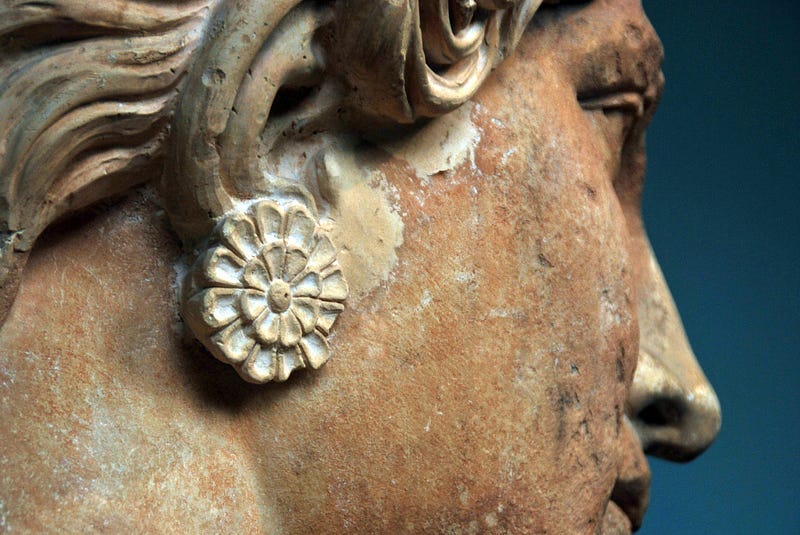
Image by NIKOS ABLIANITIS from Pixabay

“The female is as it were a deformed male”

— Aristotle

I first came across Xanthippe when I was searching for words that were synonymous with “shrew” or “nag.” Xanthippe, I thought. That’s an interesting word. I decided to look into its origins. Since I study philosophy, I found it kind of strange that I hadn’t encountered the wife of Socrates sooner.

Socrates is probably The West’s best-known philosopher. The image of the ancient Greek thinker comes to mind immediately when most people think of philosophy. Socrates has been taught outright and mentioned peripherally in many of my philosophy classes. I’ve certainly heard a lot about the man, but no one ever really told me much about his wife.

“Xanthippe” is defined by Merriam-Webster as “an ill-tempered woman,” and by Urban Dictionary as “any nagging scolding person, especially a shrewish wife.” The name Xanthippe means “yellow horse,” from the ancient Greek xanthos “blond” and hippos “horse.”

Xanthippe, for me, is a symbol of how women have had their personal narratives manipulated throughout history.

In Xenophon’s Symposium, Xanthippe is described by Antisthenes as: “the hardest to get along with of all the women there are.” She is known to history for her explosive temper and inclination to argue. She is often described as cranky, nagging, and hysterical.

Socrates also gives his own comments in Symposium about Xanthippe, explaining that her argumentative nature is the reason why he likes her. Paying tribute to Xanthippe’s name, “yellow horse” and perhaps also nodding slightly to the common belief that women are not quite human, Socrates describes Xanthippe as a wild horse in need of taming:

It is the example of the rider who wishes to become an expert horseman: “None of your soft-mouthed, docile animals for me,” he says,” the horse for me to own must show some spirit” in the belief, no doubt, if he can manage such an animal, it will be easy enough to deal with every other horse besides. And that is just my case. I wish to deal with human beings, to associate with man in general; hence my choice of wife. I know full well, if I can tolerate her spirit, I can with ease attach myself to every human being else.

Xanthippe was bold enough to publicly scold her husband (who was about 40 years older than her) for shirking his familial responsibilities. She also had the audacity to do what women throughout history have been mocked, shamed, and punished for doing: to speak up when men are talking. It seems that her disagreeableness may have been viewed by her husband as nothing more than an amusing challenge. Xanthippe was just a spirited horse to be ridden.

Xanthippe also had the audacity to do what women throughout history have been mocked, shamed, and punished for doing: to speak up when men are talking.

Aristotle said that “a proper wife should be as obedient as a slave.” Statements like this can give you a general idea of how unexpected behavior like Xanthippe’s was in ancient Greece. Plato generally described Xanthippe as a devoted wife and mother. His views on women were what might be considered progressive for the time he lived in.

There is a well-known, if unconfirmed, anecdote in which Xanthippe becomes so irritated with Socrates that she dumps the contents of a chamber pot over his head. Perhaps this story is an exaggeration or a fiction, designed to reinforce the caricature of Xanthippe a shrill, disobedient harpy.

Or, perhaps it’s true.

Is it ever morally justified to dump a chamber pot over someone’s head? Probably not. While I’d like to think that I, myself am not capable of the same action– I can certainly relate to how the Xanthippe of this story might have been feeling in the moments before this act. Possibly, so can you.


Amy Levy was a 19th-century British writer known for her poetry and essays. She was the first Jewish woman to attend Cambridge University, and she was a feminist. In 1881, while a student at Newnham College, she published a poem called Xantippe.

Xantippe (spelled without the “h”) tells the story of the wife of Socrates from a very different perspective. The poem is essentially a feminist parody of the widely accepted Xanthippe narrative, painting a picture of a woman dissatisfied in a time and place where her options were limited by her gender.

This Xanthippe falls in love with Socrates after listening to him speak, admiring him for his mind and ideas. She is devastated by the fact that he does not care to consider hers.

A scene unfolds where Xanthippe speaks her mind in a group of men and is ridiculed:

But Sokrates, all slow and solemnly, 
Raised, calm, his face to mine, and sudden spake:
‘ I thank thee for the wisdom which thy lips
Have thus let fall among us : prythee tell
From what high source, from what philosophies
Didst cull the sapient notion of thy words?’
Then stood I straight and silent for a breath,
Dumb, crushed with all that weight of cold contempt;

The Xanthippe of Levy’s poem is punished cruelly for her hubris. She does not have the education to articulate her ideas to the men around her. Regardless of the nature of her ideas, she is doomed to be mocked for the perceived foolishness of her expression.

Amy Levy had episodes of major depression from an early age. This depression grew worse in her later years, exacerbated by troubles in her romantic relationships and the fact of her increasing deafness. She took her own life two months before her 28th birthday.

Perhaps Amy Levy, who had the audacity to try and succeed in male-dominated spheres of art and discourse, felt a bit like Xanthippe. Perhaps, so do many women today.


There aren’t very many women in philosophy. I’m proud to be one of them.

Philosophy departments across the US are notorious for their low numbers of women, as well as people of color. The number of women awarded philosophy PhDs is about 27%, and just 21% of employed philosophers are women. These numbers drop significantly for women of color.

Why are there so few women in philosophy?

Maybe it’s because women, as Hegel put it, “are not adapted to the higher sciences, philosophy, or certain of the arts.” Perhaps it is, as Confucius said: “the law of nature that women should be held under the dominance of man.”

Maybe it’s like Aristotle explained, and “the male is by nature superior and the female inferior, the male ruler and the female subject.” Maybe it’s because, as Spinoza suggested, “women are apt to seduce men into making irrational political decisions.” Nietzsche thought that “when a woman turns to scholarship” there is “usually something wrong with her sexual apparatus.”

Regardless of the truth of any of these statements uttered by male philosophers, it’s hard to miss how reading so many statements like this could be discouraging for women entering the field of philosophy. It can be hard to speak up when you know that anything you say might be labeled with the disclaimer: these thoughts came from a woman.

Feminist author Sady Doyle writes in her book Dead Blondes and Bad Mothers, about how women are often perceived as monstrous. Referencing intimidating mother goddess archetypes like Tiamat with relationship to media representations like Godzilla or the T-Rex from Jurassic Park, Doyle helps the reader understand how we may be beyond disdainful, even frightened, as a culture, of women who don’t fit the generally accepted mold.

There’s a lot of pain, blame, and shame in Doyle’s book. The women in the stories she tells are not always innocent but often are not as guilty as they are made to seem by their peers or by history. Doyle details how the real, human stories of women are often distorted– mostly, to make them look like monsters. There is also, however, a strong note of optimism in Doyle’s writing:

“We can find powerful and awe-inspiring visions of ourselves, hidden inside and underneath the stories patriarchy tells to shame us,” writes Doyle.

I wonder how Xanthippe saw herself.

When Xanthippe looked in the mirror, did she see wrathful, disobedient “yellow horse,” desperately in need of taming? Did she see a nagging shrew, angry and shrill, yap-yap-yapping at her poor husband? Would she give the same version of events if asked about the chamber pot?

Maybe not– but I suppose we’ll never know for sure.


Originally published on medium.com on May 16th, 2020.

Sex Trafficking is Only Part of Human Slavery

So why aren’t we paying attention to the rest of it?

Photo by Jose Fontano

It’s estimated that there are at least 40 million human slaves alive today. This includes 25 million people in forced labor and 15 million people in forced marriage. Slavery occurs in every region of the world.

Women are disproportionately affected by human slavery– 28.7 million or about 71% percent of these people are women and girls.

As a woman, and as someone who is voluntarily employed in the sex industry, this is an issue that’s particularly close to my heart. As part of an effort to educate myself about the good and bad in my own industry, I’ve been reading a bit about commercial sex trafficking.

While doing this research, I’ve run across a lot of information about other kinds of human slavery happening in the world. I’ve been wondering why I haven’t been hearing more about other kinds of human slavery.

Forced labor is being forced to work under threat or coercion

and it generates profits of at least $150 billion dollars per year.

One-quarter of victims have their wages withheld, 17% have been threatened with physical violence, 16% have experienced acts of violence, and 17% have had their family members threatened. 7% of victims also reported sexual violence. This type of intimidation and abuse is how people are forced to work.

Forced marriage is generally forced labor and sexual coercion under the guise of “marriage.”

88% of percent of forced marriage victims are female, and 37% are children. Of the child victims, 44% are forced to marry before the age of 15.

Until recently, I had no idea how many people were forced to work in the agriculture and manufacturing industries, or how many child brides there were in the world.

Forced sexual exploitation accounts for a relatively small percentage of human slavery, at 4.8 million people or 12% of the 40 million people enslaved globally.

Besides involving sex, it’s not a whole lot different from the rest of human slavery. Being forced to work is still being forced to work, regardless of what kind of work you’re being forced to do. Often the same methods are used to coerce and intimidate victims.

So why does sex trafficking get so much more media coverage? Why can 12-year-olds still get married in the United States? Why doesn’t Lifetime make a movie about rescuing women who are being forced to work in agriculture or manufacturing?

Sex Sells

Duh.

I’ve found that sex sells better when there’s a fantasy involved; maybe one about a man rescuing a woman.

It’s a great mental image…

Burly FBI agents kick down the door of a seedy brothel, carrying damsels in distress over their shoulders. The helpless women blink their delicate, dark-expanded pupils in the sunlight.

Pimps in purple velour jogging suits are led out one by one, their gold chains and diamond watches confiscated and zipped into evidence bags. The bony, shivering victims are wrapped in emergency blankets and given warm mugs of hot chocolate.

“It’s going to be alright now,” says a fireman.

…except

not all sex workers are being forced into their labor.

They don’t all have pimps, and they aren’t all being exploited. Many of them really love sex (and money), and not all of them want to be rescued. I’m also pretty sure that 0% of them want to go to jail.

You see, in the real world, it’s the sex workers who are often the ones led out in handcuffs, whether they are victims of exploitation or not.

At the very least, a sex worker might be put in the unfortunate position of having lost their livelihood, as well as their sense of security, independence, and bodily autonomy.

Handcuffs or no, if someone busted into the strip club where I work to try and rescue me, I would be pissed.

Our focus on the sex industry is not based on the gravity of the problem relative to the global human slavery problem, but rather on a cultural obsession with sex, a history of puritanical repression, and the notion that women need to be rescued from the burden of deciding what to do with their own bodies.

Keeping sex work illegal doesn’t make sex workers safer

and it won’t end forced labor in the sex industry.

Much like prohibiting drugs does not stop drug use, and drives a violent black market; prohibiting sex work does not stop people from buying or selling sex– it just makes them less safe while they do it.

Focusing disproportionately on the sex industry when addressing the human slavery problem does not help to address the problem of human slavery, and it does not help sex workers.

It also creates a false justification for taking away a fundamental freedom that belongs to every human being: the right to do what you want with your own body, for love or money.

All of these issues need attention

It’s clear that anyone being forced to do any kind of work under the threat of violence is a threat to everyone’s fundamental human rights.

I think it’s incredible that we still condone things like forced labor or forced marriage as a species.

Shouldn’t we be past this by now?

Let us slip out of our archaic attitudes about sex, and focus on the real issue: protecting basic, inalienable human rights.


Originally published on medium.com on September 1st, 2019. 

When Creativity Comes in Waves


How to work with a flaky muse

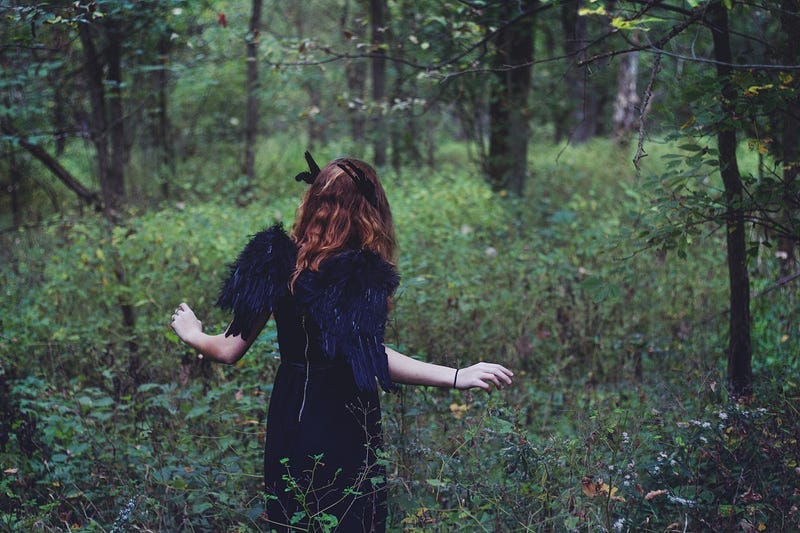
a woman wearing black angel wings wandering through the forest
Photo by Alex Grodkiewicz

Everyone’s creative process is different, but I’ve noticed a real trend among artists of ebbs and flows in inspiration and productivity.

An artistic temperament has often been associated with ups and downs in mood, which is unsurprising considering there seems to be a much-discussed relationship between creativity and mood disorders.

First, I think it’s important to make the distinction between illness and genius. Note that, at extremes, both positive and negative mood swings can actually impede creativity. There’s a problematic image of the “mad” artist in popular culture which I think often, unfortunately, becomes a self-fulfilling prophecy, but that’s not what I’m here to write about today.

Not all artists have mental illnesses; nonetheless, many creative people report experiencing something akin to mood swings when describing their creative process. The positive, functional moods which could be described as “strokes of inspiration” are something well-documented in the artistic world, and also increasingly in the realms of psychology and neuroscience.

You might have heard this referred to as a flow state, or “being in the zone”. Whatever you call it, I don’t think anyone experiences it all the time, and it’s always something to be grateful for when it comes around.

Since I’m a romantic sort of person who loves mythology and archetypes, I like to think of these moments in my creative life as “visits from my muse.” It helps me understand my own process better to personify the unknowable force which allows me to bring something forth from the nothingness that once was.

I’ve read a lot of articles about the psychology and neuroscience of creativity and productivity. I’ve read lots of guides detailing the logical steps you should take in order to optimize your ability to get into and maintain this sort of state.

While I think it’s helpful to understand things like this from a rational, materialistic, perspective– I think it can be a big leap bringing this comprehension from the conscious mind back into the unconscious programming which will drive our actual behavior.

In situations like this, I like to take a mystical perspective instead.

I like to imagine my muse as a temperamental diva who shows up either when the mood strikes her or when she believes I’m ready to hear what she has to say. Like most powerful and enigmatic women, my muse is complicated, and she isn’t easily wooed.

If your muse is anything like mine, it might be helpful to keep a few things in mind during your love affair.

Understand what attracts her

No self-respecting woman would be attracted to someone who doesn’t take care of themselves, and my muse is no exception. If I’m really screwing up when it comes to eating healthy, exercising, getting enough sleep, or any of the other basic responsibilities that I have to my beloved meat-suit, I’m a lot less likely to be able to get her to call me back.

Letting yourself go when it comes to caring for your physical, mental, or emotional health will certainly turn the daughters of Zeus all the way the off. I mean, who can blame them? No one wants to go out dancing with a lazy couch potato who can’t bother to shower and change out of those sweats and into a pair of dancing shoes.

Don’t be your muse’s Tinder left-swipe.

Also– don’t you think a gorgeous, intelligent goddess like your muse would want to hang out with somebody interesting?

My muse is happy to meet up for coffee and chat about that new book I just read or that interesting podcast I just listened to, but she isn’t really that impressed by the shallow gossip I heard or the hours of Netflix I binge-watched last week.

It’s not all about appearances– muses are attracted to people of substance.

Give her your full attention when she arrives

The thing about the muse is, you never really know how long she’s going to stay when she shows up. Muses can be fickle like that– they’re kind of afraid of commitment, so often you have to settle for a no-strings fling.

Make the most of it! When a woman like her steps into your world, you make the time to spend with her, if you know what’s good for you.

Practice active listening when you’re interacting with your muse. Really look her in the eyes. Repeat back what she says. Shut the hell up for a little while and stop talking about you.

And take notes!

Sometimes the muse will show up bearing all sorts of ideas, and no matter how much time you carve out of your busy schedule to accommodate her, it still won’t be enough. Write down the good ideas for later if you can’t get to work right this minute.

But don’t be too clingy

You can bring her flowers– but don’t be a stalker. Don’t try to force things, that will only make the situation awkward. You know what I’m talking about. If you’ve been calling her and she’s not picking up, cool off for a bit.

“When inspiration does not come, I go for a walk, go to the movie, talk to a friend, let go… The muse is bound to return again, especially if I turn my back! “ — Judy Collins

Show her you’re worth it

If you’re trying to show a fine woman that you’re worth her time, actions speak louder than words.

Be honest with your muse about the responsibilities you’re capable of taking on and the reasons why you want to take them on in the first place.

Hera didn’t raise any fools, and you’ll definitely regret trying to do this girl dirty. Muses can see right through your bullshit, and they know if you’re just blowing smoke when you say you’re ready to get serious. Like most relationships, you get what you give in your relationship with your muse.

Show up for her when it matters. She wants to know she can depend on you. You have to make her feel safe. Work on building trust with your muse.

“I show up in my writing room at approximately 10 A.M. every morning without fail. Sometimes my muse sees fit to join me there and sometimes she doesn’t, but she always knows where I’ll be. She doesn’t need to go hunting in the taverns or on the beach or drag the boulevard looking for me.” — Tom Robbins

Understand that she’s worth it

If you‘re hanging around a’ good woman and she realizes you don’t value her, she’ll be out the door before you can say “Melpomene.”

Having a muse by your side will make all the difference when it comes to fighting the battles of your creative process. She can teach you things about yourself and the world that you never imagined were possible, and make you feel things that you didn’t know you could feel, but don’t expect her to stick around if you don’t appreciate her.

When your muse gives you a good idea, don’t take it for granted. Show her that you’re actually paying attention to the words she whispers in your ear, and maybe next time she’ll sing you a song.


Originally published on medium.com on October 24, 2019.

The Six Principles of Nonviolence


According to Dr. Martin Luther King Jr.

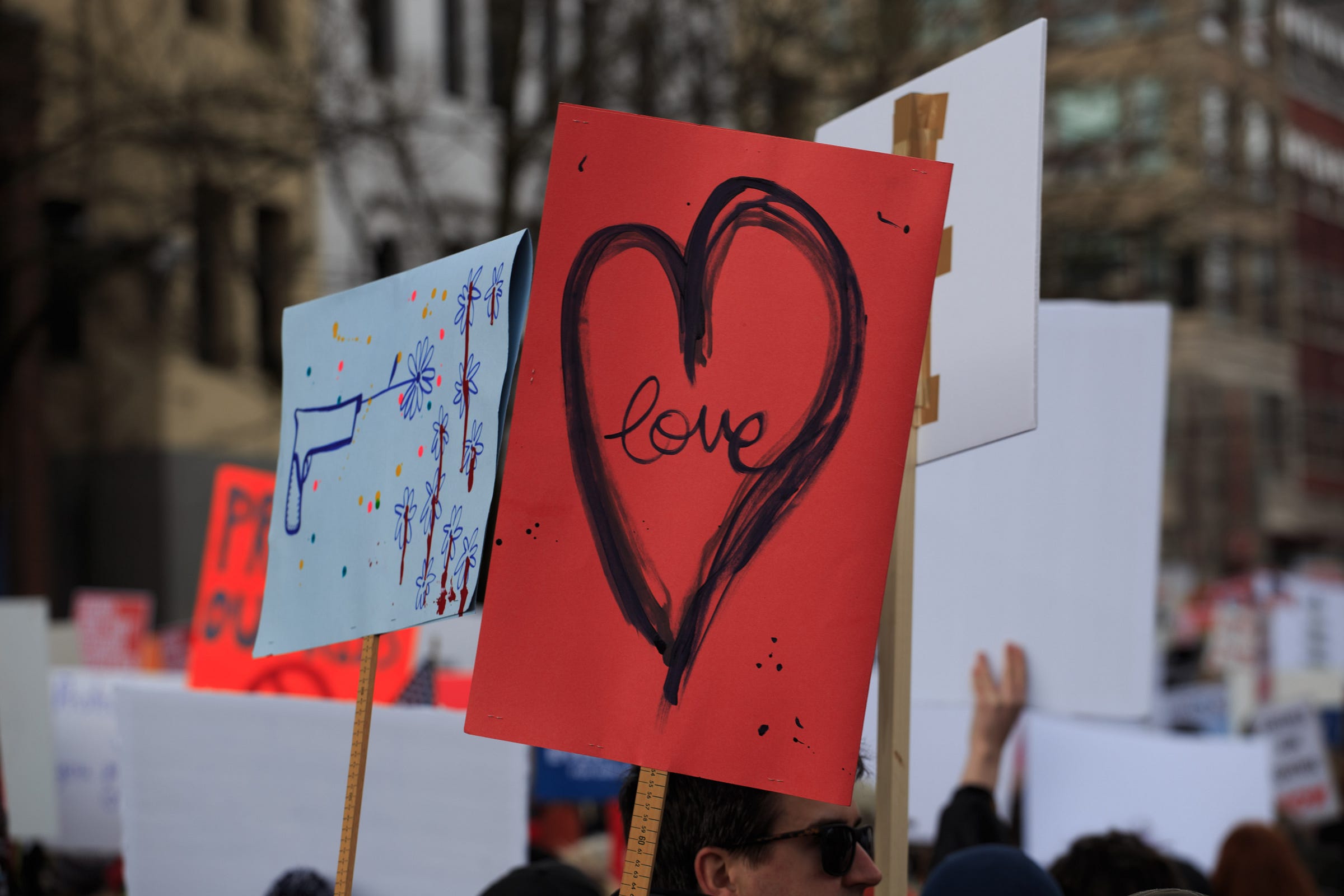
protest sign with heart that reads “love”
Photo by Ben Mater

From Hong Kong to Chilé, and from Egypt to Ecuador, protests seem to be erupting across the planet right now. People all around the world are ready for shifts in power and changes in leadership.

We’re concerned about many issues: poverty, war, corruption, human rights, and climate change being some of the top ones. It seems that we live in a time when we are ready to go through some changes as a species, and growth is never comfortable.

Sometimes we see so much anger and violence in the media that it seems like that’s all the world is.

It’s easy to become afraid. It’s easy to let that fear turn into anger. It’s easy to let that anger turn into hate. It’s harder to choose a more difficult road and resist the slippery path to hatred.

I’ve been doing some reading about civil disobedience recently, and I came across Martin Luther King Jr.’s six principles of nonviolence, which he described in his book, Strive Towards Freedom. Reading these helped me remember just how powerful nonviolence can be, and what a wise person Dr. King was.

Martin Luther King had an indefatigable faith in love. So do I, and so should you.

1. Nonviolence is a way of life for courageous people

It takes a great deal of bravery to hold to nonviolent principles, especially when others around you are not. Being nonviolent doesn’t make you weak or wimpy, it makes you strong.

King believed that nonviolence should be active– spiritually, mentally, and emotionally. Active resistance.

“We will have to repent in this generation not merely for the hateful words and actions of the bad people but for the appalling silence of the good people.”
― Martin Luther King Jr., Letter from the Birmingham Jail

2. Nonviolence seeks to win friendship and understanding

King pointed out that the end goal of nonviolence should be redemption and reconciliation, and the “creation of the Beloved Community.” King had a vision of a global community where things like poverty, hunger, and homelessness would not be tolerated because human decency would not allow for it.

I see what he’s saying. I’ve noticed that there are some out there who claim to be preaching a message of peace but don’t seem to be trying to make friends with those who they claim to want peace with. I would guess that Dr. King saw this kind of hypocrisy, too.

What’s your goal? Do you really want peace, or do you just want to be right?

3. Nonviolence seeks to defeat injustice, not people

Dr. King recognized that people who do evil things are also victims themselves. After all: no one is born evil, and doing hateful things is painful and damaging to the soul. It’s a cycle of suffering, and the more we shame and blame, the more we contribute to it.

It’s hard to admit sometimes, but hurt people do hurt people. One of the reasons that the wheel of violence keeps turning because it’s difficult for us to see those who have harmed us or those we love as human.

As much as certain people might repulse us because of the things they say or do, it’s in everybody’s best interest to do our best to try to love them anyway– or at the very least, not to hurt them more.

4. Nonviolence holds that suffering can educate and transform

Here’s a hard one to swallow: Dr. King thought that nonviolence should accept suffering without retaliation. He also wanted us to recognize that “unearned suffering” has transformative powers.

If you can accept injustices perpetrated against you without retaliating, you’re not only creating a more peaceful world, you’re doing a lot to build your own character.

Even if you’re not ready to love your enemy, turn the other cheek anyway, for your own sake.

5. Nonviolence chooses love instead of hate

Martin Luther King believed that we should resist violence “of the spirit” as well as of the body. He believed nonviolent love was “spontaneous, unmotivated, unselfish, and creative.”

To be truly nonviolent is not just about putting down your gun or your fist. It’s not just about biting your tongue before you say something cruel. It’s about working at a deeper level to genuinely release the violence from your heart.

The goal here is to become strong enough to really choose love. Always.

6. Nonviolence believes that the universe is on the side of justice

Dr. King wanted us to have faith in justice, and to believe that we live in a benevolent world.

The cynic in me wants to say that this is foolish– the universe is random and it doesn’t care about us. Still, I can see the value in choosing to believe this, over the alternative, because we will probably never know for sure, anyway.

This is similar to how it’s valuable to believe that I have free will, even though I’ll never know. Even if I didn’t, it wouldn’t really help me to know. I choose to believe that I have agency because it feels more empowering than believing that I don’t.

Similarly, I choose to believe that the universe has my back, because I understand the power of faith. The power of faith can be used for both good and evil, but when it comes to the human heart, there are few things more powerful.

What do you choose to put your faith in? Dr. King wanted to know that, too:

“Will we be extremists for hate or will we be extremists for love? Will we be extremists for the preservation of injustice ― or will we be extremists for the cause of justice?”

I don’t know, but I’m pretty anxious to find out.


Originally published on medium.com on November 27, 2019.

Why Knowledge is Power


Seven Reasons You Don’t Want to Forget

Spiderman reading a book in a brick archway with the sun behind him
Photo by Raj Eiamworakul

“Scientia potentia est,” or, “knowledge is power” is a Latin aphorism most commonly attributed to 16th-century philosopher Francis Bacon.

This phrase has existed in various versions across cultures and across times. Earlier versions of the phrase date back to the 10th century, such as in the Nahj Al-Balagha:

“Knowledge is power and it can command obedience,”

or the words of the Persian poet Ferdowsi:

“Capable is he who is wise.”

There’s a Hebrew phrase in the biblical Book of Proverbs that was translated nearly the same; first into Latin as:

“Vir sapiens et fortis est et vir doctus robustus et validus,”

and then into the English King James Bible as:

“A wise man is strong, a man of knowledge increaseth strength.”

I’m sure we’ve all heard it before.

Most of us have probably heard it enough that it has become one of those corny, hackneyed phrases that we might roll our eyes at. It’s one of those things you know is true, but that you might feel like a dork saying.

Platitudinous though it may be, I feel this is a phrase worth remembering.

While knowledge and wisdom are not quite the same thing (like knowing what to say vs when you should say it), for these purposes they can both be thought of as valuable things that accumulate as one lives.

Here are some things to remember about wisdom and/or knowledge, to remind you why it is never a waste of time to pursue it:

It’s free

While you might pay a sort of karmic price for your golden nuggets of wisdom (like burning your hand when the stove is hot), you really can learn pretty much anything for free, if you put your mind to it.

There’s free articles, videos, textbooks, even open courseware for pretty much everything on the internet. Your local library probably has some cool stuff. Your grandpa probably knows some things that he’d be willing to tell you. Hell, a lot of things you can probably just figure out through trial and error, like how to kiss someone, or how to stand on your head.

Even if you’re paying for someone else to teach you something, it’s really you who ends up teaching yourself in the end, isn’t it? The time and attention you give something is the true price you pay for it, but it doesn’t always have to cost dollars.

It’s renewable

Knowledge doesn’t expire– you can use it over and over again.

As long as you remember where the blackberries grow you’ll be able to go and pick them. You can harvest a quail egg if you know the right bush to check underneath.

There’s no limit to sharing it

The renewability of your knowledge isn’t limited to you.

If you know where the berries grow and where the quail lay their eggs, you can teach your friends, and you and your friends can make berry pies and quails-egg omelets for you all to enjoy in the future.

It’s interesting

It’s another thing that sounds awfully cheesy to say, but learning is fun.

Did I need to know that certain animals– like mantis shrimp, pythons and some birds– can see a whole spectrum of color that we humans can’t even really comprehend?

No.

Do I have any current practical application for that knowledge?

No.

Am I still glad I found out?

Yes!

Why the hell wouldn’t I be? That’s fascinating.

Things like this are what make living on Earth exciting and engaging. Aren’t we lucky to exist on this badass planet? You only live once (theoretically), and you might as well discover some things to entertain you while you’re doing it, if you haven’t already.

It can’t be taken from you

Short of a Men in Black-style memory eraser wand type situation, I can’t imagine a situation where someone could take your knowledge from you.

Even if everything else was taken from you, like your possessions, your social status, or your health-– you would still have all the information you’ve learned that you could manage to remember.

Actually, you’d probably end up with more knowledge than you started with if you endured a worst-case scenario like that. Wisdom too, definitely. Which brings me to my next point:

It’s the best silver lining

No matter what totally crazy messed-up stuff goes down in your life, you will be wiser for the experience.

If things are horrible at this particular moment, you can at least take comfort in the fact that you’ll have this as a consolation prize. Sometimes it even turns out to add up to more than that- something tangibly useful instead of just an abstract life participation trophy.

You might end up finding that whatever you learned was more valuable than whatever you thought you lost, or decide that whatever pain you went through was worth what you found out about yourself or about life.

It liberates us

Knowledge gives us the ability to survive and thrive in the world. This is freedom, and you can’t have real power without freedom.

More knowledge makes us better able to make decisions, as well as to decide the logical and ethical grounds on which we want to be making our decisions.

Knowledge and wisdom help us to make better choices. We respect ourselves more when we make better choices, and when we respect ourselves more, we want to continue to make better choices. This cycle is powerful.

When it’s clear that we respect ourselves, others come to respect us more, which is also immensely powerful.


There’s no denying that knowledge is power– but it’s also important to remember that

with great power comes great responsibility.

Never stop learning, and remember to use your powers for good.


Originally published on medium.com on September 12, 2019.

The United States of America is Basically Doing the Holocaust

We should probably stop.

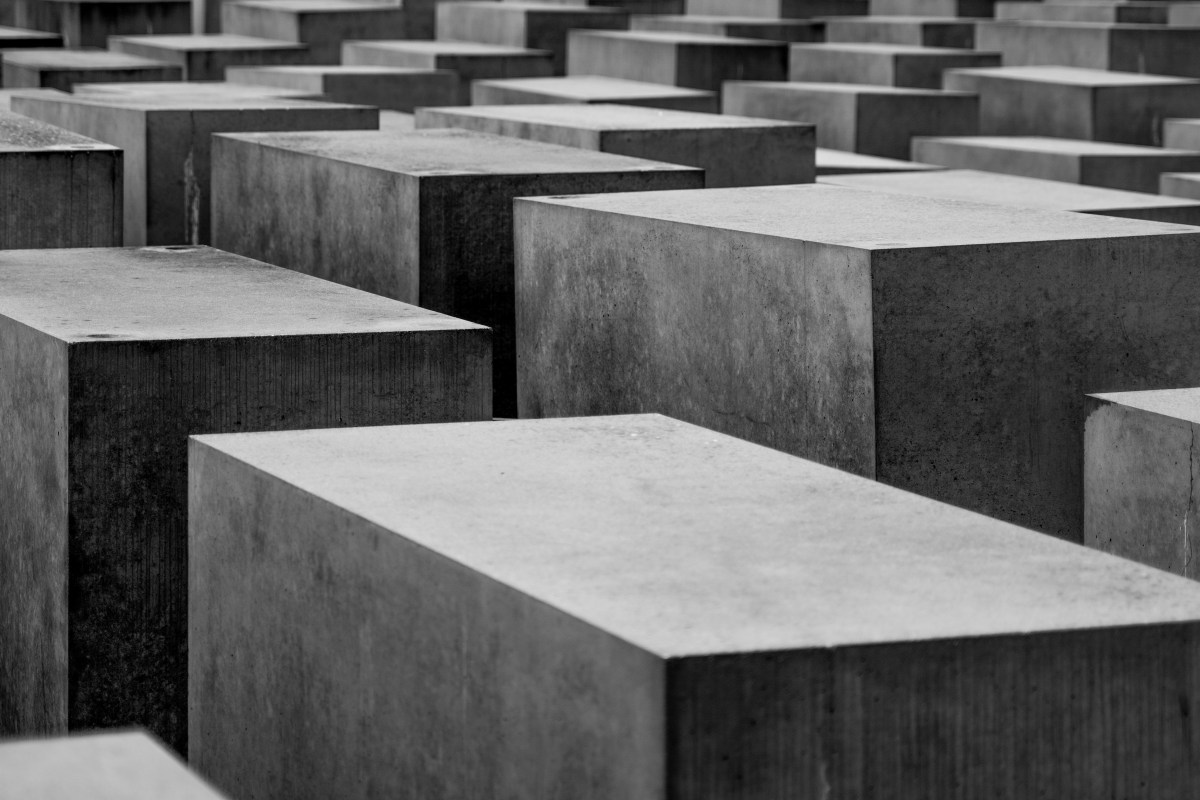
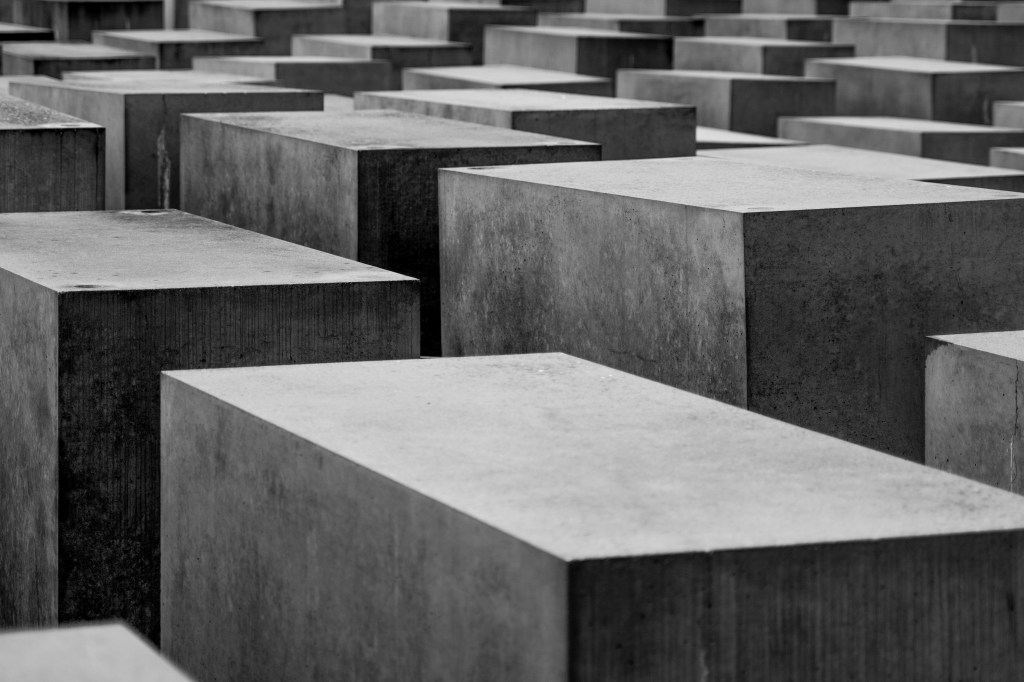
a series of grey boxes

Photo by Michael Fousert

During the Holocaust, specific groups of people became the target of propaganda and violence that was coordinated by the state. These groups included ethnic, cultural and social groups such as Jews, Catholics, Freemasons, gay people, trans people, disabled people, and sex workers.

People belonging to these groups became the targets of propaganda campaigns designed to destroy their reputations– but more importantly, to destroy their credibility. An important feature of the Holocaust was the culture of secrecy and the destruction of historical records. Because we do not, collectively, remember our history in a meaningful way, in a way which allows us to fully comprehend the horrors that human beings are capable of, we are continuing to perpetrate these horrors.

The philosopher Hannah Arendt wrote about how totalitarian governments created societies of people who were lonely; not just physically lonely, physically isolated, but spiritually isolated from one another. During World War II, Nazis used propaganda and violent threats to create a culture in which speaking the truth was punishable by social isolation, shaming, unjust incarceration, and physical torture. They created a world in which human beings were incapable of having real intimacy with one another because they were no longer able to express to each other the truth of their experiences. This weakened the social and familial bonds between people, which made them easier to control.

This kind of spiritual loneliness, according to Arendt, is what created the perfect conditions for governments to control the minds of their citizens. Unable to find real human connection under conditions where it was impossible to tell the truth, human beings sought comfort elsewhere — from the authority figures who became stand-ins for the real human relationships which could no longer exist. They became loyal to an amorphous, faceless authority instead of to one another. Even people who lived in the same house, worked at the same jobs or attended the same schools could no longer truly relate to one another. People became passionately terrified of one another. There was a culture of paranoia.

Fear is the seed of hatred. By causing immense fear, by torturing the populace en masse by making everyone afraid all the time, not just of the state, but of each other, Nazis made people more willing to participate in their atrocities. They created a world in which human beings were willing to harm the ones they loved the most in order to avoid pain. In which they were forced to denounce their most deeply held beliefs at the barrels of guns. In which they informed on and turned in their loved ones. In which they were coerced into implicating themselves and other innocent people in kangaroo courts in which facts and evidence didn’t matter. In which people were so confused, so tortured, that they no longer trusted their own memories or senses.

During the Holocaust, it was not just agents of the governments who committed atrocities, it was everyone. Every single person who participated was, to varying degrees, culpable. And yet, when the criminals were tried, a select few were disproportionately punished for crimes which were participated in, condoned, and concealed by nearly everyone. These people became the scapegoats for the crimes of everyone else. Perhaps collectively, as a species, after such an event, we believed that using these people as sacrifices would absolve the rest of us of our guilt.

But guilt doesn’t work that way. Morality doesn’t work that way. Human psychology doesn’t work that way. The world doesn’t work that way. When people commit atrocities, if they witness atrocities, even if they are forced to say, even, for a time, forced to believe that the atrocities didn’t happen, some part of them will still remember. And then, regardless of whether or not they are held accountable by the laws of any state, people will punish themselves, and each other, regardless of how much anyone involved deserves any of it. 

The collective guilt that resulted after the Holocaust led thousands of people to commit suicide and countless others to be left with permanent mental and spiritual scars that would never heal and would be passed down from generation to generation. The intergenerational trauma from the Holocaust and other genocides have left intergenerational traumas that fuel a cycle of hatred and fear and perpetuate unnecessary suffering across the planet.

The government and people of the country in which I live are perpetuating these same crimes, right now, as I speak. The government of my country perpetrates horrific crimes against humanity on what seems to be a perpetual basis, both at home and abroad.

In the country where I live, right now, as I speak, people are being locked away without due process and being treated in horrifying and inhumane ways while in captivity. They are being separated from their parents, children, brothers, and sisters. They are being denied medical treatment when they are sick. They are being asked to defend themselves at hearings in languages that they do not understand without representation by attorneys. People are being raped and sexually abused by government officials who are not held accountable for their actions. People are having their body parts, such as their reproductive organs, removed without their informed consent.

My country murders civilians en masse in foreign countries in order to maintain its control over global markets and natural resources. It relentlessly persecutes, tortures, and executes citizens who speak out against its atrocities.

During World War II, people with both immutable physical characteristics or religious, cultural and social associations like mine were tortured and murdered. Historically, the peaceful values of both my ancestral culture and both the religion in which I was raised and the one I currently practice were warped and distorted by state governments for propaganda of fear-mongering, hate-mongering, and social control.

During my lifetime, I have personally been subjected to treatment which constitutes torture and crimes against humanity. I know many other people belonging to the both the same and other cultural, religious, and social groups and as me who have been subjected to the same. My local, state and federal governments have condoned this treatment and failed to hold the perpetrators accountable. I have been subjected to this treatment, not, in fact, because of the groups that I belong to, but because I reported the atrocities that I witnessed and experienced and because I fought back. The same is true for many others around me, regardless of race, religion, culture, and the like.

It does not matter what ethnic, religious, social, or cultural group you belong to. During the reign of a totalitarian government, any person is potentially a member of a group that was referred to by Nazis during the Holocaust as “untermenschen,” or “subhumans.” This group still exists today, under the totalitarian government under which I live. Absolutely anyone can be labeled a member of this group, and absolutely anyone is a potential target.

Dear America — your human sacrifices do not absolve you of your crimes, and they will not absolve you of your guilt.

No matter who you are, one day you too, could one day be treated as “subhuman.” And also, no matter who you are, one day, you too could be the person who treats someone else that way. You might even be doing it right now. And if the propaganda and mind control that is inflicted on you every single day of your life has succeeded in breaking your consciousness to the point where you can no longer see the truth when it’s right in front of you — you might not even be aware of it. But you will be one day. And it’s gonna hurt.