
Stop confusing the two!
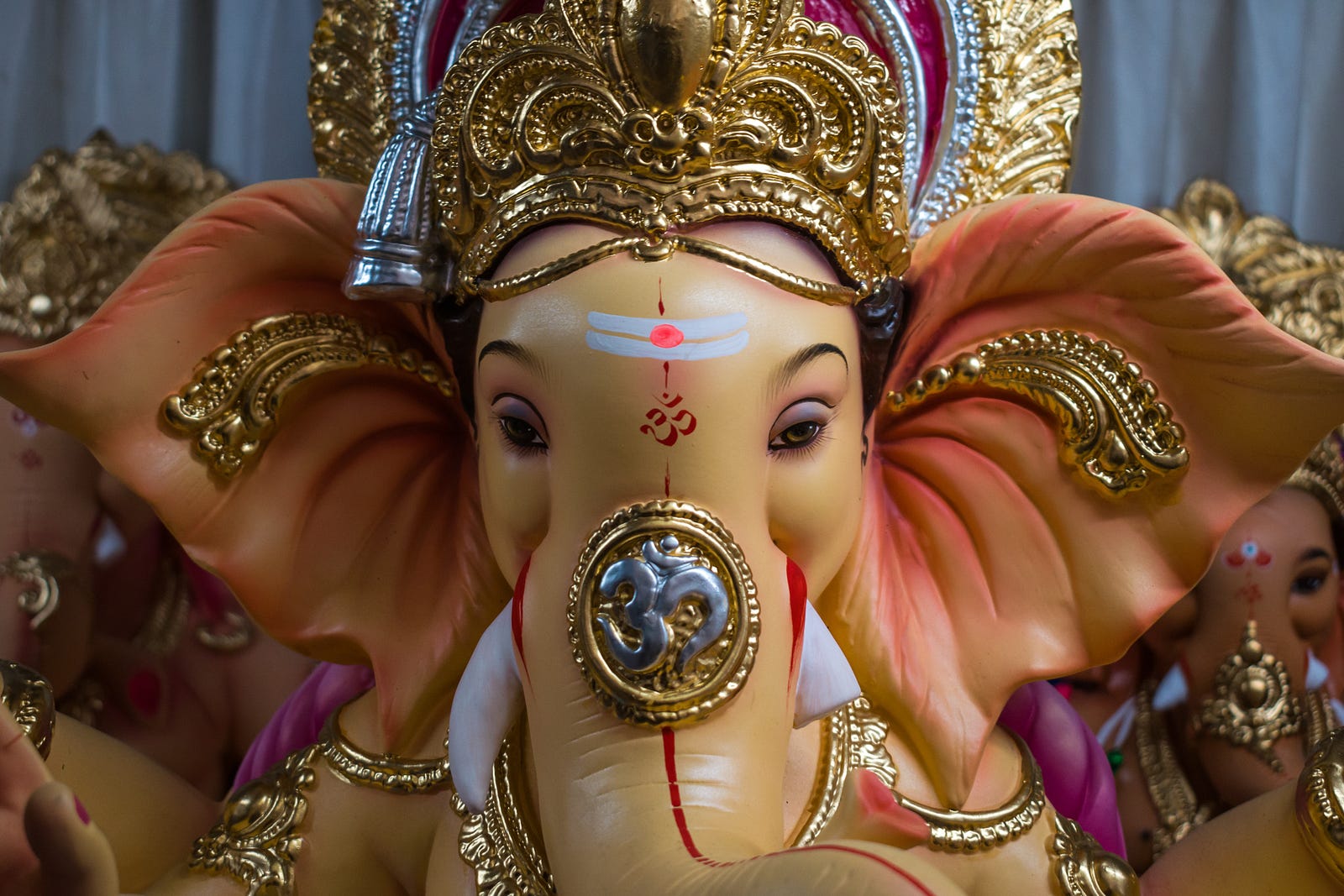
Explaining my religion is complicated. I was raised Wiccan or Neo-Pagan, and my family on that side is mostly Catholic. My family on the other side is mostly Protestant. I am a practicing Hindu.
I came to be a practicing Hindu, not through simply deciding to be a Hindu, but by pursuing religion and spirituality in an abstract way, which led me, ultimately, to religious beliefs and practices that were consistent with Hinduism. I explored the world, I explored different spiritual practices, and I ended up repeating the ones that worked for me the best. Gradually, I found myself doing things like chanting traditional Hindu mantras and praying to Hindu Gods, and I began to identify as a Hindu.
My current religious practices are a mix of how I was raised, Neo-Pagan practices, and the religion that I found on my own spiritual path as an adult, Hinduism. My Hindu practices are mostly consistent with a branch of Hinduism called Shaivism, and with a branch of Buddhism called Vajrayana Buddhism. I learned from research, after adopting many of my current practices, that my Buddhist practices have pretty obvious roots in ancient Vedic Hinduism. I’m also into Chaos Magic, but I don’t think that’s inconsistent with any of my other beliefs.
I went on a quest to learn about the religion that I had found I was already practicing, because I wanted to engage with it more fully with on a spiritual level. On my quest, I did a bunch of research about Hinduism. I found it to be strangely associated with Nazism, largely through the influence of the philosopher Friedrich Nietzsche on a woman named Savitri Devi and Devi’s influence on Hitler and the the Third Reich.
I no longer buy the narrative that Devi was Hitler’s Nazi priestess or the idea that that Nazism has any real roots in Hinduism. Nazism is built, in part, on horrific misinterpretations of Hindu philosophy, which honors the cycle of death and rebirth and the unique roles that living beings play during their time on the planet Earth.
My theory is that Devi was basically Hitler’s hostage, and that her real beliefs about the world were twisted by Hitler to fit his Nazi ideology. Either that, or she became confused, as Nietzsche had been when learning about Eastern philosophy through the influence of the philosopher Arthur Schopenhauer. Schopenhauer studied Eastern philosophy, and one of his main takeaways was an Eastern interpretation of the concept of compassion.
Compassion in Eastern traditions is a kind of compassion that more deeply understands the experience and mindset of the individual who is not oneself. Compassion in Western traditions is often associated with submissiveness and cowardice, and not honored or explained in quite the same way as it is in Eastern traditions, except maybe, through Western religions, sometimes. There are similar concepts of compassion and peace in Christianity, for example.
Devi and Hitler, like many Hindus, were vegetarians. It would seem that they had some kind of compassion for the natural world. And yet, Hitler’s regime led to the torture and slaughter of millions of people.
This isn’t the kind of thing that my Hindu or Buddhist practices advocate for, and the confusion of the two, in my opinion, should be included in the list of Nazi crimes against humanity, as this kind of cultural erasure is, in itself, an act of genocide. The swastika, for example, which is important in Hinduism and also exists in many other cultures, has now come to globally symbolize Nazi philosophy.
Hinduism, and the many Eastern faiths that have been spawned by its ancient Vedic roots overwhelmingly focus on practices of peace, nonviolence and self-discipline. Philosophically, they tend to focus on the importance of cultivating of love, compassion and understanding for all living beings on Earth.
The self-discipline and personal growth aspects of the Hindu faith, I think, are where the Nazis began twisting Hindu philosophy to fit their nefarious ends. One theme in Hinduism is repetition, like the repetition of mantras and certain tasks. This kind of repetition leads to the kind of mastery of different skills or disciplines that would be valued in Nazi philosophy. This kind of repetition in the natural world leads to literal evolution. Practice might not make “perfect,” as they say, but you can’t deny that you usually get better at something if you do it a bunch of times.
Evolution, I think is what the Nazis were attempting to force with their torture and killing of millions of people. I don’t think that their propaganda and ideology, which attempted to convince the world that huge populations of people were worthy of indiscriminate punishment based on their immutable physical characteristics or social classes alone, expressed their true goals. Their true goal was to place stress on humanity and to traumatize it in such an irrevocable way that it would be forced to evolve in a new direction. The cruelty itself was the point.
If the Nazi goal was to create a version of humanity that was objectively better, I don’t think the path they chose to get there was effective. Humans, because of our powers of self-reflection and our ability to plan for the future, are different from the vast majority of living beings on this planet. Because of our differences we wield immense power. Massively traumatizing us, as through war, will not necessarily cause the kind of evolution we want. Sometimes trauma causes growth in people, but much more often it makes them terribly ill.
War has made us sick as a species, and further traumatizing us through further wars will not force us to evolve fast enough to save ourselves from ourselves. We need to find a different approach to reigning in the chaos of humanity. War is everywhere. It’s even in the streets of my hometown, and it could always come to the streets of yours.
We will not solve the world’s problems by torturing the populace. Every act of torture is an experiment, and every failed experiment runs the risk of becoming an act of terror or a horrific crime against humanity. Torturing people might make them stronger or more compassionate sometimes, but it’s a high stakes gamble. That’s not a bet that I’m willing to take for the sake of creating a better or stronger humanity. It doesn’t seem like it will work!
People often get confused and think I’m a Nazi because I’m talking about Hinduism, or about Nietzsche or Schopenhauer or because they see the Hindu symbols tattooed on my body. I’m not really offended by this misunderstanding because I understand where it comes from, but I think it’s a shame that Westerners are being deprived of the wisdom that my religion and other religions like it have to offer by these unfair negative cultural associations between Hinduism and Nazism.
Colonization in the East by the West began in ancient times and the warping of these traditions by the West has continued since then. It’s almost like the power of real, authentic love and compassion that is behind these traditions is too much power for the colonial West to allow anyone to hold besides itself.
For the record: Hindus are not Nazis.
We are mostly peaceful, and we often even take our peacefulness to extremes. I’m an extremist in some ways, and I know that means I won’t always get along with everyone. But I’d rather be an extremist for love, compassion, and peace than an extremist for hatred, bigotry, and war, and I just want to make sure that everyone knows which one I am.
 Esoteric Epistemology